Boyabat Castle
The castle on the rocky hill above the district centre dates to the Roman period. From the castle, which was restored in the Ottoman period, the Boyabat Plain and the Gökırmak Valley can be seen.
View on map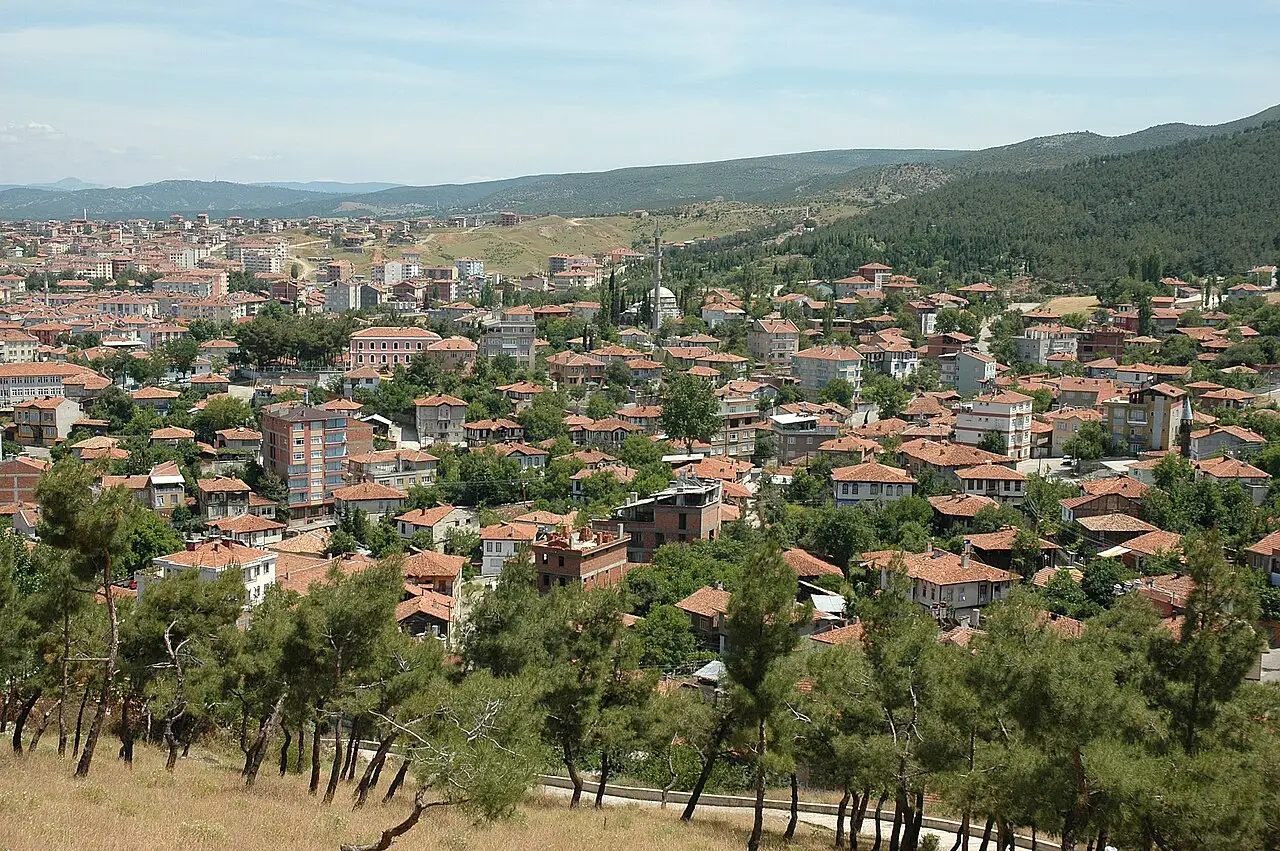 Photo: Dosseman (CC BY-SA 4.0) · Source
 10 places to visit in the Boyabat district of Sinop: Gökırmak Valley, Boyabat Castle and Basalt Columns (Rock Tombs). Plan your trip to Boyabat with local food, practical tips and transport information.
Boyabat is a district of Sinop province, 82 kilometres from the provincial centre. It borders Durağan to the east, Ayancık, Gerze and Erfelek to the north, and Saraydüzü to the south. The district covers an area of 1,512 km², and the average elevation of its centre above sea level is 328 metres.
The district is believed to have been founded around 600 BC, with the first founders thought to be the Kaşkas. It then came under Hittite, Paphlagonian, Lydian, Persian, Macedonian, Pontic, Roman and Byzantine rule. Boyabat passed into Turkish hands after the Battle of Manzikert, and came under Ottoman protection when Fatih Sultan Mehmet conquered the Byzantine Empire of Trebizond.
The Orta Bazaar was completely burned in a fire in 1925, and in its place a new bazaar was built with rectangular and square plans. Traditional crafts such as coppersmithing, tinsmithing, tanning and basketmaking were practised in the bazaar, and some of them continue to this day.
Boyabat passed into Turkish hands after the Battle of Manzikert. Ottoman protection began with Fatih Sultan Mehmet’s conquest of the Byzantine Empire of Trebizond. The old foundations of Boyabat Castle were laid by the Paphlagonians in the 6th century BC. The basalt cliffs are estimated to have formed 3 to 5 million years ago. Finds from the Late Roman and Early Byzantine periods are displayed in the castle.
Boyabat and Durağan passed into the hands of the Danishmends in AD 1105. The Ayancık-Boyabat and central districts of the Sinop sancak are regarded as among the regions that suffered the most martyrs in the Independence War. Boyabat Castle stands on one of two steep rocky hills facing each other in the Gökırmak Valley, where Boyabat District is located.
Last updated:
The castle on the rocky hill above the district centre dates to the Roman period. From the castle, which was restored in the Ottoman period, the Boyabat Plain and the Gökırmak Valley can be seen.
View on mapThe historic bazaar in the district centre reflects traditional trading culture through its shop buildings from the Ottoman period. This area, carefully preserved by the local people, is one of Boyabat's best-known landmarks.
View on mapThe Daylı and Aşıklı Tekke tombs in the district, dating from the Ottoman period.
View on mapA mosque with a wooden and zinc minaret, named after the rock on which it was built.
View on mapA mosque endowed by Yıldırım Beyazıt, rebuilt in 1856 from rubble stone.
View on mapA valley whose geographical location forms the basis of the district's founding.
View on mapThe basalt rock formations around Boyabat are of geological interest for their natural column structures.
View on mapA nature monument of vertically formed basalt columns, located in three valleys.
View on mapA tower with a polygonal body resembling a minaret, in the park opposite Boyabat Castle.
View on mapWhile you are in Boyabat, you can also see the highlights of Sinop province. These places are in other districts; Boyabat is about 100 km from the provincial centre.
Boyabat Sırık Kebabı was registered as a protected geographical indication on 28 September 2020 (TÜRKPATENT registration no: 549). Product group: dishes and soups. Registered by: Boyabat Chamber of Commerce and Industry.
Boyabat pide is known for its thin dough and generous fillings. It is baked in a stone oven.
Keşkek, prepared by slow-cooking and pounding wheat and meat, is indispensable at wedding feasts. Prepared in a communal spirit, keşkek is essential to the wedding table.
Boyabat Castle and its historic bazaar form the foundation of the district's cultural identity.
Boyabat's economy is based on agriculture and livestock farming. Rice, wheat and vegetable production are the main agricultural activities.
Boyabat is 100 km from Sinop city centre and 80 km from Kastamonu. The D-030 highway passes through the district.
The 10 highlights of Boyabat: Gökırmak Valley, Boyabat Castle, Basalt Columns (Rock Tombs), Boyabat Historic Bazaar, Basalt Cliffs Nature Monument, Boyabat Clock Tower, Kaya Mosque, Orta Bazaar, Great Mosque (Bayezid Mosque) and Daylı and Aşıklı Tekke Tombs.
Boyabat Sırık Kebabı, Boyabat Pide and Keşkek are the standout flavours on Boyabat's tables.
Boyabat is known for Boyabat Çember and its castle and bazaar culture. It is registered with TÜRKPATENT as a designation of origin product.
Boyabat is 100 km from Sinop city centre and 80 km from Kastamonu. The D-030 highway passes through the district.
Suggested visit length: 1 day. Best time to visit: spring and autumn.