Yedisu Hot Springs
The name Yedisu means 'seven waters', and the district has many thermal springs. The healing waters of these baths are said to help with rheumatism and skin conditions.
View on map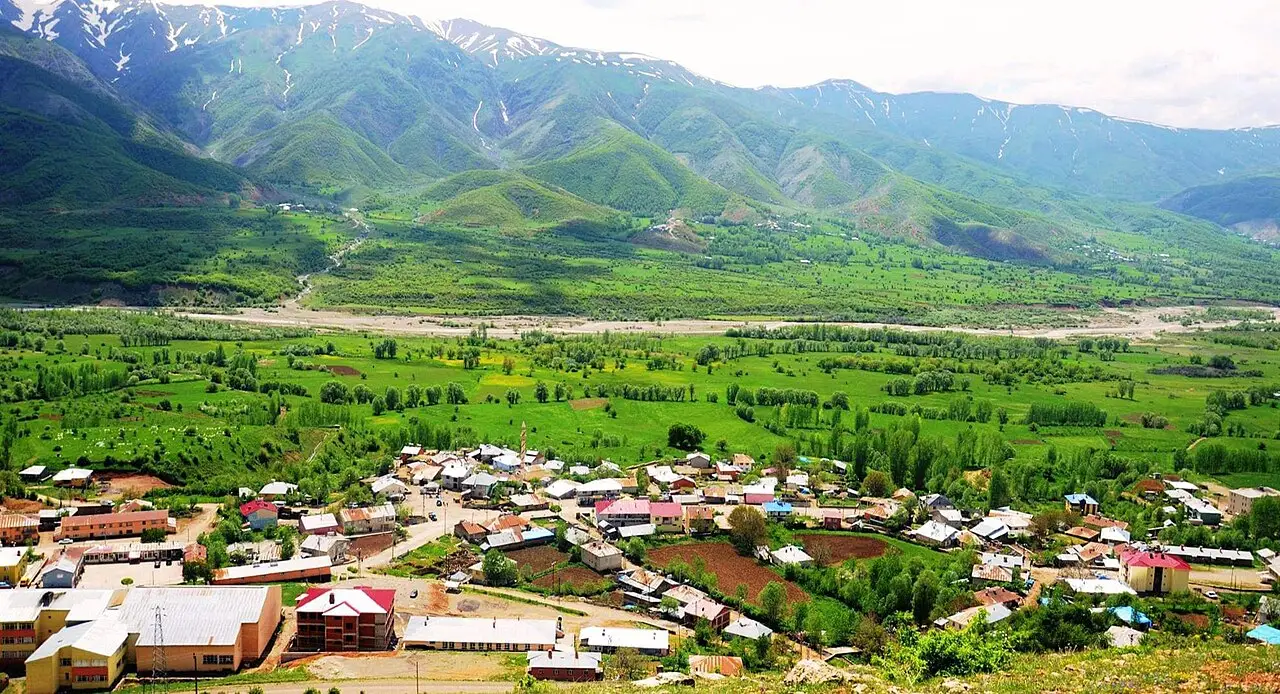 Photo: YedisuBingol (CC BY-SA 4.0) · Source
 5 places to visit in the Yedisu district of Bingöl: Yedisu Hot Springs, Yedisu Plateaus and Yedisu Waterfalls. Plan your trip to Yedisu with local food, practical tips and transport information.
The district’s altitude is 1,516 metres, and it is 124 kilometres from the city centre.
With a history of 250 years, the district was known as Çerme village until 1951. In 1970 it took the name Yedisu after a fountain with seven taps, and it was upgraded to district status in 1990.
Because it lies at the easternmost point of the North Anatolian Fault, the earthquake risk here is very high.
The name Yedisu comes from a seven-tap fountain built in the centre of Çerme in 1970. Until 1951 the settlement was known as Çerme village, and afterwards as Çerme Bucağı, attached to Kiğı.
Last updated:
The name Yedisu means 'seven waters', and the district has many thermal springs. The healing waters of these baths are said to help with rheumatism and skin conditions.
View on mapThe plateaus in the higher parts of the district, with their cool summer air and rich vegetation, are ideal for hiking.
View on mapWaterfalls cascading down the mountains around the district create a striking sight, especially during the snowmelt season. They are attractive spots for nature photographers.
View on mapWhile you are in Yedisu, you can also see the highlights of Bingöl province. These places are in other districts; Yedisu is about 65 km from the provincial centre.
Çiğ köfte, made by kneading fine bulgur with spices, is an essential delicacy at guest tables in Yedisu.
Made with dried beans, chickpeas and bulgur, kelecoş is one of Yedisu's traditional winter dishes.
The name Yedisu comes from seven different water sources rising from the district's land. Each of these sources is believed to have different healing properties.
The economy of Yedisu is based on livestock farming and agriculture. Small livestock farming is the district's main source of income. Beekeeping and thermal tourism potential are developing.
Yedisu is 65 km from Bingöl city centre. Minibus services run from Bingöl.
The five highlights of Yedisu are: Yedisu Hot Springs, Yedisu Plateaus, Yedisu Waterfalls, Peri Valley and Mount Şeytan.
Çiğ Köfte and Kelecoş are the standout dishes on tables in Yedisu.
Yedisu is known for Yedisu Horoz Dried Beans and the Legend of the Seven Waters. It is a product registered as a protected designation of origin with TÜRKPATENT.
Yedisu is 65 km from Bingöl city centre. Minibus services run from Bingöl.
Suggested visit time: half a day. Best time to visit: summer months.