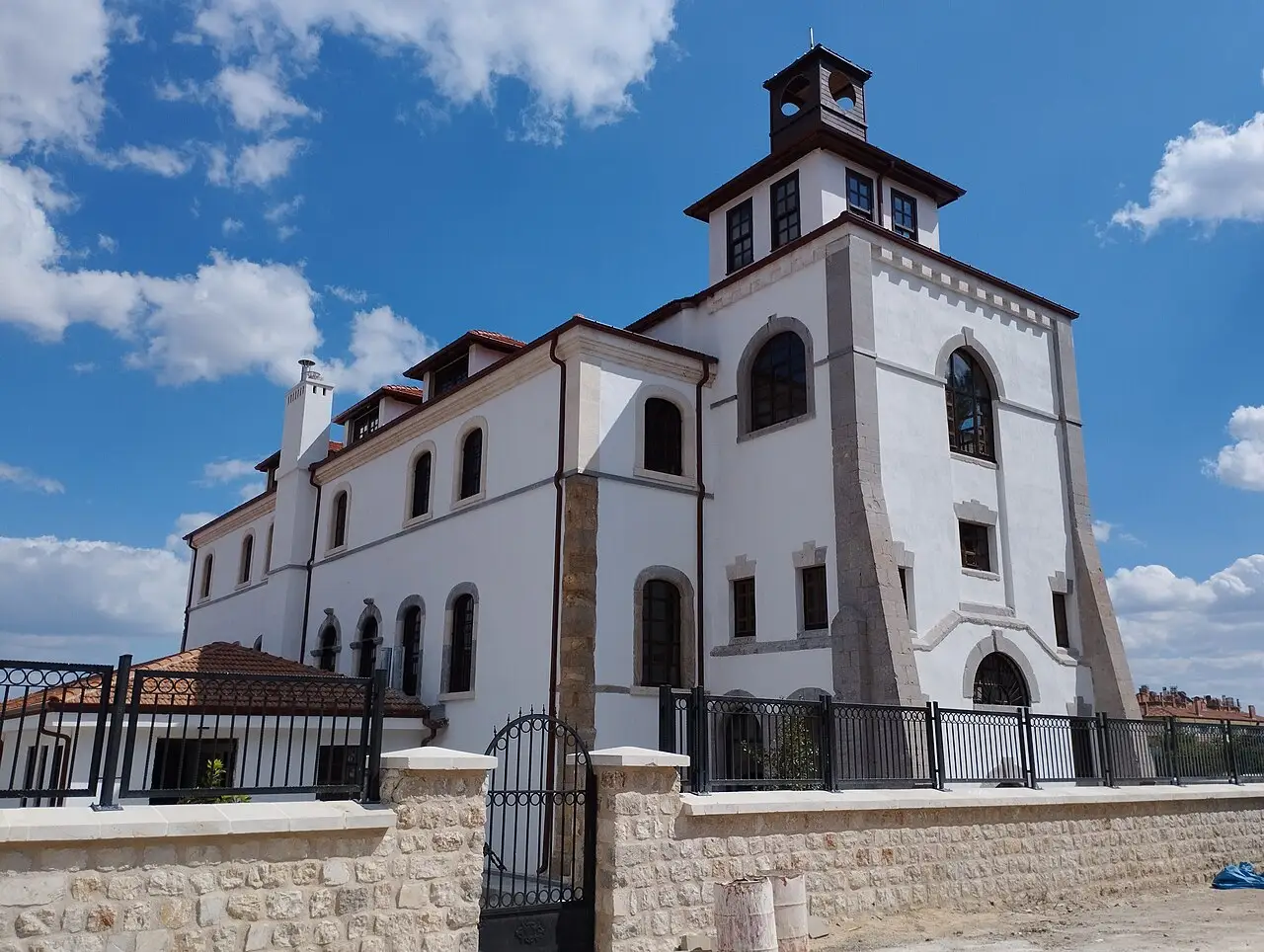
11 places to visit in the Merzifon district of Amasya: Gök Medrese, Merzifon Kalesi (Bulak Kalesi) and Taş Han. Plan your trip to Merzifon with local food, practical tips and transport information.

Share with friends

Merzifon is a district of Amasya, and there are various theories about the origin of its name. The district’s area is 888 km² and its altitude is 744 metres. Its population is 77,077.

Adının Kökeni

In the 700s BC, east of Merzifon, the regional governor Barsevinç had a town built bearing his own name, and over time the name took the forms Marsevinç, Mersuvan and Merzifon.

Tarihçe

Archaeological findings show that the history of Merzifon goes back to 5500 BC. After the Dark Ages, in the 8th century BC, the Phrygians settled on the Hittite cities in the region and used these settlements after repairing them. In the 11th century the region came under the rule of the Danishmendids. When Yıldırım Bayezid conquered Amasya in 1393, after roughly three years of struggle the Merzifon region came under Ottoman rule.

Tarihçe ve Kültür

Merzifon was a place where the roads linking the Black Sea with Central Anatolia met. Hadrian visited the region in 131 and ordered the temples to be repaired. When Amasya became the capital of Pontus, Merzifon became an important trade centre. According to Evliya Çelebi, the Bektashi dervish Gülbaba was born in Merzifon.

Last updated:

Places to Visit in Merzifon

  • 8 Historic
  • 2 Religious
  • 1 Attraction

Historic Sites 8

Historic

Gök Medrese

Gök Medrese, built in 1266 during the Seljuk period by Pervane Muineddin Süleyman, is one of the important examples of Seljuk architecture with its twin minarets on the portal and its geometric decorations. The iwans and rooms in the madrasa courtyard reflect the educational approach of the period.

View on map
Historic

Merzifon Kalesi (Bulak Kalesi)

Bulak Castle, built in the Byzantine period against Arab raids, is one of Merzifon's oldest structures. The castle was used for centuries as a defensive structure protecting the city's strategic position.

View on map
Historic

Taş Han

Taş Han, built in the Ottoman period for trade, is an important witness to Merzifon's commercial past. The restored building now hosts cultural events.

View on map
Historic

Kara Mustafa Paşa Hammam

A hammam built in 1678 by Kara Mustafa Paşa, known for its octagonal domed warmth.

View on map
Historic

Merzifon Taşhanı

A historic two-storey han from the 17th century, with a courtyard. It has been restored and is used as a hotel.

View on map
Historic

Çelebi Mehmet Madrasa

A four-iwan madrasa built in 1414. The clock tower above it was added in 1865.

View on map
Historic

Merzifon Bedesten

A covered bazaar with nine domes, dating from the 17th century. It still performs its commercial function.

View on map
Historic

Bulak Castle

A castle overlooking the Merzifon plain, near Alıcık village, protecting the trade route.

View on map

Religious Buildings 2

Religious

Pir İlyas Çelebi Tomb

The tomb of Pir İlyas Çelebi, a 14th-century mystic, is one of Merzifon's important places to visit. The area around the tomb serves as an organised park.

View on map
Religious

Abide Hatun Mosque

A mosque in Karamustafapaşa village, built in the 17th century and known for its wooden embroidery.

View on map

Attractions 1

Attraction

Merzifon Museum

This museum, which tells the history of Merzifon, displays archaeological finds from the Hittite, Phrygian, Roman and Ottoman periods. Works excavated from the mounds in the region are important parts of the collection.

View on map

Places to Visit Around Amasya Province

See all →

While you are in Merzifon, you can also see the highlights of Amasya province. These places are in other districts.

  • Royal Rock Tombs — Monumental Hellenistic-period tombs carved into the limestone rocks on the southern foot of Mount Harşena.
  • Amasya Castle (Harşena) — The castle stands on the steep Mount Harşena above the Yeşilırmak; it changed hands many times in the Persian, Pontic, Roman and Byzantine periods, and the Seljuks repaired it extensively in 1075. The section known as 'Cilanbolu' contains a passage carved into the rock, and the summit offers a bird's-eye view of the city.
  • Yalıboyu Houses — Traditional Amasya houses lined along the bank of the Yeşilırmak, built in the 19th and 20th centuries using the hımış and bağdadi techniques.
  • Hazeranlar Mansion — Built in 1865 and restored in 1979, the mansion can be visited as an ethnography museum, furnished with clothing, carpets, kitchen utensils and jewellery that reflect life in 19th-century Amasya.
  • Sultan Bayezid II Complex — Built by Bayezid II in 1486, this is the largest complex in the city, made up of an inverted-T-plan mosque with two domes, a madrasa, an imaret (soup kitchen), a şadırvan (ablution fountain) and a library.
  • Darüşşifa (Sabuncuoğlu Museum of the History of Medicine and Surgery) — According to its inscription, the darüşşifa (hospital) was built in 1308 under the Ilkhanid ruler Öljeitü and his wife İlduz Hatun, and is known as the first hospital in Anatolia to treat patients with music.

Practical Information for Visiting Merzifon

Suggested time
1 day
Best time to visit
Spring and autumn
Places to visit
11 places

What to Eat in Merzifon

Food guide →
  • Merzifon Pidesi

    Merzifon's traditional pide, known for its thin dough and generous fillings. Baked in stone ovens in minced meat, cheese and egg varieties.

  • Keşkek

    Keşkek, prepared by boiling and pounding cracked wheat and meat for a long time, is the traditional dish of wedding and holiday tables in Merzifon.

  • Toyga Çorbası

    Toyga soup, made with yoghurt, flour and chickpeas, is one of the distinctive flavours of Merzifon cuisine.

  • Pastırma

    Pastırma, prepared by drying beef coated with çemen, is Merzifon's traditional meat product.

Culture, Local Products and Economy of Merzifon

  • Selçuklu Mirası

    In the Seljuk period, Merzifon was an important centre of culture and education. The Gök Medrese is the most magnificent witness to this period.

  • Çok Kültürlü Geçmiş

    Throughout history, Merzifon has been home to the Hittite, Phrygian, Pontic, Roman, Byzantine, Seljuk and Ottoman civilisations. It has been continuously settled since 5500 BC.

  • Askeri Havacılık Geleneği

    The military air base in Merzifon holds an important place in the city's modern history. The aviation tradition has become part of the district's identity.

Local Products

  • Merzifon Dokuması — Merzifon Dokuması was registered as a protected geographical indication on 5 August 2024 (TÜRKPATENT registration no. 1623). Product group: textiles. Registered by: Merzifon Chamber of Commerce and Industry.
  • Merzifon Keşkeği — Merzifon Keşkeği was registered as a protected geographical indication on 30 December 2014 (TÜRKPATENT registration no. 186). Product group: dishes and soups. Registered by: Merzifon Municipality.

Economy

Merzifon's economy consists of farming, industry and trade. Wheat, sugar beet, apples and vegetables are grown on the fertile plain. Food and textile sectors operate in the organised industrial zone. Merzifon Airport contributes to the region's transport infrastructure. Thanks to its location on the Ankara–Samsun highway, the district is commercially advantageous.

How to Get to Merzifon

Merzifon is 40 km from Amasya city centre and is reached by road. Merzifon Airport is 10 km from the district, with regular flights to Istanbul. Intercity bus services serve the district on the Ankara–Samsun highway.

Get directions on Google Maps Getting to Amasya

Merzifon: Frequently Asked Questions

What are the places to see in Merzifon?

The main places in Merzifon are: Gök Medrese, Merzifon Castle (Bulak Castle), Taş Han, Merzifon Museum, Pir İlyas Çelebi Tomb, Kara Mustafa Paşa Hammam, Merzifon Taşhanı, Çelebi Mehmet Madrasa, Merzifon Bedesten, Abide Hatun Mosque and Bulak Castle.

What to eat in Merzifon?

Merzifon Pidesi, Keşkek, Toyga Çorbası and Pastırma are the standout dishes on Merzifon's tables.

What is Merzifon famous for?

Merzifon is known for Merzifon Dokuması (weaving) and the Seljuk heritage. It is a protected geographical indication product registered with TÜRKPATENT.

How do I get to Merzifon?

Merzifon is 40 km from Amasya city centre and is reached by road. Merzifon Airport is 10 km from the district, with regular flights to Istanbul. Intercity bus services serve the district on the Ankara–Samsun highway.

How much time should I set aside for a visit to Merzifon?

Suggested visit length: 1 day. Best time to visit: spring and autumn.

Continue Your Trip

Other Districts of Amasya

Search 81 province guides and 968 district guides.