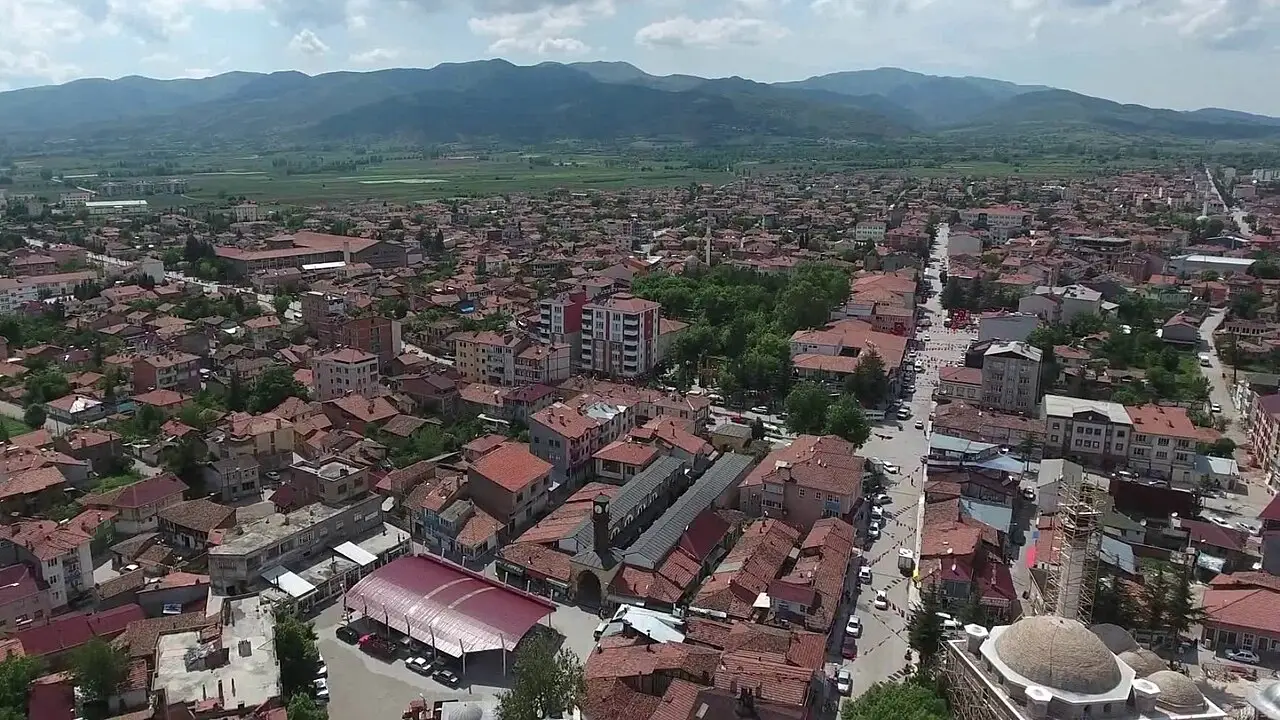
10 places to visit in the Gümüşhacıköy district of Amasya: Gümüşhacıköy Historic Bazaar, Gümüşhacıköy Castle and Gümüşhacıköy Grand Mosque. Plan your trip to Gümüşhacıköy with local food, practical tips and transport information.

Share with friends

The district covers 629 km² and its altitude is 820 metres. Its population is 22,319.

History

It was founded on Etonia, a favourite city of the Eastern Roman Empire. Since its first known inhabitants were the Cimmerians, it was later known as Kimmari. After Artu Bey took the Yöre in the 11th century, the settlement developed by Sadreddin Artık took the names Artıkova and Artıkabat.

Ottoman Period

Because the silver mine was given to Köprülü Mehmet Paşa as a has arpalık (imperial revenue grant), the town was for a time known as Has Arpalık. The Gümüşhacıköy bedesten and clock tower are the old commercial centre of the town and one of the important stops on the international Silk Road.

History and Culture

Until 1891, the district centre was known as Hacıköyü, a subdistrict (bucak) attached to Gümüş; it became a district centre in 1892. According to one source, Gümüşhacıköy was a town founded around AD 140 on the site of today’s district centre. Ownership rights to the silver mines passed to Süleyman Bey from 1797.

Last updated:

Places to Visit in Gümüşhacıköy

  • 6 Historic
  • 3 Religious
  • 1 Nature

Historic Sites 6

Historic

Gümüşhacıköy Historic Bazaar

A historic bazaar from the Ottoman period, whose stone-walled shops and narrow streets reflect traditional Anatolian trade culture. Traditional crafts such as coppersmithing and woodwork are still practised in the bazaar.

View on map
Historic

Gümüşhacıköy Castle

Built in the Seljuk period on a hill near the district centre. From the castle ruins, views of the district centre and the surrounding mountains can be enjoyed.

View on map
Historic

Silver Mine Ruins

The silver mines from which the district takes its name were operated in the Ottoman period. The mine remains shed light on the region's mining history.

View on map
Historic

Gümüşhacıköy Bedesten (covered bazaar) and Clock Tower

According to the source, the bedesten was built by Köprülü Mehmet Paşa in 1660; the clock tower was added in 1900 by Ali Rıza Bey.

View on map
Historic

Maden Hammam

According to the source, a hammam built in the 1820s. It has a large central hamam göbeği (heated central slab).

View on map
Historic

Darphane Mosque

A mint (darphane) building opened in 1248 in the Seljuk period, converted into a mosque in 1866 and opened for worship.

View on map

Religious Buildings 3

Religious

Gümüşhacıköy Grand Mosque

Built in the Ottoman period, this mosque is the most important religious building in Gümüşhacıköy. It has regional architectural features in its woodwork and stone decoration.

View on map
Religious

Köprülü Mehmet Paşa Mosque

According to Wikipedia, it was built in 1660 by Köprülü Mehmet Paşa, destroyed in the 1943 earthquake and rebuilt in 1948.

View on map
Religious

Ali Pir Civan Tomb

A tomb in Sarayözü village belonging to Ali Pir Civan, one of the Alevi pirs.

View on map

Natural Wonders 1

Nature

Gümüşhacıköy Plateaus

The plateaus in the south of the district, with their cool summer air and green meadows, are ideal for hiking.

View on map

Places to Visit Around Amasya Province

See all →

While you are in Gümüşhacıköy, you can also see the highlights of Amasya province. These places are in other districts.

  • Royal Rock Tombs — Monumental Hellenistic-period tombs carved into the limestone rocks on the southern foot of Mount Harşena.
  • Amasya Castle (Harşena) — The castle stands on the steep Mount Harşena above the Yeşilırmak; it changed hands many times in the Persian, Pontic, Roman and Byzantine periods, and the Seljuks repaired it extensively in 1075. The section known as 'Cilanbolu' contains a passage carved into the rock, and the summit offers a bird's-eye view of the city.
  • Yalıboyu Houses — Traditional Amasya houses lined along the bank of the Yeşilırmak, built in the 19th and 20th centuries using the hımış and bağdadi techniques.
  • Hazeranlar Mansion — Built in 1865 and restored in 1979, the mansion can be visited as an ethnography museum, furnished with clothing, carpets, kitchen utensils and jewellery that reflect life in 19th-century Amasya.
  • Sultan Bayezid II Complex — Built by Bayezid II in 1486, this is the largest complex in the city, made up of an inverted-T-plan mosque with two domes, a madrasa, an imaret (soup kitchen), a şadırvan (ablution fountain) and a library.
  • Darüşşifa (Sabuncuoğlu Museum of the History of Medicine and Surgery) — According to its inscription, the darüşşifa (hospital) was built in 1308 under the Ilkhanid ruler Öljeitü and his wife İlduz Hatun, and is known as the first hospital in Anatolia to treat patients with music.

Practical Information for Visiting Gümüşhacıköy

Suggested time
Half a day
Best time to visit
Spring and autumn
Places to visit
10 places

What to Eat in Gümüşhacıköy

Food guide →
  • Keşkek (wheat and meat dish)

    Keşkek, prepared by boiling and pounding cracked wheat and meat for a long time, is the traditional dish of wedding and festival tables in Gümüşhacıköy.

  • Toyga Çorbası (yoghurt, flour and chickpea soup)

    Made with yoghurt, flour and chickpeas, toyga soup is one of the traditional flavours of Gümüşhacıköy cuisine.

  • Amasya Çöreği (walnut and cinnamon pastry)

    Made with walnuts and cinnamon, Amasya çöreği is also popular in Gümüşhacıköy.

  • Tandır Ekmeği (clay oven bread)

    Baked in a clay tandır oven, this traditional bread is indispensable at village tables in Gümüşhacıköy.

  • Leblebi (roasted chickpeas)

    Leblebicilik (roasted chickpea making), a traditional craft, still keeps its importance in the district today.

Culture, Local Products and Economy of Gümüşhacıköy

  • Mining Heritage

    Gümüşhacıköy takes its name from the silver mines worked in the Ottoman period. This mining past forms the basis of the district's cultural identity.

  • Traditional Crafts

    Traditional crafts such as coppersmithing and woodwork are still practised in Gümüşhacıköy.

  • Rural Way of Life

    A traditional rural way of life based on farming and livestock farming is still maintained in Gümüşhacıköy.

Local Products

  • Elma (apples) — The famous apples of the Amasya region are grown in Gümüşhacıköy.
  • Buğday (wheat) — Wheat grown on the Gümüşhacıköy plain is the region's staple agricultural product.
  • Bal (honey) — Flower honey gathered in the mountainous parts of Gümüşhacıköy is a valued natural product of the region.

Economy

Gümüşhacıköy's economy is based on agriculture and livestock farming. Apples, wheat and sugar beet are grown. Small and large livestock farming is an important livelihood in rural areas. Traditional crafts also contribute to the economy.

How to Get to Gümüşhacıköy

Gümüşhacıköy is 55 km from Amasya city centre and is reached by road. Regular minibus services run from Amasya. The nearest airport is Merzifon Airport (25 km).

Get directions on Google Maps Getting to Amasya

Gümüşhacıköy: Frequently Asked Questions

What are the places to see in Gümüşhacıköy?

The 10 highlights of Gümüşhacıköy are: Gümüşhacıköy Historic Bazaar, Gümüşhacıköy Castle, Gümüşhacıköy Grand Mosque, Silver Mine Ruins, Gümüşhacıköy Plateaus, Gümüşhacıköy Bedesten and Clock Tower, Maden Hammam, Darphane Mosque, Köprülü Mehmet Paşa Mosque and Ali Pir Civan Tomb.

What is there to eat in Gümüşhacıköy?

Keşkek, Toyga Çorbası, Amasya Çöreği and Tandır Ekmeği are the standout flavours on Gümüşhacıköy's tables.

What is Gümüşhacıköy famous for?

Gümüşhacıköy is known for apples and its mining heritage. The famous apples of the Amasya region are grown in Gümüşhacıköy.

How do I get to Gümüşhacıköy?

Gümüşhacıköy is 55 km from Amasya city centre and is reached by road. Regular minibus services run from Amasya. The nearest airport is Merzifon Airport (25 km).

How much time should I set aside for a visit to Gümüşhacıköy?

Suggested visit length: half a day. Best time to visit: spring and autumn.

Continue Your Trip

Other Districts of Amasya

Search 81 province guides and 968 district guides.