Iğdır Merkez is located in the subsidence plain formed by the Aras River, at the easternmost tip of Türkiye. Thanks to this mild climate, apricots, cotton, melons, grapes and vegetables grow on the plain; Iğdır is considered the orchard of the region.
History
The region has been settled since the Urartian period. In the Middle Ages it passed under Seljuk, Kara Koyunlu, Ak Koyunlu and Safavid rule. The Sürmeli region, ceded to the Russian Empire by the Treaty of Turkmenchay in 1828, joined Türkiye in 1920 when the Turkish army entered the region after the turbulent years following the First World War. The border was determined by the Treaty of Kars in 1921. Long a district of Kars, Iğdır became a province in 1992.
Climate
Iğdır has a continental climate, but it is noticeably milder and drier than the areas around the plain. Annual rainfall is only around 260 mm; Iğdır is one of the driest places in Türkiye.
History and Culture
The Monument Museum, opened in 1999, is Iğdır’s most important symbol.
Highlights
The name Iğdır comes from Iğdır Beğ, son of Cengiz Alp, the grandson of Oğuz Khan. Research carried out in 1943 identified mounds in the Yaycı Village of Iğdır Merkez.
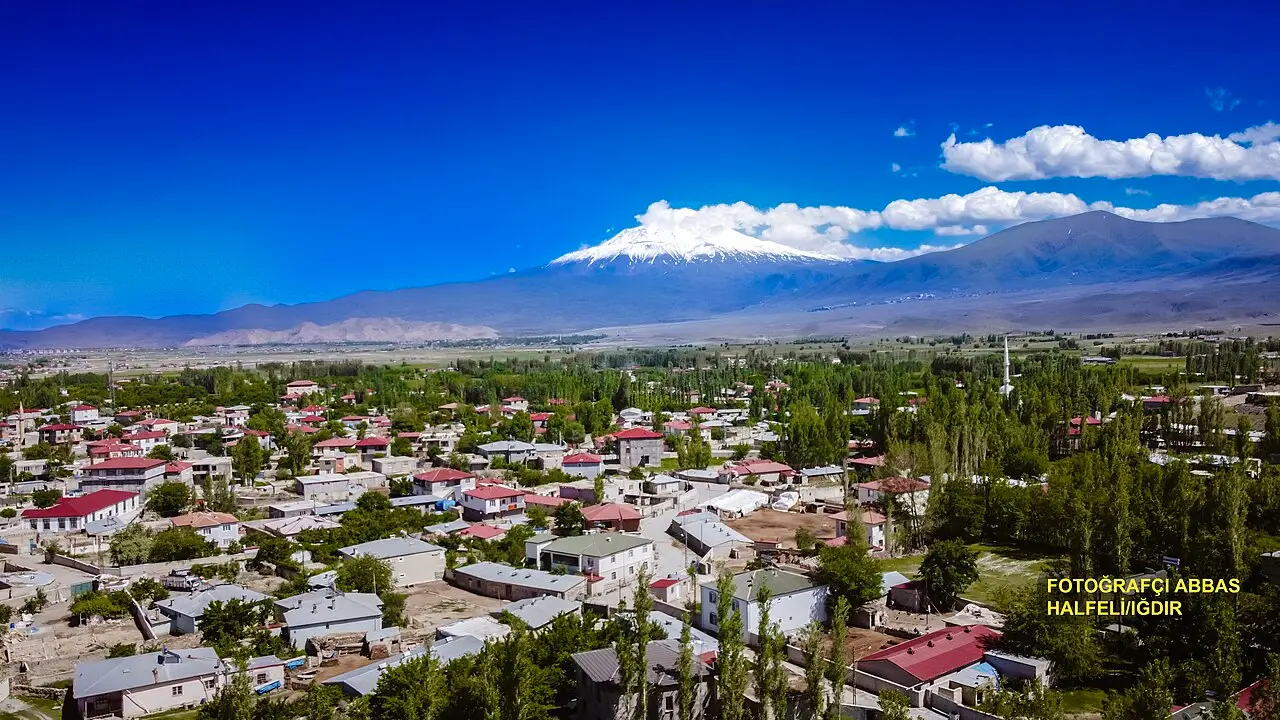
 Photo: Fotoğrafçı Abbas (CC BY-SA 4.0) · Source