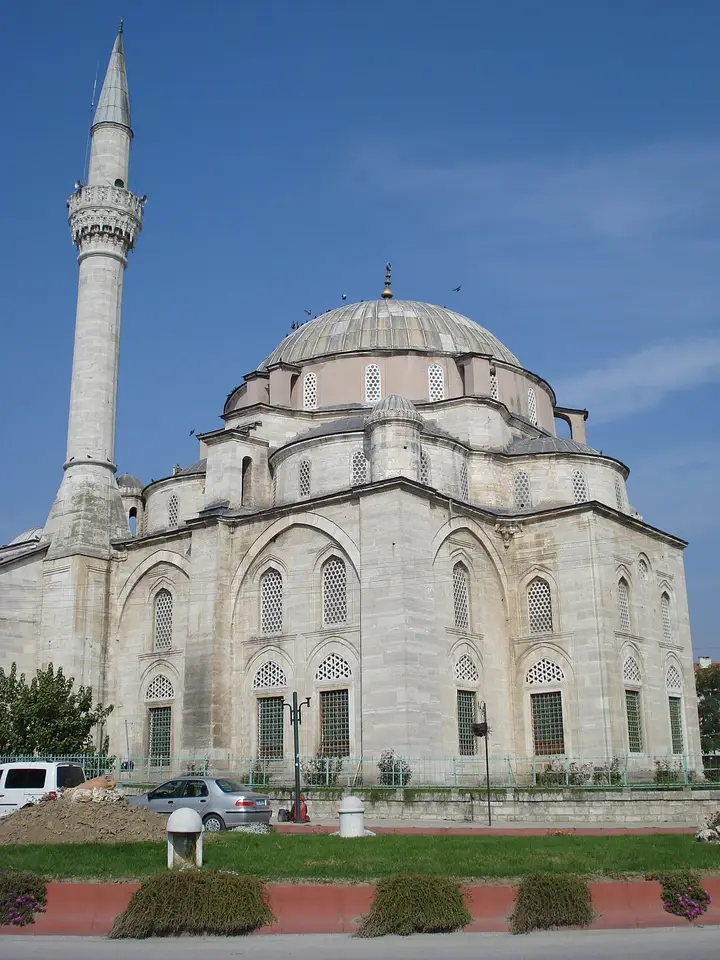
 Photo: Yabancı (CC BY-SA 3.0) · Source
 Cedid Ali Paşa Mosque
The ornately decorated, domed mosque in Hacı Hasan Neighbourhood in Babaeski was commissioned by Cedid Ali Paşa.
View on map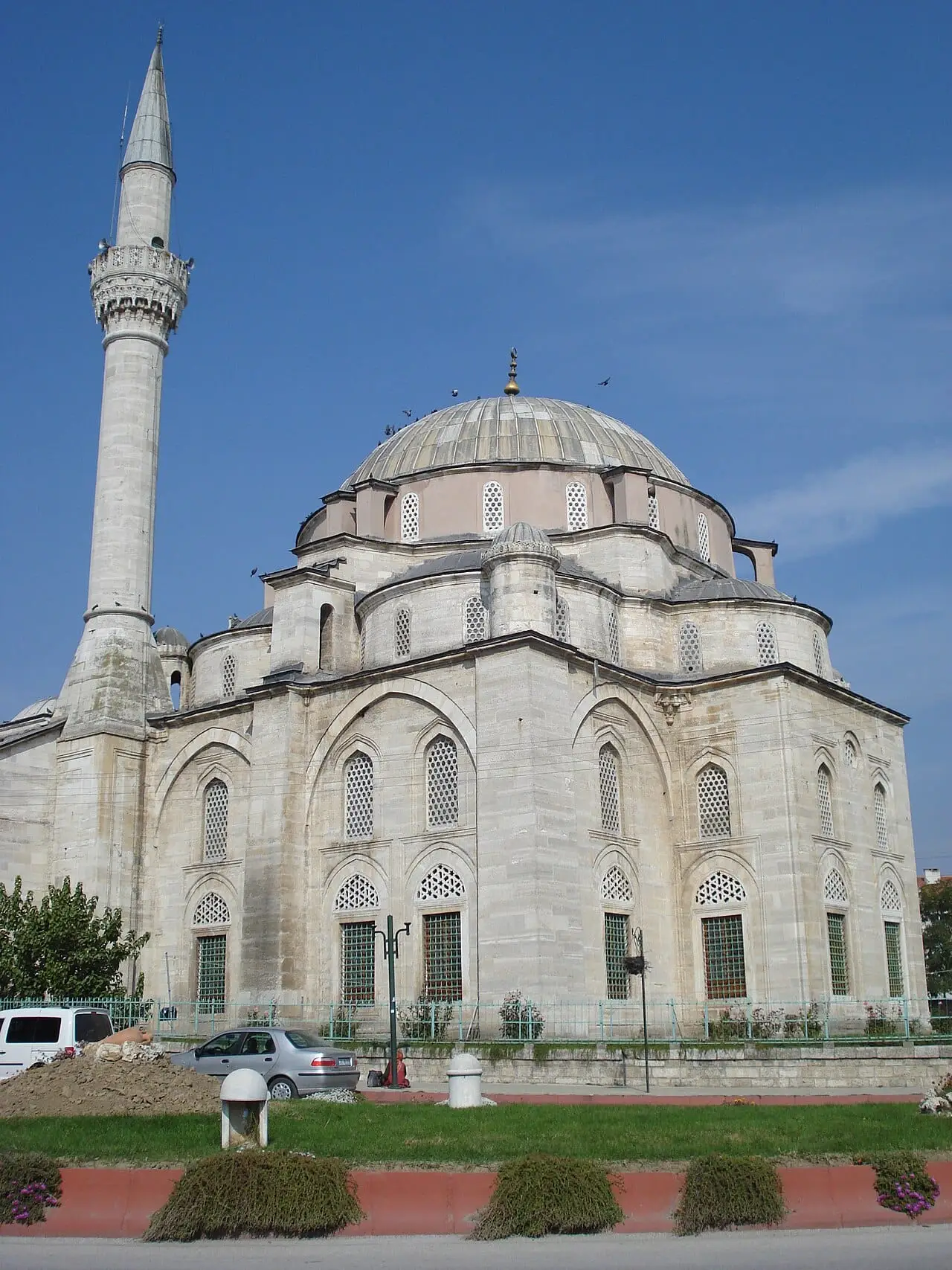 Photo: Yabancı (CC BY-SA 3.0) · Source
 4 places to visit in the Babaeski district of Kırklareli: Cedid Ali Paşa Mosque, Fatih Sultan Mehmet Bridge and Babaeski Tumuli. Plan your trip to Babaeski with local food, practical tips and transport information.
Babaeski is a district of Kırklareli. It lies in the Thracian part of the Marmara Region, with Merkez district to the north, Lüleburgaz to the east, Pehlivanköy to the southwest, Tekirdağ to the south and Edirne to the west. The district lies on the Ergene Plain, with almost no high areas or mountains.
The name Babaeski comes from the Baba Kavağı (Baba poplar) tree found in the area. In the Ottoman period, arrows and bows made from poplar trees around Babaeski were very famous. Babaeski and the Baba poplar are mentioned in the Saltukname.
In the mid-5th century BC, the state founded here by the Odrysian branch of the Thracians was destroyed by Philip II of Macedon. In 46 BC, the Roman Emperor Claudius ruled over the Kırklareli region together with Thrace. The great harbour wall built by Byzantine Emperor Anastasius I, stretching from the Marmara to the Black Sea, passed near Babaeski. Justinian I repaired these walls, but as they were constantly attacked, they have not survived to the present day.
The Babaeski region was annexed to Ottoman territory in 1359 by Balaban Bey, in the reign of Sultan Murad I. In the Byzantine period the place was called Bulgaraphygon. After Fatih Sultan Mehmet’s visit to the area, it was renamed Babaeski after Ahi Baba, who reorganised the region. Evliya Çelebi recorded in his Seyahatname that the works in Babaeski, including the Ali Paşa Mosque, a madrasa, imaret, inn and shops, were built by Semiz Ali Paşa.
Babaeski is the first municipality of Kırklareli province, and became a municipality in 1854. It was occupied by the Bulgarians in 1912 and by the Greeks in 1919. It was liberated from occupation on 9 November 1922, during the Turkish War of Independence.
Babaeski was annexed to Ottoman territory in 1359 by Murad I. In 1879, when Kırklareli became a sanjak, Babaeski was attached to Kırklareli. The municipality of Babaeski was established in 1854. In the Byzantine period, Babaeski was a fortification and bishopric centre in the Thrace region.
Last updated:
Photo: Yabancı (CC BY-SA 3.0) · Source The ornately decorated, domed mosque in Hacı Hasan Neighbourhood in Babaeski was commissioned by Cedid Ali Paşa.
View on mapThe 6-arched stone bridge in Babaeski was built by Sultan Murad IV in 1634–35.
View on mapThe tumuli from the Thracian period around the district are dated to the 5th–3rd centuries BC. Gold jewellery and ceramics found in excavations are displayed in the Kırklareli Museum.
View on mapA masonry bridge faced with dressed stone, built during the reign of Murad IV where the Istanbul–Edirne road crosses the Babaeski Stream (Şeytan Dere). It is still in use.
View on mapWhile you are in Babaeski, you can also see the highlights of Kırklareli province. These places are in other districts; Babaeski is about 40 km from the provincial centre.
Lamb liver wrapped in its membrane and grilled, ciğer sarma is one of Babaeski's famous meze dishes.
Made with fresh cheese, flour and sugar, peynir helvası is a traditional dessert of Thrace. It is made in Babaeski, especially during the winter months.
Pide made with plenty of Thracian sunflower oil, in cheese and minced meat varieties, is indispensable to Babaeski's bakeries.
A dessert produced in the town of Büyükmandıra, attached to Babaeski. It has been registered by the Turkish Patent and Trademark Office as a geographical indication product.
A local product listed among the province's geographical indication products in an announcement by the Kırklareli Governorship.
Babaeski hosts the Cedid Ali Paşa Mosque, one of Mimar Sinan's works in Thrace. This building is an important proof of the Ottoman architectural presence in Rumelia.
Located on the historic caravan route between Istanbul and Edirne, Babaeski was a centre of accommodation and trade for centuries. The remains of inns and caravanserais bear traces of this tradition.
Babaeski is one of Thrace's important agricultural centres. Sunflower, wheat and rice production are the main sources of income. The dairy and dairy products industry has developed. Its location on the Istanbul–Edirne highway supports trade and the service sector.
Babaeski is 40 km from Kırklareli city centre, 190 km from Istanbul and 90 km from Edirne. The E-80 (D-100) highway runs through the district. Intercity bus services run regularly. There is a train station on the Istanbul–Edirne railway line.
The 4 highlights of Babaeski: Cedid Ali Paşa Mosque, Fatih Sultan Mehmet Bridge, Babaeski Tumuli and Babaeski Bridge.
Trakya Usulü Ciğer Sarma, Peynir Helvası, Ayçiçeği Yağlı Pide and Brakana Tatlısı are the standout dishes on the tables of Babaeski.
Babaeski is known for Babaeski Garlic and the Mimar Sinan Heritage. Babaeski Garlic is a protected geographical indication product registered with TÜRKPATENT.
Babaeski is 40 km from Kırklareli city centre, 190 km from Istanbul and 90 km from Edirne. The E-80 (D-100) highway runs through the district. Intercity bus services run regularly. There is a train station on the Istanbul–Edirne railway line.
Suggested visit length: half a day to 1 day. Best time to visit: spring and summer (May–September).