Çorlu Castle
The castle ruins in the district centre date from the Byzantine period. It was restored in the Ottoman period.
View on map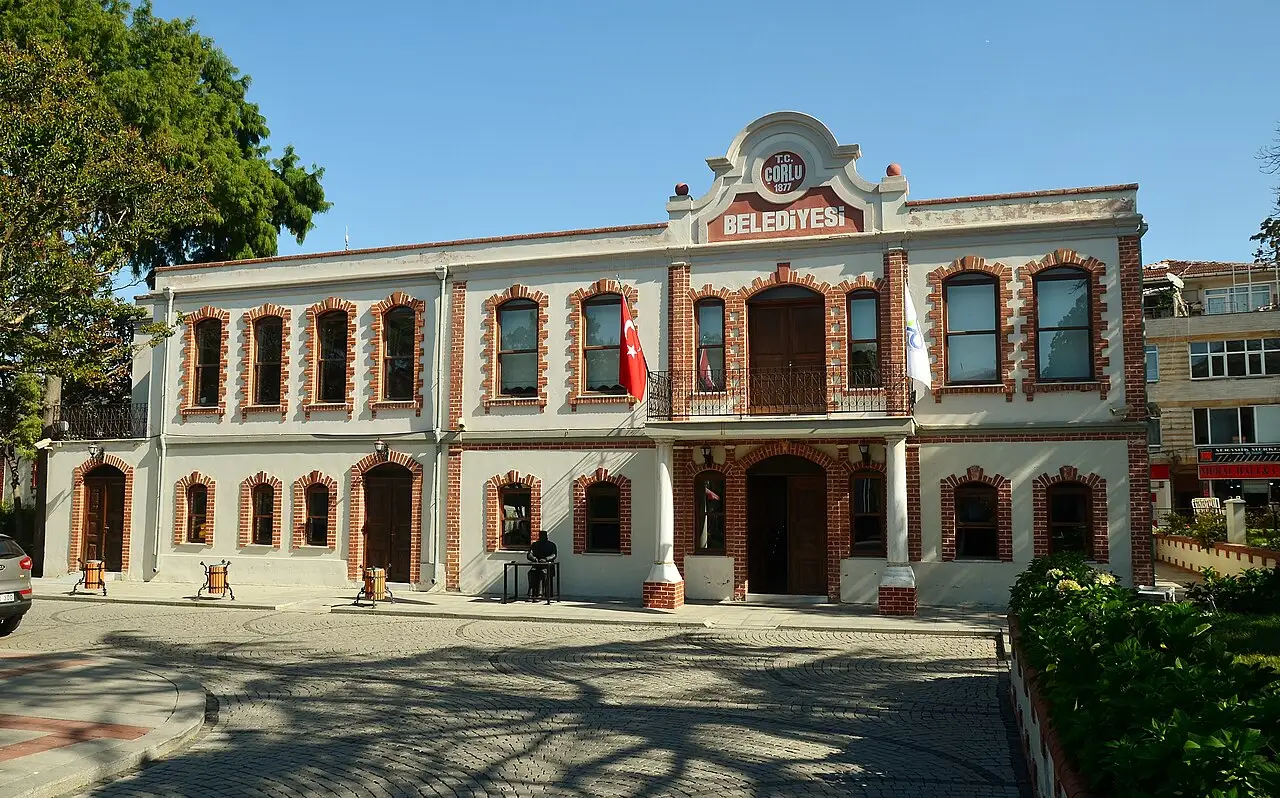 Photo: CeeGee (CC BY-SA 4.0) · Source
 6 places to visit in the Çorlu district of Tekirdağ: Çorlu Castle, Çorlu Atatürk House and Çorlu Deresi Park. Plan your trip to Çorlu with local food, practical tips and transport information.
Çorlu is a district of Tekirdağ province and, after Istanbul, is the second-largest settlement in Turkish Thrace. The district covers an area of 531 km² and has a population of 306,939; its average elevation is 148 metres above sea level. Çorlu lies in the Ergene basin, on a plain in the middle of Thrace, and is one of Türkiye’s most developed districts.
The name Çorlu appears in old atlases in forms such as “Tzarylus”, “Tzurulum” and “Tzurulus”. In the Byzantine period, because its cheese was famous, it was called Tribiton, meaning “cheese town”.
Over the course of history it came under Phrygian, Greek, Scythian, Persian, Macedonian, Roman and Byzantine rule. Çorlu was conquered by Süleyman Pasha in 1357 and joined Ottoman territory. It was conquered again by Şehzade Murad in 1361 and came definitively under Ottoman rule. Çorlu’s first mosque was built during the reign of Mehmed II and was named the Fatih Mosque.
Çorlu was conquered by Şehzade Murad in 1361 and definitively came under Ottoman rule. After Çorlu was invaded by the Greeks, it was retaken on 1 November 1922.
Last updated:
The castle ruins in the district centre date from the Byzantine period. It was restored in the Ottoman period.
View on mapThe house where Atatürk stayed during his visit to Çorlu has been laid out as a museum. This building, which sheds light on the region's past through its historic fabric, offers visitors an authentic experience.
View on mapA park laid out along the stream that runs through the district centre, with walking paths and resting areas, and a place favoured by the city's residents.
View on mapThe mansion in Cemaliye Neighbourhood, estimated to be around 150 years old, was opened to visitors on 26 February 2019 as the Muhacir House Museum.
View on mapA mosque commissioned by Suleiman the Magnificent in 1521 from the architect Acem Ali, and counted among Çorlu's main historic monuments.
View on mapA mini zoo established by the Park and Gardens Directorate of Çorlu Municipality at its facility in Havuzlar Neighbourhood, with farm and poultry species.
View on mapWhile you are in Çorlu, you can also see the highlights of Tekirdağ province. These places are in other districts.
Tekirdağ köftesi is also served in Çorlu with the traditional recipe. This flavour, which holds an important place on the tables of local people, is prepared using traditional recipes.
Trakya ciğeri, made by frying fresh beef liver in thin slices, is one of Çorlu's popular flavours.
Kuzu ciğer sarma, one of Thrace's established dishes, has gained fame in Çorlu through a special recipe prepared here.
Çorlu is one of Thrace's largest industrial and trade centres. The textile, food and chemical industries form the district's economic identity.
Çorlu is the largest and most developed district of Tekirdağ. Textiles, food, chemicals and automotive supply industry are the main economic activities. Organised industrial zones are concentrated in the district.
Çorlu is 100 km from Istanbul. The TEM motorway and the D-100 highway pass through the district. Çorlu Atatürk Airport lies within the district boundaries.
The 6 highlights of Çorlu are: Çorlu Castle, Çorlu Atatürk House, Çorlu Deresi Park, Historic Çorlu House, Süleymaniye Mosque and Çorlu Mini Zoo.
Tekirdağ Köftesi, Trakya Ciğeri and Çorlu Kuzu Ciğer Sarma are the standout flavours on Çorlu's tables.
Çorlu is known for Çorlu Kuzu Ciğer Sarma and Industry and Trade Culture. It is a product registered as a protected geographical indication with TÜRKPATENT.
Çorlu is 100 km from Istanbul. The TEM motorway and the D-100 highway pass through the district. Çorlu Atatürk Airport lies within the district boundaries.
Suggested visit length: half a day. Best time to visit: spring and autumn.