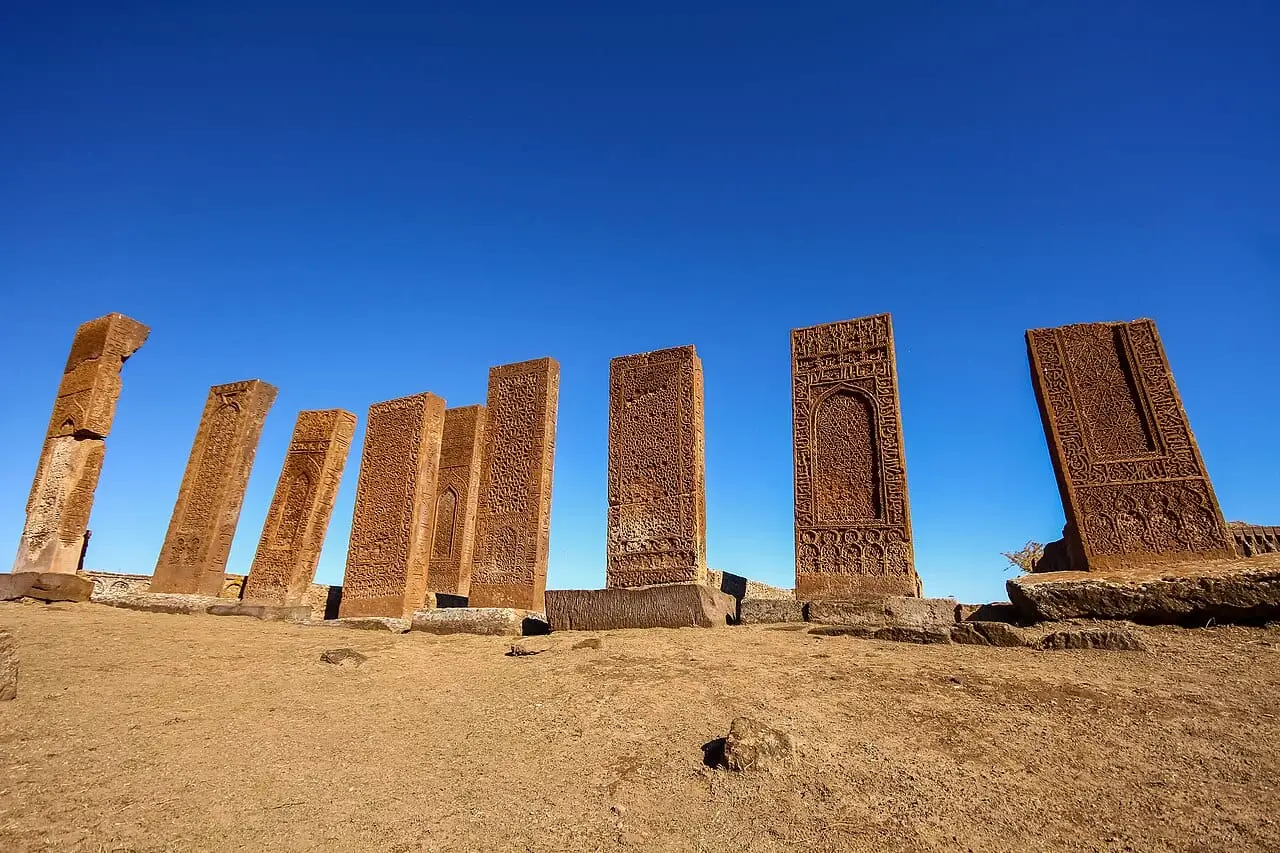
8 places to visit in the Ahlat district of Bitlis: Ahlat Seljuk Meydan Cemetery, Ahlat Castle and Çifte Kümbetler (twin tomb towers). Plan your trip to Ahlat with local food, practical tips and transport information.

Share with friends

History

In the Seljuk era Ahlat served as the capital of the Ahlatşahs Principality. It is an Oghuz–Turkmen city and, for the Ottomans, a city inherited from the ancestors. Just before the Battle of Malazgirt, on Alp Arslan’s orders, the Seljuk and Turkmen begs completed their preparations in Ahlat and launched campaigns of conquest in eastern and central Anatolia. The Ahlat Seljuk Meydan Cemetery is the largest Muslim cemetery in the world.

Geography

To the north of the district lie the Bulanık and Malazgirt districts of Muş province; to the west are Güroymak and Muş province; and to the south lies Lake Van.

History and Culture

The tradition of cane-making remains an important cultural and artistic activity today. Ahlat was the capital of the Ahlatşahs Principality in the Seljuk era, an Oghuz–Turkmen city. Ahlat’s history goes back to around 900 BC. The Urartian and Ottoman Old Settlement Tombstones were inscribed on UNESCO’s Tentative List of World Heritage in 2000.

Last updated:

Places to Visit in Ahlat

  • 5 Historic
  • 2 Nature
  • 1 Attraction

Historic Sites 5

Ahlat Seljuk Meydan Cemetery - Ahlat Photo: Mehmetkrckrc (CC BY-SA 4.0) · Source
Historic

Ahlat Seljuk Meydan Cemetery

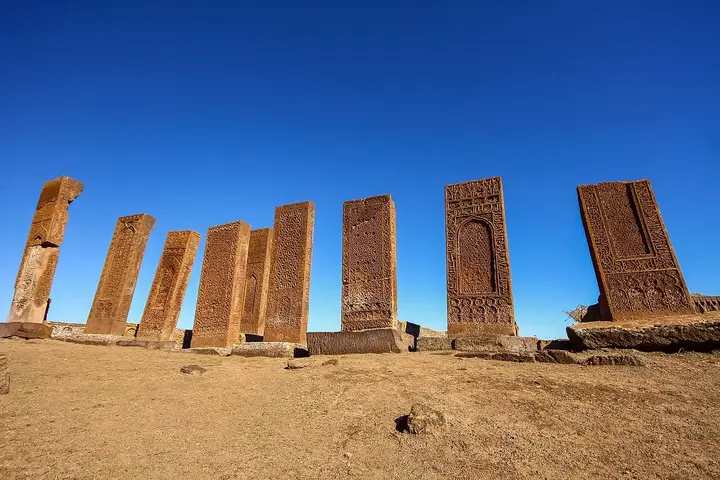
The largest Turkish-Islamic cemetery in the world, the Ahlat Seljuk Meydan Cemetery covers an area of 210 dönüm and contains more than 8,200 tombstones. Monumental tombstones dating from the 12th–15th centuries are the most magnificent examples of Seljuk stonework.

View on map
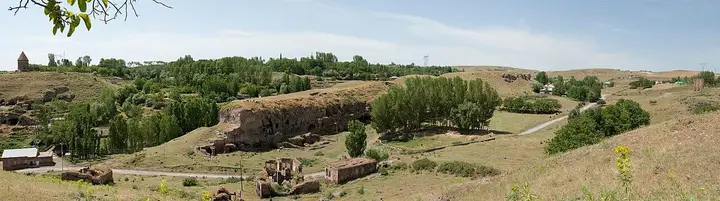
Ahlat Castle - Ahlat Photo: Dosseman (CC BY-SA 4.0) · Source
Historic

Ahlat Castle

Ahlat Castle, on the shore of Lake Van, was built in the Urartian period and expanded in the Seljuk period. Its walls and towers are partly standing and offer views of the lake.

View on map
Historic

Çifte Kümbetler (twin tomb towers)

Seljuk-period kümbets dating from the 13th century are among Ahlat's most important architectural works. With their geometric decoration and stonework, they are outstanding examples of Seljuk funerary architecture.

View on map
Historic

Ahlat Seljuk Cemetery

A historic cemetery known for its tombstones from the Seljuk period. According to Wikipedia, it is the largest Muslim cemetery in the world.

View on map
Historic

Emir Bayındır Kümbeti (Emir Bayındır Tomb)

A kümbet built in the 15th century.

View on map

Natural Wonders 2

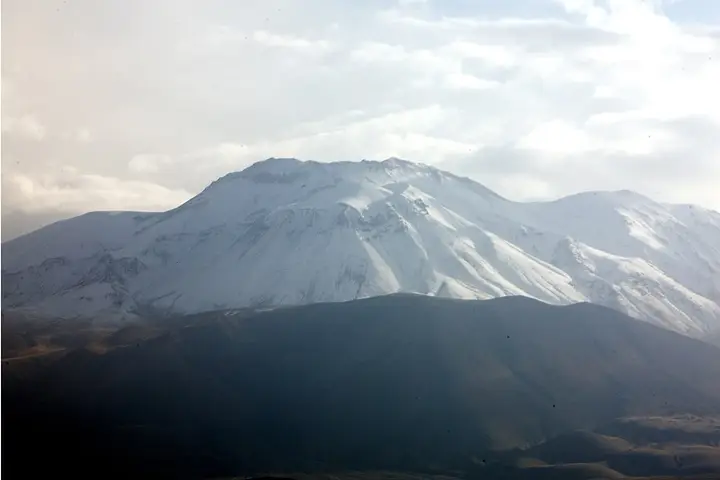
Süphan Mountain - Ahlat Photo: EvgenyGenkin (CC BY 2.5) · Source
Nature

Süphan Mountain

At 4,058 metres, Süphan Mountain is Türkiye's third-highest mountain and lies north of Ahlat. Popular for mountaineering, trekking and winter sports, Süphan offers a magnificent view together with Lake Van.

View on map
Nature

Nemrut (Mount Nemrut)

One of the notable volcanoes on Earth, it lies west of Ahlat.

View on map

Attractions 1

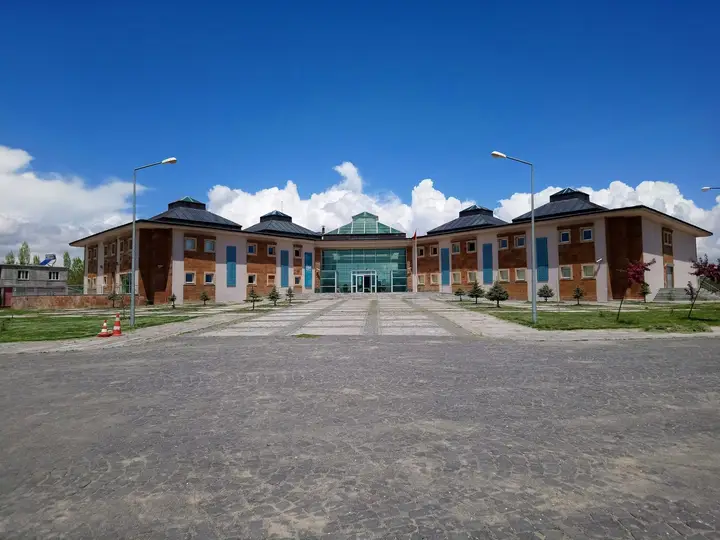
Ahlat Museum - Ahlat Photo: Wikipedia (CC BY-SA) · Source
Attraction

Ahlat Museum

Ahlat Museum displays archaeological finds from the Seljuk period, fragments of tombstones and ethnographic objects. It is an important stop for understanding Ahlat's rich history.

View on map

Places to Visit Around Bitlis Province

See all →

While you are in Ahlat, you can also see the highlights of Bitlis province. These places are in other districts; Ahlat is about 50 km from the provincial centre.

  • Ahlat Ulu Kümbet (Great Tomb) — The largest Seljuk tomb in Ahlat; with its cylindrical body and cut-stone decoration, it is the most monumental example of Ahlat tomb architecture.
  • Nemrut Crater Lake — In the caldera of the Nemrut stratovolcano between Tatvan, Ahlat and Güroymak, at 2,247 metres, this is Türkiye's largest crater lake; its deepest point is 155 metres.
  • Bitlis Castle — A castle built on steep rocks between two streams in the city centre, with 2,800 metres of walls and 670 crenellations; tradition attributes its construction to Badlis, a commander of Alexander the Great (312 BC).
  • Bitlis Grand Mosque — According to its inscription, the mosque was built in 1153 by the Marwanid Ebu'l-Muzaffer Muhammed; it was damaged during the Russian occupation and underwent extensive repairs in 1985.
  • Şerefiye Mosque — One of the city's important historic mosques, built by the Şerefhans (Sharafkhans) in the period of the Bitlis Emirate.
  • İhlasiye Madrasa — A madrasa built by the Seljuks in 1216 and repaired by Şeref Han in 1589; the tombs of the Şerefhan family lie in its garden, and today it is used as the Provincial Directorate of Culture and Tourism.

Practical Information for Visiting Ahlat

Suggested time
1–2 days
Best time to visit
Summer months (June–September)
Places to visit
8 places

What to Eat in Ahlat

Food guide →
  • Büryan Kebabı (earth-oven lamb)

    Prepared by slow-cooking lamb in an earth tandır, büryan kebabı is Ahlat's best-known dish.

  • Çiğ Köfte

    Made by kneading fine bulgur with spices, çiğ köfte is an indispensable dish on guest tables in Ahlat.

  • Otlu Peynir (herbed cheese)

    Made with wild herbs gathered from the highland pastures, otlu peynir is indispensable on Ahlat's breakfast tables. It is eaten after months of maturing.

Culture, Local Products and Economy of Ahlat

  • Legacy of the Battle of Malazgirt

    The Battle of Malazgirt, fought in the nearby region in 1071, marked the beginning of the Turkification of Anatolia. In this period Ahlat was one of the first settlement centres of the Seljuk Turks in Anatolia.

  • Seljuk Stonework

    Ahlat contains some of the richest examples of Seljuk stonework. The geometric and floral motifs on the tombstones represent the peak of Seljuk art.

Local Products

  • Ahlat Bastonu (Ahlat walking stick) — Ahlat Bastonu was registered as a protected geographical indication on 26 December 2017 (TÜRKPATENT registration no. 298). Product group: handicrafts other than carpets, kilims and textiles. Registered by: Ahlat District Governorship.
  • Ahlat Stone — Ahlat's volcanic red stone has been used as a building material for centuries. Seljuk tombstones and kümbets were built from this stone.
  • Ahlat Honey — Flower honey obtained from the highland pastures on the slopes of Süphan Mountain, one of the region's valued natural products.

Economy

Ahlat's economy consists of agriculture, livestock farming and tourism. Grain and fruit are grown on the shore of Lake Van. Cultural and nature tourism is developing thanks to the Seljuk Meydan Cemetery and Süphan Mountain. Ahlat stone quarrying also contributes to the economy.

How to Get to Ahlat

Ahlat is 50 km from Bitlis provincial centre and 25 km from Tatvan. It is 50 km from Bitlis–Muş Airport. Intercity bus services run.

Get directions on Google Maps Getting to Bitlis

Ahlat: Frequently Asked Questions

What is worth seeing in Ahlat?

The 8 leading places in Ahlat: Ahlat Seljuk Meydan Cemetery, Ahlat Castle, Çifte Kümbetler, Süphan Mountain, Ahlat Museum, Ahlat Seljuk Cemetery, Emir Bayındır Tomb and Nemrut.

What is there to eat in Ahlat?

Büryan Kebabı, Çiğ Köfte and Otlu Peynir are the standout dishes on Ahlat's tables.

What is Ahlat famous for?

Ahlat is known for Ahlat Bastonu and the Legacy of the Battle of Malazgirt. Ahlat Bastonu is registered with TÜRKPATENT as a protected geographical indication product.

How do I get to Ahlat?

Ahlat is 50 km from Bitlis provincial centre and 25 km from Tatvan. It is 50 km from Bitlis–Muş Airport. Intercity bus services run.

How much time should I set aside for a visit to Ahlat?

Suggested visit length: 1–2 days. Best time to visit: summer months (June–September).

Continue Your Trip

Other Districts of Bitlis

Search 81 province guides and 976 district guides.