Palu Historic Houses
Traditional stone houses in the district centre reflect the civil architecture of Eastern Anatolia. Designed to suit the climate of the region, they have thick stone walls and flat roofs.
View on map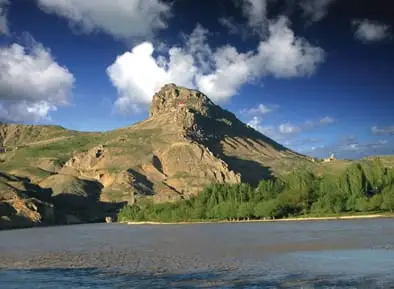 Photo: Wikipedia (CC BY-SA) · Source
 9 places to visit in the Palu district of Elazığ: Palu Castle, Murat River Valley and Palu Grand Mosque. Plan your trip to Palu with local food, practical tips and transport information.
Palu is a district of Elazığ province in the Eastern Anatolia Region. The district was founded on the banks of the Murat River. Its history goes back to the 2000s BC, and it is one of the oldest settlement centres in the region. The district has 1 town (belde), 36 villages and 10 neighbourhoods.
The oldest known peoples in the region were the Hurrians, Hittites and Urartians. A stone inscription of the Urartian king Menuas has been found at Uratula, and from it we learn that Palu was called Sebitaruas. The Behistun Inscription, written between 522 and 486 BC, mentions the Kingdom of Sophene. With the Battle of Manzikert in 1071, the region passed under Seljuk rule. On his return from the Eastern Campaign, Yavuz Sultan Selim granted the Palu region as a timar to Karacimşit Bey, one of his commanders.
The district covers 730 km² and its average elevation above sea level is 869 metres. It borders Arıcak and Alacakaya to the south, Kovancılar to the north, Bingöl city centre to the east, Genç to the south-east and Elazığ city centre to the west. 70 per cent of the towns and villages of the district are set on mountainous and rugged terrain. The highest point of the Akdağlar, which form part of the Eastern Taurus range, rises to 2,500 metres.
Palu lies in a continental climate zone, with an annual average temperature of around 13 °C. Rainfall generally occurs in spring and autumn. Since the construction of the Keban Dam, the climate of Palu and its surroundings has become noticeably milder.
The mountainous nature of most of the district’s land has a negative effect on land-based agriculture. Among the places to visit and see in the district are Palu Castle, the cuneiform stone inscriptions of the Urartians and the historic mosques.
Palu’s history goes back to the 2000s BC, and it is one of the oldest settlement centres in the region. Palu served as the capital of the Kingdom of Sophene. The region passed under Seljuk rule with the Battle of Manzikert in 1071. The cuneiform stone inscription at Palu Castle provides information about the Urartian campaigns to the west.
Palu has been an important settlement area of the region since ancient times, and finds dating to around 5000 BC exist. Palu Castle, built by the Urartian king Menuas, has a history of approximately 3,000 years.
Last updated:
Traditional stone houses in the district centre reflect the civil architecture of Eastern Anatolia. Designed to suit the climate of the region, they have thick stone walls and flat roofs.
View on mapA historic bridge listed among the places to visit and see in the district, according to Wikipedia.
View on map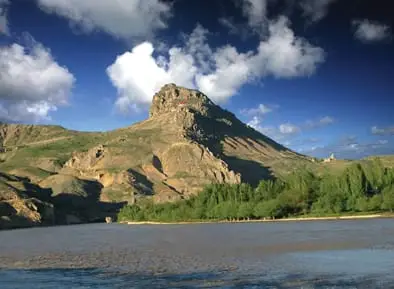 Photo: Wikipedia (CC BY-SA) · Source
 A historic castle in the district. Its structure from the Urartian period and later periods has been preserved.
View on mapA stone inscription written in cuneiform, located in a niche north-west of Palu Castle.
View on map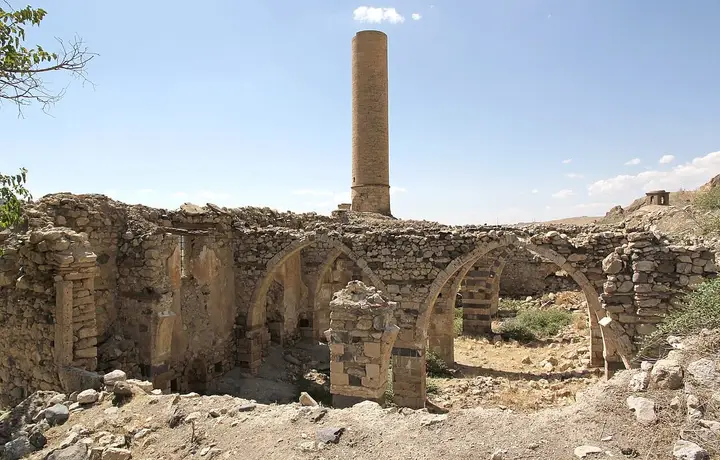 Photo: Ingeborg Simon (CC BY-SA 3.0) · Source
 The Palu Grand Mosque, built in the Ottoman period, stands out for its stone craftsmanship and its simple architecture. As the most important religious building in the district, the mosque is part of the Ottoman-period cultural heritage of the region.
View on mapA mosque built in the 16th century in the classic Ottoman style with a single dome. Its side walls and the shaft of its minaret have survived.
View on mapThe valley area of the Murat River, which flows along the edge of the district.
View on mapFlows through the lands of Palu; its valley is generally steep and precipitous.
View on mapWhile you are in Palu, you can also see the highlights of Elazığ province. These places are in other districts; Palu is about 70 km from the provincial centre.
A meatball made with fine bulgur and minced meat, cooked in water with a tomato sauce. It resembles Harput köftesi, but its flavour differs through a spice mix specific to Palu; it is the signature dish of the district.
Prepared by slow-cooking lamb for hours in an earthen tandoor. Prepared on special days and at festivals in the villages of Palu, tandır kebabı is one of the most beloved delicacies of the region.
A traditional soup made with lentils, bulgur and yoghurt, one of the winter dishes of Eastern Anatolian cuisine. It is frequently eaten in Palu on cold winter days.
Palu Tava is one of the local main dishes specific to Elazığ.
Palu has been a place of settlement in the Murat River valley for thousands of years. Bearing traces of the Urartian, Seljuk, Artuqid and Ottoman periods, the district reflects the historical depth of Eastern Anatolia.
A traditional Eastern Anatolian way of life continues in the villages of Palu. Life based on livestock farming, agriculture and handicrafts is supported by social solidarity and neighbourly relations.
The economy of Palu is based on agriculture, livestock farming and small-scale trade. Apricots, walnuts and cereals are grown in the Murat River valley. Small and large livestock farming are important sources of livelihood.
Palu is 70 km from Elazığ city centre. It is reached by road via Elazığ. There are minibus services from Elazığ.
The 9 highlights of Palu are: Palu Castle, Murat River Valley, Palu Grand Mosque, Palu Historic Houses, Palu Castle Inscription, Small Mosque, Kara Cemşit Bey Complex, Historic Palu Bridge and Murat River.
Palu Meatballs, Tandır Kebabı and Kelecoş are the standout dishes on tables in Palu.
Palu is known for its Palu Tava and Civilisations of the Murat River. It is a product registered with TÜRKPATENT as a protected geographical indication.
Palu is 70 km from Elazığ city centre. It is reached by road via Elazığ. There are minibus services from Elazığ.
Suggested visit length: 1 day. Best time to visit: spring and autumn.