Antiokheia Pisidia Ancient City
An ancient city founded by the Seleucids in 275 BC as an advanced outpost against the Galatians.
View on map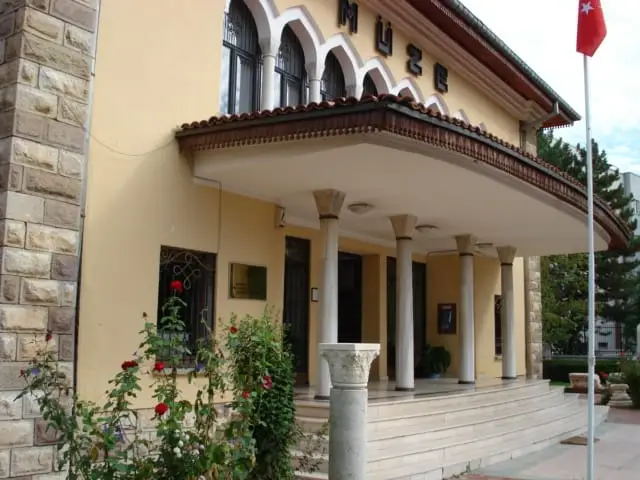 Photo: Maderibeyza at Turkish Wikipedia (CC BY-SA 3.0) · Source
 4 places to visit in the Yalvaç district of Isparta: Antiokheia Pisidia Ancient City, Yalvaç Museum and Saint Paul Trail. Plan your trip to Yalvaç with local food, practical tips and transport information.
Yalvaç is a district of Isparta province, and one of its most popular places is the historic Çınaraltı plane tree. The tree, which stands in the centre of the district, was planted in the 1200s and placed under protection on 11 May 1992. Yalvaç is the end point of the Saint Paul Trail, Turkey’s second long-distance walking route. The district covers 1,402 km², and its elevation is 1,101 metres.
Because the Oghuz tribe that settled here in the Seljuk period were known as ‘Yalvaçlılar’, the settlement came to be called ‘Yalvaç’. The word ‘Yalvaç’ means ‘prophet, messenger, envoy, guide’ in the dictionary.
Yalvaç is a very ancient settlement, and research shows that its history goes back to the Late Neolithic period. In ancient Anatolia, the settlement in the Pisidia region came under Persian rule in 546 BC. In 275 BC, the Seleucids founded the city of Antiocheia Pisidia as an advanced outpost against the Phrygians. After the Battle of Myriokephalon, Yalvaç passed under the rule of the Anatolian Seljuk State, and permanent Turkish settlement began.
Today Yalvaç is one of the 21 Cittaslow (Slow City) towns in Türkiye and one of 287 worldwide. It earned this title at the 2012 Cittaslow General Assembly held in Novellara, Italy, thanks to its work to protect its historical and cultural values in line with sustainable development goals.
Yalvaç lies in the western part of the Mediterranean Region, in the northernmost part of the Lakes District. It is the largest and northernmost district in Isparta province after the city centre. The highest point of the district is Gelincik Ana Peak, at 2,531 metres, on the Yalvaç–Çay border.
After the proclamation of the Republic, Yalvaç was attached to Isparta. Yalvaç was attached to Konya in 1840, and a municipal administration was set up in 1864. Yalvaç is one of the Cittaslow (Slow City) towns.
The Battle of Myriokephalon in 1176, between Sultan Kılıç Arslan II and the Byzantine Emperor Manuel Komnenos, definitively brought Yalvaç under Turkish rule. Yalvaç was founded as Antiocheia between 300 and 280 BC by Antiochus I as a Seleucid colony.
Last updated:
An ancient city founded by the Seleucids in 275 BC as an advanced outpost against the Galatians.
View on map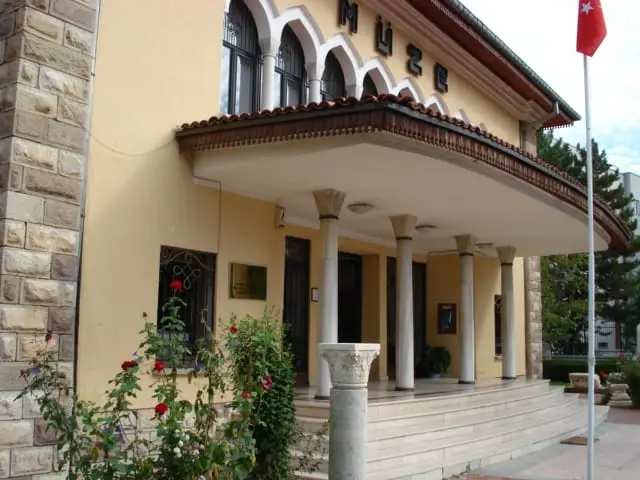 Photo: Maderibeyza at Turkish Wikipedia (CC BY-SA 3.0) · Source
 Traditional two-storey Yalvaç houses built from mudbrick and timber. They reflect the architectural features of the Turkish house and are also known as Yalvaç Houses.
View on mapWhile you are in Yalvaç, you can also see the highlights of Isparta province. These places are in other districts; Yalvaç is about 105 km from the provincial centre.
Thin-crusted pide with minced meat, baked in a stone oven. It is served hot with a layer of butter and is the district's best-known dish.
A traditional dessert made with fresh cheese, flour and sugar, caramelised in a pan. It is an essential dessert at weddings and festivals in Yalvaç.
Wheat and lamb are cooked together and pounded for a long time. Keşkek, prepared in Yalvaç especially for weddings, is served drizzled with butter.
Hamursuz bread with a registered geographical indication, produced through the bakery tradition kept alive by women in Yalvaç.
A dessert made by thickening milk with yoghurt water, layering it with wafers and pouring syrup over it. It is favoured at weddings, festivals and special occasions.
Buffalo cream specific to Yalvaç.
The most common börek in Yalvaç, served to guests at festivals and weddings. The local flavours made in its bakeries have become a kind of fast food.
Another local dish known in Yalvaç, made from beans or spinach.
Antiokheia Pisidia is an important stop in Christian history, where Saint Paul preached on his first missionary journey. For this reason, Christian pilgrims from around the world visit Yalvaç.
The traditional houses of Yalvaç are cultural heritage buildings that reflect the way of life of the local people. Some houses have been restored and opened to visitors as house museums.
Yalvaç's economy is based on agriculture, livestock farming and tourism. Apples, roses, grain and sugar beet are the main crops. Cultural tourism, thanks to the ancient city of Antiokheia, is an important source of income.
Yalvaç is 105 km from Isparta city centre. It lies on the Afyon–Antalya highway. Isparta Süleyman Demirel Airport is about 120 km away. Minibus and bus services connect the district with Isparta and neighbouring provinces.
The 4 standout places in Yalvaç are Antiokheia Pisidia Ancient City, Yalvaç Museum, Saint Paul Trail and Old Yalvaç Houses.
Yalvaç Pidesi, Höşmerim, Keşkek and Yalvaç hamursuzu (hamursuz bread) are the standout dishes on Yalvaç's tables.
Yalvaç is known for Yalvaç Hamursuzu and the Saint Paul Pilgrimage Route. It is a product registered with TÜRKPATENT as a protected geographical indication.
Yalvaç is 105 km from Isparta city centre. It lies on the Afyon–Antalya highway. Isparta Süleyman Demirel Airport is about 120 km away. Minibus and bus services connect the district with Isparta and neighbouring provinces.
Suggested visit length: 1 day. Best time to visit: spring and summer (April–September).