10 places to visit in the Safranbolu district of Karabük: Safranbolu Historic Houses, Cinci Han and Kaymakamlar House Museum. Plan your trip to Safranbolu with local food, practical tips and transport information.

Share with friends

History

The town lies in the ancient region of Paphlagonia, and its known history goes back to around 3000 BC. Safranbolu was taken by the Turks in 1196 by Muhiddin Mesut Şah, son of the Seljuk Sultan Kılıç Arslan II. During the Ottoman period, especially in the 17th century, it reached its cultural and economic peak as a lodging centre on the Istanbul–Sinop caravan route. The town takes its name from saffron, a rare plant grown in the region. According to the 2024 address-based population census, the town’s population is 52,140.

History and Culture

Safranbolu was inscribed on the UNESCO World Heritage List on 17 December 1994. Safranbolu reached its peak in the 17th century as a lodging centre on the Istanbul–Sinop caravan route. In 1196, it came under Turkish rule through Muhiddin Mesut, a Seljuk prince.

Last updated:

Places to Visit in Safranbolu

  • 4 Historic
  • 2 Religious
  • 1 Museum
  • 1 Nature
  • 2 Cultural

Historic Sites 4

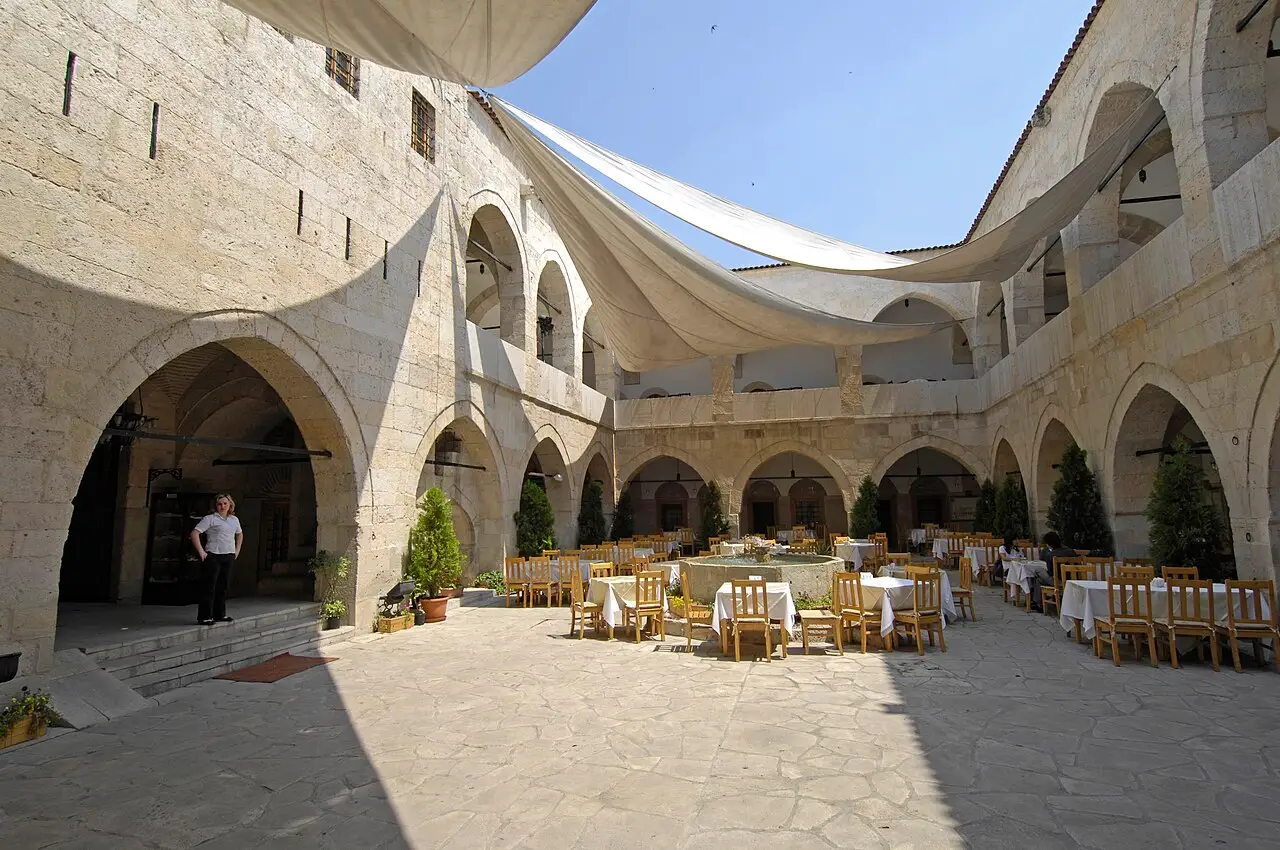
Cinci Han - Safranbolu Photo: Dosseman (CC BY-SA 4.0) · Source
Historic

Cinci Han

A han built in 1645 by Hüseyin Efendi, known as Cinci Hoca, is one of the important examples of Ottoman caravanserai architecture. The three-storey building now operates as a hotel.

View on map
Historic

Kaymakamlar House Museum

A typical Safranbolu house, arranged as a museum. Ottoman-period lifestyle, furniture and household objects are on display.

View on map
Historic

İncekaya Aqueduct

This aqueduct over the Tokatlı Canyon was built to bring water to Safranbolu.

View on map
Historic

Yörük Village

A Turkmen village regarded as a small model of Safranbolu, designated an urban conservation area in 1997.

View on map

Religious Buildings 2

Religious

İzzet Mehmet Paşa Mosque

A mosque built in 1796 by Grand Vizier İzzet Mehmet Paşa, the largest mosque in Safranbolu. The building, which blends Baroque and Ottoman architecture, is notable for its decorative pen-work.

View on map
Religious

Köprülü Mehmet Paşa Mosque

A mosque in the Safranbolu Bazaar, dating from 1661 and displaying 17th-century features.

View on map

Museums 1

Museum

Safranbolu City History Museum

A two-storey stone building that was once the government building, displaying examples of everyday life in Safranbolu.

View on map

Natural Wonders 1

Nature

Tokatlı Canyon

The Tokatlı Canyon, south of Safranbolu, is notable for its steep cliffs reaching a depth of 100 metres. A glass terrace over the canyon offers panoramic views.

View on map

Cultural Venues 2

Cultural

Safranbolu Historic Houses

Historic houses that reflect classical Ottoman urban architecture.

View on map
Cultural

Yemeniciler Arasta

An old bazaar of the yemeni guild, with 48 wooden shops, adjoining the Köprülü Mehmet Paşa Mosque.

View on map

Places to Visit Around Karabük Province

See all →

While you are in Safranbolu, you can also see the highlights of Karabük province. These places are in other districts.

  • Historic Houses of Safranbolu (UNESCO) — A historic town that preserves its 18th- and 19th-century Ottoman townscape as a whole, with whitewashed mansions with timber overhangs.
  • Cinci Han — A large caravanserai in the centre of Safranbolu Çarşı, built between 1640 and 1648 by Cinci Hoca (Hüseyin Efendi), the tutor of Sultan İbrahim.
  • Tokatlı Canyon and Glass Viewing Terrace — A deep canyon just north of Safranbolu, with a glass viewing terrace extending over the canyon and a walking path along the valley.
  • Hıdırlık Hill — A viewpoint overlooking Safranbolu Çarşı, with the Hasan Paşa Tomb; the finest panorama of the houses is seen from here.
  • Kaymakamlar House — A museum house in Safranbolu Çarşı that uses tableaux to show the room, sofa and kitchen layout of a traditional Safranbolu house.
  • Mencilis Cave — One of the longest caves in Türkiye, in the village of Bulak, made up of three interconnected levels; Safranbolu's drinking water comes from its lowest level.

Practical Information for Visiting Safranbolu

Suggested time
2 days
Best time to visit
Spring and autumn (for the October saffron harvest)
Places to visit
10 places

What to Eat in Safranbolu

Food guide →
  • Safranbolu Lokumu (Safranbolu Turkish delight)

    Safranbolu Lokumu was registered as a geographical indication on 15 July 2014 (TÜRKPATENT registration no. 183). Product group: chocolate, confectionery and derived products. Registered by: Safranbolu Lati Gıda Sanayi ve Ticaret Limited Şirketi.

  • Safranbolu Zencefilli Ekmek (Safranbolu ginger bread)

    A traditional bread made with spices such as ginger, cinnamon and cloves, one of Safranbolu's distinctive flavours.

  • Safranbolu Pidesi (Safranbolu flatbread)

    Thin-dough Safranbolu pide with minced meat, baked in a stone oven. Prepared with local ingredients, this flavour reflects the region's gastronomic richness.

Culture, Local Products and Economy of Safranbolu

  • UNESCO World Heritage

    Safranbolu was inscribed on the UNESCO World Heritage List in 1994. Its more than 2,000 historic buildings are among the world's best examples of preserved Ottoman-period urban fabric.

  • Saffron Harvest Tradition

    The saffron harvest is carried out by hand in October and November. Saffron, for which only 3 stigmas are taken from each flower, is a labour-intensive production process.

Local Products

  • Safranbolu Çavuş Grape — Safranbolu Çavuş Grape was registered as a protected designation of origin on 26 December 2022 (TÜRKPATENT registration no. 1302). Product group: processed and unprocessed fruits and vegetables, and mushrooms. Registered by: Safranbolu District Governorship.
  • Safranbolu Kıtırı (Safranbolu biscuit) — Safranbolu Kıtırı was registered as a geographical indication on 30 December 2020 (TÜRKPATENT registration no. 639). Product group: bakery and pastry products, dough items, desserts. Registered by: Safranbolu Municipality.
  • Safranbolu Maniye Tomato — Safranbolu Maniye Tomato was registered as a protected designation of origin on 18 August 2022 (TÜRKPATENT registration no. 1195). Product group: processed and unprocessed fruits and vegetables, and mushrooms. Registered by: Safranbolu District Governorship.
  • Safranbolu Saffron — Safranbolu Saffron was registered as a protected designation of origin on 18 March 2011 (TÜRKPATENT registration no. 144). Product group: flavourings and seasonings for food, sauces and salt. Registered by: Safranbolu Chamber of Craftsmen and Tradesmen.
  • Safranbolu Yazıköy Vinegar — Safranbolu Yazıköy Vinegar was registered as a geographical indication on 5 May 2026 (TÜRKPATENT registration no. 1852). Product group: other products. Registered by: Safranbolu Chamber of Commerce and Industry.

Economy

Safranbolu's economy depends largely on tourism. The historic houses, a UNESCO heritage site, attract more than 1 million visitors a year. Turkish delight production, saffron cultivation and handicrafts are other sources of income.

How to Get to Safranbolu

Safranbolu is 8 km from Karabük. It is 200 km from Ankara and 400 km from Istanbul. Bus and minibus services run from Karabük.

Get directions on Google Maps Getting to Karabük

Safranbolu: Frequently Asked Questions

What are the places to see in Safranbolu?

The 10 main places in Safranbolu are Safranbolu Historic Houses, Cinci Han, Kaymakamlar House Museum, Tokatlı Canyon, İzzet Mehmet Paşa Mosque, İncekaya Aqueduct, Köprülü Mehmet Paşa Mosque, Yemeniciler Arasta, Safranbolu City History Museum and Yörük Village.

What is there to eat in Safranbolu?

Safranbolu Lokumu, Safranbolu Zencefilli Ekmek and Safranbolu Pidesi are the standout flavours on Safranbolu's tables.

What is Safranbolu famous for?

Safranbolu is known for its Safranbolu Çavuş Grape and its UNESCO World Heritage status. It is a registered protected designation of origin product with TÜRKPATENT.

How do I get to Safranbolu?

Safranbolu is 8 km from Karabük. It is 200 km from Ankara and 400 km from Istanbul. Bus and minibus services run from Karabük.

How much time should I allow for a visit to Safranbolu?

Suggested visit length: 2 days. Best time to visit: spring and autumn (for the October saffron harvest).

Continue Your Trip

Other Districts of Karabük

Search 81 province guides and 968 district guides.