Açıksaray (Açık Saray) Ruins
An important bishopric centre about 3 km from Gülşehir, with spaces carved into tuff rock, Roman-period rock tombs and rock churches dating to the 9th–10th centuries.
View on map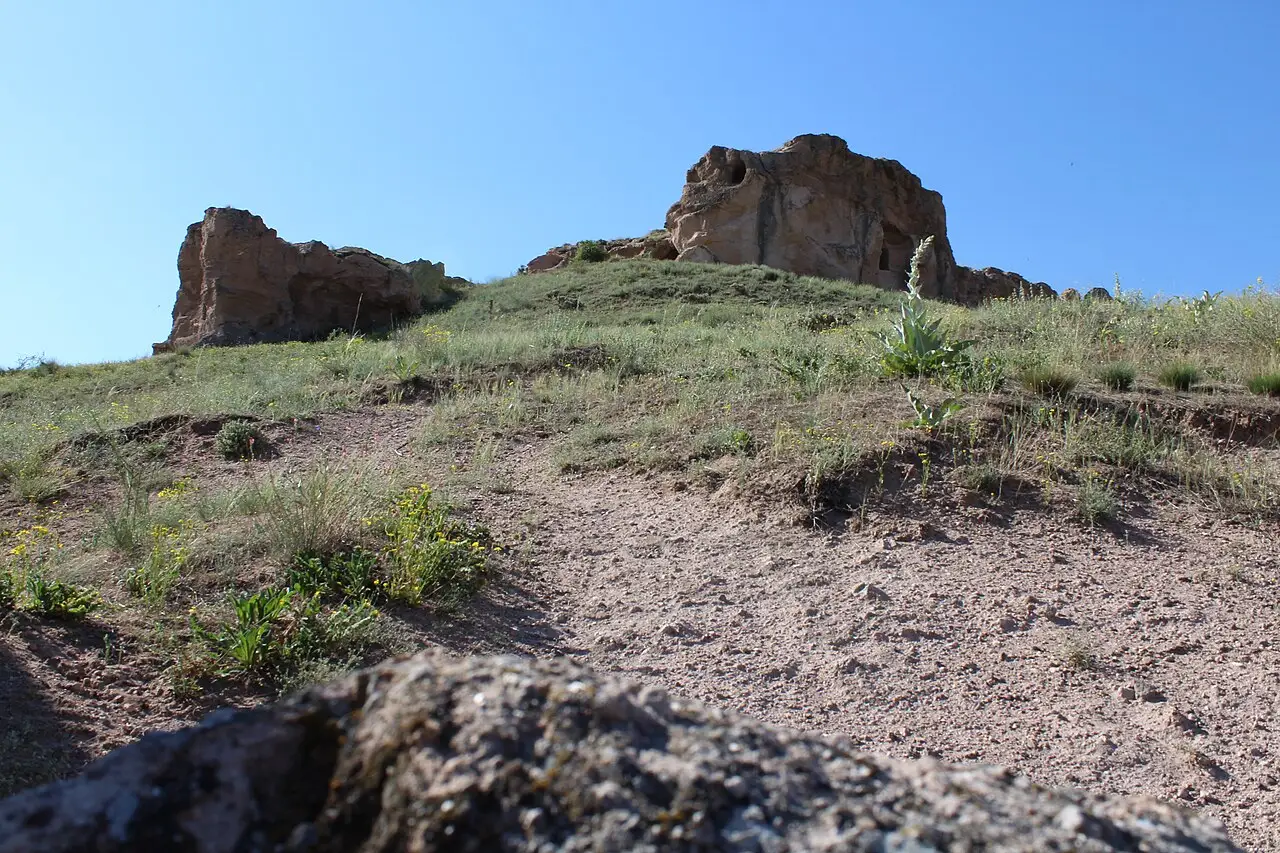 Photo: Görkem Yavuz (CC BY-SA 4.0) · Source
 6 places to visit in the Gülşehir district of Nevşehir: Açıksaray (Açık Saray) Ruins, Saint John Church (Karşı Kilise, the Church Opposite) and Kızılırmak Valley. Plan your trip to Gülşehir with local food, practical tips and transport information.
The district covers 879 km² and lies at an average altitude of 924 metres above sea level. The ancient name of the district was Zoropassos, and its former name was Arapsun.
Silahdar Seyyid Mehmed Pasha, a Grand Vizier of the Ottoman Empire, built a complex in Gülşehir consisting of a mosque, a madrasa and a fountain. Açıksaray, 3 km from Gülşehir, became an important bishopric centre with spaces carved into tuff rock, Roman-period rock tombs and rock churches dating to the 9th–10th centuries. At the very entrance to Gülşehir is the two-storey Saint John Church; its lower floor contains a church, wine cellars, tombs and a water channel, while its upper floor has another church decorated with scenes from the Gospels. The town of Arapsun was renamed Gülşehir in 1948.
Vases and jars found in the cave at Civelek village show that the district’s history goes back to 7500–8000 BC. In the Byzantine period the district was known as Zoropassos. Gülşehir remained the religious capital of Cappadocia from the 3rd to the 8th centuries AD, but lost this title after the monks of Açıksaray rejected the practice of painting pictures. After the Battle of Manzikert in 1071, the region came under the control of the Seljuk Turks of Cappadocia and the district was renamed Arapsun. The district was officially registered as Gülşehir by a Council of Ministers decision in 1947, and in 1954 it gained the title of district (ilçelik).
Last updated:
An important bishopric centre about 3 km from Gülşehir, with spaces carved into tuff rock, Roman-period rock tombs and rock churches dating to the 9th–10th centuries.
View on mapA two-storey church at the entrance to Gülşehir. The lower floor contains a church, wine cellars and tombs; the upper floor has another church decorated with scenes from the Gospels.
View on mapThe valley formed where the Kızılırmak (Red River) flows through Gülşehir offers a beautiful view with rocky slopes and green farmland. Walking and picnicking are possible on the riverbank.
View on mapCastle ruins on the hill above the district centre, dating to the Seljuk period. The rock-carved structures around the castle and the viewpoint can be visited.
View on mapA archaeological site with many spaces carved into tuff rock, Roman-period rock tombs and rock churches dating to the 9th–10th centuries, forming an important bishopric centre. It is about 3 km from Gülşehir.
View on mapA church carved as a two-storey structure into a fairy chimney; according to the inscription in its apse it dates to 1212. The upper floor contains a church decorated with scenes from the Gospels.
View on mapWhile you are in Gülşehir, you can also see the highlights of Nevşehir province. These places are in other districts.
Small pieces of hand-rolled dough filled with minced meat and boiled. Served with a sauce of yoghurt and butter. Made with fresh, natural ingredients, it is a healthy option.
Prepared by baking lamb and vegetables in a clay pot. It is a traditional flavour of Cappadocia.
Made by baking squash in the oven and serving it with tahini and walnuts.
The rock churches of Gülşehir have been centres of worship and monastic life since the early Christian period. The frescoes in the Church of Saint John are among the finest examples of this tradition.
Gülşehir is one of the rare places on the shores of the Kızılırmak where settlement has continued without interruption for thousands of years. The water provided by the river created ideal conditions for farming and settlement.
The economy of Gülşehir is based on agriculture. Potatoes, wheat, barley and grapes are the main agricultural products. Viticulture and livestock farming are traditional livelihoods. Açıksaray and the rock churches bring tourism income.
Gülşehir is 10 km from Nevşehir and 15 km from Avanos. Nevşehir Kapadokya Airport is 40 km away.
The highlights of Gülşehir are 6 places: Açıksaray (Açık Saray) Ruins, Saint John Church (Karşı Kilise), Kızılırmak Valley, Gülşehir Castle, Açıksaray Archaeological Site and Saint John Church.
Gülşehir Mantısı, Testi Kebabı and Kabak Tatlısı are the standout dishes on Gülşehir's tables.
Gülşehir is known for Gülşehir Grapes and the Cappadocian Rock Church Tradition. Grapes gathered from the vineyards of the Kızılırmak valley are used to make wine, pekmez and sucuk.
Gülşehir is 10 km from Nevşehir and 15 km from Avanos. Nevşehir Kapadokya Airport is 40 km away.
Suggested visit: half a day. Best time to visit: spring and autumn.