 Photo: Ingeborg Simon (CC BY-SA 4.0) · Source
 Pertek Castle
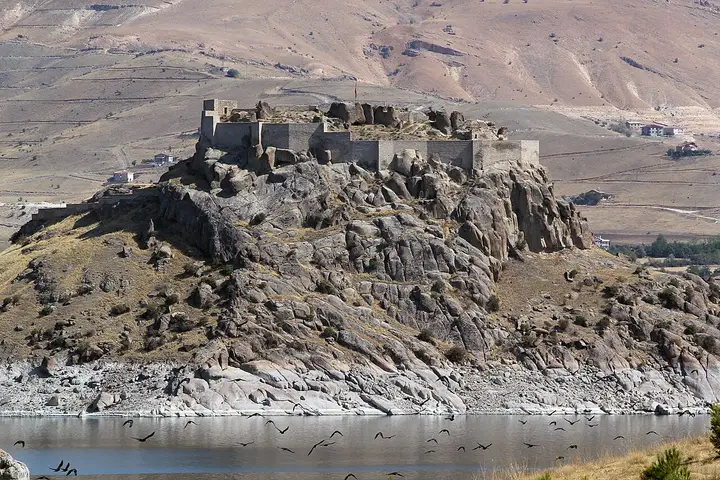
A castle bearing remains from the Urartian period, situated on the Murat River and on Keban Dam Lake.
View on map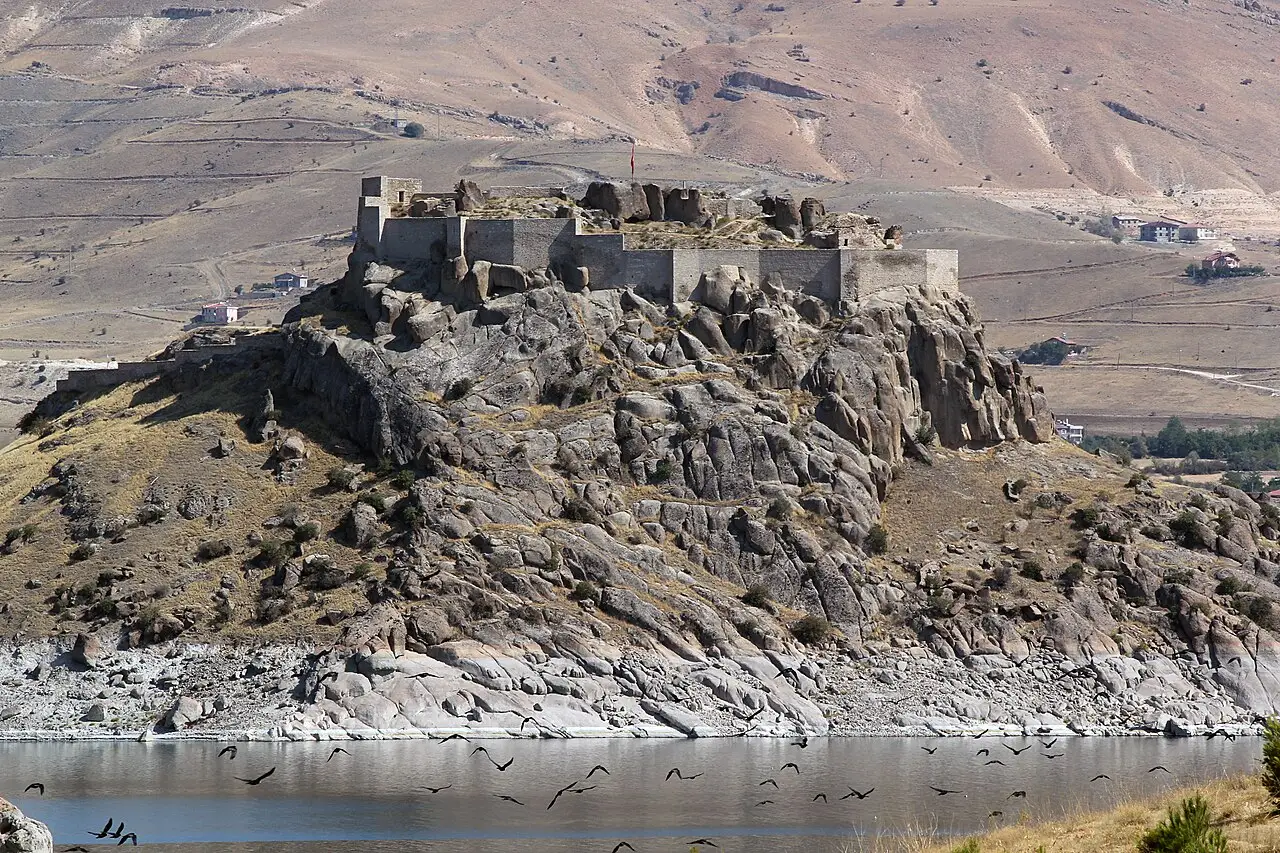 Photo: Ingeborg Simon (CC BY-SA 4.0) · Source
 5 places to visit in the Pertek district of Tunceli: Pertek Castle, Keban Dam Lake and Pertek Grand Mosque. Plan your trip to Pertek with local food, practical tips and transport information.
The fact that local people still use Armenian names for some neighbourhoods and villages in Pertek district suggests that its name originally meant “Kalecik” (“little castle”) in Armenian.
Settlement in the region north of the Euphrates, where Pertek lies, began in the Neolithic period. After the 1071 Battle of Manzikert, the region was exposed to Turkish raids; it was taken by Çubuk Bey after the Byzantine general Philaretos Brachamios. After the 1514 Battle of Chaldiran, Pertek was the scene of the Ottoman–Safavid struggle, and after the Battle of Ovacık it came under Ottoman rule.
Livestock farming, agriculture and ferry operations on Keban Dam Lake bring economic returns to the district. Crops include barley, wheat, sugar beet and chickpeas; livestock products include milk, cheese, red meat, honey and eggs.
In the Seljuk and Ottoman periods the district was developed into a centre of culture and art. The district received its name Pertek because of a bird sculpture set up on the castle. Pertek is described as the district with the second-largest number of historic monuments in Tunceli, after Çemişgezek. In 1916, with the establishment of the Tunceli province, Pertek became a district of Tunceli.
Pertek formed one of the four sanjaks (Çarsancak) during the Çemişgezek Beylik period. Pertek was added as a district of Tunceli Province, which was established in 1935.
Last updated:
Photo: Ingeborg Simon (CC BY-SA 4.0) · Source A castle bearing remains from the Urartian period, situated on the Murat River and on Keban Dam Lake.
View on mapKeban Dam Lake, to the south of Pertek, is an impressive natural beauty with turquoise waters and mountain scenery around it. Boat tours and fishing are possible on the lake.
View on mapThe mosque moved from old Pertek to the new settlement retains traces of Seljuk-period architecture. It stands out for its stonework and mihrab decoration.
View on mapA stream in the district that flows south and empties into Keban Dam Lake.
View on mapWhile you are in Pertek, you can also see the highlights of Tunceli province. These places are in other districts; Pertek is about 55 km from the provincial centre.
A traditional soup made with bulgur, chickpeas and red pepper, and the most characteristic flavour of Pertek cuisine.
Freshwater fish caught in Keban Dam Lake, served grilled or fried in a pan.
Regional cheeses made from livestock farming in Pertek, Çemişgezek and Hozat are among the best known.
When the waters of Keban Dam Lake rose, the old settlement of Pertek was submerged. The people who moved to New Pertek continue to keep alive the memories and cultural heritage of the old town.
Pertek's economy is based on agriculture, livestock farming and fishing. Fishing on Keban Dam Lake is an important source of income. Small livestock farming and beekeeping are also sources of livelihood.
Pertek is 55 km from Tunceli city centre. There is a ferry connection across Keban Dam Lake. Regular minibus services run from Tunceli.
The highlights of Pertek are 5 places: Pertek Castle, Keban Dam Lake, Pertek Grand Mosque, Hozat (Singeç) Stream and Çelebi Ağa Mosque.
Gulik, fish, and Şavak and tulum cheeses are the flavours to look out for on Pertek's tables.
Pertek is known for honey and its submerged town heritage. Flower honey gathered on Pertek's high plateaus is known in the region for its natural and unadulterated character.
Pertek is 55 km from Tunceli city centre. There is a ferry connection across Keban Dam Lake. Regular minibus services run from Tunceli.
Suggested visit length: 1 day. Best time to visit: spring and summer (May to September).