11 places to visit in the Doğubayazıt district of Ağrı: İshak Paşa Palace, Mount Ararat (Ağrı Dağı) and Bayazıt Castle (Old Bayazıt). Plan your trip to Doğubayazıt with local food, practical tips and transport information.

Share with friends

Doğubayazıt, or formerly Bayazıt, is a district of Ağrı province and the centre of the same district; it covers 2,250 km² and sits at an elevation of 1,592 m. It was founded in eastern Anatolia, on the European E-road E80 transit route. It lies 93 km east of the Merkez district of Ağrı, 35 km from Iran. It is the oldest and most historic district of Ağrı.

Ancient and Medieval History

The presence of Urartian tombs in Old Bayazıt and at the castle shows that the town’s history goes back a long way. In 625 it was seized by the Khazars, who arrived at the shores of the Aras. During Alp Arslan’s first western campaign (1064), Doğubayazıt, along with the Kars region and the area around Ağrı, was taken from the Byzantines.

Ottoman Period

When the Ottoman army under Yavuz Sultan Selim entered Çaldıran, it camped at Danasazı on the Sarısu, north of the Bayazıt Plain, on 20 August 1514, and the people of Bayazıt Castle declared their loyalty to the sultan.

Modern Period

During the Ottoman-Russian War of 1877–1878, after the defeat at Alacadağ on 25 October 1877, the Russians seized Bayazıt. It was left to Russia by the Treaty of Yeşilköy on 30 March 1878, but was returned to the Ottomans on 13 July 1878 by the Treaty of Berlin.

Geography

The district covers 2,250 km². Its land is made up of plains and volcanic masses.

History and Culture

The original site of Doğubayazıt was the old castle in Upper Bayazıt. The Urartian tombs in Old Bayazıt and at the castle show that the town’s history goes back a long way. Bayazıt was seized by the Khazars in 625. Doğubayazıt, along with the Kars and Ağrı areas, was taken from the Byzantines. Bayazıt was first left to Russia and then given to the Ottomans by the 1878 treaties. Bayazıt was conquered in 1578 and became a sanjak attached to Van.
Last updated:

Places to Visit in Doğubayazıt

  • 4 Historic
  • 1 Religious
  • 1 Museum
  • 5 Nature

Historic Sites 4

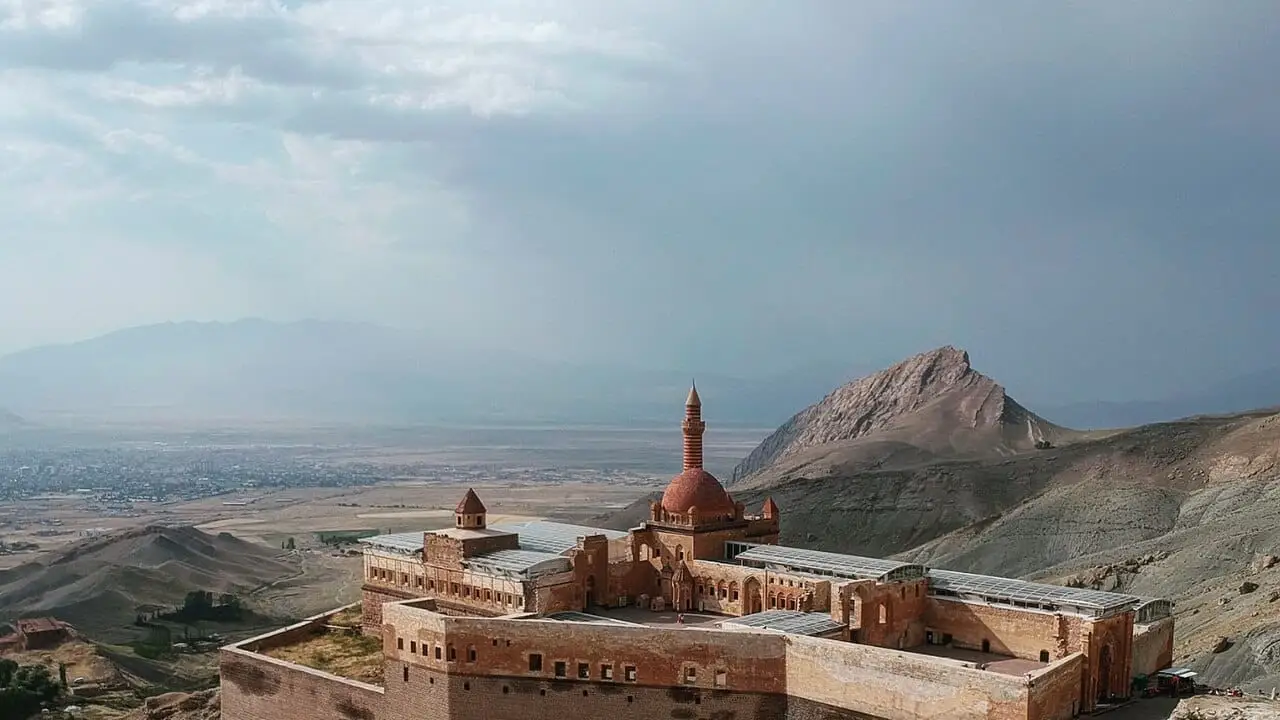
İshak Paşa Palace - Doğubayazıt Photo: Omer404 (CC BY-SA 4.0) · Source
Historic

İshak Paşa Palace

Built between 1685 and 1784, the İshak Paşa Palace is a unique structure that blends Ottoman, Seljuk, Iranian and Armenian architectural styles. This palace complex of 366 rooms, with its mosque, hammam, harem and selamlık sections, is one of the most magnificent historic buildings in Türkiye and is on the tentative list of UNESCO World Heritage Sites.

View on map
Historic

Bayazıt Castle (Old Bayazıt)

A historic castle on a rocky hill, dating back to the Urartian Kingdom (7th century BC). Rebuilt during the Bagratuni dynasty, the castle was restored in 1374 by Celayirid Prince Bayazıt Khan, who gave the town its name.

View on map
Historic

Ahmed-i Hani Monumental Tomb

The tomb of the famous 17th-century poet and thinker Ahmed-i Hani is one of Doğubayazıt's most important cultural sites. Known for his work Mem û Zîn, Ahmed-i Hani holds a special place in the literary history of the region.

View on map
Historic

Doğubayazıt Urartian Castle

An Urartian castle built on steep cliffs at the Belleburç site.

View on map

Religious Buildings 1

Religious

Old Beyazıt (Bayezid) Mosque

An Ottoman-period mosque right beside Doğubayazıt Castle.

View on map

Museums 1

Museum

Ahmed-i Hani City Museum and Old Bayezid House

A city museum in the centre of Doğubayazıt, including Ahmed-i Hani and the Old Bayezid House.

View on map

Natural Wonders 5

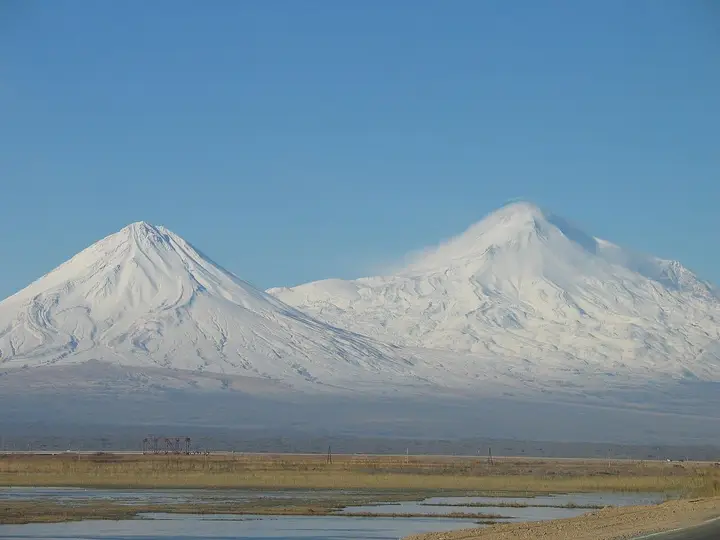
Mount Ararat (Ağrı Dağı) - Doğubayazıt Photo: Cemil1280 (FAL) · Source
Nature

Mount Ararat (Ağrı Dağı)

At 5,137 metres, Ağrı Mountain is the highest mountain in Türkiye. It is seen best from Doğubayazıt. The mountain consists of two volcanic cones, Büyük Ağrı and Küçük Ağrı, and is one of the main goals of mountaineering and trekking enthusiasts.

View on map
Nature

Meteor Crater

Located near Doğubayazıt, this meteor crater bears the trace of a meteorite that fell thousands of years ago. This 35-metre-wide crater is an interesting natural formation for geology enthusiasts.

View on map
Nature

Ağrı Dağı National Park

An area declared a national park that covers Ağrı Mountain and its surroundings.

View on map
Nature

Ice Cave

A natural cave near the village of Hallaç, containing masses of ice.

View on map
Nature

Balık Lake

A high-altitude lava-dammed lake on the border of Taşlıçay and Doğubayazıt.

View on map

Places to Visit Around Ağrı Province

See all →

While you are in Doğubayazıt, you can also see the highlights of Ağrı province. These places are in other districts.

  • Mount Ağrı — At 5,137 metres, the highest mountain in Türkiye; it is 16 km from Iran and 32 km from Armenia, and about 35 per cent of it lies within Ağrı province.
  • Mount Ağrı National Park — A national park of 88,014 hectares declared in 2004; it covers Mount Ağrı (5,137 m) and Little Ağrı (3,898 m), the largest glacier in Türkiye, a meteor crater and the ice cave on Little Ağrı.
  • Old Bayazıt Castle and Ruins — The castle at Upper Bayazıt (Yukarı Bayazıt), where Doğubayazıt was first founded, and Urartian tombs lie around it.
  • Ahmed-i Hânî Tomb — The tomb of Ahmed-i Hânî, poet and scholar and author of the mesnevi Mem û Zîn, stands close to İshak Paşa Palace and is a popular stop for visitors.
  • Durupınar Formation (Noah's Ark) — A ship-shaped limonite formation 164 metres long, at 1,966–2,004 metres, 16 km south-east of Doğubayazıt near the village of Üzengili.
  • Diyadin Hot Springs — Hot-water springs spread over a wide area in Diyadin, about 55 km from the provincial centre; with facilities open all year, they are favoured for skin conditions and rheumatism.

Practical Information for Visiting Doğubayazıt

Suggested time
2 days
Best time to visit
June–September
Places to visit
11 places

What to Eat in Doğubayazıt

Food guide →
  • Doğubayazıt Abdigör Köftesi (boiled beef meatballs)

    Doğubayazıt Abdigör Köftesi was registered as a protected geographical indication on 25 December 2017 (TÜRKPATENT registration no. 310). Product group: dishes and soups. Registered by: Doğubayazıt Chamber of Commerce and Industry.

  • Doğubayazıt Aşure Tatlısı (sweet grain pudding)

    Doğubayazıt Aşure Tatlısı was registered as a protected geographical indication on 13 February 2025 (TÜRKPATENT registration no. 1699). Product group: bakery and confectionery products, pastries, desserts. Registered by: Doğubayazıt Chamber of Commerce and Industry.

Culture, Local Products and Economy of Doğubayazıt

  • Silk Road and Border Gate Culture

    Throughout history, Doğubayazıt served as the Iranian border gate and as a bridge of trade and culture between East and West. This location gave the district a cosmopolitan cultural fabric.

  • Urartian Heritage

    The Doğubayazıt region has a past of more than 2,700 years and holds monuments and remains from the period of the Urartian Kingdom.

  • Ahmed-i Hani Literary Tradition

    Ahmed-i Hani's work Mem û Zîn, by the 17th-century poet, is the most important work of the region's literary tradition. Commemorative events held every year keep this heritage alive.

Local Products

  • Otlu Peynir (herb cheese) — Otlu peynir, prepared by adding local mountain herbs to sheep's milk, is Doğubayazıt's most valuable local product. It is produced by traditional methods and matured for months.
  • Honey — Flower honey collected on the plateaus at the foot of Ağrı Mountain is the most precious natural product of the region.
  • Wool Products — Wool production and traditional handwoven products are an important local production line in the region, where sheep farming is widespread.

Economy

The economy of Doğubayazıt is based on tourism, border trade and livestock. İshak Paşa Palace and Ağrı Mountain attract tens of thousands of domestic and foreign tourists every year. Trade through the Iranian border gate (Gürbulak) is an important component of the district's economy. Small livestock farming is the basic livelihood in rural areas. Doğubayazıt, the provincial centre until 1946, is one of the largest settlements in the region.

How to Get to Doğubayazıt

Doğubayazıt is 93 km from Ağrı city centre and is reached by road. It is 100 km from Ağrı Ahmed-i Hani Airport. There are regular bus services from Ağrı and Van. The district is 35 km from the Gürbulak Border Gate on the Iranian border.

Get directions on Google Maps Getting to Ağrı

Doğubayazıt: Frequently Asked Questions

What are the places to see in Doğubayazıt?

The 11 highlights of Doğubayazıt are: İshak Paşa Palace, Mount Ararat (Ağrı Dağı), Bayazıt Castle (Old Bayazıt), Ahmed-i Hani Monumental Tomb, Meteor Crater, Doğubayazıt Urartian Castle, Ağrı Dağı National Park, Ice Cave, Old Beyazıt (Bayezid) Mosque, Ahmed-i Hani City Museum and Old Bayezid House and Balık Lake.

What is there to eat in Doğubayazıt?

Doğubayazıt Abdigör Köftesi and Doğubayazıt Aşure Tatlısı are the flavours that stand out at Doğubayazıt's tables.

What is Doğubayazıt famous for?

Doğubayazıt is known for Otlu Peynir and the Silk Road and Border Gate Culture. Otlu peynir, prepared by adding local mountain herbs to sheep's milk, is Doğubayazıt's most valuable local product. It is produced by traditional methods and matured for months.

How do I get to Doğubayazıt?

Doğubayazıt is 93 km from Ağrı city centre and is reached by road. It is 100 km from Ağrı Ahmed-i Hani Airport. There are regular bus services from Ağrı and Van. The district is 35 km from the Gürbulak Border Gate on the Iranian border.

How much time should I set aside for a visit to Doğubayazıt?

Suggested visit length: 2 days. Best time to visit: June–September.

Continue Your Trip

Other Districts of Ağrı

Search 81 province guides and 968 district guides.