Getting to Know Ağrı
Ağrı is a high plateau province in the far east of Türkiye, stretching to the Iranian border. The provincial centre lies on the north of the Ağrı Plain, at an altitude of about 1,640 metres; known through history as Karakilise and Karaköse, the city took its name from Mount Ağrı only later.
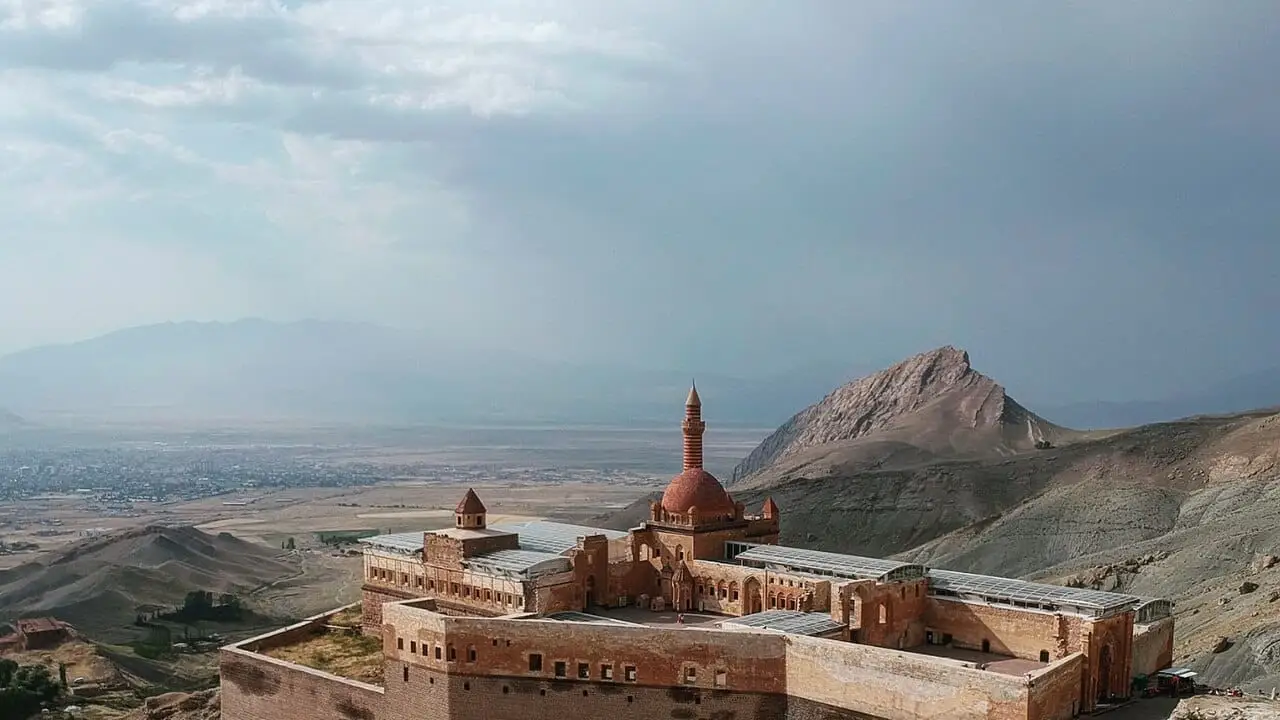
The historic centre of gravity of the province is Doğubayazıt, for a long time the provincial centre. The castle at Old Bayazıt and the Urartian tombs show that the settlement goes back to very ancient times; its position on the Türkiye–Iran transit road made Doğubayazıt an important customs and trading centre in every period. The most magnificent product of this accumulated wealth is İshak Paşa Palace, begun in 1685 and completed in 1784. Ahmed-i Hânî, the poet who wrote Mem û Zîn, also served as scribe to the Bayazıt beys; his tomb is right beside the palace.
The natural symbol of Ağrı is Mount Ağrı, at 5,137 metres the highest point in Türkiye. About a third of the mountain lies within Ağrı and the rest within Iğdır; it is 16 km from Iran and 32 km from Armenia. Mount Ağrı National Park, declared in 2004 and covering 88,014 hectares, takes in Great and Little Ağrı, the glaciers, the meteor crater and areas associated with the story of Noah’s flood.
When to Go
Ağrı is one of the coldest provinces in Türkiye: winters are long and harsh, and summers are short but mild. Averages for 1940–2025 from the Turkish State Meteorological Service:
| Month |
Avg. high |
Avg. low |
Rainfall |
Rainy days |
| January |
−5.2 °C |
−15.4 °C |
43 mm |
12 |
| February |
−3.3 °C |
−14.3 °C |
47 mm |
11 |
| March |
2.4 °C |
−7.7 °C |
54 mm |
12 |
| April |
12.0 °C |
0.8 °C |
71 mm |
14 |
| May |
18.8 °C |
5.3 °C |
70 mm |
16 |
| June |
24.4 °C |
8.3 °C |
43 mm |
10 |
| July |
29.4 °C |
12.2 °C |
22 mm |
6 |
| August |
30.2 °C |
12.0 °C |
13 mm |
4 |
| September |
25.5 °C |
7.0 °C |
19 mm |
4 |
| October |
17.4 °C |
2.1 °C |
54 mm |
9 |
| November |
8.0 °C |
−3.4 °C |
46 mm |
8 |
| December |
−1.5 °C |
−10.4 °C |
44 mm |
11 |
The best time to visit is June to September. The Mount Ağrı climbing season is also concentrated in these months. Night temperatures fall to 10–12 °C even in summer, so always have a thick layer with you. There are nights below −30 °C in winter (the lowest recorded is −45.6 °C), so check road conditions in advance when travelling in winter.
Climbing Mount Ağrı
Although not technically difficult, Mount Ağrı is a summit that requires serious preparation because of the altitude and rapidly changing weather. Under current regulations:
- Foreign climbers must apply for a climbing permit at least 30 days in advance; applications are decided in about 10 days.
- To prevent climbs by people without technical competence, climbing with a local guide and escort is compulsory.
- The busiest part of the season is June to September; even in July and August blizzards can occur at the summit.
Even if you do not climb, the mountain is an unforgettable part of the trip, seen from Doğubayazıt and from the terrace of İshak Paşa Palace.
How to Get to Ağrı
By air: Ağrı Ahmed-i Hani Airport, opened in 1997, serves the province, with a runway extended in 2011 and a new terminal opened in 2015.
By road: Doğubayazıt lies on the E80 transit road linking Europe with Iran; it is 93 km from the provincial centre and 35 km from the Iranian border. The Gürbulak Border Gate, the most important border crossing linking Türkiye with Iran, is in Doğubayazıt.
Suggested Itineraries
Day 1 – Doğubayazıt: Tour İshak Paşa Palace in the morning, then climb to the Old Bayazıt ruins above the slope and the Ahmed-i Hânî Tomb. In the afternoon, go to the Durupınar (Noah’s Ark) formation 16 km south-east of the district, and from there to the meteor crater near the village of Sarıçavuş. In the early evening, watch the view of Mount Ağrı.
Day 2 – Diyadin and Balık Lake: Visit the canyon carved by the Murat River and the hot springs at Diyadin, about 55 km from the provincial centre; on the way back, if the season allows, stop at Balık Lake from the Taşlıçay side.
Ağrı Cuisine
The most famous flavour of Ağrı cuisine is Abdigör köftesi (hand-pounded meatballs), a speciality of Doğubayazıt with a geographical indication. According to legend, it was prepared about 400 years ago for Çolak Abdi Paşa, the sanjak bey of Doğubayazıt, who had a stomach complaint; sinew-free meat is pounded for hours on stone benches called “sal” until it reaches a paste-like consistency. Ağrı yaprak döneri (thin-sliced döner), registered in 2022, and the haşıl dish (wheat and butter porridge), also with a geographical indication, are the province’s other signature flavours. As the cuisine of long winters, tandır bread, herbed cheese (otlu peynir) and buttery pastries also appear frequently on the table.
Practical Tips
- Evenings in Ağrı are cool even in summer; whatever the season, keep a coat with you.
- Allow at least half a day for İshak Paşa Palace and Doğubayazıt; the view of the palace and Mount Ağrı at sunset is very impressive.
- There may be security checks in some areas of the border region; carry your identity document with you.
- For a Mount Ağrı climb, arrange the permit and guide through licensed local companies in advance.