 Photo: Dosseman (CC BY-SA 4.0) · Source
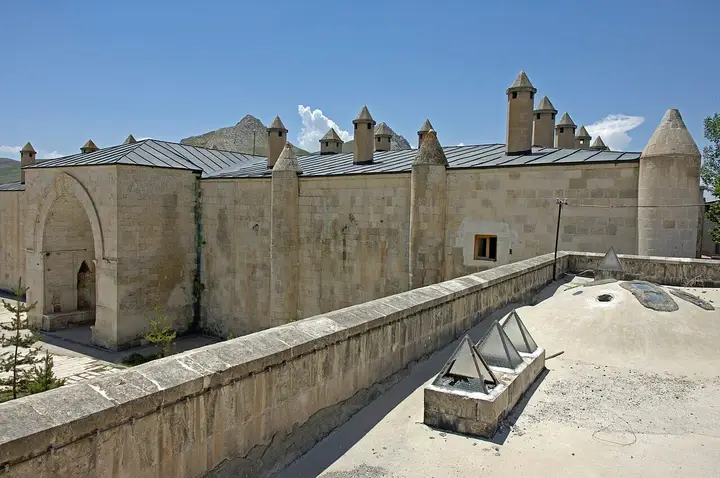
 Mama Hatun Caravanserai
A caravanserai from the Ottoman period in the settlement centre of Tercan, part of the Mama Hatun complex.
View on map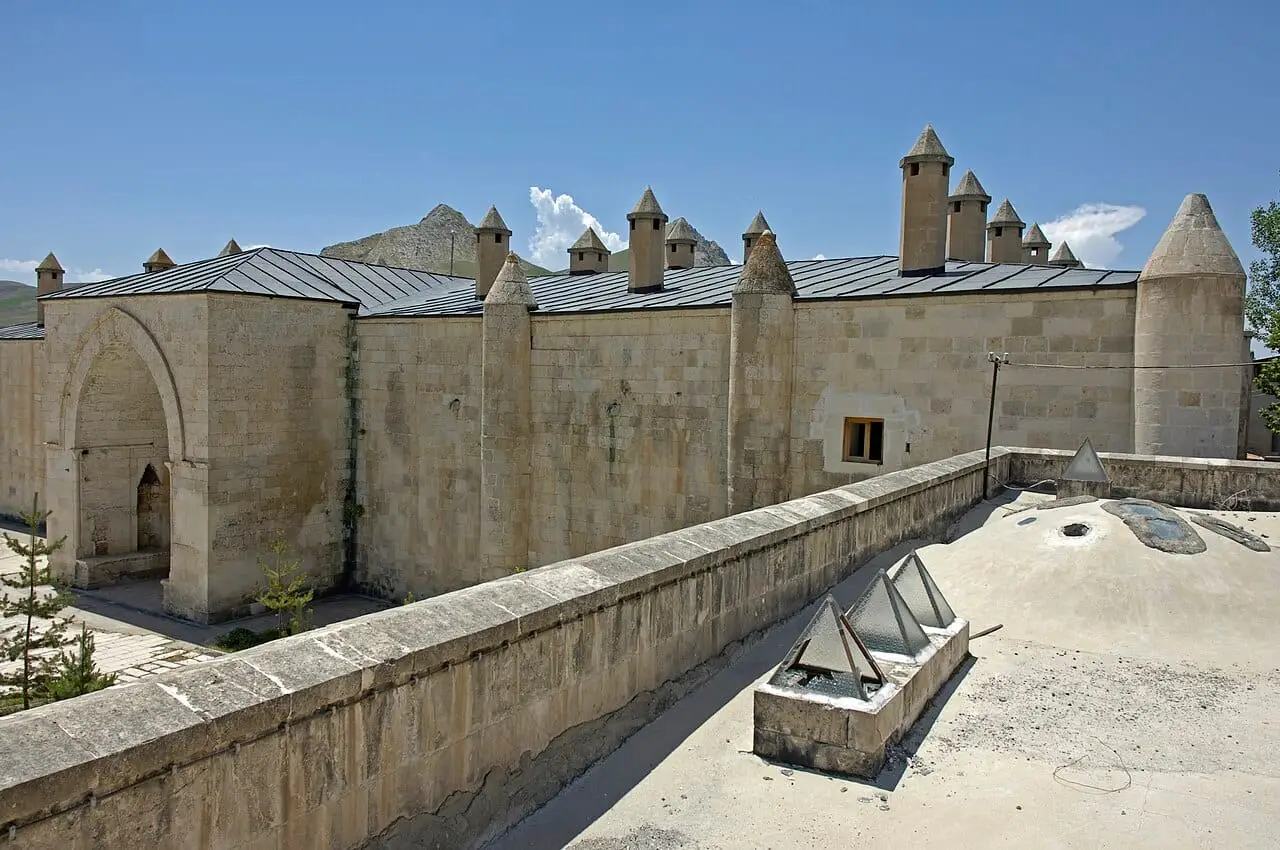 Photo: Dosseman (CC BY-SA 4.0) · Source
 9 places to visit in the Tercan district of Erzincan: Mama Hatun Caravanserai, Mama Hatun Tomb and Kötür Bridge. Plan your trip to Tercan with local food, practical tips and transport information.
Tercan is one of the nine districts of Erzincan province in Türkiye. The district covers an area of 1,614 km² and has an average elevation of 1,432 metres above sea level. The district has three towns (belde), seventy-one villages and seventeen neighbourhoods (mahalle).
Under Ottoman rule, the settlement was named after the Mama Hatun complex located there, and it became a military stopping point. In a 1591–92 register, there were 24 men (nefer) in the settlement known as Mama Hatun, and an 1635 record states that Sultan Murad IV ordered that the village be reopened for settlement. The district, which had previously belonged to Erzurum and whose municipal administration was established in 1923, was attached to Erzincan in 1938.
During the Ottoman period, the settlement was recorded in registers under the name of its founder, Mama Hatun, because of the existence of the complex. The district remained within the sphere of influence of the Urartians and Assyrians. Tercan came firmly under Ottoman rule in the time of Suleiman the Magnificent. The district was attached to Erzincan by Law No. 3383, adopted on 11 May 1938.
Last updated:
Photo: Dosseman (CC BY-SA 4.0) · Source A caravanserai from the Ottoman period in the settlement centre of Tercan, part of the Mama Hatun complex.
View on map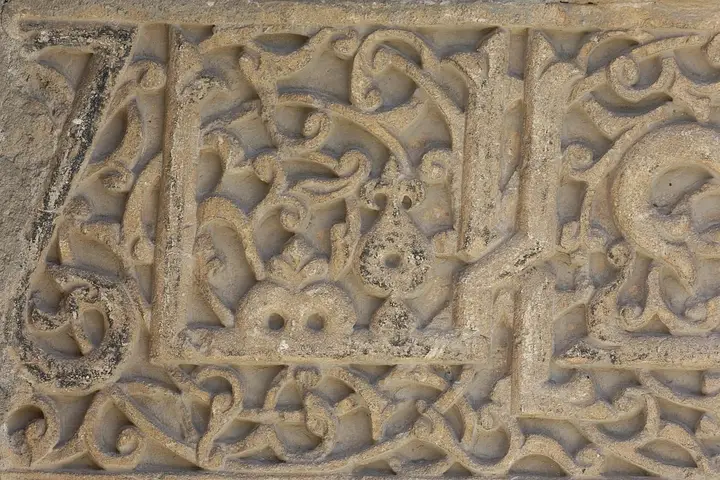 Photo: Dosseman (CC BY-SA 4.0) · Source
 The tomb, located near the caravanserai, has a unique architectural form, with a cylindrical tower rising from the middle of a circular courtyard. The muqarnas-decorated entrance portal and the arched niches in the courtyard wall reflect the artistic sensibility of the Saltukid period.
View on mapA historic stone bridge over the Tuzla River near Tercan, a transport structure from the Ottoman period. Built from dressed stone, its arches represent the engineering heritage of the region.
View on mapLocated north of Tercan, Pekeriç Castle contains the remains of Pekeriç, the main settlement of the region in antiquity. Of strategic importance in the Byzantine and Seljuk periods, the castle controlled the Erzurum–Erzincan road.
View on mapA cemetery on a hill in Çadırkaya town; it is said to belong to a holy man who was martyred by an arrow in battle.
View on mapWhile you are in Tercan, you can also see the highlights of Erzincan province. These places are in other districts; Tercan is about 100 km from the provincial centre.
Tercan Honey was registered as a protected designation of origin on 21 November 2025 (TÜRKPATENT registration no. 1792). Product group: honey. Registered by: Tercan Village Services Union.
Lamb slow-cooked for hours in an earth tandır oven. It takes on a special flavour from the meat of sheep raised on Tercan's highland pastures.
A traditional soup of thinly cut dough pieces cooked in meat broth; a dish never absent from tables in Tercan's harsh winter conditions.
Meatballs kneaded from fine bulgur and minced meat, cooked in a sour tomato sauce. One of the characteristic flavours of Erzincan cuisine, this dish is also widely prepared in Tercan.
Tercan is associated with the name of Melike Mama Hatun, the female ruler of the Saltukid Beylik in the 12th century. Mama Hatun made the region an important trade and lodging centre by building a caravanserai, a tomb, a mosque and a hammam. The district's former name was also Mama Hatun.
In the Middle Ages, Tercan was a strategic junction where the road from Erzurum–Erzincan–Sivas met the road coming from the Upper Kelkit basin. In the 17th century, Evliya Çelebi also visited Tercan and described its Saltukid buildings.
Tercan's economy rests on livestock farming and agriculture. Small-livestock farming and beekeeping are carried out on the high pastures. Wheat, barley and fodder crops are grown in agriculture. Cultural tourism is also developing thanks to the Mama Hatun Caravanserai and Tomb.
Tercan is about 100 km from Erzincan city centre and 120 km from Erzurum. It lies on the Erzincan–Erzurum road. The nearest airports are Erzincan and Erzurum airports. The district can be reached by intercity bus services.
The 9 highlights of Tercan are: Mama Hatun Caravanserai, Mama Hatun Tomb, Kötür Bridge, Pekeriç Castle, Kefrenci Temple, Oklu Baba, Kadıgölü, Şirinkayalar Caves and Vank Church.
Tercan Honey, Tandır Kebabı, Kesme Çorbası and Ekşili Köfte are the standout flavours on Tercan's tables.
Tercan is known for Tercan Honey and the Melike Mama Hatun Heritage. Flower honey gathered on the district's high pastures is an aromatic and high-quality product thanks to its rich flora. Beekeeping is an important livelihood in the region.
Tercan is about 100 km from Erzincan city centre and 120 km from Erzurum. It lies on the Erzincan–Erzurum road. The nearest airports are Erzincan and Erzurum airports. The district can be reached by intercity bus services.
Suggested visit length: 1 day. Best time to visit: spring and summer (May–September).