Mut Castle
Castle with a rectangular plan and four corner towers, in the Karamanid style.
View on map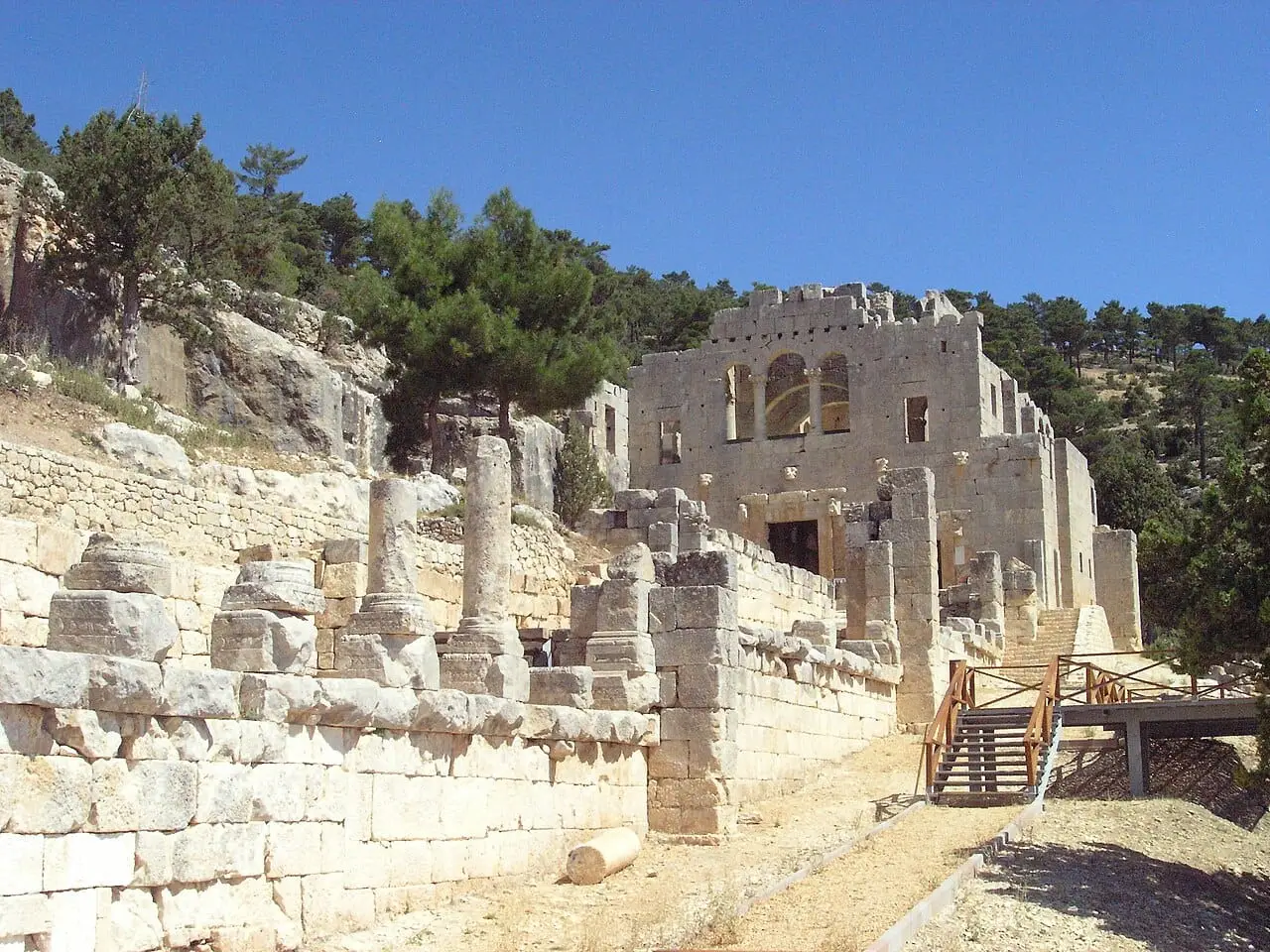 Photo: Ana al'ain (CC BY-SA 4.0) · Source
 11 places to visit in the Mut district of Mersin: Alahan Monastery, Kozlar Plateau and Sertavul Plateau. Plan your trip to Mut with local food, practical tips and transport information.
Mut is a district of Mersin Province in the Mediterranean Region, founded at the foot of the Taurus Mountains on the banks of the Göksu River. The district covers 2,718 km² and lies at an altitude of 313 metres. It is bordered by Silifke to the east, Ermenek to the west, Karaman to the north and Gülnar to the south. The average altitude of Mut district centre above sea level is 304 metres.
Mut is thought to have been first settled around 2000 BC. It was founded in the mountainous part of Cilicia, which is divided into Mountainous and Lowland Cilicia, just south of the Sertavul Pass, which witnessed many important events in history. At that time the town was called Claudiopolis. In the reign of Seljuk Sultan Alaeddin Keykubad, Nur-e Sofi Bey, founder of the Karamanid principality, drove the Armenians out of the area in 1228 and brought Ermenek, Mut, Gülnar and later Silifke under his rule. In the time of Karamanid Mesut Bey, Mut served as the capital of the principality for 5 years. After 1502, when the Karamanids migrated en masse to the east, the Karaman lands passed entirely into Ottoman hands.
Historically important structures in Mut include Laal Paşa Mosque and Kızılminare.
The district’s economy is mainly based on farming, with considerable production of table apricots. Other important crops grown in the district are olives and plums.
For many years the district has hosted the Apricot Festival, which has helped promote the region across the country. Türkiye’s largest flag, measuring 180 × 120 metres, is in this district.
Laal Paşa Mosque, Kızılminare and some other structures were built in the Karamanid period.
Mut district lies at the foot of the Taurus Mountains, on the banks of the Göksu River. In the time of Karamanid Mesut Bey, Mut served as the capital of the principality for 5 years. It was founded as a Roman colony by Emperor Augustus to settle retired soldiers.
Last updated:
Castle with a rectangular plan and four corner towers, in the Karamanid style.
View on mapCastle built by carving into the rock, dating from the reign of Alaeddin Keykubad.
View on mapRoman-period city, also known as Balabolu Ruins, with a necropolis of sarcophagi.
View on map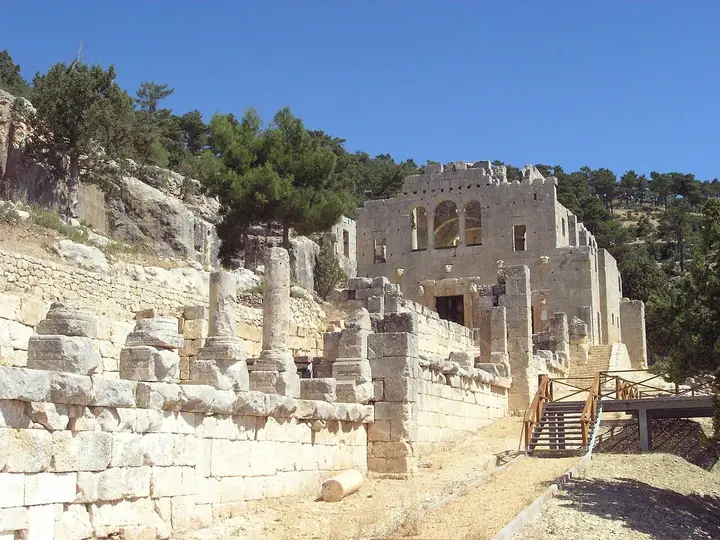 Photo: Ana al'ain (CC BY-SA 4.0) · Source
 Three-aisled Byzantine church with a half-dome; the ancient city of Corapissus is nearby.
View on mapRock church carved out of a large cave; it contains paintings and mosaics.
View on mapOne of the most important highland plateaus in Mut district, and an important pass into Cilicia.
View on mapNature park covered in plane and Brutia pine trees, with a day-use picnic area.
View on mapWaterfall dropping 30 metres into the deep valley carved by the Ermenek Stream.
View on mapWhile you are in Mut, you can also see the highlights of Mersin province. These places are in other districts; Mut is about 120 km from the provincial centre.
Mut Zeytinyağı was registered as a protected designation of origin on 17 July 2018 (TÜRKPATENT registration no. 367). Product group: solid and liquid oils, including butter. Registered by: Mut Chamber of Commerce and Industry.
Finely chopped beef, fried in oil and wrapped in lavash bread. Made with fresh, natural ingredients, so it is a healthy choice.
Traditional dish of cracked wheat and meat, cooked slowly for hours. Passed down from generation to generation, it is an important part of the local food culture. Listed on UNESCO's Intangible Cultural Heritage list, keşkek is a source of pride in Turkish cuisine.
Mut is home to Alahan Monastery, which is on UNESCO's Tentative List of World Heritage Sites. It is one of the most important buildings of the early Christian period.
The economy of Mut is based on farming and livestock. Apricots, wheat and citrus fruits are the main agricultural products.
Mut is 120 km from Mersin city centre. It lies on the Mersin-Karaman highway.
The 11 highlights of Mut are: Alahan Monastery, Kozlar Plateau, Sertavul Plateau, Karaekşi Nature Park, Mut Castle, Yerköprü Waterfall Nature Park, Dağpazarı Church, Laal Paşa Mosque, Adrassus Ancient City, Al Oda Church and Mavga Castle.
Mut olive oil, tantuni and keşkek are the standout dishes on Mut tables.
Mut is known for Mut Kayısısı (Yaş Sofralık) and the heritage of Alahan Monastery. Mut Kayısısı (Yaş Sofralık) is registered with TÜRKPATENT as a protected designation of origin.
Mut is 120 km from Mersin city centre. It lies on the Mersin-Karaman highway.
Suggested visit length: 1 day. Best time to visit: spring and autumn.