9 places to visit in the Tarsus district of Mersin: Tarsus Waterfall, Cleopatra's Gate (Kleopatra Kapısı) and Well and Church of Saint Paul (Aziz Paulus Kuyusu ve Kilisesi). Plan your trip to Tarsus with local food, practical tips and transport information.

Share with friends

The district covers 2,029 km². The average altitude of Tarsus district centre above sea level is 25 metres.

History

Tarsus has been an important settlement since the Neolithic period, some 8,000 years ago, thanks to its position in the Çukurova plain and the Cilician Gates, the pass that links the Taurus Mountains with Central Anatolia. It is believed that the cave where the Companions of the Cave (Ashab al-Kahf), mentioned in the Quran’s Surah al-Kahf, stayed is in Tarsus, and Paul, one of the writers of the New Testament, was born in Tarsus. The Church of Saint Paul and the Well of Saint Paul are in Tarsus, and these monuments are of great importance for religious tourism. In antiquity Tarsus played an important role as a centre of trade and culture, and its population is thought to have exceeded 450,000.

Antiquity

In 66 BC, when Cilicia became a Roman province, Tarsus was made its centre and grew considerably during this period. Strabo gives detailed information about cultural life in Tarsus, noting that many philosophers, grammarians and poets lived there and that Tarsus was a centre of learning and a university city.

History and Culture

Paul, a writer of the New Testament, was born in Tarsus. Tarsus was conquered in 1082 by the Anatolian Seljuk ruler Süleyman Şah I.

Last updated:

Places to Visit in Tarsus

  • 2 Historic
  • 1 Ancient City
  • 5 Religious
  • 1 Nature

Historic Sites 2

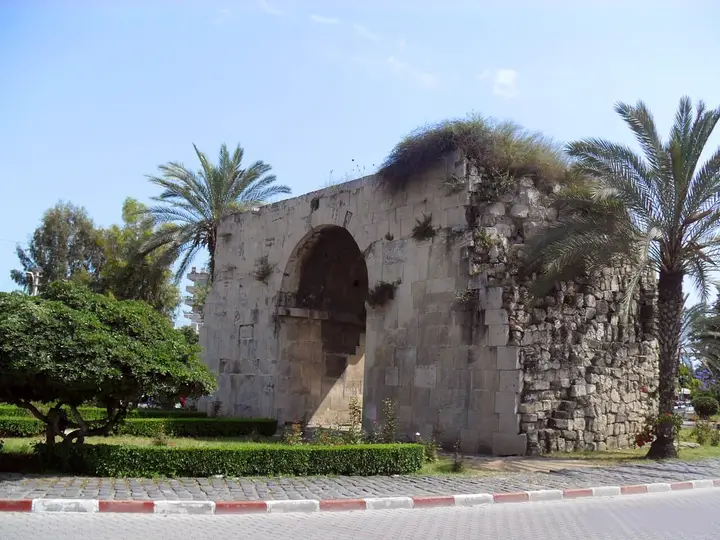
Cleopatra's Gate - Tarsus Photo: Nedim Ardoğa (CC BY-SA 3.0) · Source
Historic

Cleopatra's Gate (Kleopatra Kapısı)

Historic gate structure among the oldest remains in Tarsus.

View on map
Historic

Kubat Paşa Madrasa (Kubat Paşa Medresesi)

16-room madrasa with a courtyard, near the tomb of Prophet Daniel.

View on map

Ancient Cities 1

Ancient City

Gözlükule Mound (Gözlükule Höyüğü)

Mound with settlement layers from the Neolithic period to the Islamic period.

View on map

Religious Buildings 5

Religious

Well and Church of Saint Paul (Aziz Paulus Kuyusu ve Kilisesi)

In Tarsus, the birthplace of Saint Paul (Paulus), one of the key figures of Christianity, the well and church attributed to him are important for faith tourism.

View on map
Religious

Grand Mosque (Ulu Camii)

Built in 1579 during the Ottoman period, this mosque is the largest and most important in Tarsus.

View on map
Religious

Shrine of Prophet Daniel (Danyal Peygamberin Makamı)

Mosque built over the symbolic tomb of Prophet Daniel.

View on map
Religious

Ashab al-Kahf Cave (Eshabı Kehf Mağarası)

Known through the belief in the Seven Sleepers, a cave regarded as holy by both Muslims and Christians.

View on map
Religious

Shrine and Masjid of Bilal-i Habeşi (Bilal-i Habeşi Makamı ve Mescidi)

Shrine and masjid at the place where Bilal-i Habeşi is said to have recited the call to prayer.

View on map
Natural Wonders 1

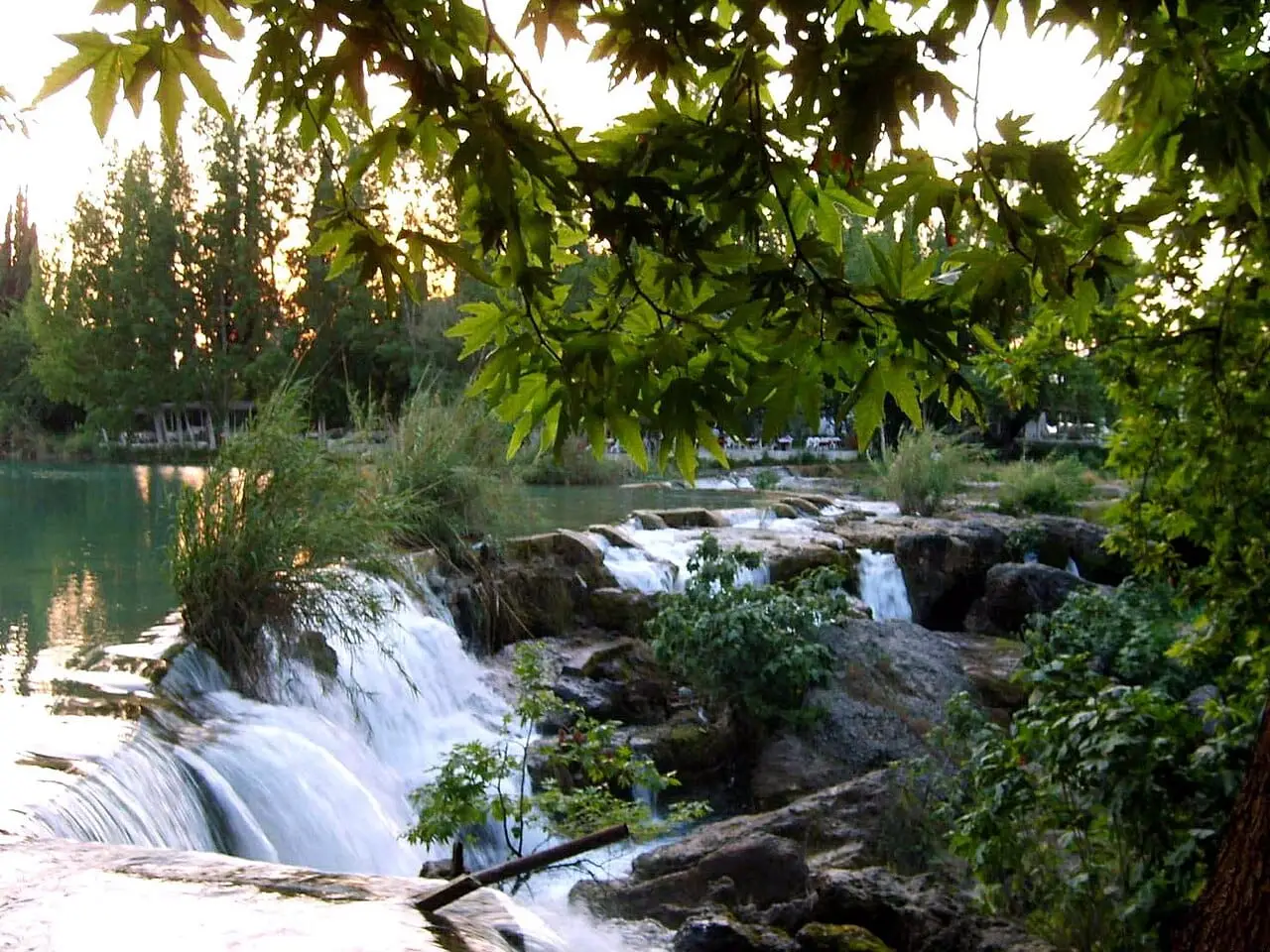
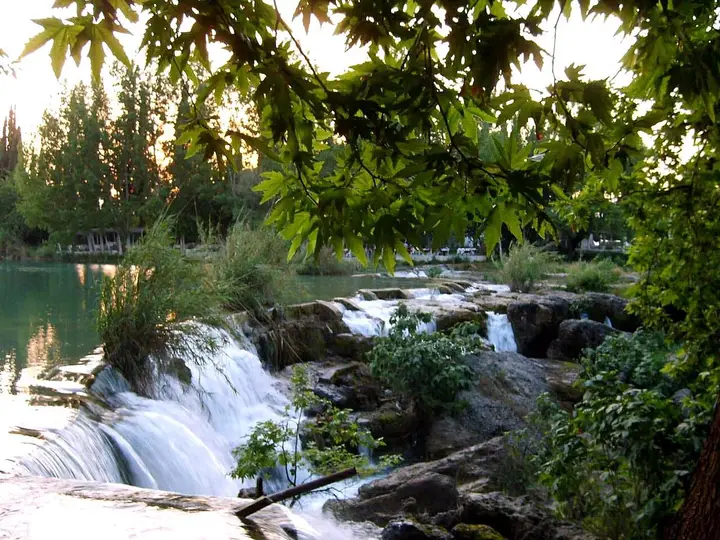
Tarsus Waterfall - Tarsus Photo: Nedim Ardoğa (CC BY-SA 3.0) · Source
Nature

Tarsus Waterfall

This waterfall is a natural beauty of the Tarsus area and important for tourism.

View on map

Places to Visit Around Mersin Province

See all →

While you are in Tarsus, you can also see the highlights of Mersin province. These places are in other districts; Tarsus is about 30 km from the provincial centre.

  • Kızkalesi (Korykos) — A medieval sea castle built on an islet about 200 metres off the coast in the Kızkalesi neighbourhood of Erdemli; together with the land castle of Korykos opposite, it is the best-known symbol of the Cilician coast.
  • Heaven and Hell Sinkholes (Cennet ve Cehennem Obrukları) — Giant sinkholes formed by the dissolving of limestone, 25 km from Silifke and 2 km north-west of Narlıkuyu; steps lead down to the 5th-century Church of the Virgin Mary at the bottom of the Heaven Sinkhole.
  • Mamure Castle — A castle on the seashore at Anamur, founded in the Roman period and enlarged under the Armenian Kingdom of Cilicia and the Karamanids; it is one of the best-preserved medieval castles in Anatolia.
  • Anemurium Ancient City — At Cape Anamur, with its theatre, odeon, baths and extensive necropolis from the Roman and Byzantine periods, it is one of the most impressive ghost cities on the Mediterranean coast.
  • Uzuncaburç (Olba–Diocaesarea) — The sacred centre of the Teucrid priest-kings, 30 km north of Silifke; it is known for the Temple of Zeus Olbios, one of the oldest Corinthian-order temples in Anatolia, the Temple of Tyche, the theatre and a five-storey tower.
  • Cleopatra's Gate and Tarsus — A Roman-period city gate in Tarsus that, according to legend, Cleopatra is believed to have entered to meet Mark Antony; nearby are Saint Paul's Well, a Roman road and the historic houses of Tarsus.

Practical Information for Visiting Tarsus

Suggested time
1 day
Best time to visit
Spring and autumn
Places to visit
9 places

What to Eat in Tarsus

Food guide →
  • Tarsus Kebabı

    Tarsus Kebabı was registered as a geographical indication on 17 September 2020 (TÜRKPATENT registration no. 539). Product group: dishes and soups. Registered by: Tarsus Chamber of Commerce and Industry.

  • Tarsus Sarıulak Zeytinyağı (Tarsus Sarıulak olive oil)

    Tarsus Sarıulak Zeytinyağı was registered as a protected designation of origin on 25 May 2021 (TÜRKPATENT registration no. 767). Product group: solid and liquid oils, including butter. Registered by: Tarsus Commodity Exchange.

Culture, Local Products and Economy of Tarsus

  • Saint Paul Heritage (Aziz Paulus Mirası)

    Tarsus is the birthplace of Saint Paul, one of the most important figures of Christianity. This makes the city of worldwide importance for Christian faith tourism.

Local Products

  • Tarsus Beyazı Üzüm (Topacık) — Tarsus Beyazı Üzüm (Topacık) was registered as a protected designation of origin on 14 June 2005 (TÜRKPATENT registration no. 69). Product group: processed and unprocessed fruits and vegetables, and mushrooms. Registered by: Tarsus Municipality.
  • Tarsus Biberiyesi — Tarsus Biberiyesi was registered as a protected geographical indication on 3 February 2022 (TÜRKPATENT registration no. 1018). Product group: seasonings and flavourings for food, sauces and salt. Registered by: Tarsus Municipality and Tarsus Forest Management Directorate.
  • Tarsus Fındık Lahmacunu — Tarsus Fındık Lahmacunu was registered as a protected geographical indication on 17 September 2020 (TÜRKPATENT registration no. 538). Product group: bakery and pastry products, dough products and desserts. Registered by: Tarsus Chamber of Commerce and Industry.
  • Tarsus Humusu — Tarsus Humusu was registered as a protected geographical indication on 1 November 2017 (TÜRKPATENT registration no. 226). Product group: dishes and soups. Registered by: Tarsus Chamber of Commerce and Industry.
  • Tarsus Sarıulak Zeytini (Tarsus Sarıulak olives) — Tarsus Sarıulak Zeytini was registered as a protected designation of origin on 16 April 2018 (TÜRKPATENT registration no. 345). Product group: processed and unprocessed fruits and vegetables, and mushrooms. Registered by: Tarsus Commodity Exchange.
  • Tarsus Şalgamı (Tarsus şalgam drink) — Tarsus Şalgamı was registered as a protected geographical indication on 8 February 2007 (TÜRKPATENT registration no. 84). Product group: non-alcoholic beverages. Registered by: Tarsus Municipality.
  • Tarsus Yayla Bandırması — Tarsus Yayla Bandırması was registered as a protected geographical indication on 4 December 2008 (TÜRKPATENT registration no. 105). Product group: chocolate, confectionery and related products. Registered by: Tarsus Municipality.

Economy

The economy of Tarsus is based on farming, industry and trade. Citrus fruits, cotton and grain are the main crops. Food and textile factories operate in the organised industrial zone.

How to Get to Tarsus

Tarsus is 30 km from Mersin city centre and 40 km from Adana. It is close to Adana Airport.

Get directions on Google Maps Getting to Mersin

Tarsus: Frequently Asked Questions

What are the places to see in Tarsus?

The 9 highlights of Tarsus are: Tarsus Waterfall, Cleopatra's Gate, the Well and Church of Saint Paul, Grand Mosque, Shrine of Prophet Daniel, Ashab al-Kahf Cave, Shrine and Masjid of Bilal-i Habeşi, Kubat Paşa Madrasa and Gözlükule Mound.

What is there to eat in Tarsus?

Tarsus Kebabı and Tarsus Sarıulak olive oil are the standout dishes on Tarsus tables.

What is Tarsus famous for?

Tarsus is known for Tarsus Beyazı Üzüm (Topacık) and the heritage of Saint Paul. Tarsus Beyazı Üzüm (Topacık) is registered with TÜRKPATENT as a protected designation of origin.

How do I get to Tarsus?

Tarsus is 30 km from Mersin city centre and 40 km from Adana. It is close to Adana Airport.

How long should I spend in Tarsus?

Suggested visit length: 1 day. Best time to visit: spring and autumn.

Continue Your Trip

Other Districts of Mersin

Search 81 province guides and 968 district guides.