Liman Castle
The walls surrounding the peninsula to the south of the city and the remains of a castle can still be seen today.
View on map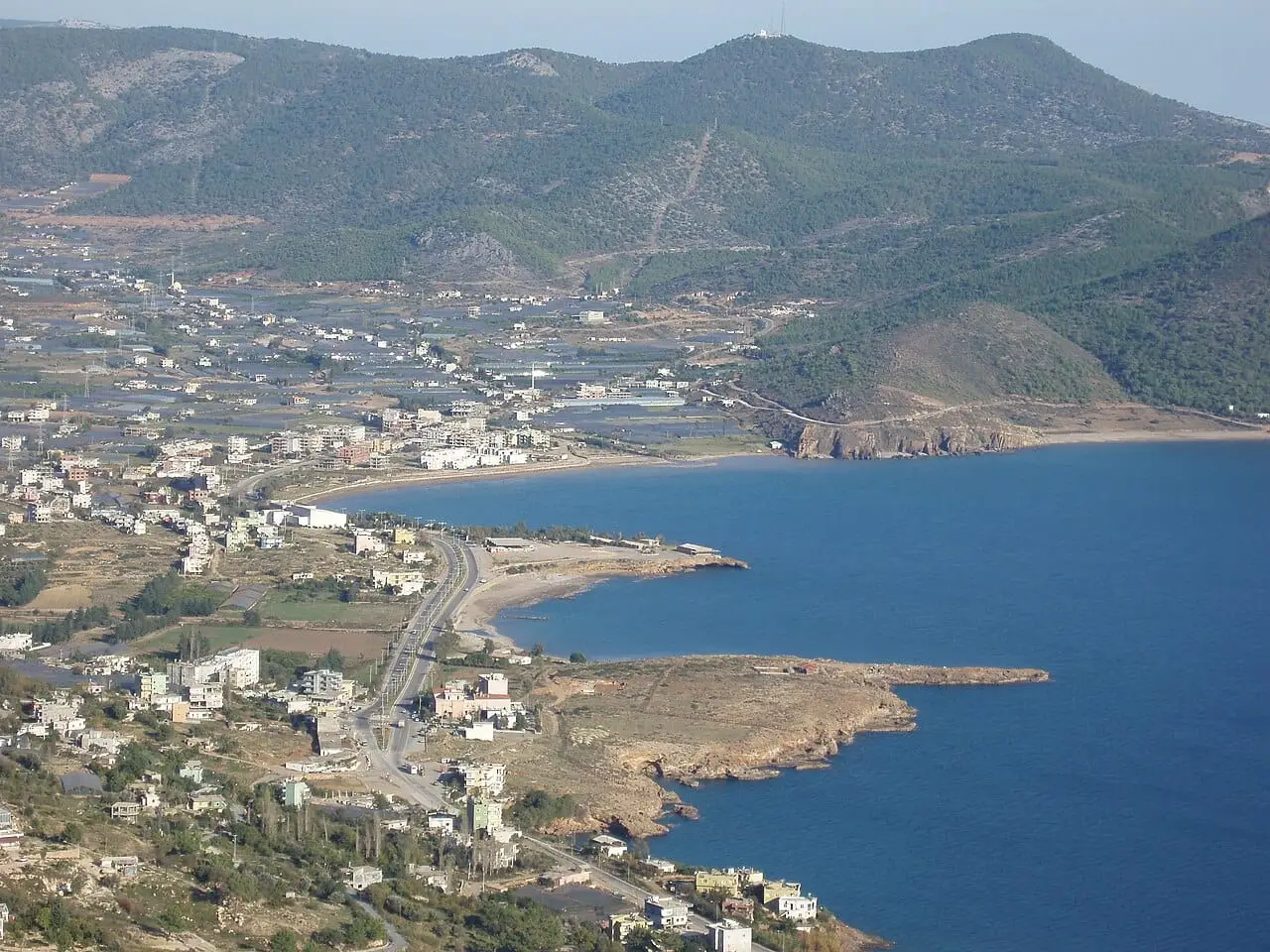
8 places to visit in the Aydıncık district of Mersin: Kelenderis Antik Kenti (Kelenderis ancient city), Aydıncık Plajları and Liman Castle. Plan your trip to Aydıncık with local food, practical tips and transport information.
Aydıncık is a district of Mersin Province, set on the slopes of the easternmost branch of the Taurus Mountains where they run down to the Mediterranean coast. It covers 352 km² and lies 13 metres above sea level. In antiquity the district was known as Kelenderis, and it has been home to several civilisations.
According to myth, Kelenderis was founded by the Phoenicians, who were advanced in seafaring and trade. The city was ruled by the Hittites, Assyrians, Sisamians, Seleucids, Egyptians, Romans, Byzantines and Ottomans. Kelenderis first flourished in the 5th and 4th centuries BC, and its own coinage began to appear in the 5th century BC. In 1228, Ertokuş Bey, one of the commanders of Karamanoğlu Alaeddin Bey, took Kelenderis Castle from the Armenians and settled Turks there. The Greeks of the district left via Cyprus for Greece under the population exchange.
Aydıncık lies on the Mediterranean coast of the Mediterranean Region, on the slope of the easternmost branch of the Taurus Mountains. It is 173 km from Mersin city centre. Gülnar lies to the north, Silifke to the east, Bozyazı to the west and the Mediterranean to the south. The district’s coastline is 38 km long and, though not as indented as the Aegean coast, is irregular. From Taşmasa, a hill overlooking the district centre, a mountain range running parallel to the coast east of the centre can be seen extending into the Mediterranean, forming Sancak Cape. Between Sancak Cape and Büyükalan there are 4 small islands: Yelkenliada, Küçükada, Büyükada and Yılanlıada.
In antiquity the city, known as Celenderis, Kelenderis and Gilindire, developed into an important port city because of its location closest to Cyprus. Aydıncık became a separate district in 1987, when it was split from Gülnar. The ancient writer Apollodorus notes that Kelenderis was founded by Sandokos from Syria. Archaeological excavations have uncovered Seleucid-period ceramics and a Roman-period theatre and monumental tomb. Kelenderis first flourished in the 5th and 4th centuries BC. The Dört Ayak monumental tomb is dated to the late 2nd or early 3rd century AD.
Last updated:
The walls surrounding the peninsula to the south of the city and the remains of a castle can still be seen today.
View on mapTwo castles near the city, both in ruins.
View on mapIn antiquity Aydıncık was known as Kelenderis. It was a harbour and trading city founded by the Phoenicians in the 5th century BC.
View on mapA monumental tomb with a pyramidal roof, built of large cut limestone blocks in the city centre. It is regarded as the most striking ancient structure in the district.
View on mapThe most distant of the four small islands off Aydıncık. It is described as a first-degree archaeological site.
View on mapA hill overlooking the district centre, from which the town and the Mediterranean can be seen.
View on mapCaves in the area between Gemidurağı and Yelkenliada, which are the habitat of the Mediterranean monk seal.
View on map
While you are in Aydıncık, you can also see the highlights of Mersin province. These places are in other districts; Aydıncık is about 180 km from the provincial centre.
Finely chopped beef, fried in oil and wrapped in lavash bread. Because it is made with fresh, natural ingredients, it is a healthy choice.
Fresh Mediterranean fish grilled and served. Prepared from recipes passed down through the generations, this dish is an important part of the local culinary culture.
Aydıncık is home to the ancient harbour of Kelenderis. The city, once an important trading port, reflects the history of Mediterranean maritime trade.
Aydıncık's economy is based on agriculture and fishing. Citrus fruit and bananas are the main crops.
Aydıncık is 180 km from Mersin city centre. It lies on the Antalya–Mersin coast road.
The highlights of Aydıncık are 8 places: Kelenderis Ancient City, Aydıncık Plajları, Liman Castle, Dört Ayak Anıt Mezarı, Yılanlıada, Taşmasa, Akdeniz foku mağaraları and Duruhan ve Bodur kaleleri.
Tantuni and Balık Izgara are the standout dishes on Aydıncık's tables.
Aydıncık is known for Citrus Fruit and the Kelenderis Heritage. Citrus fruit is grown around Aydıncık.
Aydıncık is 180 km from Mersin city centre. It lies on the Antalya–Mersin coast road.