Akçakoca Tarihi Evleri (Historic Houses of Akçakoca)
Examples of civil architecture in Akçakoca and its villages.
View on map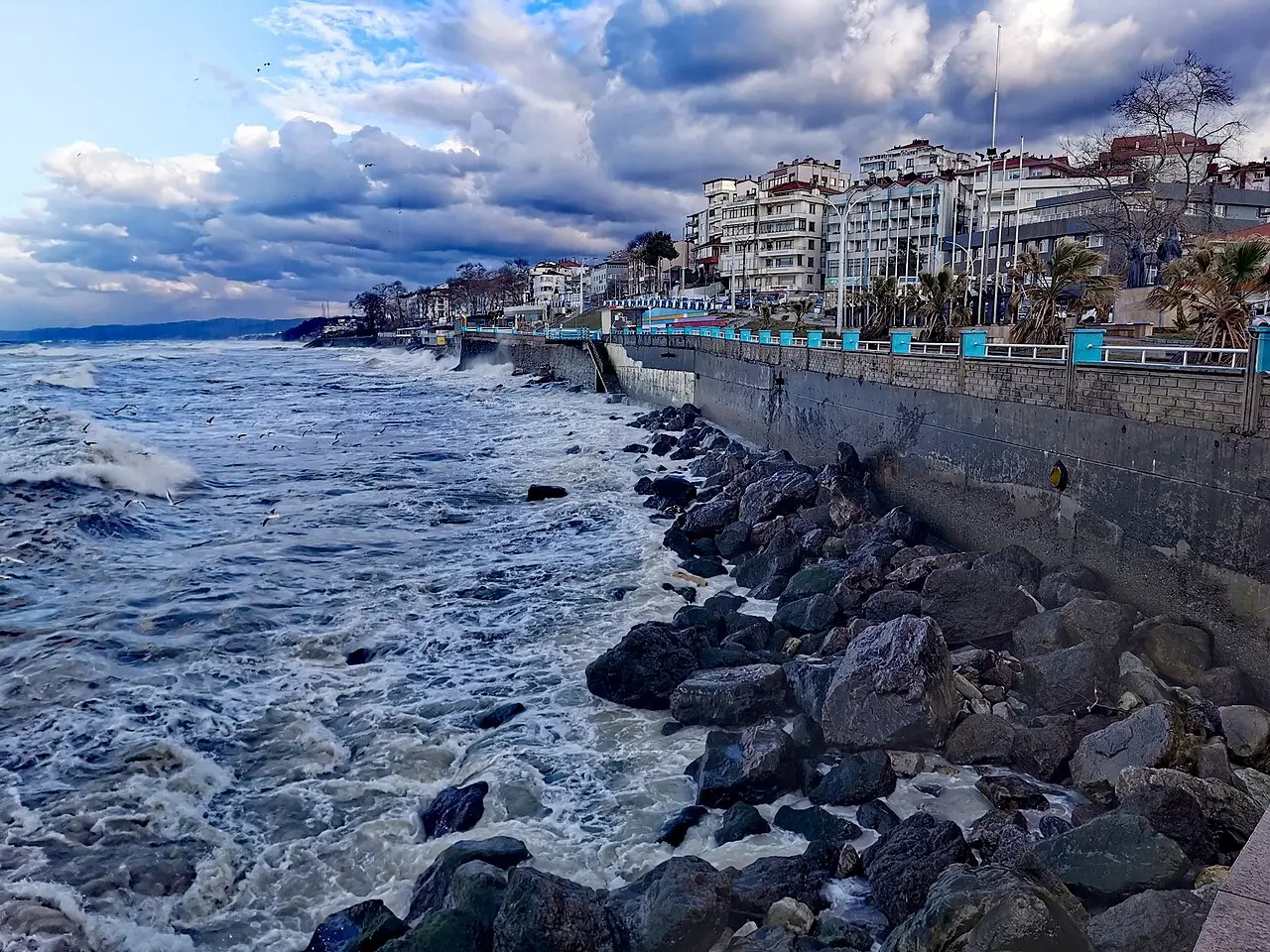 Photo: Murat Özsoy 1958 (CC BY-SA 4.0) · Source
 11 places to visit in the Akçakoca district of Düzce: Ceneviz Kalesi (Genoese Castle), Merkez Camii (Merkez Mosque) and Atatürk Caddesi (Atatürk Street). Plan your trip to Akçakoca with local food, practical tips and transport information.
Akçakoca is a district of Düzce province in the Western Black Sea Region. It has a 35 km beach along the Black Sea coastline. The district covers 380 km², and its average elevation above sea level is 10 metres.
The district began to become a tourist destination especially after 1950. Beyond its sea and beaches, it attracts tourists with its unspoilt natural beauty. The vegetation, made up of beech, chestnut, lime, plane and oak trees, attracts holidaymakers.
Finds from excavations in the area are thought to belong to the Thracian tribes who crossed into Anatolia via the Thracian route around 1220 BC. During the Roman period it was known as ‘Dia-Diospolis’, meaning ‘Shining City’, and was recognised as an important port and trade centre. In the Ottoman Beylik period, it was conquered in 1319 by Konur Alp, Orhan Gazi’s tutor (lala) and one of the akıncı beys. In 1934 the area, then a nahiye called Akçaşehir, was renamed and became the district of Akçakoca.
Akçakoca is one of the westernmost districts on the Black Sea coast of the Black Sea Region. Hazelnut production plays a major role in the people’s income. The settlement lies roughly midway between Istanbul and Ankara. It becomes particularly busy at weekends.
A festival is held in Akçakoca every year as a tradition. It has gradually begun to rank among the best festival organisations in Türkiye.
Akçakoca was attached to Düzce when Düzce became a province in December 1999. Akçakoca became a district in 1934, taking the name of Akçakoca Bey. The Genoese Castle and its surroundings date from the Hellenistic and Roman periods. Akçakoca continued to exist as a city of the Roman Empire under the name Diapolis in AD 395.
Last updated:
Examples of civil architecture in Akçakoca and its villages.
View on mapA historic school building in Orhangazi Neighbourhood.
View on mapA historic castle dating from the Roman period, which attracts visitors with its picnic area and castle beach.
View on mapAn interesting mosque in the local architectural style. Although it is reminiscent of Far Eastern architecture, it was inspired by the Yörük tent. The interior of the mosque is column-free.
View on mapA mosque in the city centre, notable for its unusual appearance.
View on mapThe coast, which fills with tourists in summer and whose season ends at the end of October.
View on mapTraditional examples of architecture of high cultural value.
View on mapA street closed to vehicle traffic on summer evenings, with extremely modern cafés.
View on mapWhile you are in Akçakoca, you can also see the highlights of Düzce province. These places are in other districts.
Akçakoca Mancarlı Pidesi was registered as a protected geographical indication on 29 December 2017 (TÜRKPATENT registration no. 321). Product group: bakery and pastry products, dough products, sweets. Registered by: Akçakoca Chamber of Commerce and Industry.
Akçakoca Melengücceği Tatlısı was registered as a protected geographical indication on 18 December 2017 (TÜRKPATENT registration no. 279). Product group: bakery and pastry products, dough products, sweets. Registered by: Akçakoca Chamber of Commerce and Industry.
After the Russo-Turkish War of 1877–1878, Laz, Georgian and Abkhaz communities who migrated from the Caucasus settled in Akçakoca. This multicultural character is reflected in every area, from the district's cuisine to its architecture.
The district takes its name from Akçakoca Bey, a Turkish commander who brought the region under Ottoman rule in the 14th century. A statue erected in his honour in the city centre is a symbol of the district's historical identity.
Akçakoca's economy is based on hazelnut farming, tourism and fishing. The district is one of the region's most important hazelnut production centres, and coastal tourism is an important source of income in the summer months. The summer population increases significantly with summer-house owners and tourists.
Akçakoca is about 200 km from Istanbul. It can be reached from Düzce city centre in 40 minutes via the D-655 highway. The nearest airport is reached via Düzce, with a connection to Bolu-Yeniçağa. It can be easily reached by road from Istanbul and Ankara.
The top 11 places in Akçakoca: Ceneviz Castle, Merkez Mosque, Atatürk Caddesi, Çantı Evleri, Aktaş Waterfall, Fakıllı Cave, Kurugöl Canyon, Akçakoca Merkez Mosque, Akçakoca Tarihi Evleri, Akçakoca Coast and Orhangazi İlköğretim Okulu.
Akçakoca Mancarlı Pidesi and Akçakoca Melengücceği Tatlısı are the standout dishes on Akçakoca's tables.
Akçakoca is known for Akçakoca Ekşilisi and Multicultural Migration Heritage. It is a product registered with TÜRKPATENT as a protected geographical indication.
Akçakoca is about 200 km from Istanbul. It can be reached from Düzce city centre in 40 minutes via the D-655 highway. The nearest airport is reached via Düzce, with a connection to Bolu-Yeniçağa. It can be easily reached by road from Istanbul and Ankara.
Suggested visit length: 1–2 days. Best time to visit: summer months (June–September).