A route from the lakes and forests of Bolu to the historic houses of Safranbolu (Karabük), Amasra (Bartın), Kastamonu and Sinop, the northernmost point of the Black Sea coast.
Best time: May–October. The forests turn colourful in autumn; the coastal towns are busy in summer.
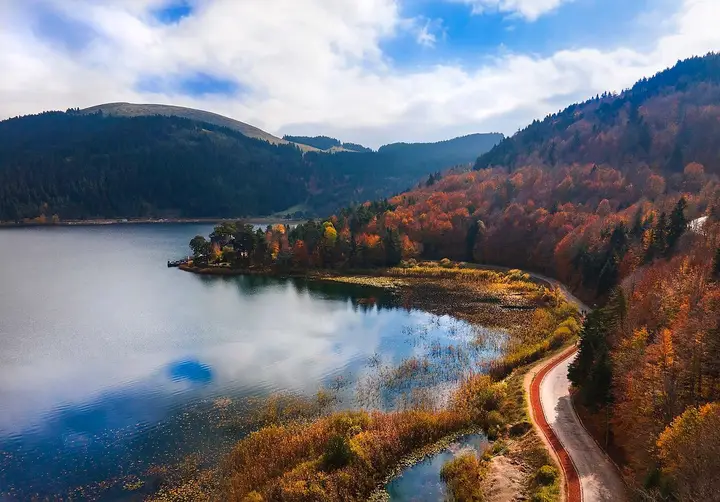
Lake Abant National Park — A landslide-dammed lake in the Mudurnu district, 35 km south-west of Bolu at an altitude of about 1,330 metres; the 125-hectare…
Yedigöller National Park — Seven lakes formed when landslides blocked valleys, some of them connected underground, and beech forests reminiscent of a "sea…
Gölcük Nature Park — A 4.5-hectare forest lake 13 km south of Bolu at an altitude of 1,217 metres; the wooden lake house on the shore is the most…
Lake Sünnet — A narrow lake 1,100 metres long, 22 km east of Göynük at an altitude of 1,030 metres, formed when two landslides blocked the Gök…
Mudurnu — An Ottoman town 52 km from Bolu that developed on the Silk Road; it has a well-preserved urban fabric of wooden mansions, a…
Mudurnu Yıldırım Bayezid Mosque — Built in 1374 during Yıldırım Bayezid's time as prince governor of Bolu, this is one of the finest examples of early Ottoman…
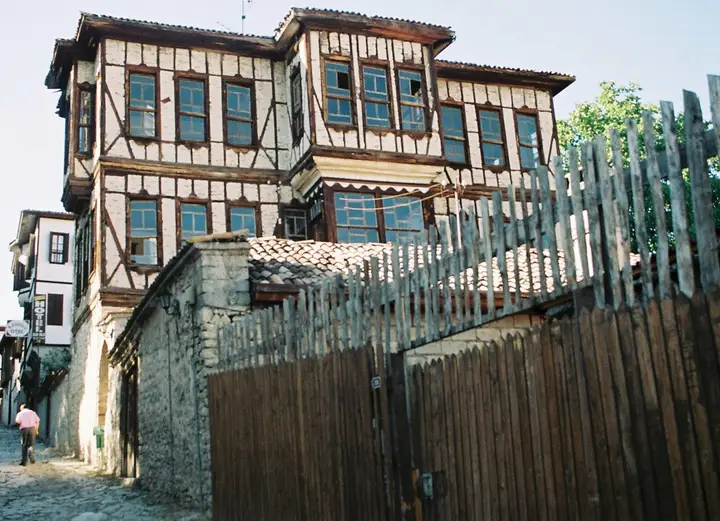
Historic Houses of Safranbolu (UNESCO) — A historic town that preserves its 18th- and 19th-century Ottoman townscape as a whole, with whitewashed mansions with timber…
Cinci Han — A large caravanserai in the centre of Safranbolu Çarşı, built between 1640 and 1648 by Cinci Hoca (Hüseyin Efendi), the tutor of…
Yemeniciler Arasta — A covered market street in Safranbolu Çarşı dating from the 17th century, where yemeni (leather shoe) makers once worked. Today…
İncekaya Aqueduct — An aqueduct with one main arch and five supporting arches, spanning Tokatlı Canyon north of Safranbolu. It was extensively…
Tokatlı Canyon and Glass Viewing Terrace — A deep canyon just north of Safranbolu, with a glass viewing terrace extending over the canyon and a walking path along the…
Hıdırlık Hill — A viewpoint overlooking Safranbolu Çarşı, with the Hasan Paşa Tomb; the finest panorama of the houses is seen from here.
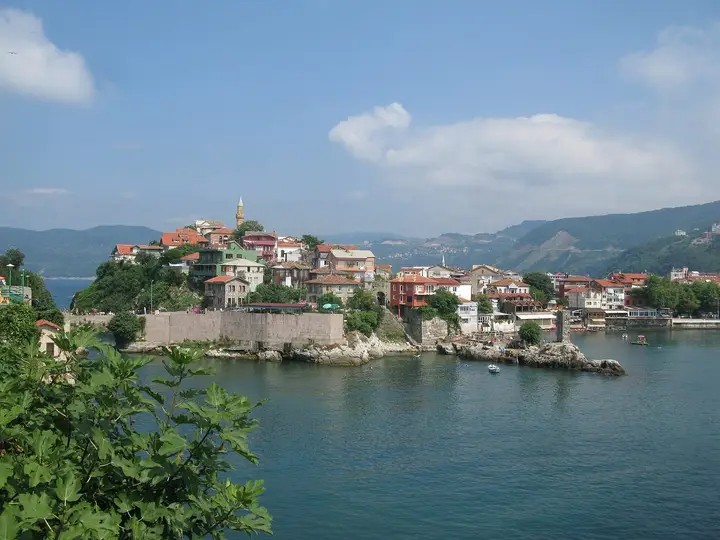
Amasra Castle — Built in the Roman period and repaired in the Byzantine, Genoese and Ottoman periods, the castle consists of two parts, Sormagir…
Kemere Bridge — A single-arched stone bridge that joins the two parts of Amasra Castle, on the peninsula and on Boztepe Island; built in the…
Amasra Fatih Mosque — Originally a Byzantine church built in the 9th century, the building was converted into a mosque after Sultan Mehmed the…
Amasra Museum — Opened in its present building in 1982, the museum displays works from the Hellenistic, Roman, Byzantine, Genoese and Ottoman…
Kuşkayası Road Monument — A Roman monument carved into the rock beside the old road, 4 km from Amasra; it was commissioned in the 1st century AD by Gaius…
Güzelcehisar Basalt Columns — On the Bartın coast, pentagonal basalt columns up to 50 metres high, stretching for 5 km, formed about 80 million years ago…
Bartın İşi Tel Kırma (Bartın wire-breaking embroidery)Bartın İşi Tel Sarma (Bartın wire-wrapping embroidery)Kurucaşile Taş Sac (Kurucaşile stone griddle)
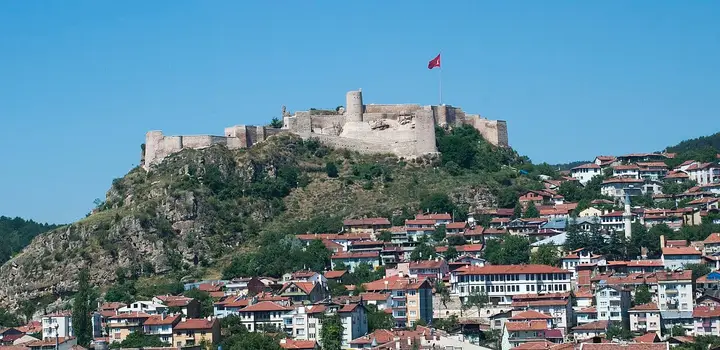
Kastamonu Castle — Standing on a rock about 860 metres high south-west of the city centre, the castle is believed to have been built in the 10th…
Kasabaköy Mahmut Bey Mosque — Built in 1366 in the Candaroğulları period in the village of Kasaba, 18 km from Kastamonu, the mosque is known as the "Nail-less…
Nasrullah Mosque — Built in 1506 by Kadı Nasrullah in the reign of Bayezid II, with its square, ablution fountain and bridge it has the character…
Kastamonu Archaeology Museum — In the former Committee of Union and Progress club building, a work of the architect Mimar Kemaleddin Bey, the museum displays…
Valla Canyon — At Pınarbaşı, the canyon cut through the Küre Mountains by the Devrekani Stream is about 12 km long and 800 metres deep, among…
Küre Mountains National Park — A national park on the Kastamonu–Bartın border protecting the canyons, caves and old-growth forests of the Western Black Sea…
Local food
🍖 Taşköprü Kuyu Kebabı (pit-cooked lamb kebab) 🥘 Kastamonu Tiridi (bread and broth dish) 🥙 Daday Etli Ekmeği (meat-topped flatbread) 🍬 Kastamonu Çekme Helvası (pulled halva) 🥩 Kastamonu Pastırması 🥣 Pınarbaşı Kara Çorba (black soup)
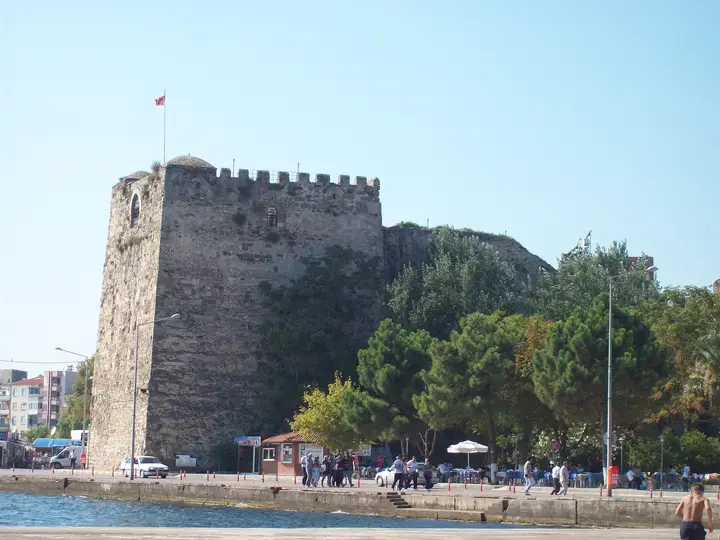
Sinop Castle — Surrounding the Sinop peninsula and dating from the 7th century BC, its walls are 2,050 metres long, 25 metres high and 3 metres…
Sinop Historic Prison — A two-storey cut-stone building with a U-shaped plan and 28 wards, beside the castle walls; known as the "Alcatraz of Anatolia"…
Hamsilos — A bay at İnceburun, at the northernmost tip of Türkiye, that runs 300–400 metres inland from the mouth of the Deveci Stream; it…
Erfelek Tatlıca Waterfalls — A series of 28 waterfalls on the Karasu Stream, about 10 km from Erfelek and 45 km from Sinop, in a valley that came to light…
Alaaddin Mosque — A Seljuk-period mosque and its courtyard in the centre of Sinop.
Boztepe — A peninsula 8–9 km long that carries most of the city of Sinop; the only natural harbour on the Turkish coast of the Black Sea…
Local food
🥟 Sinop Mantısı 🐟 Sinop Lakerdası (salt-cured bonito) 🐠 Sinop Kotrası 🥖 Sinop Nokulu 🍢 Boyabat Sırık Kebabı (pole kebab)