An Eastern Anatolia route from Erzurum to Kars, home of the ruins of Ani, to the İshak Pasha Palace at the foot of Mount Ararat, to the shores of Lake Van and to Bitlis with Ahlat and the Nemrut crater lake.
Best time: June–September. Winters are long and very cold; high passes can close because of snow.
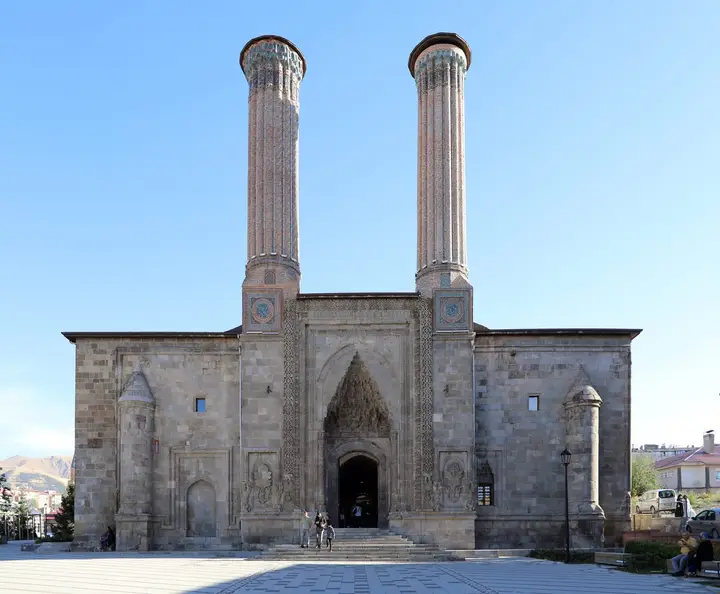
Çifte Minareli Madrasa — The symbol of the city, a two-storey Seljuk madrasa with an open courtyard, built in the mid-13th century. It is famous for its…
Yakutiye Madrasa — Built in 1310 by Hoca Cemalettin Yakut during the reign of the Ilkhanid ruler Öljeitü, this is the largest madrasa with a…
Erzurum Grand Mosque — Built in 1179 under the Saltukid ruler Melik Nasirüddin Muhammed, this is the oldest and largest mosque in the city, also known…
Three Tombs (Üç Kümbetler) — Three monumental tombs south of the Çifte Minareli Madrasa, dating from the 12th to 14th centuries. The largest is the octagonal…
Erzurum Castle and Clock Tower — The inner citadel on the highest point of the city, founded in the Byzantine period and repaired under the Saltukids and the…
Lala Mustafa Paşa Mosque — A classical Ottoman mosque attributed to Mimar Sinan, built in 1562–1563 for Lala Mustafa Paşa, the beylerbey of Erzurum. With…
Local food
🍢 Oltu Cağ Kebabı (horizontal spit-roasted lamb) 🍯 Erzurum Kadayıf Dolması (walnut-filled kadayıf) 🥧 Erzurum Su Böreği (boiled-pastry börek) 🥣 Ayran Aşı Çorbası (yoghurt and wheat soup) 🍮 Erzurum Hurma Tatlısı (syrupy dough dessert) 🍲 Hasıta
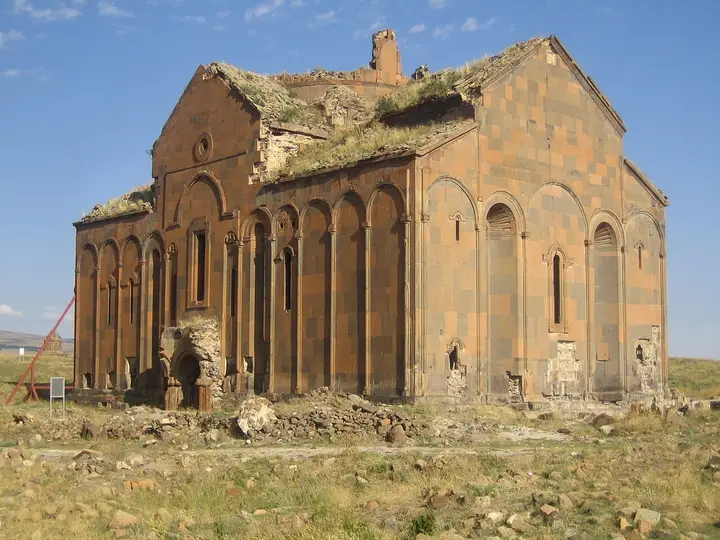
Ani Ruins — A medieval city on the banks of the Arpaçay, 45 km east of Kars, the capital of the Bagratid kings from 961 to 1045; with its…
Ebu'l Menüçehr Mosque (Ani) — A building at Ani that is thought to have been commissioned by the Shaddadid ruler Ebu'l Menüçehr after the conquest of 1064 and…
Kars Castle — According to its inscription, a castle built in 1152 on the order of the Saltukid Sultan Melik İzzeddin, destroyed by Timur in…
Church of the Apostles (Kümbet Mosque) — A church built in the 10th century under the Bagratid King Abbas I, with reliefs of the twelve apostles on its drum; it was…
Fethiye Mosque — A building of dark and light tuff, built in the late 19th century in the Russian period as the Alexander Nevsky Church; it was…
Kars Museum — A museum founded in 1959 and moved to its present building in 1981; it displays finds from Ani, Urartian and Bronze Age works…
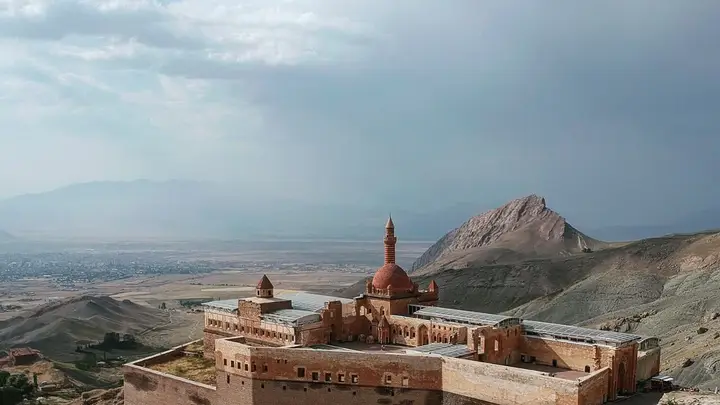
İshak Paşa Palace — The palace in Doğubayazıt was begun in 1685 by Çolak Abdi Paşa of the Çıldır Atabeys and completed in 1784, after 99 years, in…
Mount Ağrı — At 5,137 metres, the highest mountain in Türkiye; it is 16 km from Iran and 32 km from Armenia, and about 35 per cent of it lies…
Mount Ağrı National Park — A national park of 88,014 hectares declared in 2004; it covers Mount Ağrı (5,137 m) and Little Ağrı (3,898 m), the largest…
Old Bayazıt Castle and Ruins — The castle at Upper Bayazıt (Yukarı Bayazıt), where Doğubayazıt was first founded, and Urartian tombs lie around it. The castle…
Ahmed-i Hânî Tomb — The tomb of Ahmed-i Hânî, poet and scholar and author of the mesnevi Mem û Zîn, stands close to İshak Paşa Palace and is a…
Durupınar Formation (Noah's Ark) — A ship-shaped limonite formation 164 metres long, at 1,966–2,004 metres, 16 km south-east of Doğubayazıt near the village of…
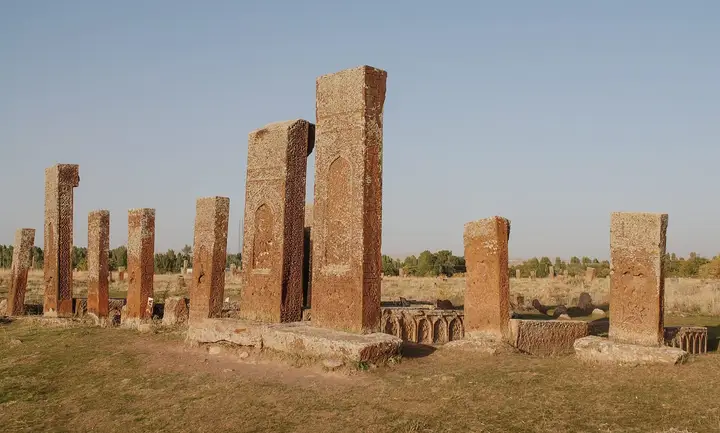
Ahlat Seljuk Cemetery — The world's largest Turkish-Islamic cemetery, with about 8,200 gravestones over 210 decares; it has tombstones up to 3.5 metres…
Ahlat Ulu Kümbet (Great Tomb) — The largest Seljuk tomb in Ahlat; with its cylindrical body and cut-stone decoration, it is the most monumental example of Ahlat…
Emir Bayındır Tomb — A monumental tomb built in 1481 for the Aq Qoyunlu lord Emir Bayındır by his wife Şah Selime Hatun, also called the 'Parmaklıklı…
Ahlat Museum — Opened in a new building in 2018, the museum displays Urartian steles, Seljuk gravestones, manuscripts and works relating to the…
Nemrut Crater Lake — In the caldera of the Nemrut stratovolcano between Tatvan, Ahlat and Güroymak, at 2,247 metres, this is Türkiye's largest crater…
Mount Süphan — A stratovolcano north of Lake Van and the third-highest peak in Türkiye after Mount Ağrı and the Cilo mountains; June–September…