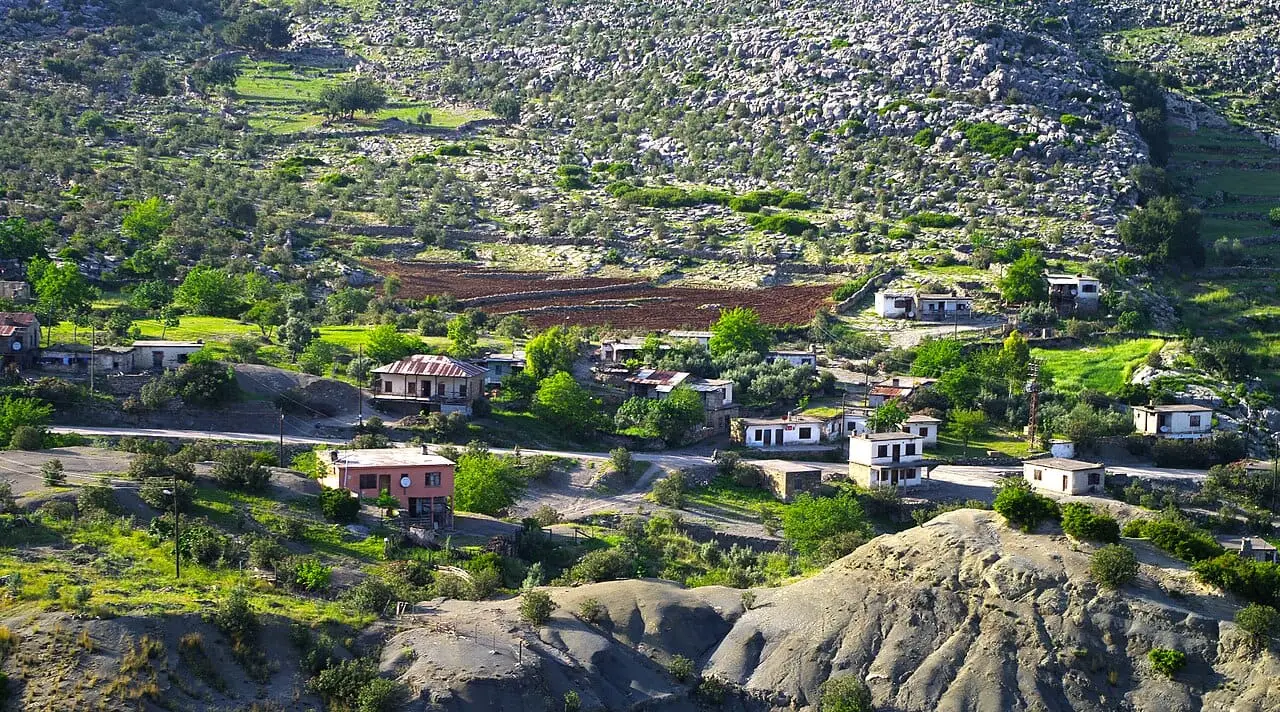
9 places to visit in the Aladağ district of Adana: Meydan Castle, Küp Waterfalls and Akören Ancient City. Plan your trip to Aladağ with local food, practical tips and transport information.

Share with friends

Aladağ is a district of Adana province. The district covers 1,340 km² and had a population of 15,897 at the 2022 census. Its altitude is 855 metres. It gained district status in 1987.

The district centre is the town of Aladağ. The district includes the part of the Taurus Mountains known as the Aladağlar, from which it takes its name. As it lies in a mountainous area, agricultural productivity is low.

Among its most famous attractions are the Küp Waterfall, Meydan Castle, Kapuzbaşı Cataract, Mazılık Ören Castle and Acı Su.

History and Culture

The 572 historical inscription found in the Byzantine church at Akören shows that the region’s history goes back to the early Byzantine period.

Last updated:
Places to Visit in Aladağ

  • 2 Historic
  • 1 Ancient City
  • 6 Nature

Historic Sites 2

Historic

Meydan Castle

An important historic structure for the district's tourism.

View on map
Historic

Mazılık Church

Mazılık is a settlement from the late antique and Byzantine periods, known for its small but impressive basilica church.

View on map

Ancient Cities 1

Akören Ancient City - Aladağ Photo: Zeynel Cebeci (CC BY-SA 4.0) · Source
Ancient City

Akören Ancient City

This ancient settlement in Akören village, dating from the Byzantine period, is known for the basilica ruins locally called the Broken Church. Water cisterns and traces of settlement show the dense population of the region in late antiquity.

View on map

Natural Wonders 6

Nature

Küp Waterfalls

A group of nine closely spaced waterfalls fed by cold water from the Taurus Mountains, set in lush greenery, making it the most visited spot in the district. Drive carefully through the narrow tunnel at the entrance; it gets crowded on summer weekends.

View on map
Nature

Bığbığı Cave

This cave on Meydan Plateau bears traces of the district's karst structure. Deep sections should not be entered without a guide.

View on map
Nature

Acısu Spring

A mineral water spring about 40 km from the district centre, known for its mineral-rich water and the plateau scenery around it.

View on map
Nature

Kapuzbaşı Waterfalls

Just beyond the Aladağ border, in Yahyalı district of Kayseri, these waterfalls are among Türkiye's most impressive waterfall groups, with dozens of cascades tumbling down the rock face. Reachable from Aladağ as a day trip.

View on map
Nature

Aladağlar National Park

Part of the national park, which covers the highest section of the Taurus Mountains, lies within the district boundaries. Climbs to the summits and walks on the plateaus should be made with an experienced guide.

View on map
Nature

Aladağ Meydan Plateau

A plateau at an altitude of 1,700 m, set among juniper, pine, fir and cedar trees and orchards.

View on map

Places to Visit Around Adana Province

See all →

While you are in Aladağ, you can also see the highlights of Adana province. These places are in other districts.

  • Taşköprü (Stone Bridge) — A Roman bridge linking the two banks of the Seyhan River, probably built in the first half of the 2nd century AD and attributed to Emperor Hadrian.
  • Great Clock Tower — Begun in the time of Governor Ziya Paşa and completed in 1882 under Abidin Paşa, this 32-metre brick tower is the tallest clock tower in Türkiye.
  • Adana Grand Mosque — Begun by Ramazanoğlu Halil Bey in 1509 and completed by his son Piri Mehmet Paşa in 1541, the mosque is the masterpiece of the Ramazanoğulları Principality.
  • Yağ Mosque — This multi-columned building was formed when the Armenian Church of Surp Hagop was converted into a mosque in 1501 under Ramazanoğlu Halil Bey and merged with the new mosque that Piri Mehmet Paşa had built beside it; it is among the oldest mosques in the city.
  • Ramazanoğlu Mansion — According to the inscription over its door, the harem section of this mansion, south-east of the Grand Mosque, was completed by Halil Bey in April 1495. One of the oldest examples of a mansion in Türkiye, it hosted the Ottoman sultans who came to Adana, and today it is used as a cultural centre.
  • Sabancı Central Mosque — Opened for worship in 1998 on the west bank of the Seyhan River, south of Central Park, the mosque can hold 28,500 people including its open areas, making it one of the largest mosques in the region.

Practical Information for Visiting Aladağ

Suggested time
2–3 days
Best time to visit
May–October
Places to visit
9 places

What to Eat in Aladağ

Food guide →
  • Keşkek (wheat and meat porridge)

    This traditional dish is made by boiling cracked wheat and meat for a long time and then pounding them together. In the mountain villages of Aladağ it is a must at wedding and festival tables. It is served with butter.

  • Tarhana Çorbası (tarhana soup)

    Tarhana dough is prepared in the district in the summer months and dried to be stored for winter. Drunk piping hot in Aladağ's harsh winter climate, this soup has its own distinctive flavour from a blend of yoghurt, tomato and spices.

  • Arabaşı (chicken and yoghurt soup)

    This local soup is made by adding a mixture of flour and yoghurt to chicken broth. It is a staple of winter tables in the mountain villages of the Taurus. Served with shredded chicken meat.

  • Bazlama (flatbread)

    This traditional bread is cooked on a sač griddle and is an inseparable part of Aladağ's plateau culture. It is eaten at breakfast with fresh butter and honey.

Culture, Local Products and Economy of Aladağ

  • Aladağ Nature and Art Festival

    Organised by Adana Governorship and Aladağ Municipality, this festival aims to raise awareness of nature conservation and to make nature-related issues visible through art. It features local and national artists.

  • Plateau Migration Tradition

    The migration of lowland people from Çukurova to the Aladağ plateaus during the hot summer months is a tradition that has continued for centuries. This seasonal migration forms one of the cornerstones of the region's cultural identity.

  • Yörük Culture

    The Yörük tradition, still kept alive in the mountain villages of Aladağ, carries traces of a nomadic livestock culture. Felt-making, kilim weaving and traditional tent life are important elements of this culture.

Local Products

  • Mountain Honey — Mountain honey made from the rich flora of the Aladağlar is the most valued natural product of the region. This honey, with its thyme and flower aromas, is produced by traditional methods on the district's plateaus.
  • Tarhana — Tarhana is made by mixing yoghurt, tomato, pepper and wheat flour and drying the mixture. It is the most important product of Aladağ's winter preparations.
  • Goat's Cheese — This cheese is produced from the milk of goats raised in the mountain villages and reflects the region's livestock tradition. It matures in a natural environment, gaining its distinctive firm texture and sharp aroma.

Economy

The economy of Aladağ rests largely on agriculture and livestock farming. Small livestock dominates in the mountainous terrain, while grain and fruit are grown in the valleys. Forestry is also an important sector contributing to the district's economy. In recent years, with the growing recognition of natural attractions such as the Küp Waterfalls and Kapuzbaşı Waterfall, eco-tourism has begun to develop. The district also has chromium ore deposits, and mining activities contribute to the economy.

How to Get to Aladağ

Aladağ is about 92 km from Adana city centre and is reached by road. The nearest airport is Çukurova International Airport, on the border of Tarsus district in Mersin. Regular minibus services run from Adana's intercity bus terminal to Aladağ. The district lies in a mountainous area at an altitude of 921 metres, so road conditions should be checked in winter.

Get directions on Google Maps Getting to Adana

Aladağ: Frequently Asked Questions

What are the places to see in Aladağ?

The highlights of Aladağ are 9 places: Meydan Castle, Küp Waterfalls, Akören Ancient City, Bığbığı Cave, Acısu Spring, Kapuzbaşı Waterfalls, Aladağlar National Park, Mazılık Church and Aladağ Meydan Plateau.

What is there to eat in Aladağ?

Keşkek, Tarhana Çorbası, Arabaşı and Bazlama are the standout flavours on Aladağ's tables.

What is Aladağ famous for?

Aladağ is known for its Mountain Honey and the Aladağ Nature and Art Festival. Mountain honey made from the rich flora of the Aladağlar is the most valued natural product of the region. This honey, with its thyme and flower aromas, is produced by traditional methods on the district's plateaus.

How do I get to Aladağ?

Aladağ is about 92 km from Adana city centre and is reached by road. The nearest airport is Çukurova International Airport, on the border of Tarsus district in Mersin. Regular minibus services run from Adana's intercity bus terminal to Aladağ. The district lies in a mountainous area at an altitude of 921 metres, so road conditions should be checked in winter.

How much time should I set aside for a trip to Aladağ?

Suggested trip length: 2–3 days. Best time to visit: May–October.

Continue Your Trip

Other Districts of Adana

Search 81 province guides and 968 district guides.