Built on both banks of the Seyhan River, Adana is the heart of the Çukurova, with its Roman Taşköprü (Stone Bridge), the mosques of the Ramazanoğulları, the largest museum complex in Türkiye and its famous kebab. Stretching from the Taurus highland pastures to the Mediterranean lagoons, the province is ideal for anyone who wants to combine a city break with nature and ancient-city routes.

Share with friends

Last updated:

Places to Visit in Adana

28 places worth seeing in Adana, from historic monuments to natural wonders, grouped by type. Open any of them on the map with a single click.

  • 10 Historic
  • 5 Ancient City
  • 3 Religious
  • 2 Museum
  • 6 Nature
  • 2 Attraction

Historic Sites 10

Historic

Taşköprü (Stone Bridge)

A Roman bridge linking the two banks of the Seyhan River, probably built in the first half of the 2nd century AD and attributed to Emperor Hadrian. Originally 310 metres long with 21 arches, it lost seven of them under the ground when the river was regulated. Restored in 2006–2007, Taşköprü is one of the oldest bridges in the world still in use, and it is the finest spot in the city for river views at sunset.

View on map
Historic

Great Clock Tower

Begun in the time of Governor Ziya Paşa and completed in 1882 under Abidin Paşa, this 32-metre brick tower is the tallest clock tower in Türkiye. Standing in the Karasoku neighbourhood, it forms the centre of historic Adana together with the old bazaar and caravanserais around it.

View on map
Historic

Ramazanoğlu Mansion

According to the inscription over its door, the harem section of this mansion, south-east of the Grand Mosque, was completed by Halil Bey in April 1495. One of the oldest examples of a mansion in Türkiye, it hosted the Ottoman sultans who came to Adana, and today it is used as a cultural centre.

View on map
Historic

Tepebağ Mound and Houses

Continuously inhabited since the Early Bronze Age, Tepebağ is the oldest settlement in Adana and has been excavated since 2013. The restored old Adana houses around the mound, with their cobbled streets, are ideal for a short walk.

View on map
Historic

Varda Bridge

The railway bridge in the Hacıkırı neighbourhood of Karaisalı was built by the Germans in 1907–1912 for the Istanbul–Baghdad railway. The 172-metre bridge has a central pier 99 metres above the ground. It is about 64 km from Adana by road.

View on map
Historic

Kozan Castle (Sis Castle)

The castle of Sis, the capital of the Armenian Kingdom of Cilicia, stretches for about 700 metres along a narrow spur of the Taurus. With 44 towers and bastions, cisterns and dungeons, it is one of the largest fortified sites in the Levant; the total length of its outer walls approaches 3 kilometres.

View on map
Historic

Yılankale

The castle on a steep hill dominating the plain, 13 km from Ceyhan, was built by King Levon I of the Armenian Kingdom of Cilicia. The castle square, reached through three gates, controlled the Silk Road in the time of the Crusades; locally it is also known as Şahmeran Castle.

View on map
Historic

Kurtkulağı Caravanserai

According to its inscription, this caravanserai 12 km south-east of Ceyhan was built in 1659 by Hüseyin Paşa, and its architect was Mehmed Ağa. This Ottoman staging inn on the Adana–Aleppo caravan route, with walls as solid as a fortress, was restored in 2006.

View on map
Historic

Ayas Ancient City and Castle

Ancient Aigeai at Yumurtalık was the busiest port of Cilicia in the Middle Ages under the name Laiazzo; Marco Polo began his journey to China from here in 1271. The sea castle on the shore and the ancient theatre uncovered by excavations are the symbols of the district.

View on map
Historic

Sin Monastery

Carved into the steep cliffs on the east bank of the Göksu River in the Velicanlı neighbourhood of Kozan, this five-storey building draws attention for its setting, which resembles Sumela. The monastery has no inscription and is thought to have been built in the 10th–11th centuries; access is difficult and it awaits conservation work.

View on map

Ancient Cities 5

Ancient City

Anavarza Ancient City

Anazarbos, built at the foot of a rocky hill that rises like an island at Dilekkaya, 28 km south of Kozan, was the capital of Cilicia Secunda in the Late Roman period. With its triumphal arch, colonnaded streets, theatre, stadium, aqueducts and church ruins, it is the largest ancient city in the Çukurova; in 2014 it was added to the UNESCO World Heritage Tentative List.

View on map
Ancient City

Misis (Mopsuestia) and Mosaic Museum

Ancient Mopsuestia, in the Yakapınar town of Yüreğir 27 km from Adana, was founded on the Silk Road on the banks of the Ceyhan River. At the mosaic museum you can see mosaics preserved in situ, and the historic Misis Bridge, where legend says Lokman Hekim lost his recipe for immortality to the wind.

View on map
Ancient City

Sirkeli Mound

On a 30-metre-high mound on the bank of the Ceyhan River, 40 km east of Adana, there is a rock relief of the Hittite king Muwatalli II, who fought the Battle of Kadesh. It is one of the most important mounds in Cilicia.

View on map
Ancient City

Magarsus Ancient City

At the ancient city in the Dörtdirek locality on Fener Burnu, 4 km west of Karataş, Alexander the Great made a sacrifice to Athena Megarsis before the Battle of Issus. Ministry-funded excavations continue at its 3,000-seat theatre.

View on map
Ancient City

Şar (Comana) Archaeological Site

Comana, at Şar about 20 km north of Tufanbeyli, was a sacred centre where religious ceremonies were held in the Hittite period; in the Roman period it was known as Hierapolis.

View on map

Religious Buildings 3

Religious

Adana Grand Mosque

Begun by Ramazanoğlu Halil Bey in 1509 and completed by his son Piri Mehmet Paşa in 1541, the mosque is the masterpiece of the Ramazanoğulları Principality. It is famous for its walls decorated in black and white marble, an architecture that blends Seljuk and Mamluk styles, and its 16th-century tiles; the complex also includes a madrasa and the tomb of the beys.

View on map
Religious

Yağ Mosque

This multi-columned building was formed when the Armenian Church of Surp Hagop was converted into a mosque in 1501 under Ramazanoğlu Halil Bey and merged with the new mosque that Piri Mehmet Paşa had built beside it; it is among the oldest mosques in the city. It takes its name from the butter market (yağ pazarı) set up in front of it in the 19th century, and the madrasa next to it was completed in 1558.

View on map
Religious

Sabancı Central Mosque

Opened for worship in 1998 on the west bank of the Seyhan River, south of Central Park, the mosque can hold 28,500 people including its open areas, making it one of the largest mosques in the region. Designed by the architect Necip Dinç in the classical Ottoman style, it has six minarets and a main dome 32 metres in diameter.

View on map

Museums 2

Museum

Adana Museum Complex

Opened in 2017 through the conversion of the Millî Mensucat Factory, founded in 1907, the complex is the largest museum complex in Türkiye. It houses the Archaeology Museum, the Mosaic Exhibition Hall and the City, Agriculture and Industry museums; the statue of Tarhunna and the Achilles sarcophagus are the most notable exhibits.

View on map
Museum

Adana Cinema Museum

Opened on 23 September 2011 in a two-storey old Adana house in the Kayalıbağ neighbourhood, the museum is the second cinema museum in Türkiye. With a room devoted to Yılmaz Güney, posters by film-makers from Adana and a section on the history of the Golden Boll Festival, it is a favourite stop for film lovers.

View on map

Natural Wonders 6

Nature

Seyhan Reservoir and Dilberler Terrace

The roughly 68 km² lake of the Seyhan Dam, opened on 8 April 1956, lies just north of the city and has hosted water sports and, since 2006, the Turkish Offshore Championship races. Dilberler Terrace on the lakeshore and Yaşar Kemal Grove opposite are ideal for sunset walks.

View on map
Nature

Kapıkaya Canyon

Of the 20 km canyon carved by the Çakıt Stream, the western branch of the Seyhan, 7.25 km has been laid out as a walking trail. In the canyon, only 2 km from Varda Bridge, you walk among oleanders, olive trees, carob trees and plane trees; the wooden viewing terrace facing the waterfall is the finest point on the route.

View on map
Nature

Akyatan Lagoon

At about 14,000 hectares, Akyatan in Karataş is the largest lagoon lake in Türkiye. At the crossroads of migration routes from the Balkans and the Caucasus, thousands of waterbirds, including flamingos, winter here; the sandbar separating the lagoon from the sea is a nesting ground for green sea turtles.

View on map
Nature

Yumurtalık Lagoon National Park

The 16,430-hectare lagoon was declared a Ramsar site in 2005 and a national park in 2008. Home to loggerhead (Caretta caretta) and green sea turtles, the area is one of the most important conservation areas of the Seyhan–Ceyhan delta.

View on map
Nature

Küp Waterfalls

A natural area in the Aladağ district made up of nine separate waterfalls close to one another, it is one of the most popular places to cool off in summer, thanks to its cold water from the Taurus and its green surroundings.

View on map
Nature

Çatak (Obruk) Highland Pasture

On the highland pasture just near Saimbeyli, people picnic in arbours built on the trunks and branches of monumental plane trees fed by small waterfalls running down the mountainside; the icy water of the spring is known locally as 'watermelon-splitter'.

View on map

Attractions 2

Attraction

Kazancılar Bazaar

Built around the Great Clock, this historic bazaar keeps the trading fabric of old Adana alive with its coppersmiths and tradesmen. You can visit the bazaar on the same walk as the Grand Mosque and the Yağ Mosque.

View on map
Attraction

Central Park

Spreading over both banks of the Seyhan River, this 33-hectare city park lies just north of the Sabancı Central Mosque. With its walking and cycling paths, river views and the stands of the Flavour Festival in October, it is the city's meeting point.

View on map

Getting to Know Adana

Adana lies at the centre of the Çukurova, a plain formed by the alluvium carried by the Seyhan and Ceyhan rivers. With a population of more than 2.28 million in 2025, it is the seventh most populous province in Türkiye; of its 15 districts, Seyhan, Yüreğir, Çukurova and Sarıçam make up the city centre.

The city’s name is believed to come from Adaniya, a city of the kingdom of Kizzuvatna mentioned in Hittite sources. Tepebağ Mound in Seyhan, continuously inhabited since the Early Bronze Age, is the oldest known point of the city. Taşköprü, built over the Seyhan River in Roman times and today one of the oldest bridges in the world still in use, is the most visible witness to this long history.

In the Middle Ages the region belonged to the Armenian Kingdom of Cilicia, whose capital was present-day Kozan (Sis); Yılankale and Sis Castle date from this period. The Ramazanoğulları Principality, which dominated the region in the 14th century, left Adana the Grand Mosque complex and its mansion, completed in 1495; Ottoman sultans such as Yavuz Sultan Selim and Suleiman the Magnificent later stayed in the mansion.

At the end of the 19th century cotton and the railway reshaped the city: the Mersin–Tarsus–Adana railway opened in 1886, and Varda Bridge in the Taurus was completed in 1912 for the Baghdad Railway. Occupied by the French after the First World War, Adana was liberated on 5 January 1922, following the Ankara Agreement of 1921. The Seyhan Dam, opened in 1956 and built with the help of a young civil engineer named Süleyman Demirel, protected the plain from floods and gave the city its present-day lakeshore.

When to Go

Adana has a typical Mediterranean climate: winters are mild and rainy, summers long, hot and dry. Averages for 1929–2025 from the Turkish State Meteorological Service:

Month Avg. high Avg. low Rainfall Rainy days
January 14.9 °C 5.3 °C 111 mm 10
February 16.2 °C 6.1 °C 88 mm 10
March 19.5 °C 8.3 °C 65 mm 10
April 23.8 °C 12.0 °C 51 mm 9
May 28.3 °C 15.9 °C 48 mm 6
June 31.8 °C 19.9 °C 22 mm 3
July 33.9 °C 23.1 °C 10 mm 1
August 34.8 °C 23.5 °C 9 mm 1
September 33.2 °C 20.3 °C 19 mm 3
October 29.1 °C 15.9 °C 43 mm 5
November 22.7 °C 10.9 °C 72 mm 7
December 16.9 °C 7.0 °C 125 mm 10

The best periods are April–May and October–November. In April the scent of orange blossom fills the city and the Orange Blossom Carnival takes place; the Flavour Festival is held in October and the Golden Boll Film Festival in September. In July and August the average high is 34–35 °C and the humidity is high (record: 45.6 °C on 24 August 1958); in these months leave sightseeing to the morning and evening, and spend the midday hours in the museums or in cool highland districts such as Pozantı, Feke and Saimbeyli. The wettest months are December and January.

How to Get to Adana

By air: Çukurova International Airport, which serves Adana, Mersin and Osmaniye, lies within the boundaries of Tarsus district in Mersin, about 35 km from central Adana. The airport opened on 10 August 2024, and the old Şakirpaşa Airport inside the city closed to scheduled flights at around the same time. The “landing at Şakirpaşa” you may read in older sources is therefore no longer valid.

By bus: Intercity buses arrive at the Adana Central Bus Station in the Fevzipaşa neighbourhood of Seyhan. The station is about 8 km from the city centre; you can reach the centre by company shuttle, municipal bus, minibus or taxi.

By train: The historic Adana Station (the present building dates from 1912) in the Kurtuluş neighbourhood is a stop for regional trains towards Mersin as well as for main-line trains heading into Anatolia; it is the starting point of the Adana–Mersin railway. Check the current timetable with TCDD Taşımacılık.

By road: The city lies on the Tarsus–Adana–Gaziantep motorway and the D-400 highway; it connects to Ankara and Cappadocia via Pozantı and to Hatay and Gaziantep via Ceyhan.

Getting Around

The historic centre — Taşköprü, the Great Clock, the Grand Mosque, the Yağ Mosque, Kazancılar Bazaar and Tepebağ — is within walking distance. The Adana Metro has a single line, the M1 (Hastane–Akıncılar), 13.5 km long with 13 stations. Beyond that, municipal buses, minibuses and taxis are widespread. For Varda Bridge, Kapıkaya Canyon, Anavarza and the coastal districts, hiring a car or taking a day tour is the most practical way.

Suggested Itineraries

Day 1 – The historic centre: Start the morning at the Great Clock Tower and the bazaar around it; visit the Grand Mosque, the Yağ Mosque and Ramazanoğlu Mansion. In the afternoon go on to the Adana Museum Complex, and in the early evening cross the river over Taşköprü and watch the sunset with views of the Sabancı Central Mosque and Central Park. Adana kebab and şalgam at a grill (ocakbaşı) make a classic end to the evening.

Day 2 – Towards the Taurus: Travel about 64 km via Karaisalı to Varda Bridge; walk until noon on the 7.25 km trail laid out in Kapıkaya Canyon, only 2 km from the bridge. On the way back, stop on the shore of Seyhan Reservoir.

Day 3 – The heart of Cilicia: Climb up to Sis Castle in Kozan, then visit Anavarza Ancient City, 28 km to the south. If you prefer the eastern route, the Misis Mosaic Museum, Yılankale and Kurtkulağı Caravanserai can be combined in the same day.

Coastal alternative: Birdwatching at Akyatan Lagoon in Karataş and the ruins of Magarsus; in Yumurtalık, the ancient port of Ayas and quiet beaches.

Adana Cuisine

The star of Adana cuisine is the Adana kebabı, which has a registered geographical indication: it contains nothing but male sheep meat minced by hand with a broad knife called a zırh, tail fat, chilli flakes and salt, and it is cooked over embers and served with lavaş, sumac onions and greens. A table is considered incomplete without şalgam suyu, the Çukurova’s drink fermented with black carrots and turnips; Adana şalgam has also received a geographical indication from the European Union. In summer, bici bici (also registered), made of shaved ice, starch pudding and syrup, cools you down.

Street stalls selling ciğer şiş in the mornings and şırdan and mumbar in the evenings are part of the city’s daily life. Visitors heading out to the districts in winter can find Kozan’s oranges, which have a registered designation of origin, fresh at roadside stalls.

Festivals and Events

  • International Orange Blossom Carnival (April): Organised by a civic initiative since 2013, it is the first street carnival in Türkiye prepared by the public. Its slogan is “Nisan’da Adana’da” (in Adana in April); the costumed parade is the most colourful event.
  • International Adana Golden Boll Film Festival (September): First held in 1969, one of the long-established film festivals in Türkiye. It takes its name from Çukurova cotton.
  • International Adana Flavour Festival (October): Held every October since 2017; Adana’s flavours are sampled at stands set up in Central Park.
  • 5 January Liberation Day: The city’s liberation from the French occupation is celebrated every year with ceremonies.

Practical Tips

  • In summer, plan outdoor sightseeing for before 10 a.m. and for the early evening; carry water and a hat.
  • See Taşköprü at sunset and the Sabancı Central Mosque in the evening hours when it is lit up.
  • Some sections of Kapıkaya Canyon pass through the water; bring non-slip water shoes and a change of clothes.
  • The beaches of Karataş and Yumurtalık are nesting grounds for sea turtles; do not enter the marked areas, and do not use lights on the beach at night.
  • At kebab restaurants, remember to say whether you want “acılı” (hot) or “acısız” (mild); şalgam, too, is served hot and mild.
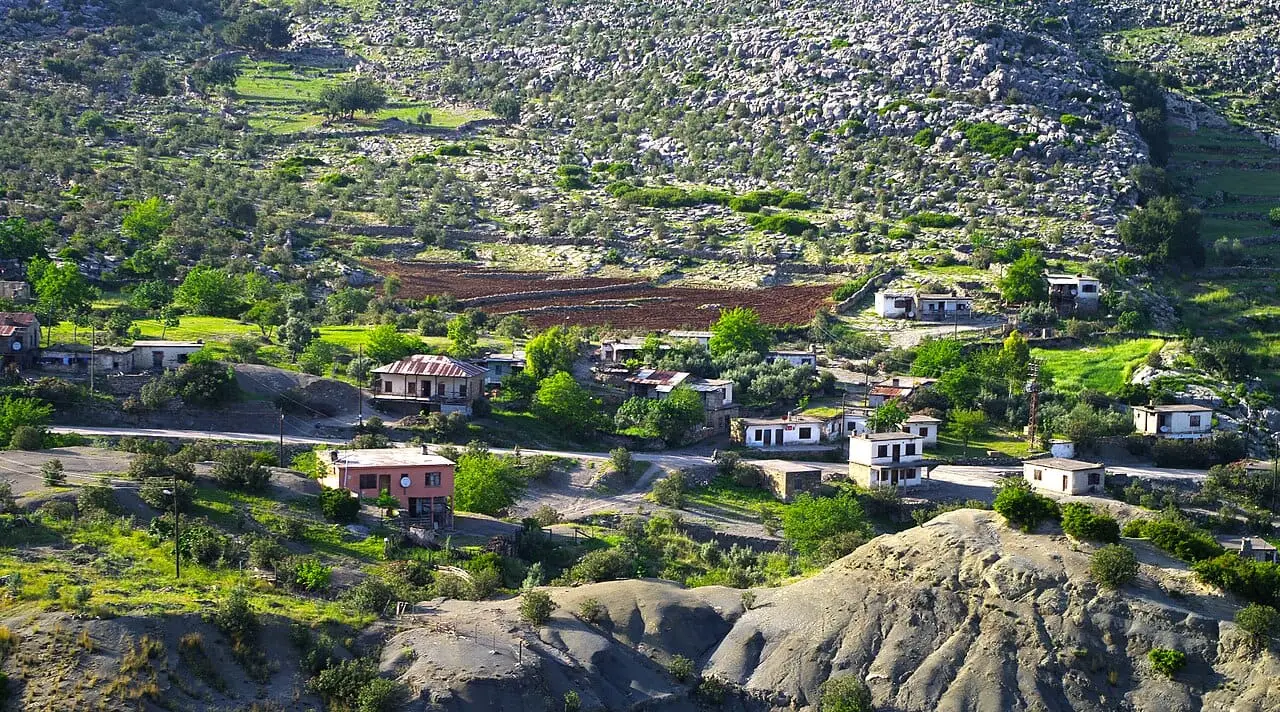
Districts of Adana

Adana province has 15 districts. Explore the places to visit, local dishes and transport in each one.

What to Eat in Adana

All dishes →
  • Adana Kebabı

    Made from hand-minced meat of a male sheep, tail fat, chilli flakes and salt; no other spice is added. It is cooked over embers and served with lavaş, sumac onions and greens. It is a product with a geographical indication registered by the Turkish Patent and Trademark Office.

  • Şalgam Suyu (fermented turnip and carrot drink)

    A slightly sour drink made by fermenting black carrots and turnips in salted water; it comes in hot (acılı) and mild (acısız) versions. Adana şalgam has received a geographical indication not only in Türkiye but also from the European Union.

  • Bici Bici (iced starch dessert)

    A summer dessert made of shaved ice, starch pudding, icing sugar and rose syrup. Adana bici bici is registered with a geographical indication; it is found at street vendors and cafés.

  • Ciğer Şiş (liver skewers)

    Skewers of lamb liver cooked over embers, the classic breakfast of Adana mornings; they are found at the liver restaurants (ciğerci) that open early.

  • Şırdan (stuffed lamb tripe)

    Lamb tripe filled with spiced rice stuffing and boiled, served with cumin at street stalls in the evening.

  • Analı Kızlı Çorbası (mother-and-daughter soup)

    A Çukurova dish in which large stuffed bulgur dumplings (the mother) and small unfilled ones (the daughter) meet in a sour soup with chickpeas.

What to eat in Adana: the full food guide

Adana: Frequently Asked Questions

What are the best places to visit in Adana?

In the city centre, Taşköprü, the Great Clock Tower, the Grand Mosque, the Yağ Mosque, Ramazanoğlu Mansion, Sabancı Central Mosque and the Adana Museum Complex stand out; in the surroundings, Varda Bridge, Kapıkaya Canyon, Anavarza Ancient City, Kozan (Sis) Castle, Yılankale and Akyatan Lagoon.

Which airport do you fly into for Adana?

You reach Adana from Çukurova International Airport in the Tarsus district of Mersin. The airport is about 35 km from the city centre. The Şakirpaşa Airport inside the city has been closed to scheduled flights since August 2024.

When is the best time to visit Adana?

April–May and October–November are the most suitable periods. In July and August the average high is 34–35 °C; in these months you should leave sightseeing to the morning and evening or head for the highland districts.

How is Adana kebab made and what makes it different?

Adana kebab is made from male sheep meat minced by hand with a knife called a zırh, tail fat, chilli flakes and salt; no other spice is added. It has a registered geographical indication and is cooked over embers and served with sumac onions, greens and lavaş.

How many days do you need in Adana?

At least three days are recommended: one for the historic centre, one for Varda Bridge and Kapıkaya Canyon and one for Kozan and Anavarza. Those who also want to see the lagoons on the coast can spend a fourth day in Karataş or Yumurtalık.

What festivals are held in Adana?

The International Orange Blossom Carnival is held in April, the Golden Boll Film Festival in September and the International Adana Flavour Festival in October; on 5 January the liberation of the city is celebrated.

How do you get around Adana?

The historic centre is within walking distance. You can use the 13-station M1 (Hastane–Akıncılar) metro line, municipal buses, minibuses and taxis. For far-off places such as Varda Bridge and Anavarza, hiring a car is the most practical way.

More from the Adana Guide

Other Provinces in the Mediterranean Region

Sources

The information in this guide has been compiled from and checked against the sources below (last checked: 7 October 2026). If you spot an error, please let us know.

  1. Vikipedi – Adana
  2. Vikipedi – Adana (il)
  3. Meteoroloji Genel Müdürlüğü – Adana il istatistikleri (1929–2025)
  4. Vikipedi – Taşköprü (Adana)
  5. Vikipedi – Büyük Saat
  6. Vikipedi – Adana Ulu Camii
  7. Vikipedi – Yağ Camii
  8. Vikipedi – Ramazanoğlu Konağı
  9. Vikipedi – Sabancı Merkez Camii
  10. Vikipedi – Adana Müze Kompleksi
  11. Vikipedi – Tepebağ Höyük
  12. Vikipedi – Adana Sinema Müzesi
  13. Vikipedi – Seyhan Barajı ve Hidroelektrik Santrali
  14. Vikipedi – Varda Köprüsü
  15. Vikipedi – Kapıkaya Kanyonu
  16. Vikipedi – Anavarza
  17. Haberler.com – UNESCO listesindeki Anavarza Antik Kenti
  18. Vikipedi – Kozan Kalesi
  19. Vikipedi – Yılankale
  20. Vikipedi – Kurtkulağı Kervansarayı
  21. Vikipedi – Misis
  22. Vikipedi – Sirkeli Höyüğü
  23. Vikipedi – Magarsa
  24. Vikipedi – Akyatan Gölü
  25. Vikipedi – Yumurtalık Lagünü
  26. Vikipedi – Yumurtalık
  27. Vikipedi – Çukurova Uluslararası Havalimanı
  28. Vikipedi – Şakirpaşa Havalimanı
  29. Vikipedi – Adana Metrosu
  30. Vikipedi – Adana Garı
  31. Vikipedi – Adana kebabı
  32. Vikipedi – Şalgam suyu
  33. Vikipedi – Bici bici
  34. NTV – Adana şalgamı AB'den coğrafi işaret tescili aldı
  35. Türk Patent – Kozan Portakalı coğrafi işaret belgesi
  36. Vikipedi – Portakal Çiçeği Karnavalı
  37. Vikipedi – Adana Altın Koza Film Festivali
  38. Medyascope – Adana Altın Koza Film Festivali'nin jürileri açıklandı (Eylül 2025)

Search 81 province guides and 968 district guides.