Burdur is one of the richest provinces of the Lakes District, with turquoise Salda Lake (which NASA has named as the place most like the Jezero crater on Mars), Sagalassos, the capital of Pisidia, and its Antonine Fountain, Kibyra with its stadium, Kremna on its rocky ridge, Burdur Museum with its finds from Neolithic Hacılar Mound, and İnsuyu Cave. Burdur şiş köftesi and walnut paste are registered.

Share with friends

Last updated:

Places to Visit in Burdur

12 places worth seeing in Burdur, from historic monuments to natural wonders, grouped by type. Open any of them on the map with a single click.

  • 5 Ancient City
  • 1 Religious
  • 1 Museum
  • 5 Nature

Ancient Cities 5

The seating of the Sagalassos theatre Photo: Dosseman (CC BY-SA 4.0) · Source
Ancient City

Sagalassos

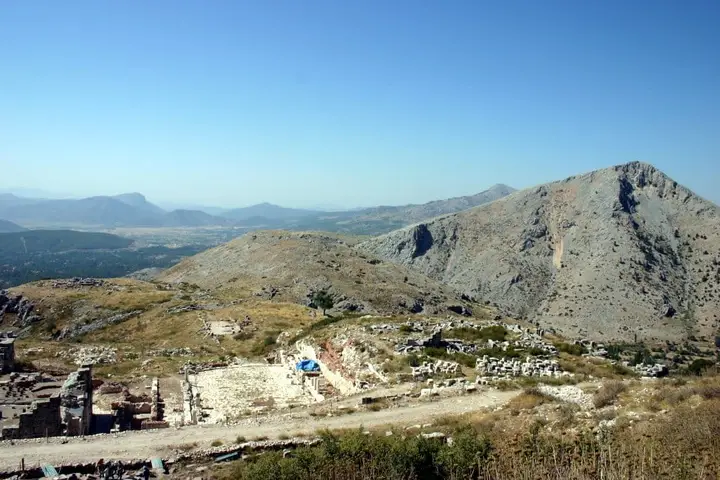
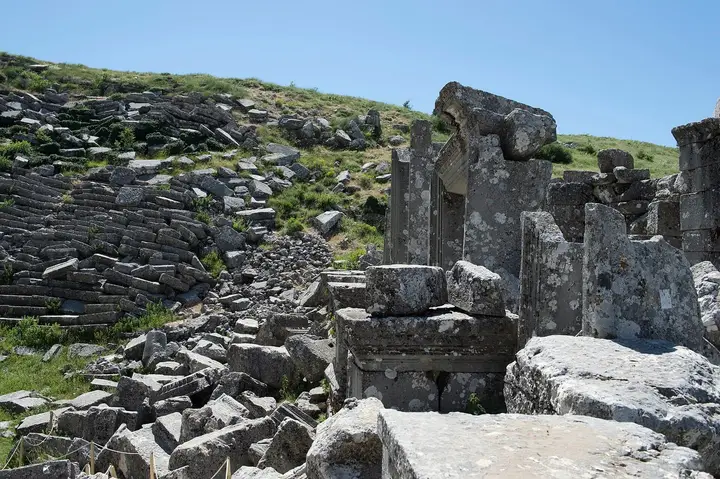
The capital of Pisidia, 7 km north-east of Ağlasun at an altitude of 1,450–1,700 metres; it is known for its 9,000-seat theatre, one of the highest-altitude ancient theatres in the world, a Roman bath with two storeys still standing, and rock-cut tombs. Excavations have continued since 1990.

View on map
The Sagalassos archaeological site Photo: Tijl Vereenooghe (CC BY-SA 2.5) · Source
Ancient City

Antonine Fountain

A monumental fountain 28 metres long and 9 metres high, built in the Upper Agora of Sagalassos in the time of Marcus Aurelius (AD 161–180); it is dedicated to Dionysus and decorated with stone in seven different colours. The fountain, which collapsed in earthquakes, has been restored and water flows from it again.

View on map
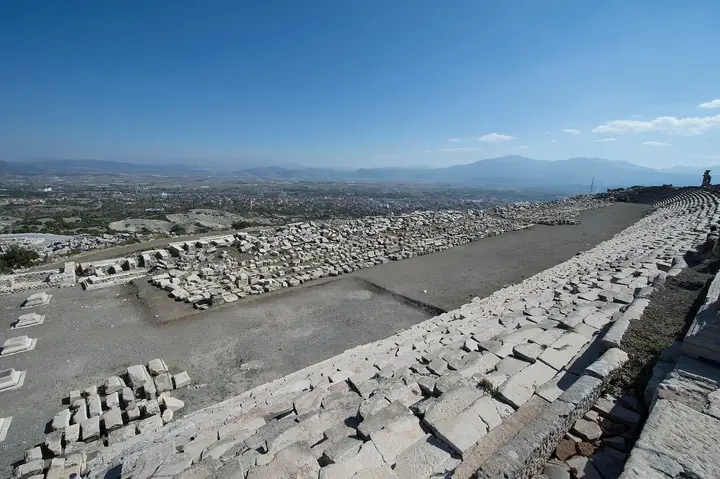
The Kibyra stadium Photo: Dosseman (CC BY-SA 4.0) · Source
Ancient City

Kibyra

The centre of the Kibyratis region, west of Gölhisar at an altitude of 1,100–1,300 metres on the foothills of Akdağ; it has a stadium that largely survives, a theatre, a council house (odeion) and an agora. Its name comes from the Luwian language.

View on map
Ancient City

Kremna

A Pisidian city at Bucak, overlooking the Aksu valley and built on a rocky ridge that rises 250 metres above the plateau and exceeds 1,200 metres in altitude; its name means 'rocky cliffs'. It became a Roman colony in the time of Augustus.

View on map
Ancient City

Hacılar Mound

A mound 26–27 km south-west of Burdur; in James Mellaart's excavations of 1957–60, 12 layers from the Late Neolithic and Early Chalcolithic periods were identified. It is one of the oldest village settlements in Anatolia.

View on map

Religious Buildings 1

Religious

Burdur Grand Mosque

A mosque first built in 1300 by Hamitoğlu Dündar Bey, repaired in 1749 and rebuilt in 1919 with a timber frame after earthquakes.

View on map

Museums 1

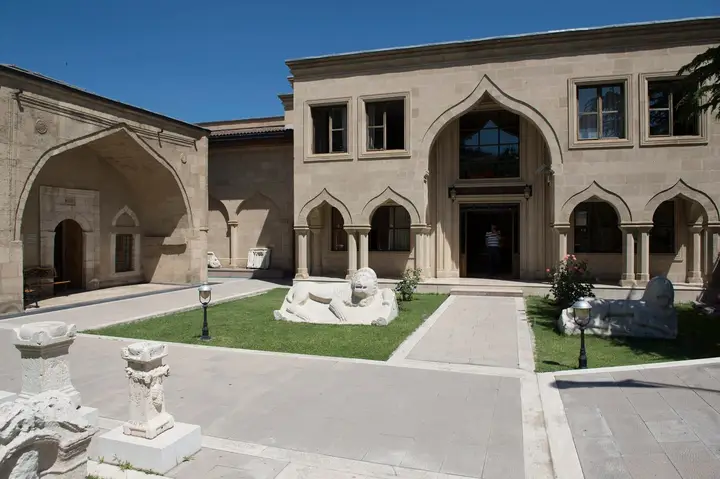
The courtyard of Burdur Museum Photo: Dosseman (CC BY-SA 4.0) · Source
Museum

Burdur Museum

Opened in 1969 in the library building of the Bulguroğlu (Pirkulzade) Madrasa and expanded with new halls in 2006, the museum holds more than 57,000 works, among which the Sagalassos statues and the finds from Hacılar Mound stand out. It was a candidate for European Museum of the Year in 2008.

View on map

Natural Wonders 5

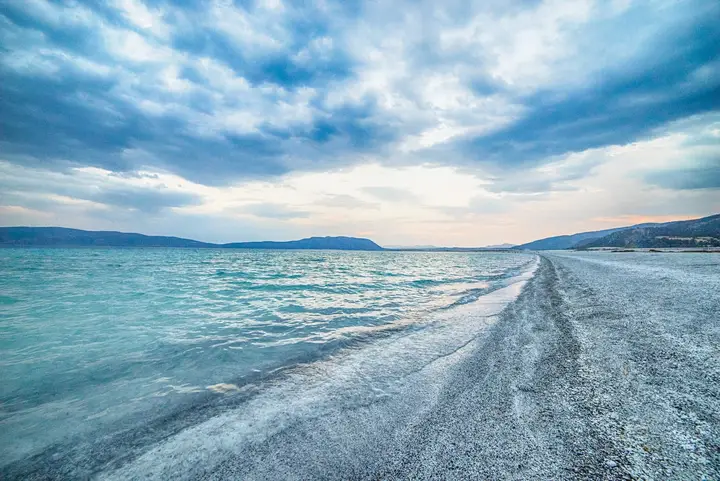
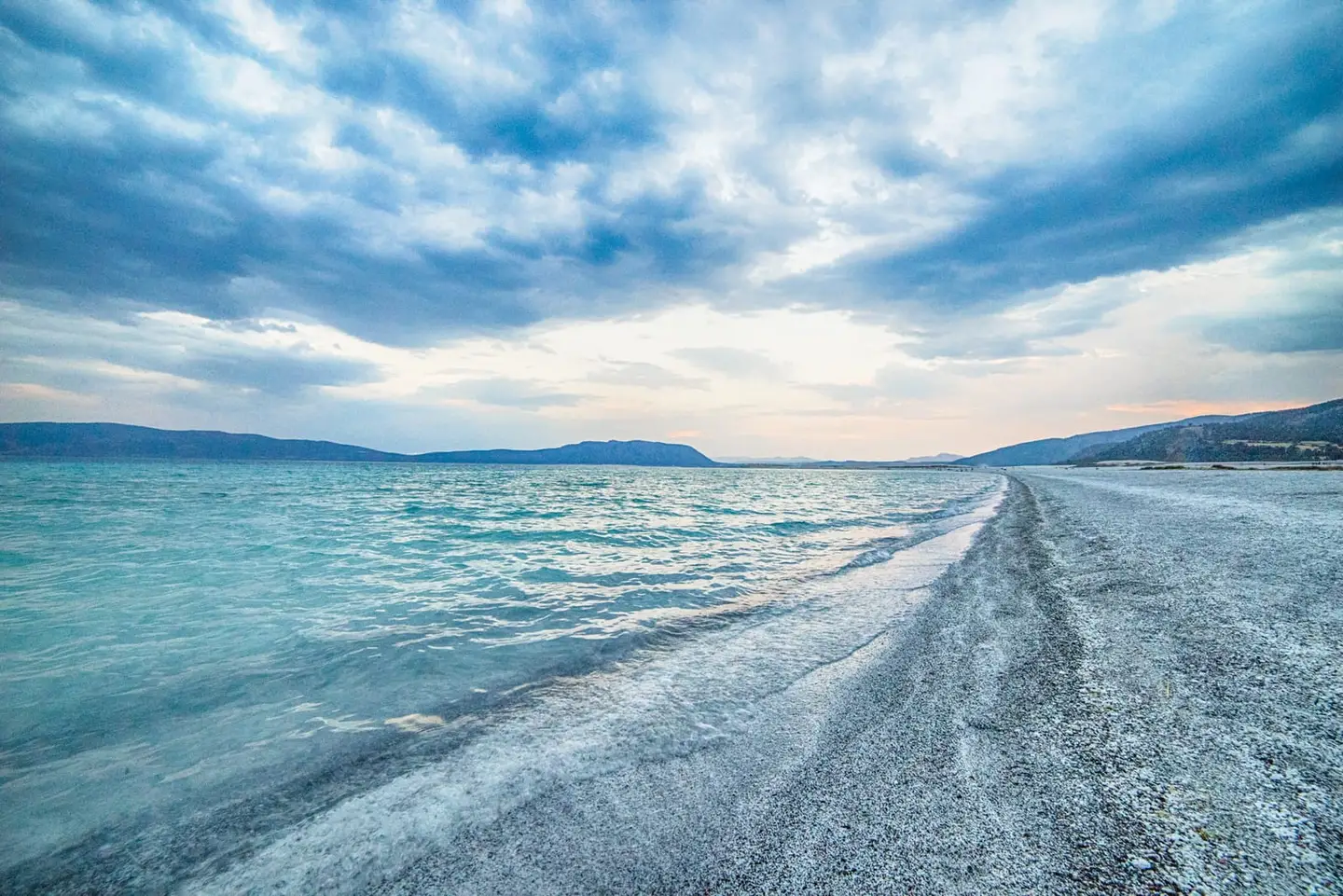
The white shore of Salda Lake Photo: Shanti Alex (CC BY-SA 4.0) · Source
Nature

Salda Lake

At Yeşilova, covering about 44 km² and up to 184 metres deep, this is the fourth deepest lake in Türkiye, famous for its turquoise water and white beaches made of hydromagnesite. NASA has named the lake as the place most like the Jezero crater on Mars in its minerals and geological structure. It has been a Special Environmental Protection Area since 2019.

View on map
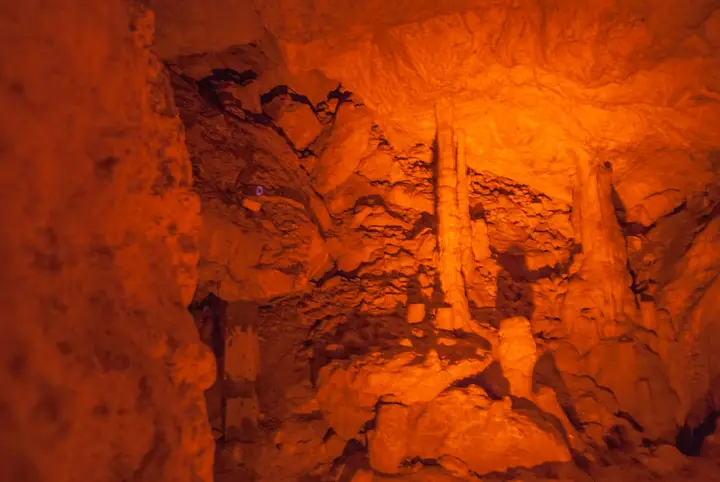
Inside İnsuyu Cave Photo: Acar54 (CC BY-SA 4.0) · Source
Nature

İnsuyu Cave

A 597-metre cave made up of nine interconnected chambers, 10 km south-east of Burdur; inside are underground lakes such as Lake Dilek, and stalactites and stalagmites.

View on map
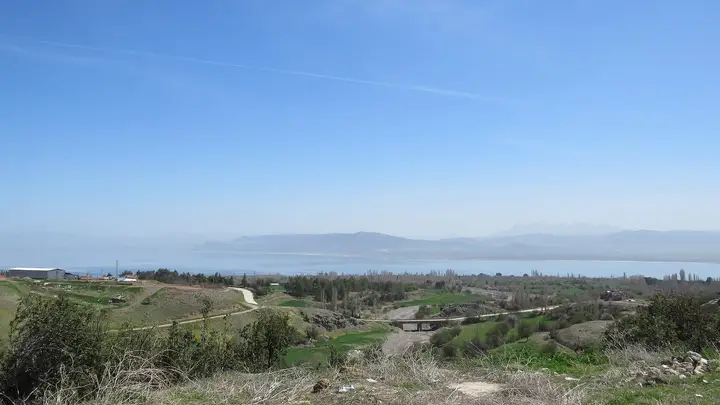
Burdur Lake from the north-west Photo: Calistemon (CC BY-SA 4.0) · Source
Nature

Burdur Lake

A tectonic lake averaging 153 km² between Burdur and Isparta; its water is twice as salty as the sea. It is an important wintering ground for the Burdur toothcarp (Burdur dişli sazancığı), found nowhere else in the world, and for the endangered white-headed duck. Its water level has been falling since 1970.

View on map
Nature

Yarışlı Lake

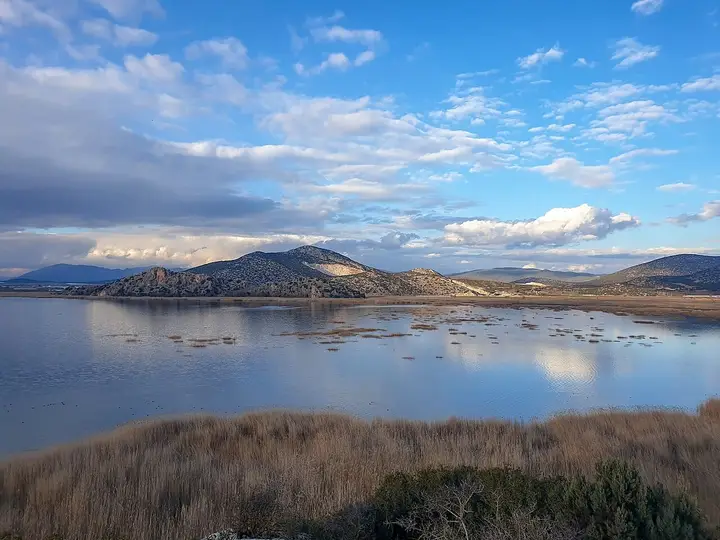
A shallow, brackish karstic lake of 16 km² at Yeşilova; it is an Important Nature Area where white-headed ducks winter and flamingos stop on migration. On the peninsula to its east lie the remains of the city of Tymbrianassus, dating from the 6th century BC.

View on map
Gölhisar Lake Photo: Mercakir (CC BY-SA 4.0) · Source
Nature

Gölhisar Lake

A shallow lake in the Dalaman Stream plain, at the foot of Kibyra.

View on map

Getting to Know Burdur

Burdur is a province in the Lakes District of the Mediterranean Region, on the northern foothills of the Taurus Mountains. In antiquity it was the heart of Pisidia: Sagalassos, near Ağlasun, was the Pisidian capital, built at 1,450–1,700 metres; Kremna at Bucak stands on a 250-metre rocky ridge, and Kibyra at Gölhisar, with its stadium and odeion, was the centre of the Kibyratis region.

The region’s history goes back much further: Hacılar Mound, 26–27 km south-west of Burdur, with layers reaching back to the Neolithic and Early Chalcolithic periods, is one of the first village settlements in Anatolia; the painted pottery and female figurines found in the excavations are among the important finds of Anatolian prehistory. The Burdur Grand Mosque in the city centre was built in 1300 by Hamitoğlu Dündar Bey.

Burdur’s best-known natural treasure is Salda Lake: with its white hydromagnesite beaches and turquoise water, it is called “the Maldives of Türkiye”. In 2020 NASA named Salda as the place most like the Jezero crater on Mars, where the Perseverance rover landed, in its minerals and geological structure.

When to Go

Burdur has a Mediterranean climate close to continental: summers are hot and dry, winters are cool and wet. Averages for 1931–2025 from the Turkish State Meteorological Service:

Month Avg. high Avg. low Rainfall Rainy days
January 6.9 °C −0.8 °C 56 mm 11
February 8.9 °C −0.3 °C 40 mm 9
March 12.7 °C 2.0 °C 46 mm 10
April 17.9 °C 6.1 °C 43 mm 10
May 23.1 °C 10.2 °C 46 mm 10
June 28.2 °C 14.0 °C 31 mm 6
July 32.1 °C 17.1 °C 14 mm 3
August 32.4 °C 17.0 °C 9 mm 2
September 28.0 °C 13.0 °C 16 mm 3
October 21.6 °C 8.4 °C 31 mm 6
November 14.5 °C 4.1 °C 36 mm 7
December 8.5 °C 1.0 °C 60 mm 11

April–June and September–October are best for the ancient cities, and July–August for swimming at Salda. Because Sagalassos stands above 1,500 metres, it is cool even in summer and may be covered in snow in spring. In winter Burdur Lake and Yarışlı Lake are important areas for wintering birds such as the white-headed duck.

How to Get to Burdur

By air: The nearest airports are Isparta Süleyman Demirel Airport, between the Keçiborlu and Gönen districts of Isparta and close to the Burdur border, and Antalya Airport.

By road: Burdur lies on the Antalya–Afyonkarahisar road; it is close to Isparta and is linked to Antalya via Bucak. Salda Lake is about 60 km west of the city centre, at Yeşilova.

Burdur Area by Area

  • Merkez: Burdur Museum, the Grand Mosque, the shore of Burdur Lake, İnsuyu Cave 10 km to the south-east, and Hacılar Mound.
  • Ağlasun: The ancient city of Sagalassos and the Antonine Fountain.
  • Yeşilova: Salda Lake and Yarışlı Lake.
  • Gölhisar: The ancient city of Kibyra and Gölhisar Lake.
  • Bucak: The ancient city of Kremna; registered Bucak salebi.
  • Tefenni and Karamanlı: Registered fennel, coriander and walnuts.

Suggested Itineraries

Day 1 – Sagalassos and Burdur: In the morning, see the 9,000-seat theatre and the Antonine Fountain at Sagalassos; in the afternoon, the Sagalassos statues and Hacılar finds at Burdur Museum, and İnsuyu Cave in the evening. Burdur şiş köftesi for dinner.

Day 2 – The lakes and Kibyra: In the morning, the white beach of Salda Lake; then the stadium and odeion of Kibyra at Gölhisar.

Burdur Cuisine

Burdur’s most famous dish is Burdur şiş köftesi (skewered beef meatballs), made from minced beef with no spice other than salt and served with charred peppers and its own special pide. Other registered products are Burdur ceviz ezmesi (walnut paste), haşhaş helvası (poppy-seed halva), kabak helvası (pumpkin halva), Bucak salebi (Bucak salep), Gölhisar kavurması (Gölhisar fried meat), Dirmil sipsisi (a wind instrument), İbecik bezi (İbecik cloth), Kozağaç İkitelli curası (Kozağaç İkitelli cura, a musical instrument) and, with a protected designation of origin, Karamanlı cevizi, kişnişi ve rezenesi (Karamanlı walnuts, coriander and fennel), Tefenni rezenesi (Tefenni fennel) and Melli inciri (Melli figs).

Practical Tips

  • Salda Lake is a Special Environmental Protection Area; enter the white beach only from the permitted areas and do not take hydromagnesite sand.
  • The road to Sagalassos is steep and winding; at the archaeological site the weather changes quickly because of the altitude.
  • The water of Burdur Lake is twice as salty as the sea, and its level has fallen markedly in recent years.
Districts of Burdur

Burdur province has 11 districts. Explore the places to visit, local dishes and transport in each one.

What to Eat in Burdur

All dishes →
  • Burdur Şiş Köftesi (skewered beef meatballs)

    A registered meatball made of minced beef with no spice other than salt, served with charred peppers and pide.

  • Burdur Ceviz Ezmesi (Burdur walnut paste)

    A walnut paste with a registered geographical indication.

  • Burdur Haşhaş Helvası (poppy-seed halva)

    A halva with a registered geographical indication.

  • Bucak Salebi (Bucak salep)

    A salep drink with a registered geographical indication.

  • Gölhisar Kavurması (Gölhisar fried meat)

    A kavurma (fried meat dish) with a registered geographical indication.

What to eat in Burdur: the full food guide

Burdur: Frequently Asked Questions

What are the best places to visit in Burdur?

The main stops are Salda Lake, Sagalassos and the Antonine Fountain, Kibyra, Kremna, Burdur Museum, İnsuyu Cave, Burdur Lake, Yarışlı Lake and the Grand Mosque.

Why is Salda Lake compared to Mars?

NASA has named Salda Lake as the place most like the Jezero crater on Mars, where the Perseverance rover landed, in its minerals and geological structure; the white shores of the lake are made of hydromagnesite.

How far is Salda Lake from Burdur city centre?

Salda Lake is about 60 km west of Burdur city centre and 4 km from the centre of the Yeşilova district.

Where is Sagalassos?

It is 7 km north-east of Ağlasun district in Burdur, 110 km from Antalya and 41 km from Isparta.

What is Burdur famous for?

Burdur şiş köftesi, walnut paste, poppy-seed and pumpkin halva, Bucak salebi and Gölhisar kavurması; also Salda Lake and Sagalassos.

When is the best time to visit Burdur?

Spring and autumn are best for the ancient cities, and July–August for swimming at Salda.

More from the Burdur Guide

Other Provinces in the Mediterranean Region

Sources

The information in this guide has been compiled from and checked against the sources below (last checked: 7 October 2026). If you spot an error, please let us know.

  1. Vikipedi – Burdur
  2. Vikipedi – Burdur (il)
  3. Meteoroloji Genel Müdürlüğü – Burdur il istatistikleri
  4. Vikipedi – Salda Gölü
  5. CNN Türk – NASA'dan Salda Gölü paylaşımı
  6. Vikipedi – Sagalassos
  7. Vikipedi – Antoninler Çeşmesi
  8. Vikipedi – Kibira
  9. Vikipedi – Kremna
  10. Vikipedi – Burdur Müzesi
  11. Vikipedi – Hacılar Höyük
  12. Vikipedi – İnsuyu Mağarası
  13. Vikipedi – Burdur Gölü
  14. Vikipedi – Yarışlı Gölü
  15. Vikipedi – Burdur Ulu Camii
  16. Vikipedi – Burdur Şiş
  17. Vikipedi – Türkiye'de tescilli coğrafi işaretler listesi
  18. TÜRKPATENT – Burdur Şiş Köftesi
  19. TÜRKPATENT – Burdur Ceviz Ezmesi

Search 81 province guides and 968 district guides.