 Photo: ahenobarbus (CC BY 2.0) · Source
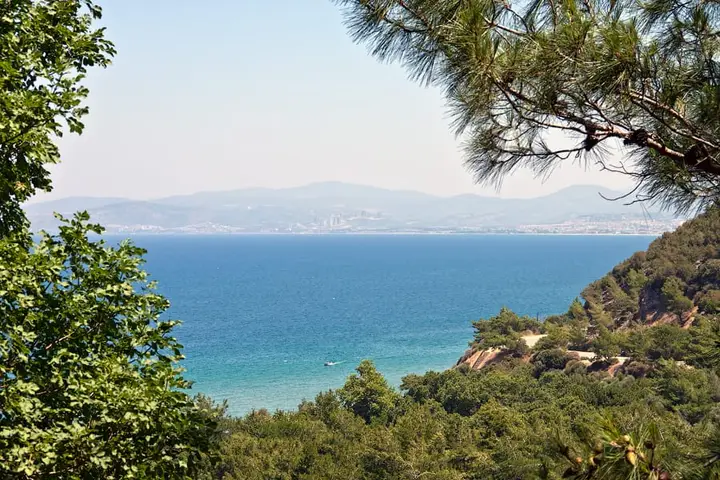
 Dilek Peninsula–Büyük Menderes Delta National Park
A national park within the boundaries of Kuşadası. It is the only place in the world where domestic pigs are found.
View on map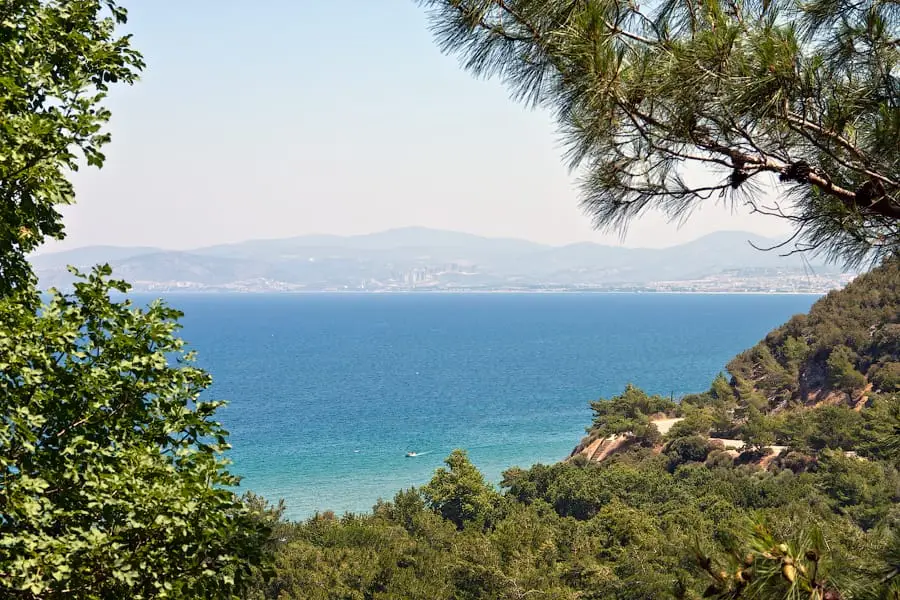 Photo: ahenobarbus (CC BY 2.0) · Source
 7 places to visit in the Kuşadası district of Aydın: Dilek Peninsula–Büyük Menderes Delta National Park, Güvercinada Castle and Caravanserai (Öküz Mehmet Paşa Caravanserai). Plan your trip to Kuşadası with local food, practical tips and transport information.
Kuşadası is a district of Aydın province in Türkiye. The district’s altitude is 7 metres. Kuşadası is one of Türkiye’s first tourism centres.
In antiquity it was known as Neopolis, one of the main ports of Anatolia opening onto the Mediterranean. It was incorporated into the Seljuk State in 1086 by I. Süleyman Şah. In 1413 it was incorporated into Ottoman rule by I. Mehmed. It was occupied by Italy and then Greece between 1919-1921, and was liberated on 7 September 1922. In 1957 it was separated from İzmir province and attached to Aydın province.
Tourism dates back to the 1960s, and the first cruise ship tourism started here. In summer, the number of domestic and foreign visitors, together with a local population of around 110,000, sometimes reaches 2 million. Kuşadası Port is Türkiye’s 3rd largest port. In 2016 a large passenger aircraft was sunk in Kuşadası Gulf, which has made an important contribution to diving tourism.
Kuşadası was separated from İzmir province in 1957 and attached to Aydın province. Kuşadası received the status of kaza in 1867. Turkish rule in the area began with the Seljuk State in 1086. Kuşadası was incorporated into Ottoman rule in 1413. Kuşadası was liberated from occupation on 7 September 1922. In the Middle Ages, Kuşadası was a harbour used by pirates.
Last updated:
Photo: ahenobarbus (CC BY 2.0) · Source A national park within the boundaries of Kuşadası. It is the only place in the world where domestic pigs are found.
View on map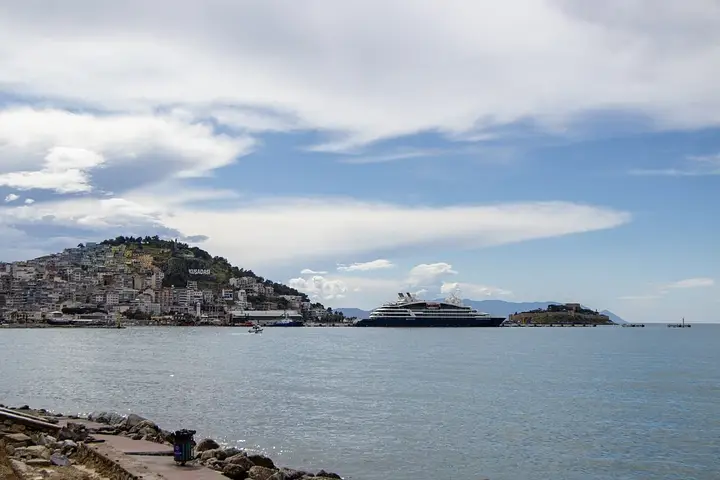 Photo: Koray (CC BY-SA 4.0) · Source
 Güvercinada Castle stands on a small island directly opposite Kuşadası harbour. It was built in the 14th century during the Byzantine period and extended in the Ottoman period. Connected to the mainland by a pedestrian bridge, the castle is the symbol of the city.
View on map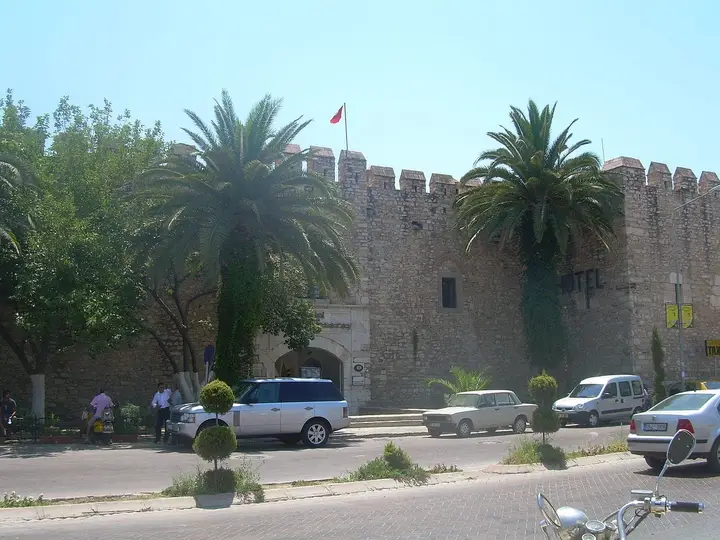 Photo: Vikimach (CC BY 3.0) · Source
 A caravanserai built in 1618 by Grand Vizier Öküz Mehmet Paşa, an important example of Ottoman commercial architecture. Now serving as a hotel, the building contributes to cultural life through events in its courtyard.
View on map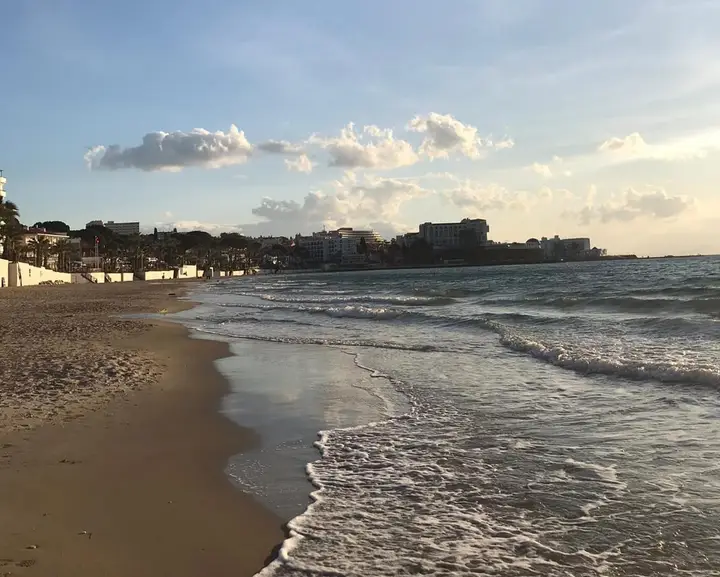 Photo: Özlem Demiir (CC BY-SA 4.0) · Source
 Kadınlar Denizi, 2.5 km from Kuşadası centre, is the city's most popular beach, with clear waters and fine sand. Restaurants and water sports facilities are located around the beach.
View on map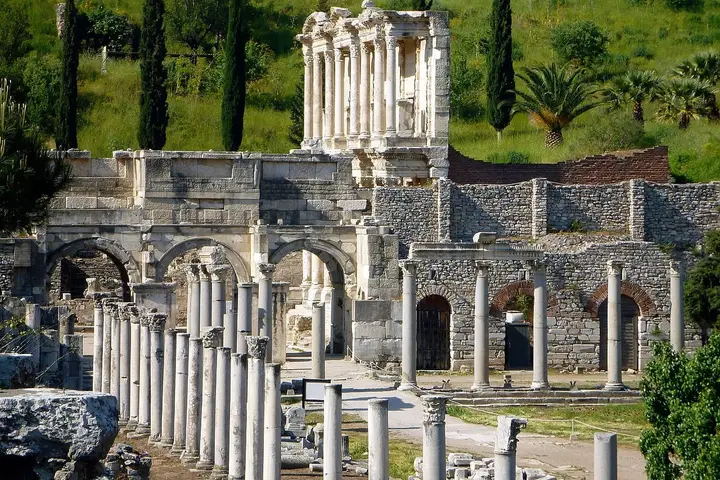 Photo: Peter K Burian (CC BY-SA 4.0) · Source
 Ephesus, 17 km from Kuşadası, is on the UNESCO World Heritage List. With the remains of the Library of Celsus, the Great Theatre and the Temple of Artemis, it is one of the best-preserved cities of the ancient world.
View on mapA caravanserai built in 1618 by Öküz Mehmet Paşa, near Kuşadası Pier.
View on mapA mosque in Kuşadası district, also known as the Öküz Mehmet Paşa Mosque.
View on mapWhile you are in Kuşadası, you can also see the highlights of Aydın province. These places are in other districts.
Fresh Aegean fish is served grilled, steamed or pan-fried at Kuşadası's seafront restaurants. Sea bass, sea bream and red mullet are the most popular species.
Prepared by boiling fresh octopus and mixing it with onion, parsley and olive oil. It is an essential flavour on Kuşadası's meze tables.
The Aegean's seasonal vegetable, artichoke, is cooked in olive oil with carrot and peas. It is one of the most loved dishes in Kuşadası during the spring months.
Kuşadası harbour is one of the busiest cruise ports in the Aegean. Every year hundreds of cruise ships dock, carrying thousands of tourists to Ephesus and its surroundings.
Kuşadası is a symbol of the relaxed, pleasant Aegean lifestyle. Cafés, fish restaurants and nightlife along the seafront reflect the city's cosmopolitan atmosphere.
Kuşadası's economy depends largely on tourism. Its cruise port, its proximity to Ephesus and its beaches attract millions of tourists a year. The hotel, restaurant and trade sectors have developed. In agriculture, olives, figs and citrus fruit are grown.
Kuşadası is 70 km from Aydın city centre and 95 km from İzmir by road. The nearest airport is İzmir Adnan Menderes Airport (75 km). There are intercity bus services and regular minibus services from İzmir. Ferry services run to the Greek island of Samos.
The 7 highlights of Kuşadası are Dilek Peninsula–Büyük Menderes Delta National Park, Güvercinada Castle, Caravanserai (Öküz Mehmet Paşa Caravanserai), Kadınlar Denizi Beach, Ephesus Ancient City (Nearby), Öküz Mehmet Paşa Caravanserai and Kaleiçi Mosque.
Ege Balık Sofrası, Ahtapot Salatası and Enginar Yemeği are the standout flavours on Kuşadası's tables.
Kuşadası is known for olive oil and cruise tourism. Olive oil from the groves around Kuşadası is among the finest in the Aegean. Cold-pressed olive oil is a source of local pride.
Kuşadası is 70 km from Aydın city centre and 95 km from İzmir by road. The nearest airport is İzmir Adnan Menderes Airport (75 km). There are intercity bus services and regular minibus services from İzmir. Ferry services run to the Greek island of Samos.
Suggested visit length: 3-4 days. Best time to visit: spring and summer months (April-October).