Alaca Castle
A castle on the rocky hill in the district centre, built in the Seljuk period. Panoramic views of the Alaca plain and surrounding villages can be enjoyed from the castle.
View on map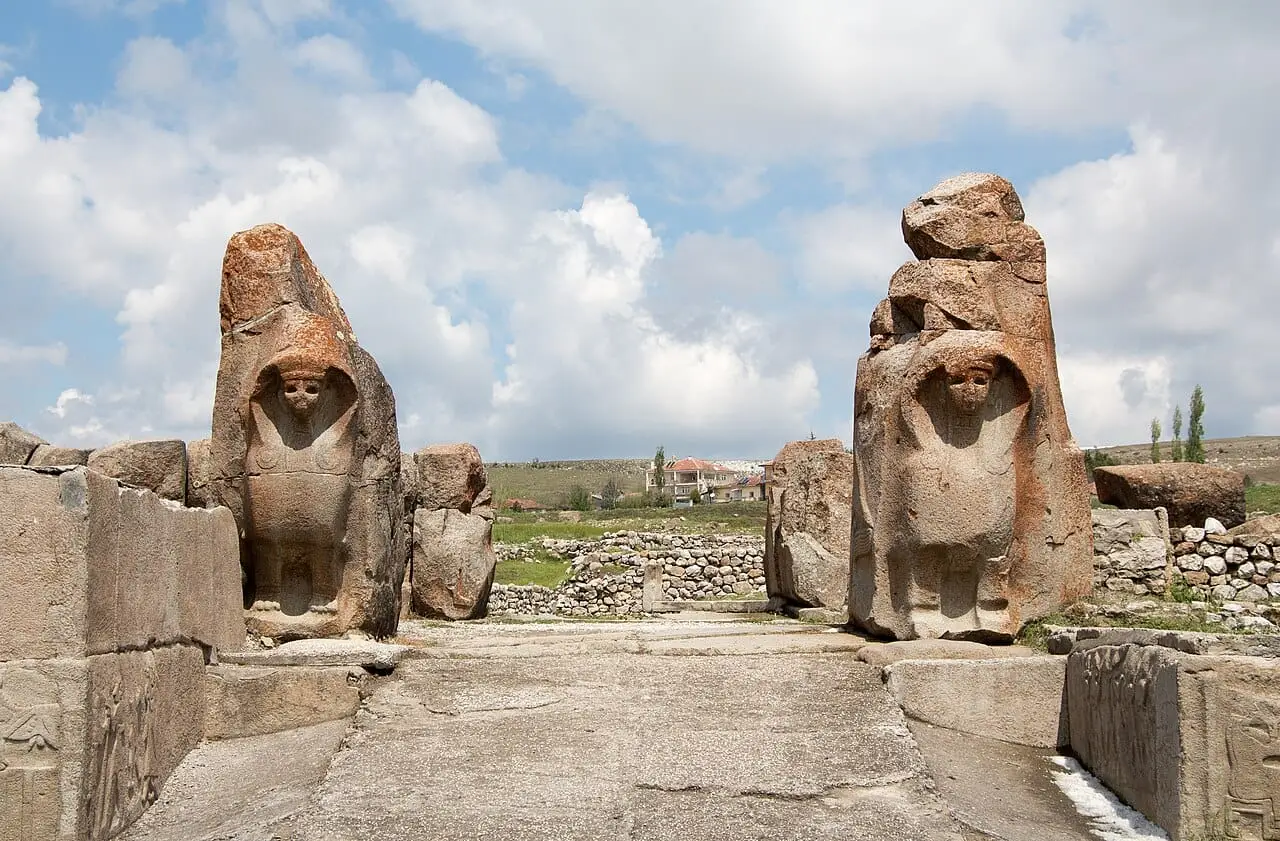 Photo: Bernard Gagnon (CC BY-SA 3.0) · Source
 9 places to visit in the Alaca district of Çorum: Alacahöyük Archaeological Site, Alacahöyük Museum and Alaca Castle. Plan your trip to Alaca with local food, practical tips and transport information.
Alaca is a district of Çorum province, with an area of 1,296 km² and an elevation of 925 metres. The district centre has 7 neighbourhoods, and there are 101 villages in the district.
Recorded as Hüseyinabad, Alaca became a district in 1919, and its municipality was established in 1920.
Alaca lies on the road linking the Black Sea Region with the Central Anatolia Region. It is 52 km from Çorum, 53 km from Yozgat and 43 km from Sungurlu, and its annual rainfall is 376 mm.
Alacahöyük holds the distinction of being the first national excavation in Türkiye’s history, and it contains royal tombs, lion sphinxes and a temple. Some of the finds are displayed in the Alacahöyük Museum, and some in the Museum of Anatolian Civilisations.
Excavations that began at Alacahöyük in 1935 revealed four layers of civilisation. The Alacahöyük excavation was started on Atatürk’s order, in the name of the Turkish Historical Society. At Alacahöyük, 13 tombs dating from the Early Bronze Age, thought to belong to princes, were found. Alaca became a district in 1919; before that it appeared as a subdistrict under the name Hüseyinabad.
Last updated:
A castle on the rocky hill in the district centre, built in the Seljuk period. Panoramic views of the Alaca plain and surrounding villages can be enjoyed from the castle.
View on mapAn important archaeological site from the Phrygian period, where coloured terracotta reliefs and architectural remains were found in Pazarlı. The finds from the excavations are displayed in the Museum of Anatolian Civilisations in Ankara.
View on mapA mound dating from the Chalcolithic Age (4000–3000 BC), it is one of the earliest settlement areas in the region. Painted pottery recovered from the excavations documents the early cultural development of central Anatolia.
View on map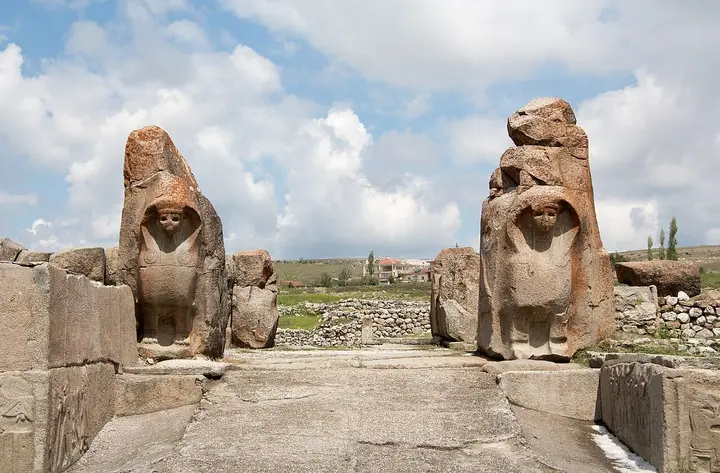 Photo: Bernard Gagnon (CC BY-SA 3.0) · Source
 The excavation area of a historic settlement from the Hittite period, containing royal tombs and temples.
View on mapA rock tomb located 18 km north of Alaca, within the boundaries of Camili Village.
View on mapApart from Alacahöyük, scientific excavations are continuing at Eskiyapar and Mahmudiye.
View on map3 km south of Alaca; a complex consisting of a tomb, soup kitchen, guesthouse, fountain and pool.
View on map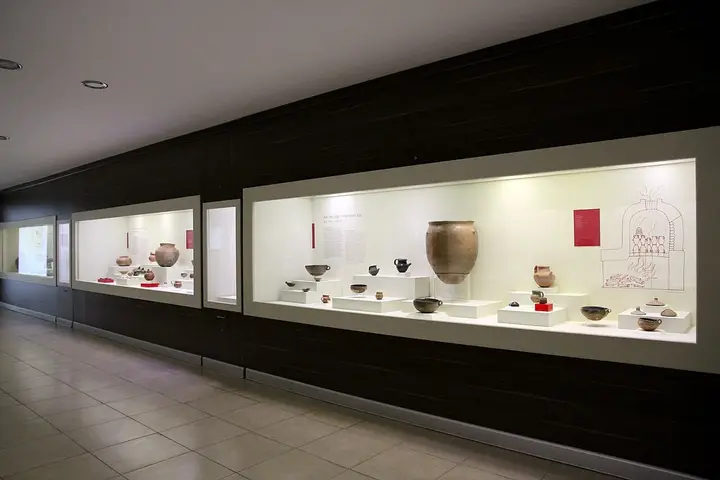 Photo: Ingeborg Simon (CC BY-SA 3.0) · Source
 While you are in Alaca, you can also see the highlights of Çorum province. These places are in other districts; Alaca is about 52 km from the provincial centre.
Alaca Borana Yemeği was registered as a protected geographical indication on 1 February 2024 (TÜRKPATENT registration no. 1530). Product group: dishes and soups. Registered by: Alaca Municipality.
Alaca Çılbır Yemeği was registered as a protected geographical indication on 5 August 2024 (TÜRKPATENT registration no. 1624). Product group: dishes and soups. Registered by: Alaca Municipality.
Alaca Yarma Aşı was registered as a protected geographical indication on 22 November 2023 (TÜRKPATENT registration no. 1502). Product group: dishes and soups. Registered by: Alaca Municipality.
The royal tombs and sun-disc standards discovered at Alacahöyük are among the most valuable remains of the Hattian civilisation, which dates from the 3rd millennium BC. These finds are accepted as evidence of Anatolia's oldest state tradition.
Traditional Anatolian ways of life continue in the villages of Alaca. Wedding customs, handicrafts and local culinary culture are passed down from generation to generation.
The economy of Alaca is based on agriculture and livestock farming. Wheat, barley, sugar beet and chickpeas are the main agricultural products. Small and large livestock farming are important sources of livelihood. Thanks to the Alacahöyük archaeological site, cultural tourism also contributes to the district's economy.
Alaca is 52 km from Çorum provincial centre. It lies on the route from the Black Sea coast into Central Anatolia. Intercity bus connections via Çorum are available.
The 9 main sights in Alaca are Alacahöyük Archaeological Site, Alacahöyük Museum, Alaca Castle, Pazarlı Mound, Büyük Güllücek Mound, Gerdek Rock Tomb, Hüseyin Gazi Complex, Old Mosque and Eskiyapar.
Alaca Borana Yemeği, Alaca Çılbır Yemeği and Alaca Yarma Aşı are the standout dishes at tables in Alaca.
Alaca is known for Alaca Camili Kilimi and the Hittite and Hattian heritage. It is a registered product with TÜRKPATENT as a protected geographical indication.
Alaca is 52 km from Çorum provincial centre. It lies on the route from the Black Sea coast into Central Anatolia. Intercity bus connections via Çorum are available.
Suggested visit length: 1 day. Best time to visit: spring and autumn.