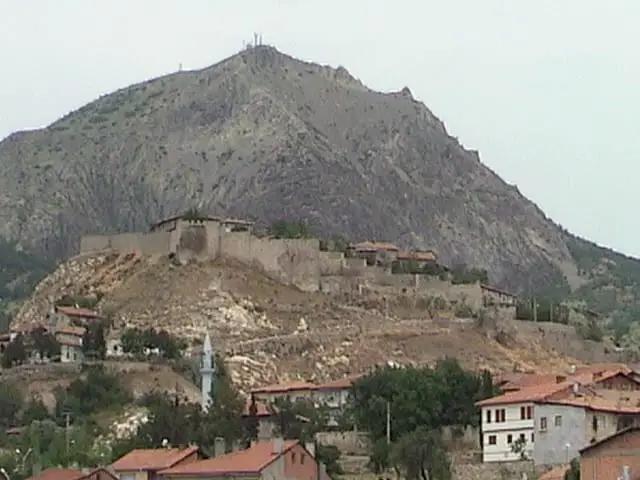
İskilip Castle
The castle on the rocky hill in the town centre, built in the Roman period and used in the Seljuk and Ottoman periods. Panoramic views of the İskilip plain and the surrounding mountains can be enjoyed from the castle.
View on map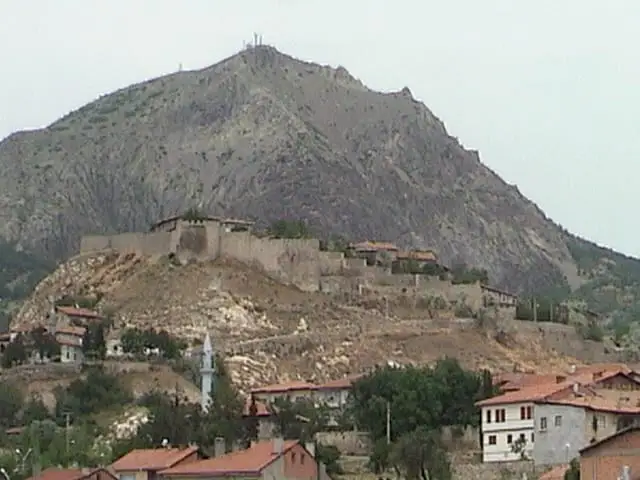
7 places to visit in the İskilip district of Çorum: İskilip Castle, Grand Mosque and İskilip Historic Houses. Plan your trip to İskilip with local food, practical tips and transport information.
İskilip is a district of Çorum province, with an area of 1,170 km² and an elevation of 733 metres. The word İskilip first appears in the Sumerian epic of Gilgamesh in the form ‘iškila-bi’.
Various sources suggest that settlement in the region goes back to the arrival of the Hittites in Anatolia (3000 BC). İskila is thought to have been a settlement area of the early Hatti civilisation.
In terms of written sources, the recorded history of İskilip goes back to 700 BC, to the Paphlagonian State. The Paphlagonians arrived in Anatolia after 1000 BC and emerged as an independent state after the collapse of the Hittite Empire. İskilip, known in Ancient Greek as Askilepiyon (God of Health), was an important settlement in antiquity.
In the Roman period, İskilip was incorporated by Justinian I into the province of Helenopontus, and it became one of the province’s three important settlements. In Byzantine times İskilip is said to have been one of three important cities.
After the Battle of Manzikert in 1071, İskilip came under the rule of the Anatolian Seljuk State in 1075. Over time İskilip continued its historical course as one of the most important settlements of the Ottoman Empire.
In the Roman period İskilip retained its geostrategic importance. Byzantine rule was ended by the Danishmendids. Ebussuud is said to have been born in İskilip, and the town is reported to have been used as a suburb until the 15th–16th centuries.
Last updated:
The castle on the rocky hill in the town centre, built in the Roman period and used in the Seljuk and Ottoman periods. Panoramic views of the İskilip plain and the surrounding mountains can be enjoyed from the castle.
View on mapBuilt in the 13th century in the Seljuk period, the Grand Mosque is İskilip's oldest mosque. It is one of the important examples of Anatolian Seljuk architecture, with its stonework and wooden minbar.
View on map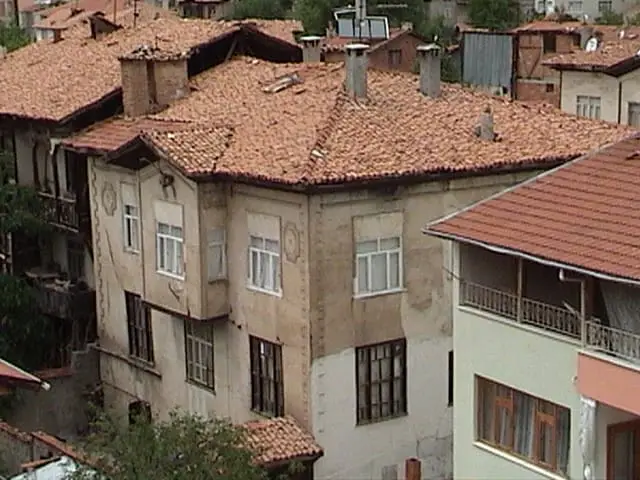
Ottoman-period wooden and stone houses lining the narrow streets of İskilip are fine examples of traditional Anatolian domestic architecture. Some of the houses with bay windows and courtyards have been restored.
View on mapThe tomb and lodge of the 14th-century mystic Elvan Çelebi are among İskilip's most important religious sites. Its wooden-columned structure reflects early Ottoman dervish-lodge architecture.
View on mapWhile you are in İskilip, you can also see the highlights of Çorum province. These places are in other districts; İskilip is about 55 km from the provincial centre.
İskilip Baklavası was registered as a protected geographical indication on 28 August 2025 (TÜRKPATENT registration no. 1764). Product group: bakery and confectionery products, pastries, sweets. Registered by: İskilip Municipality.
İskilip Dolması was registered as a protected geographical indication on 19 April 2010 (TÜRKPATENT registration no. 130). Product group: dishes and soups. Registered by: İskilip Municipality.
İskilip Su Kabağı Yemeği was registered as a protected geographical indication on 17 April 2026 (TÜRKPATENT registration no. 1841). Product group: processed and unprocessed fruit and vegetables and mushrooms. Registered by: İskilip Municipality.
A type of keşkek specific to İskilip, specific to the Ramadan period, which has received a geographical indication.
A type of pickle specific to İskilip district, which has received a geographical indication.
The 14th-century mystic Elvan Çelebi is one of the important figures in the Anatolian Sufi tradition. His tomb and lodge are still visited.
İskilip's historic houses are among the best-preserved examples of Ottoman-period Anatolian domestic architecture. Houses with bay windows and courtyards reflect the city's cultural identity.
The economy of İskilip is based on agriculture, livestock farming and handicrafts. Walnut cultivation is the district's most important agricultural activity. Chickpea production also contributes to the economy. Small livestock farming is widespread.
İskilip is 55 km from Çorum provincial centre. There are regular minibus services from Çorum.
The 7 main sights in İskilip are İskilip Castle, Grand Mosque, İskilip Historic Houses, Elvan Çelebi Tomb and Lodge, İskilip Rock Tombs, Elmabeli-Beşoluk and Çiçekli Plateaus and Yivlik Rock.
İskilip Baklavası, İskilip Dolması and İskilip Su Kabağı Yemeği are the standout dishes at tables in İskilip.
İskilip is known for İskilip Strawberries and the Elvan Çelebi Tradition. It is a registered product with TÜRKPATENT as a protected geographical indication.
İskilip is 55 km from Çorum provincial centre. There are regular minibus services from Çorum.
Suggested visit length: 1 day. Best time to visit: spring and autumn.