Enez has an area of 455 km², an average elevation of 18 metres above sea level, and a total population of 10,399.
History
The first settlement in the area is said to be Hoca Çeşme Mound, about 3 km east of Enez, founded in the Late Neolithic period. Enez was taken in January 1456 by the Ottoman army commanded by Fatih Sultan Mehmet and was incorporated into Ottoman territory.
Excavations and Historic Monuments
Excavations and research carried out since 1978 in Enez have uncovered historic remains including wine cellars, a villa with mosaics, bath ruins, a basilica and chapels, and Roman and Ottoman period necropolises.
Economy
The district’s economy rests mainly on agriculture and livestock, with wheat and sunflowers the main crops. Fishing, which for a long time was one of the district’s major sources of income, is gradually losing importance due to irregular and illegal fishing.
History and Culture
According to ancient sources, Ainos was settled in the 7th century BC by the Aeolians, who lived in the Aiolia region north of İzmir. Enez was taken in January 1456 by the Ottoman army commanded by Fatih Sultan Mehmet and by the Ottoman fleet under the Kaptan-ı Derya, Has Yunus Bey. Excavations and research have uncovered wine cellars, a villa with floors paved in mosaics, bath ruins, a basilica and chapels in Enez. According to the 1892 yearbook (salname), Enez produced 49,000 kıye of wine and 5,115 kıye of rakı from grapes each year.
Key Facts
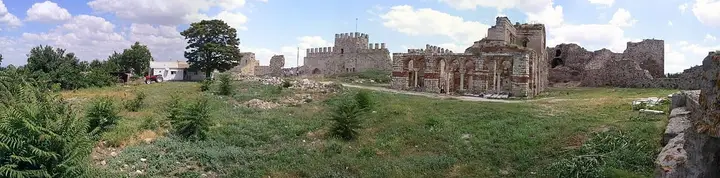
Inside Enez Castle are the Enez Ayasofyası, a mosaic church, and a cave used as a chapel. In ancient times, Enez was an important port city linking the Balkans with Anatolia and the Aegean. Enez is a city of art and history spanning 10,000 years, stretching from Taşöz to Çanakkale and along the western Black Sea coast.
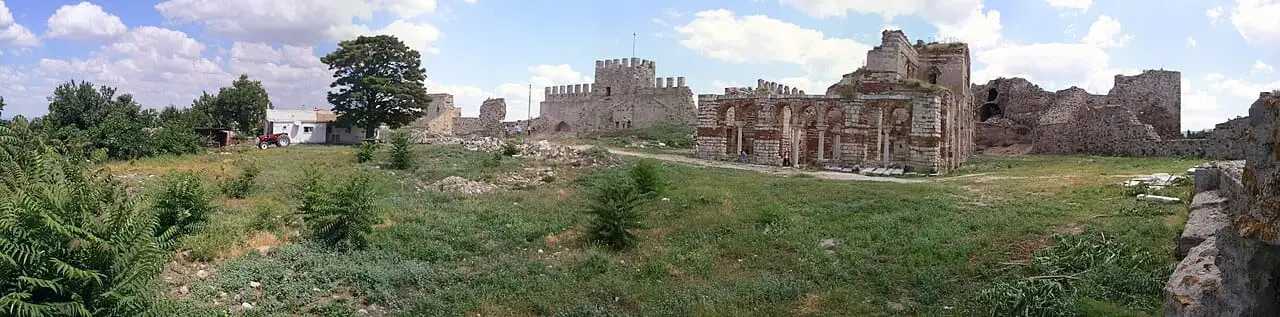
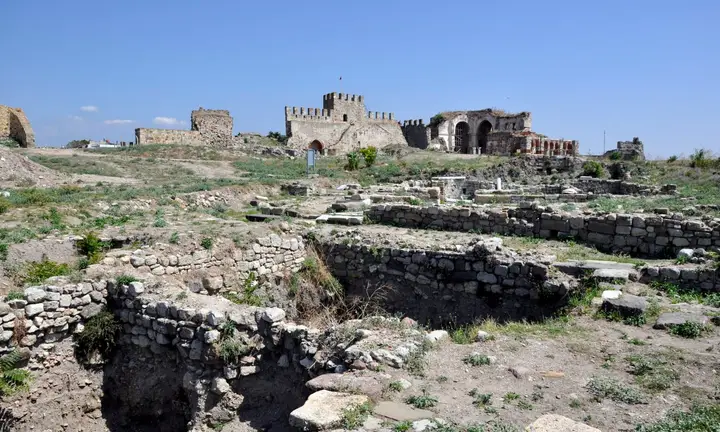 Photo: Wikipedia (CC BY-SA) · Source