 Photo: KIZILSUNGUR (CC BY-SA 3.0) · Source
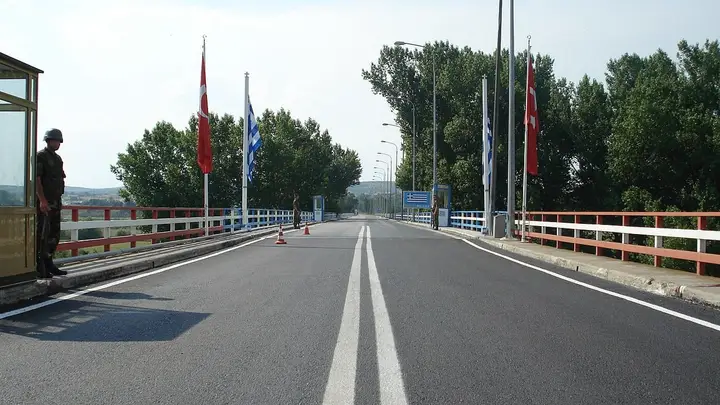
 İpsala Sınır Kapısı
The border gate on the Greek border, passing 2 km south of İpsala district.
View on map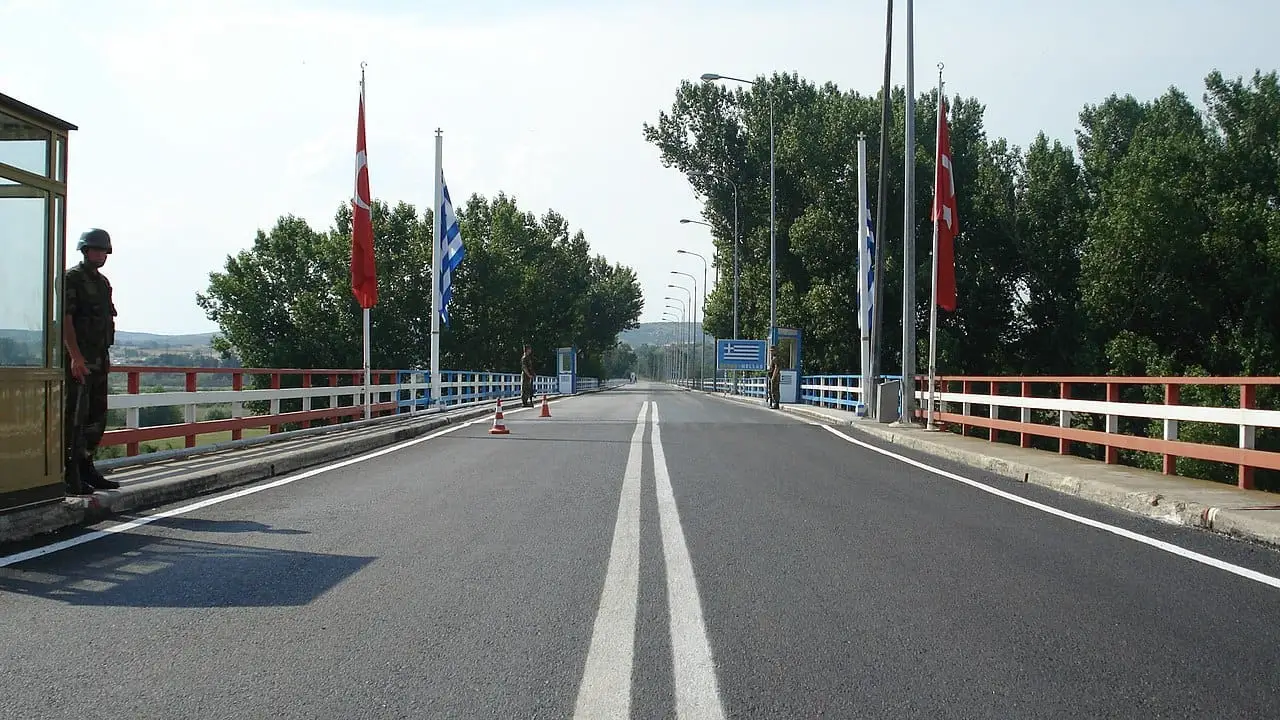 Photo: KIZILSUNGUR (CC BY-SA 3.0) · Source
 5 places to visit in the İpsala district of Edirne: İpsala Sınır Kapısı, İpsala Mound and Meriç Nehri Kıyısı. Plan your trip to İpsala with local food, practical tips and transport information.
Human settlement in the region is thought to date back to around 4000 BC, when the Thracian peoples arrived.
The Thracian Odrysian tribe, whose capital was Kypsela (İpsala), held sway in this region for many years. İpsala, taken in 1356 by Gazi Evrenos Bey, one of the commanders of Murad I, has an important place in Ottoman history.
The Baldo rice grown in İpsala is the rice variety most preferred in Turkish cuisine for its distinctive flavour. The Turkish Patent and Trademark Office granted a geographical indication registration for İpsala rice.
The region where the district lies is a very old settlement area. İpsala is one of Türkiye’s leading districts, especially in rice production.
Last updated:
Photo: KIZILSUNGUR (CC BY-SA 3.0) · Source The border gate on the Greek border, passing 2 km south of İpsala district.
View on mapThe mound near the district contains traces of settlement from Thrace's prehistoric periods. Finds dating to the Bronze Age have been uncovered in archaeological excavations.
View on mapThe Meriç River, which forms the border between Türkiye and Greece, flows past İpsala and empties into the Aegean Sea. The green areas along the riverbank offer a calm setting for walking and nature watching.
View on mapThe mosque in the district centre has Ottoman-period architectural features. With its plain and elegant structure, it reflects the mosque tradition of the Thrace region and is the centre of the district's religious life.
View on mapA mosque in İpsala, believed to have been built in the name of Alaca Mustafa Pasha, one of the Akıncı commanders. Its inscription has not survived.
View on mapWhile you are in İpsala, you can also see the highlights of Edirne province. These places are in other districts; İpsala is about 80 km from the provincial centre.
Thinly sliced veal liver, dusted with flour and fried in hot oil. Ciğer tava, the signature flavour of the Edirne region, is also served in İpsala's restaurants using the traditional recipe.
A pilaf made with rice obtained from paddy grown in İpsala's fertile plains, cooked with butter and chicken stock. The region's status as a paddy-producing centre enhances the quality of the pilaf.
A börek prepared with cheese or minced meat between thin layers of dough, reflecting the influence of Balkan cuisine. It is eaten in İpsala for breakfast and as a snack.
Made by fermenting a runny batter and cooking it on a hot griddle; eaten rolled up with butter, honey or sugar.
A dish made by spreading fermented dough thinly and cooking it on a griddle, served with boiled wild duck or goose meat sprinkled on top.
Rice obtained from the paddy fields of the region, preferred in national and international markets for its high quality and flavour.
İpsala has been a crossing point between Europe and Anatolia for centuries. The presence of the border gate has given the district a cosmopolitan character and increased its interaction with different cultures.
Immigrants from Greece and Bulgaria settled in İpsala during the Balkan Wars and the exchange of populations. This immigrant heritage is reflected in the diversity of the district's cuisine and traditions.
İpsala's economy is based on paddy farming, border trade and sunflower production. In the district, one of Türkiye's most important paddy-producing centres, rice factories provide significant employment. Customs trade thanks to the border gate also contributes to the economy.
İpsala is 80 km from Edirne city centre. It connects to Edirne and Istanbul via the D-110 highway. Passage to Greece is possible through İpsala Border Gate. Intercity bus services are available.
The 5 highlights of İpsala are: İpsala Border Gate, İpsala Mound, Meriç River Bank, İpsala Central Mosque and Alaca Mustafa Pasha Mosque.
Trakya Ciğer Tava, Çeltik Pilavı, Balkan Böreği and Gözlü akıtma (krep) are the standout flavours on İpsala's tables.
İpsala is known for İpsala Rice and its border gate culture. It is a registered product with protected designation of origin status at TÜRKPATENT.
İpsala is 80 km from Edirne city centre. It connects to Edirne and Istanbul via the D-110 highway. Passage to Greece is possible through İpsala Border Gate. Intercity bus services are available.
Suggested visit length: half a day. Best time to visit: spring and autumn.