Yedigöz Aqueduct
The largest part of the Taşlımüsellim water facility designed by Mimar Sinan; it is located in Hıdırağa village.
View on map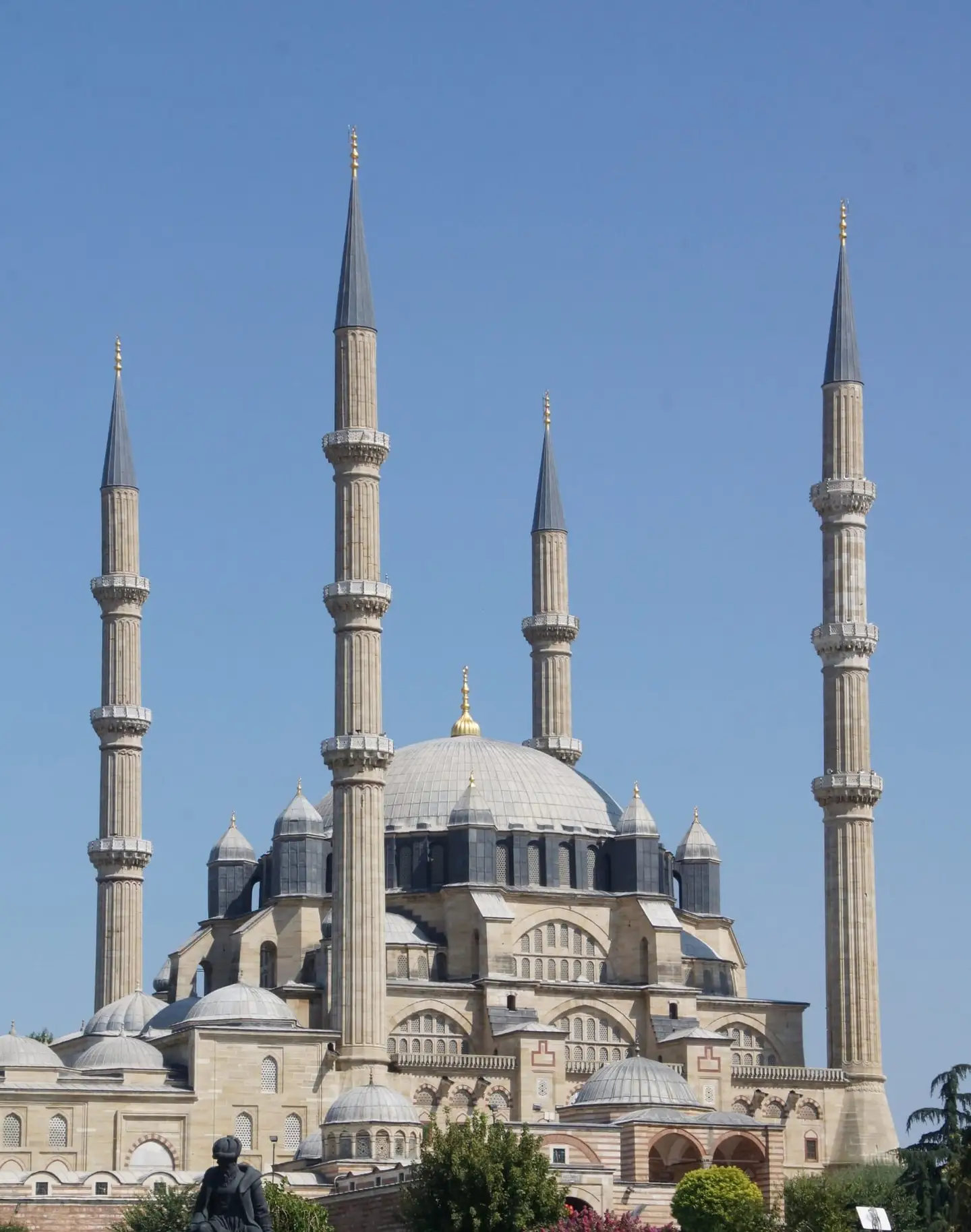 Photo: Wikipedia (CC BY-SA) · Source
 9 places to visit in the central district of Edirne: Selimiye Mosque and Complex, Eski Mosque and Üç Şerefeli Mosque. Plan your trip with local food, practical tips and transport information.
Edirne lies at the north-western tip of Türkiye, on the Greek and Bulgarian borders, on the plain where the Tunca, Arda and Meriç rivers meet. The city centre is on average 49 metres above sea level; the district covers 844 km² and has a population of 200,753. The Roman Emperor Hadrian re-founded the city and named it Hadrianopolis, from which the name Edirne derives. Taken by the Ottomans in 1363, Edirne was the capital of the Ottoman Empire until the conquest of Istanbul.
The heritage of the capital years defines Edirne’s skyline. The Selimiye Mosque (1568–1575), built by Mimar Sinan at the age of 80, is his masterpiece. The nine-domed Eski Mosque (1403–1414) and the Üç Şerefeli Mosque, with its courtyard and four minarets, show the development of Ottoman architecture. The II. Bayezid Complex (1484–1488) operated as a hospital for 400 years.
Edirne is the home of the Kırkpınar Oil Wrestling. According to legend it began in 1346, and according to its inscription it has been held since 1361; this tournament is one of the oldest continuously held sporting events in the world. Held at Sarayiçi since 1924, the tournament was added to UNESCO’s Intangible Cultural Heritage list in 2010.
The first fortification works in Edirne began after the Russian occupation of 1829. The Darül Kurra Madrasa was built by Selim II, through Mimar Sinan.
Last updated:
The largest part of the Taşlımüsellim water facility designed by Mimar Sinan; it is located in Hıdırağa village.
View on map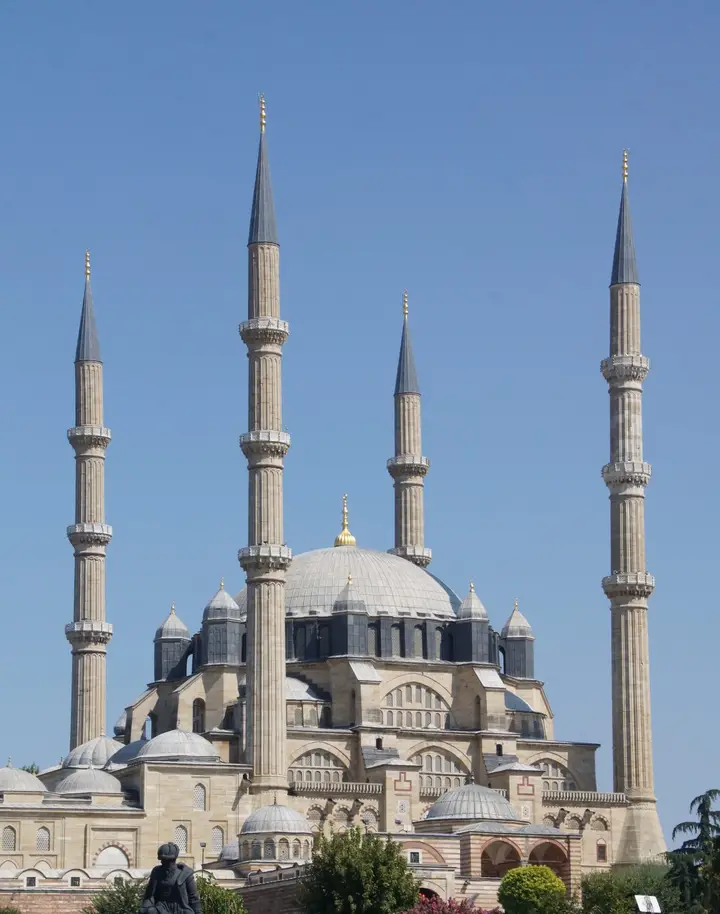 Photo: Wikipedia (CC BY-SA) · Source
 Designed by Mimar Sinan at the age of 80 and known as his masterpiece, the mosque (1568–1575) was added to UNESCO's World Heritage List in 2011.
View on map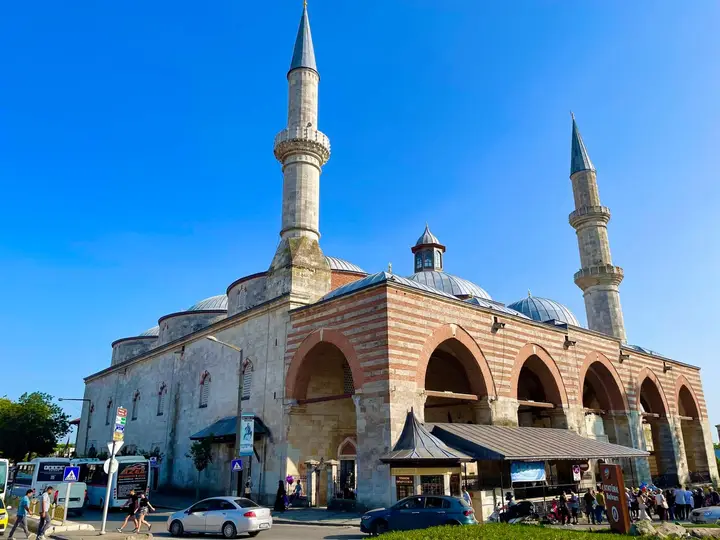 Photo: Wikipedia (CC BY-SA) · Source
 With its nine domes, it is an important example from the early period of Ottoman architecture (1403–1414).
View on map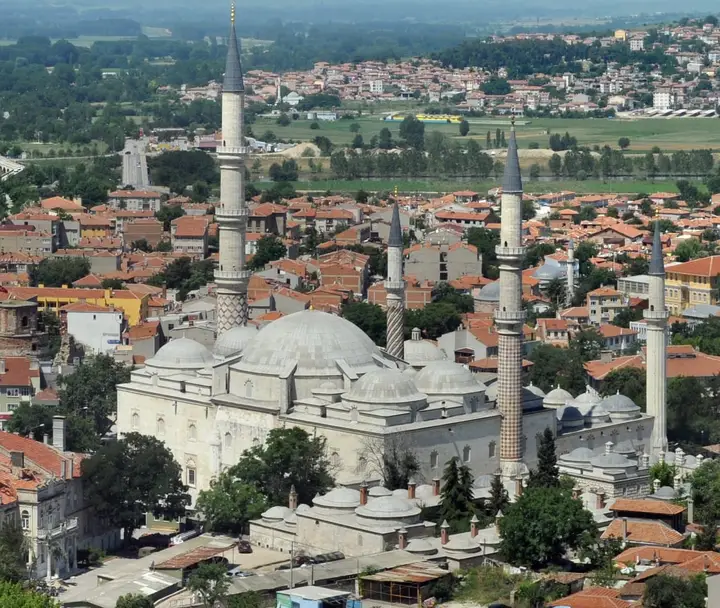 Photo: User:Ggia (CC BY-SA 3.0) · Source
 With its courtyard and four minarets, it represents an important stage in the development of Ottoman architecture.
View on map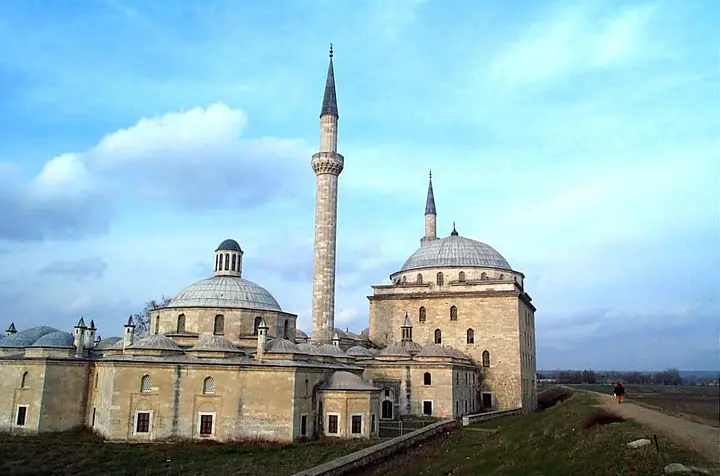 Photo: Nevit Dilmen (CC BY-SA 3.0) · Source
 Built in 1484–1488, this historic complex served as a hospital for 400 years and is now open as a museum.
View on mapBuilt in 1886–1888, the tabya (battery) was used as headquarters during the defence of Edirne in the Balkan Wars, and has since opened as a museum.
View on mapA museum located in the Darül Kurra Madrasa, displaying works from pious foundations (vakıf).
View on mapThe Saatli Madrasa, part of the Üç Şerefeli Mosque complex, is open to visitors as a museum.
View on mapWedding culture and regional costumes are displayed in an 18th-century mansion.
View on mapThinly sliced veal liver, coated in flour and fried in hot sunflower oil. Served with roasted peppers and pilaf, tava ciğeri is Edirne's world-famous dish.
Prepared by grinding fresh almonds with sugar and shaping them, badem ezmesi is Edirne's best-known sweet. Served in colourful fruit shapes, it is also a popular gift.
A traditional sweet made by cooking fresh white cheese with sugar, specific to the Thrace region. Served hot in Edirne's sweet shops.
Thin sheets of pastry boiled in water and layered with cheese, su böreği is one of Edirne's traditional breakfast favourites. Served with butter, it is loved for its crisp edges and soft interior.
Held without interruption for more than 660 years, Kırkpınar is the oldest sporting event in the world. Listed on UNESCO's Intangible Cultural Heritage list, the oil wrestling is Edirne's most important cultural event.
Edirne was the capital of the Ottoman Empire between 1365 and 1453. The mosques, bridges, palaces and complexes built during this period form the city's unique historic fabric.
Edirne Merkez is the administrative, commercial and cultural heart of the province. Agriculture (sunflowers, wheat, paddy rice), the food industry and tourism are the main economic activities. Cultural tourism, thanks to the Selimiye Mosque and Kırkpınar wrestling, is an important source of income. Trakya University contributes to education and research.
Edirne is 235 km from Istanbul and 580 km from Ankara. It is connected to Istanbul by the O-3 motorway and the D-100 highway. It lies close to the Kapıkule (Bulgaria) and Pazarkule (Greece) border crossings. The intercity bus terminal provides connections to all major cities.
The 9 highlights of Edirne Merkez are: Selimiye Mosque and Complex, Eski Mosque, Üç Şerefeli Mosque, Sultan II. Bayezid Complex Health Museum, Hıdırlık Tabya Balkan History Museum, Selimiye Foundation Museum, Yedigöz Aqueduct, Fatih Sultan Mehmet Museum (Saatli Madrasa) and Necmi İğe House Ethnography Museum.
Edirne Tava Ciğeri, Edirne Badem Ezmesi, Edirne Peynir Helvası and Waterbörek are the standout dishes on Edirne Merkez's tables.
Edirne Merkez is known for Edirne White Cheese and Kırkpınar Oil Wrestling. Edirne is one of Türkiye's top white cheese production centres. Cheese made by traditional methods from sheep's and cow's milk is registered as a geographical indication.
Edirne is 235 km from Istanbul and 580 km from Ankara. It is connected to Istanbul by the O-3 motorway and the D-100 highway. It lies close to the Kapıkule (Bulgaria) and Pazarkule (Greece) border crossings. The intercity bus terminal provides connections to all major cities.