Edirne was the Ottoman capital from 1363 to 1453 and is the city of the Selimiye Mosque, which Mimar Sinan called his 'masterpiece' and which became a UNESCO World Heritage Site in 2011. With the Old Mosque, the Üç Şerefeli Mosque, the Health Museum of the Bayezid II Complex (winner of a European Museum Award), the Kırkpınar Oil Wrestling Festival held since 1361, the Meriç and Tunca bridges, Uzunköprü (the longest stone bridge in the world) and tava ciğeri (fried liver), it is the jewel of Thrace.

Share with friends

Last updated:

Places to Visit in Edirne

16 places worth seeing in Edirne, from historic monuments to natural wonders, grouped by type. Open any of them on the map with a single click.

  • 8 Historic
  • 1 Ancient City
  • 4 Religious
  • 1 Museum
  • 1 Nature
  • 1 Attraction

Historic Sites 8

Bayezid II Complex Photo: Nevit Dilmen (CC BY-SA 3.0) · Source
Historic

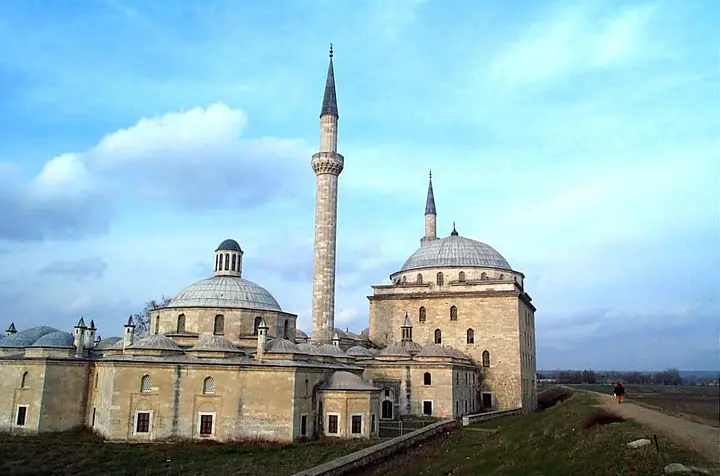
Bayezid II Complex

A complex on the bank of the Tunca built by Mimar Hayreddin in 1484–1488, made up of a mosque, a darüşşifa (hospital), a medical madrasa, a soup kitchen and a hammam. The hospital operated for 400 years.

View on map
Historic

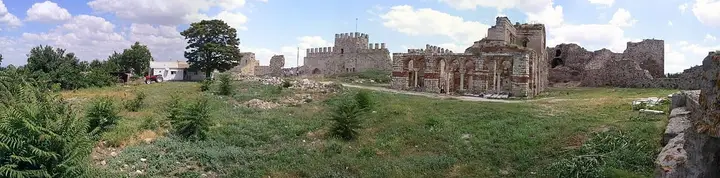
Edirne Palace Ruins

At Sarayiçi, begun by Murad II in 1450 on both banks of the Tunca, this was the second-largest Ottoman palace after Topkapı; restoration work on the remains is continuing.

View on map
Meriç Bridge and inscription pavilion Photo: CeeGee (CC BY-SA 4.0) · Source
Historic

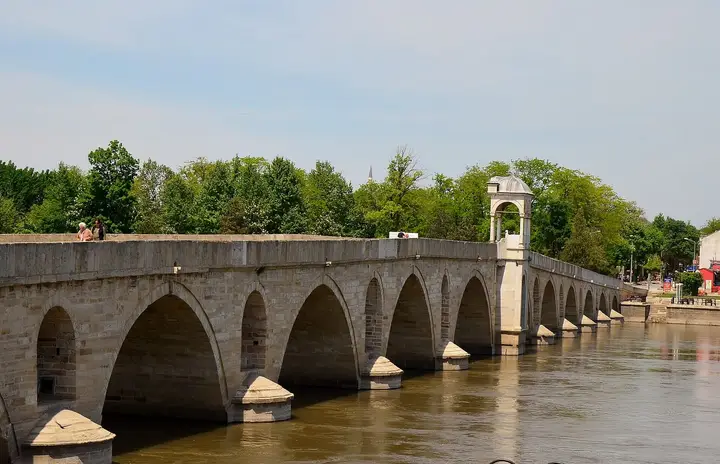
Meriç Bridge

A 12-arched, 263-metre bridge built in 1842–1847 in the reign of Abdülmecid; from the inscription pavilion (tarih köşkü) in its middle you can watch the sun set over the Meriç.

View on map
Historic

Tunca Bridge

A 10-arched, 136-metre bridge commissioned by Ekmekçizade Ahmet Paşa between 1606 and 1615, whose architect was most probably Sedefkâr Mehmed Ağa.

View on map
Ali Paşa Bazaar Photo: Dosseman (CC BY-SA 4.0) · Source
Historic

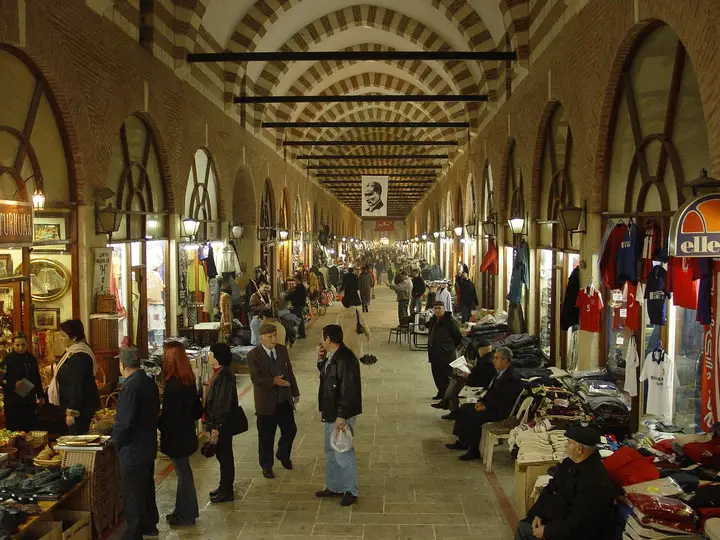
Ali Paşa Bazaar

A 300-metre covered bazaar with 130 shops, built by Mimar Sinan for Grand Vizier Semiz Ali Paşa in 1560–1565.

View on map
Historic

Selimiye Arasta

A 256-metre arasta with 124 shops, built to provide income for the Selimiye; today it sells Edirne souvenirs such as fruit-shaped soap and marzipan (badem ezmesi).

View on map
Historic

Karaağaç and the Lausanne Monument

The Lausanne Monument and Museum, opened in 1998 beside the historic railway station at Karaağaç, west of the Meriç, commemorates the Treaty of Lausanne and the handing over of Karaağaç to Türkiye.

View on map
Uzunköprü Photo: Wikimedia Commons (CC BY-SA) · Source
Historic

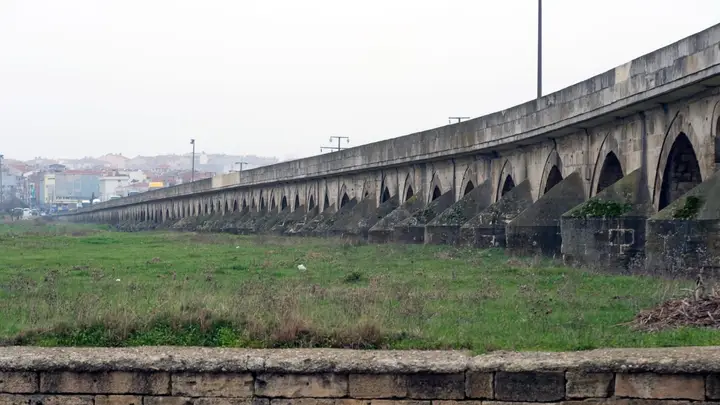
Uzunköprü

A 1,392-metre, 174-arched bridge over the Ergene River, built by Mimar Muslihiddin for Murad II in 1426–1443. It is the longest stone bridge in the world and gives the district its name.

View on map

Ancient Cities 1

Enez Castle Photo: Aziz Akbıyık (CC BY-SA 3.0) · Source
Ancient City

Enez Castle (Ainos)

A castle rising over the ancient city of Ainos, where the Meriç flows into the Aegean, together with the remains of the Hagia Sophia (Fatih) Mosque.

View on map

Religious Buildings 4

Selimiye Mosque Photo: Wikimedia Commons (CC BY-SA) · Source
Religious

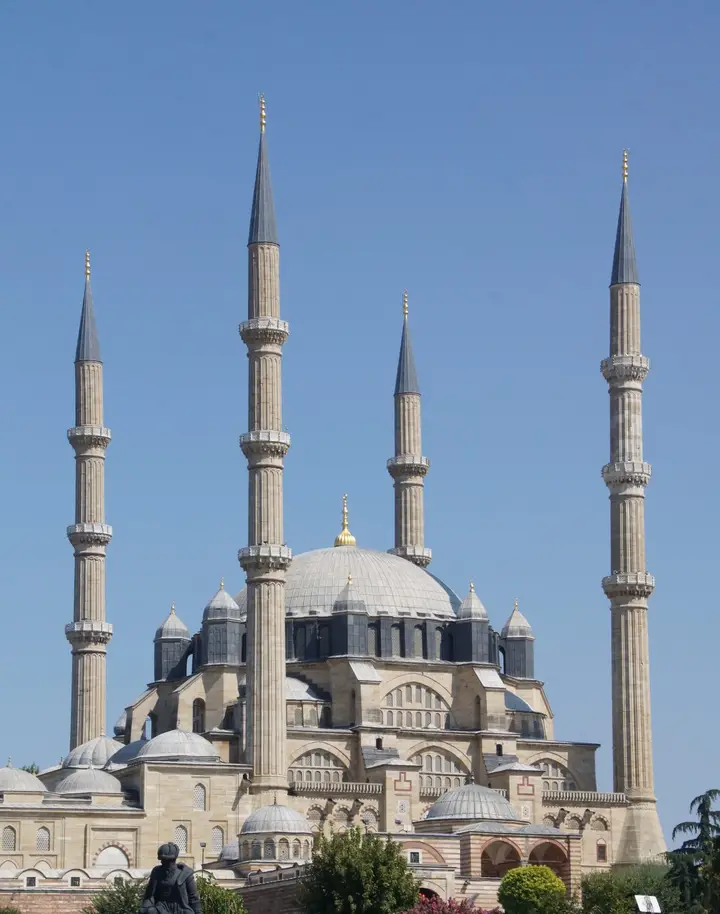
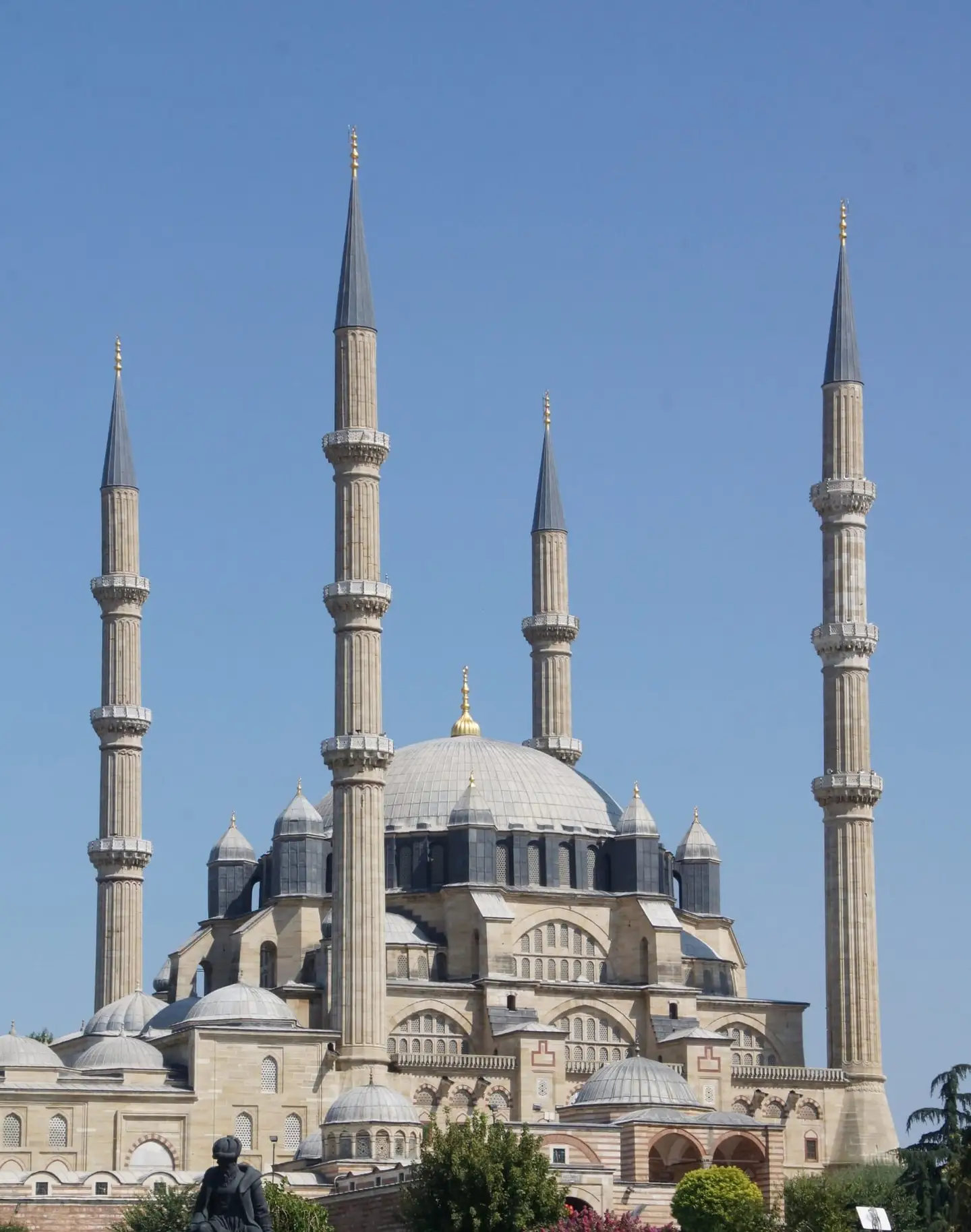
Selimiye Mosque and Complex

Built by Mimar Sinan at the age of 80 for Selim II, begun in 1568 and opened for worship on 14 March 1575, the mosque is Sinan's 'masterpiece', with a dome more than 43 metres across and four 70.89-metre minarets with three balconies each. It became a UNESCO World Heritage Site in 2011 together with its complex.

View on map
Old Mosque (Eski Cami) Photo: Wikimedia Commons (CC BY-SA) · Source
Religious

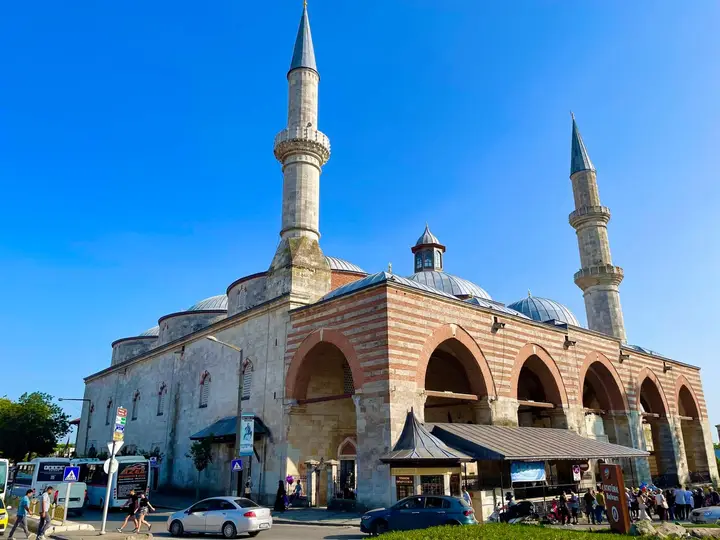
Old Mosque (Eski Cami)

A nine-domed mosque begun by Süleyman Çelebi in 1403 and completed by Mehmed I in 1414; it is the first monumental building in Edirne to survive to the present day. It is famous for the giant calligraphic inscriptions on its walls.

View on map
Üç Şerefeli Mosque Photo: Ggia (CC BY-SA 3.0) · Source
Religious

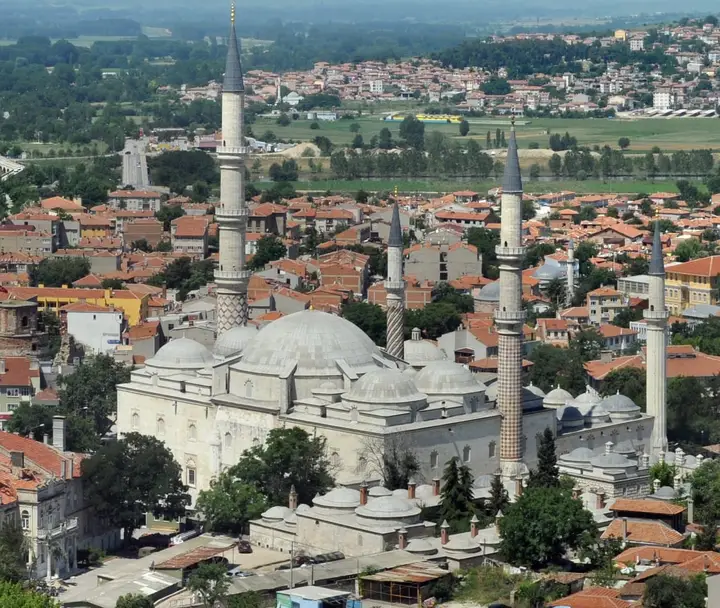
Üç Şerefeli Mosque

Built in the reign of Murad II, its plan with a courtyard and a broad dome is regarded as the forerunner of the classical Ottoman mosque. The tallest of its four minarets has three balconies, and each balcony is reached by a separate staircase.

View on map
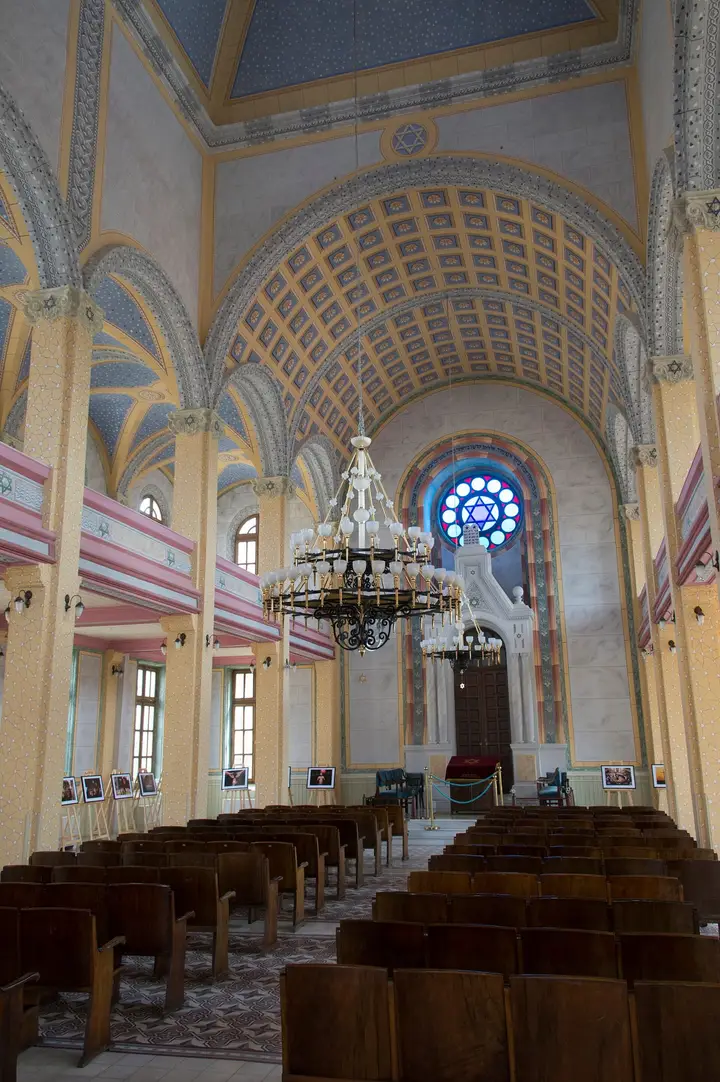
Interior of the Great Synagogue Photo: Dosseman (CC BY-SA 4.0) · Source
Religious

Edirne Great Synagogue

Rebuilt by decree of Abdülhamid II after the fire of 1905 and opened in 1907, the synagogue was inspired by the Leopoldstädter Tempel in Vienna; it is the largest synagogue in Türkiye and the third-largest in Europe.

View on map

Museums 1

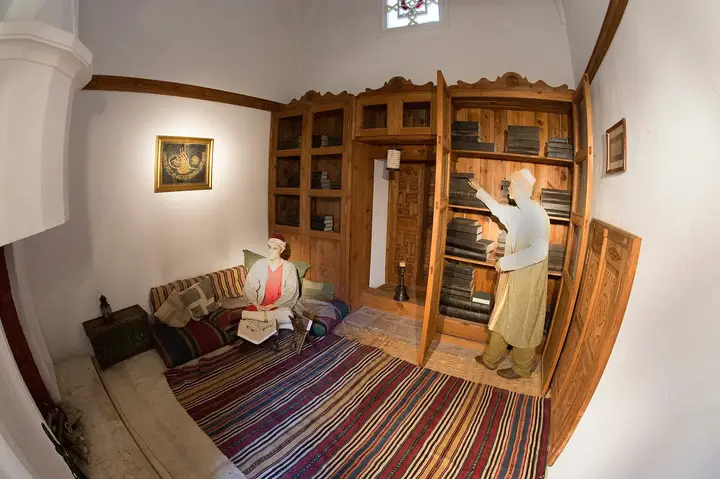
Reconstruction of the medical madrasa in the Health Museum Photo: Dosseman (CC BY-SA 4.0) · Source
Museum

Edirne Health Museum

A museum in the darüşşifa (hospital) of the Bayezid II Complex that recreates the spaces where patients were treated with music, the sound of water and scents; it won the Council of Europe's European Museum Award in 2004.

View on map

Natural Wonders 1

Nature

Gala Lake National Park

A national park (2005) between Enez and İpsala, covering Lake Gala and Lake Pamuklu; it is home to 111 bird species, including the Dalmatian pelican.

View on map

Attractions 1

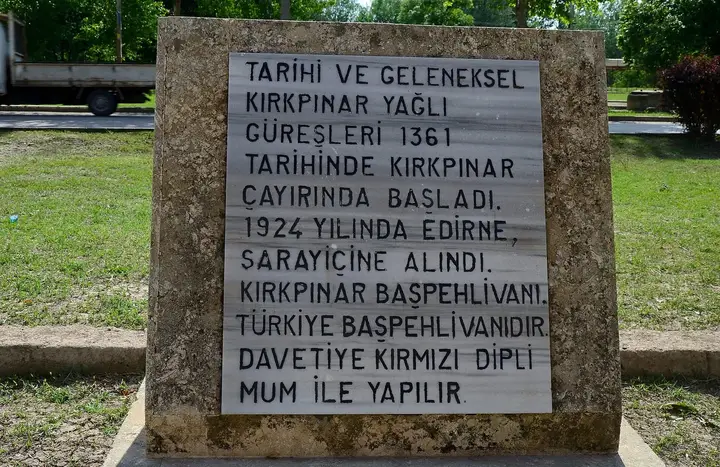
Kırkpınar inscription Photo: CeeGee (CC BY-SA 4.0) · Source
Attraction

Kırkpınar Wrestling Arena (Sarayiçi)

The wrestling arena at Sarayiçi where the Kırkpınar Oil Wrestling Festival has been held since 1924. The winner of the three-day tournament, held every year in late June or early July, receives the title of 'başpehlivan' (chief wrestler). The tradition was added to the UNESCO list in 2010.

View on map

Getting to Know Edirne

Edirne lies in the far north-west of Türkiye, on the border with Greece and Bulgaria, on the plain where the Tunca, Arda and Meriç rivers meet. The settlement, the Thracian Uskudama, was refounded by the Roman emperor Hadrian, who named it Hadrianopolis; the name Edirne comes from this. Taken by the Ottomans in 1363, the city was the capital of the Ottoman Empire until the conquest of Istanbul (1363–1453). Mehmed the Conqueror, who took Istanbul, was born in Edirne in 1432.

The legacy of the years as capital defines Edirne’s skyline: the Selimiye Mosque (1568–1575), which Mimar Sinan built at the age of 80 and called his “masterpiece”, was added to the UNESCO World Heritage List together with its complex in 2011. In the city you can follow the development of Ottoman architecture step by step: the nine-domed Old Mosque (1403–1414), the Üç Şerefeli Mosque with its courtyard and four minarets, and the Bayezid II Complex (1484–1488), whose hospital operated for 400 years.

Edirne is also the city of the Kırkpınar Oil Wrestling Festival. Said by legend to have begun in 1346, held since 1361 according to its inscription, and staged at Sarayiçi since 1924, the tournament is one of the oldest continuously held sporting events in the world and was added to UNESCO’s Intangible Cultural Heritage list in 2010.

When to Go

Edirne has a continental climate: summers are hot, and winters cold and rainy. Averages for 1930–2025 from the Turkish State Meteorological Service:

Month Avg. high Avg. low Rainfall Rainy days
January 6.8 °C −0.4 °C 64 mm 12
February 9.5 °C 0.5 °C 51 mm 9
March 13.5 °C 3.0 °C 50 mm 10
April 19.3 °C 7.1 °C 49 mm 10
May 24.8 °C 11.7 °C 52 mm 10
June 29.4 °C 15.6 °C 46 mm 8
July 32.1 °C 17.5 °C 31 mm 5
August 32.1 °C 17.4 °C 23 mm 4
September 27.5 °C 13.6 °C 36 mm 5
October 20.8 °C 9.3 °C 57 mm 8
November 14.3 °C 5.3 °C 66 mm 10
December 8.6 °C 1.5 °C 71 mm 13

The best times are April to June and September to October. Kırkpınar takes place in late June or early July, and the city is very crowded that week. On 5–6 May the Roma celebrate their Kakava festival at Sarayiçi. In winter the Meriç and Tunca may flood.

How to Get to Edirne

By road: Edirne is about 2.5–3 hours from Istanbul along the Anatolian Motorway (TEM); the D-100 also passes through the city.

Border crossings: Kapıkule (Bulgaria) is the busiest land customs gate in Türkiye; Pazarkule and İpsala open onto Greece.

By air: There is no scheduled airport in Edirne; use the Istanbul airports.

Edirne Area by Area

  • Central district: the Selimiye Mosque and Complex, the Old Mosque, the Üç Şerefeli Mosque, the Arasta and Ali Paşa bazaars, Rüstem Paşa Caravanserai, the Great Synagogue, the Bayezid II Complex and Health Museum, Sarayiçi and the Kırkpınar wrestling arena.
  • Karaağaç: the Meriç and Tunca bridges, the historic Karaağaç station and the Lausanne Monument.
  • Uzunköprü: Uzunköprü, the 1,392-metre, 174-arched bridge built by Murad II.
  • Enez: ancient Ainos, Enez Castle, Altınkum beach and Gala Lake National Park.
  • Keşan and İpsala: the Gulf of Saros coast, the registered İpsala rice and Keşan satır eti (cleaver-cut meat).

Suggested Itineraries

Day 1 – Edirne the capital: In the morning, the Selimiye Mosque and the Selimiye Foundation Museum; shop for badem ezmesi (marzipan) and fruit-shaped soap in the Arasta and Ali Paşa bazaars; tava ciğer for lunch. In the afternoon, the Old Mosque and the Üç Şerefeli Mosque, and in the evening the Great Synagogue.

Day 2 – The Tunca bank: In the morning, the Bayezid II Complex and Health Museum; then the Edirne Palace ruins and the Kırkpınar wrestling arena at Sarayiçi. In the afternoon, sunset on the Meriç Bridge and the Lausanne Monument at Karaağaç.

Extra day: The longest stone bridge in the world at Uzunköprü; or ancient Ainos and Lake Gala at Enez.

Edirne Cuisine

The symbol of Edirne is Edirne tava ciğeri (fried liver), sliced leaf-thin, fried in hot oil and served with dried red pepper. Other registered delicacies are Edirne ciğer sarma (liver wrap), Edirne badem ezmesi (marzipan), deva-i misk helvası (Ottoman palace halva), Edirne beyaz peyniri (white cheese), Uzunköprü köftesi (Uzunköprü meatballs), Keşan satır et (cleaver-cut meat), İpsala pirinci (İpsala rice), Meriç kara kavunu (Meriç black melon) and yer fıstığı (peanuts), Çeribaşı kirazı (Çeribaşı cherries) and Keşan Korudağ çiçek balı (Keşan Korudağ flower honey). The city’s traditional gift is the fruit-shaped Edirne mis meyve sabunu (fruit-shaped soap).

Practical Tips

  • Visit the Selimiye outside prayer times; take in the interior from beneath the dome and from the gallery.
  • During Kırkpınar week accommodation fills up very early; book weeks ahead.
  • Long queues can form at Kapıkule in the summer months.
Districts of Edirne

Edirne province has 9 districts. Explore the places to visit, local dishes and transport in each one.

What to Eat in Edirne

All dishes →
  • Edirne Tava Ciğeri (fried liver)

    Registered liver, sliced leaf-thin and fried, served with dried red pepper.

  • Edirne Ciğer Sarma (liver wrap)

    A wrap with a registered geographical indication.

  • Edirne Badem Ezmesi (marzipan)

    Marzipan with a registered geographical indication.

  • Deva-i Misk Helvası (Ottoman palace halva)

    A registered halva from the Ottoman palace kitchen.

  • Uzunköprü Köftesi (Uzunköprü meatballs)

    Meatballs with a registered geographical indication.

What to eat in Edirne: the full food guide

Edirne: Frequently Asked Questions

What are the best places to visit in Edirne?

The main stops are the Selimiye Mosque, the Old Mosque, the Üç Şerefeli Mosque, the Bayezid II Complex and Health Museum, the Ali Paşa and Arasta bazaars, the Great Synagogue, Sarayiçi, the Meriç and Tunca bridges, Karaağaç and the Lausanne Monument, Uzunköprü and Enez.

Does Edirne have a UNESCO World Heritage Site?

Yes. The Selimiye Mosque and its Complex were added to the UNESCO World Heritage List in 2011. The Kırkpınar Oil Wrestling Festival has also been on UNESCO's Intangible Cultural Heritage list since 2010.

When is the Kırkpınar festival held?

The Kırkpınar Oil Wrestling Festival is held every year in late June or early July at Sarayiçi in Edirne and lasts three days.

Was Edirne the Ottoman capital?

Yes. Edirne was the capital of the Ottoman Empire from 1363 until the conquest of Istanbul (1453).

What is Edirne famous for?

Tava ciğer (fried liver), badem ezmesi (marzipan), deva-i misk helvası, white cheese, fruit-shaped soap and the Kırkpınar wrestling.

Where is the longest stone bridge in the world?

It is Uzunköprü, in Edirne's Uzunköprü district, a 1,392-metre, 174-arched bridge built in the reign of Murad II.

More from the Edirne Guide

Other Provinces in the Marmara Region

Sources

The information in this guide has been compiled from and checked against the sources below (last checked: 7 October 2026). If you spot an error, please let us know.

  1. Vikipedi – Edirne
  2. Meteoroloji Genel Müdürlüğü – Edirne il istatistikleri
  3. Vikipedi – Selimiye Camii
  4. UNESCO – Selimiye Mosque and its Social Complex
  5. Vikipedi – Eski Cami
  6. Vikipedi – Üç Şerefeli Cami
  7. Vikipedi – II. Bayezid Külliyesi
  8. Vikipedi – Sultan II. Bayezid Külliyesi Sağlık Müzesi
  9. Vikipedi – Kırkpınar Yağlı Güreşleri
  10. Vikipedi – Edirne Sarayı
  11. Vikipedi – Meriç Köprüsü
  12. Vikipedi – Tunca Köprüsü
  13. Vikipedi – Ali Paşa Çarşısı
  14. Vikipedi – Arasta Çarşısı
  15. Vikipedi – Edirne Büyük Sinagogu
  16. Vikipedi – Lozan Anıtı
  17. Vikipedi – Uzun Köprü
  18. Vikipedi – Enez
  19. Vikipedi – Gala Gölü Millî Parkı
  20. Vikipedi – Ciğer tava
  21. Vikipedi – Kapıkule Sınır Kapısı
  22. Vikipedi – Türkiye'de tescilli coğrafi işaretler listesi

Search 81 province guides and 968 district guides.