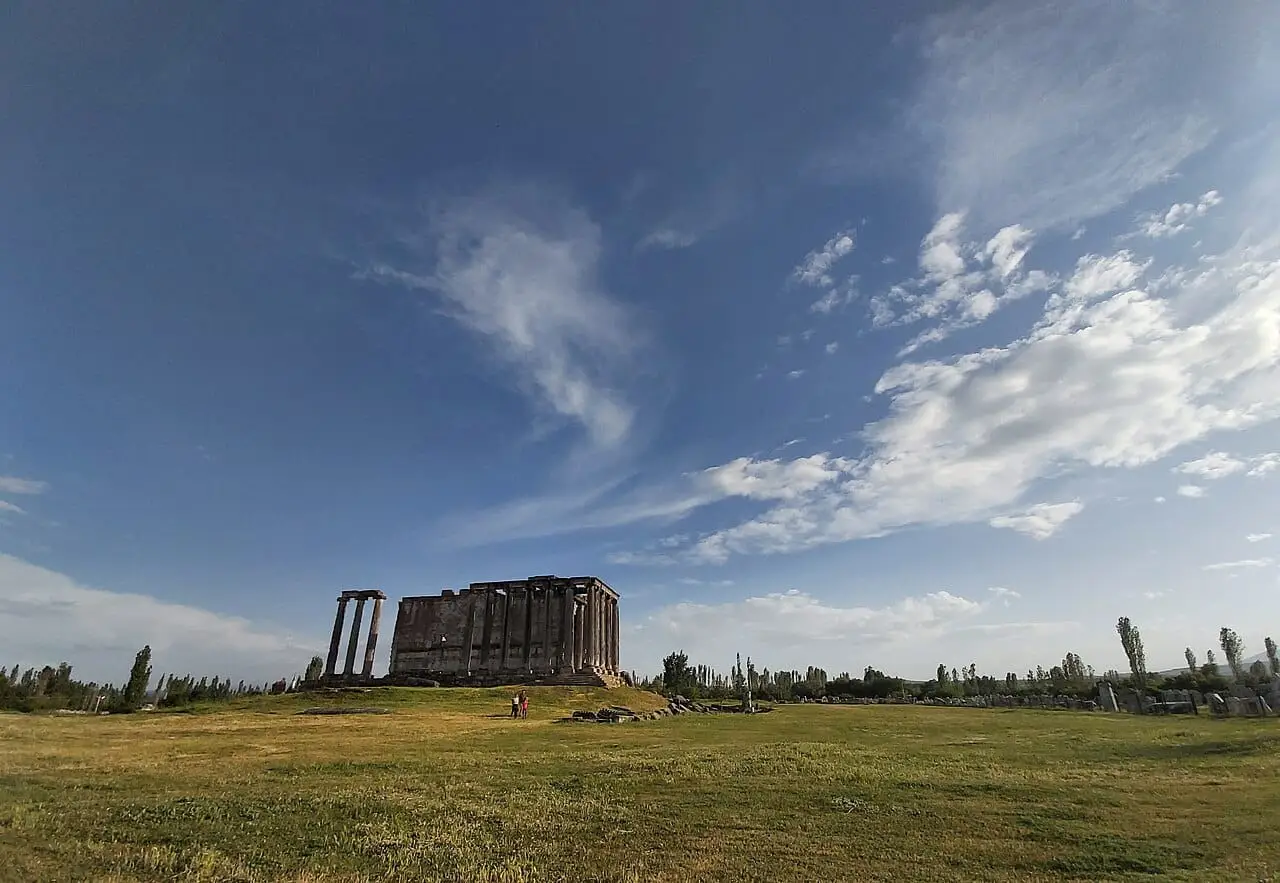
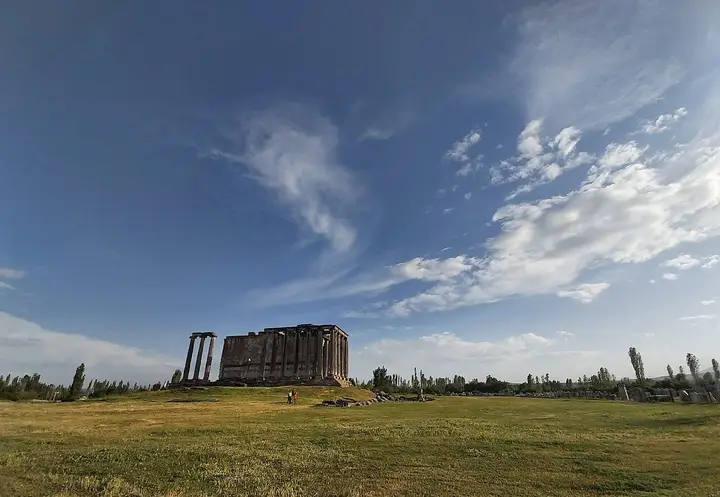
8 places to visit in the Çavdarhısar district of Kütahya: Aizanoi Ancient City, Temple of Zeus (Zeus Tapınağı) and Aizanoi Stadium and Theatre. Plan your trip to Çavdarhısar with local food, practical tips and transport information.

Share with friends

Çavdarhısar is a district of Kütahya province. It covers an area of 429 km², has an elevation of 1,005 metres and a population of 5,503, and was established in 1990.

History and Culture

Settlement at Aizanoi goes back to the Bronze Age, and in the Hellenistic period the ancient city changed hands between the kingdoms of Pergamon and Bithynia. Aizanoi continued to mint its own coins in the Roman period, and the monumental buildings of the city were erected from the early Imperial period to the 3rd century AD. Beneath the Temple of Zeus there is another vaulted space, which is thought to have served local devotion to the mother goddess Cybele. Inscriptions on the walls of the Macellum record many commercial values, from slave prices to teachers’ salaries, and this structure came to light when a mosque built on it collapsed in the 1970 Gediz earthquake. Art circles describe Aizanoi as the ‘second Ephesus’ for its cultural character, and the city is home to what is described as the best-preserved Temple of Zeus in the world. Aizanoi began to decline in Late Antiquity, and in 2012 it was included on the UNESCO World Heritage Tentative List.

Last updated:

Places to Visit in Çavdarhısar

  • 4 Historic
  • 4 Ancient City

Historic Sites 4

Aizanoi Ancient City - Çavdarhisar Photo: Gülhan K. HORUZ (CC BY-SA 4.0) · Source
Historic

Aizanoi Ancient City

Settled from the 3rd millennium BC, Aizanoi enjoyed its golden age in the Roman period. The ancient city, on the UNESCO World Heritage Tentative List, lies at 1,000 metres elevation on the bank of the Penkalas (Kocaçay) stream. Structures uncovered in excavations include a temple, stadium, theatre and macellum.

View on map
Historic

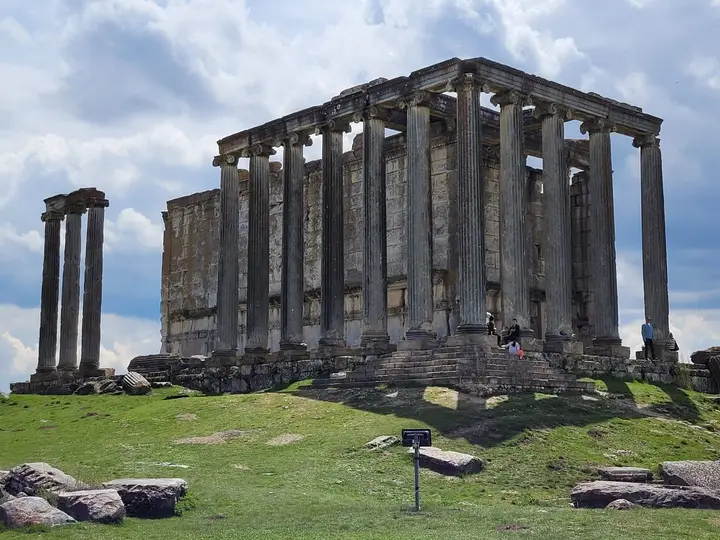
Temple of Zeus (Zeus Tapınağı)

The most important structure at Aizanoi, the Temple of Zeus is one of the best-preserved Roman temples in Anatolia. Its 48 columns, combining the Ionic and Corinthian orders, are notable. A cave dedicated to Cybele lies on the lower level of the temple.

View on map
Aizanoi Stadium and Theatre - Çavdarhisar Photo: Wikipedia (CC BY-SA) · Source
Historic

Aizanoi Stadium and Theatre

The stadium and theatre in the ancient city were built adjacent to each other, an arrangement unique in the Roman world. The stadium holds 13,500 people and the theatre 20,000.

View on map
Historic

Macellum (World's First Exchange)

A round structure dating to the 2nd century AD, considered the oldest known exchange building in the world. Inscriptions relating to price regulations by Emperor Diocletian were found on its walls.

View on map

Ancient Cities 4

Ancient City

Macellum (Exchange Building)

A round building constructed in the second half of the 2nd century AD at Aizanoi. It is considered the oldest exchange in the world; its inscriptions contain information on the prices of goods sold.

View on map
Ancient City

Theatre-Stadium Complex

Combined theatre and stadium structures north of the Temple of Zeus at Aizanoi. Construction began in the 2nd century AD and continued at intervals until the 3rd century.

View on map
Ancient City

Colonnaded Street

A colonnaded street north-east of the Macellum at Aizanoi. Dating to around AD 400 and thought to have survived until the 6th century, it was built with columns removed from older ancient structures and brought here.

View on map
Ancient City

Necropolis

Aizanoi's great cemetery. This area contains examples of Phrygian door-shaped gravestones; men's tombs feature bulls, lions and eagles, while women's tombs feature wool baskets and a mirror.

View on map

Places to Visit Around Kütahya Province

See all →

While you are in Çavdarhısar, you can also see the highlights of Kütahya province. These places are in other districts; Çavdarhısar is about 57 km from the provincial centre.

  • Aizanoi (Çavdarhisar) Ancient City — A Roman city 58 km from Kütahya, built on both banks of the Penkalas Stream at Çavdarhisar; it has one of the best-preserved temples of Zeus in the world, a theatre-stadium complex, a colonnaded street and the Macellum with its price-list inscription, and has been on the UNESCO World Heritage Tentative List since 2012.
  • Kütahya Castle — A castle on a steep hill overlooking the city, built in the Byzantine period and repaired under the Germiyanids and the Ottomans; with its inner and outer walls, its towers and its revolving restaurant, it is the city's best viewpoint.
  • Kütahya Grand Mosque — A mosque begun by Bayezid I (Yıldırım Bayezid) between 1381 and 1389 and completed by his son Musa Çelebi after the Battle of Ankara; it is the city's only sultan's mosque.
  • Kütahya Tile Museum — A museum housed in the Germiyanid-period Imaret (Yakup Bey Complex) beside the Grand Mosque, displaying examples of Kütahya and İznik tiles spanning the centuries.
  • Kossuth House Museum — An 18th-century Turkish house where Lajos Kossuth, leader of the Hungarian Revolution of 1849, lived in exile in 1850–1851; here Kossuth wrote the draft constitution he prepared for Hungary.
  • Vacidiye Madrasa — A madrasa built in 1314 under the Germiyanids, where astronomy was also taught; today it serves as the Kütahya Archaeology Museum.

Practical Information for Visiting Çavdarhısar

Suggested time
1 day
Best time to visit
Spring and autumn months (April–June, September–October)
Places to visit
8 places

What to Eat in Çavdarhısar

Food guide →
  • Kütahya Mantısı (dumplings)

    Dumplings made with small pieces of dough filled with minced meat, served with yoghurt and a butter sauce.

  • Höşmerim (cheese and flour dessert)

    A traditional dessert made with cheese, flour and sugar, one of the distinctive flavours of the Kütahya region.

Culture, Local Products and Economy of Çavdarhısar

  • Aizanoi Ancient City Heritage

    Çavdarhısar is home to Aizanoi, one of Anatolia's most important ancient cities. Known as the 'second Ephesus' of Türkiye, the city reveals the architectural and commercial richness of the Roman Empire period.

Local Products

  • Wheat and Barley — Wheat and barley are grown on the fertile plains of Çavdarhısar. The name of the district, 'çavdar' (rye), reflects the historical importance of grain farming.

Economy

Çavdarhısar's economy is based on agriculture and tourism. The progress of the Aizanoi Ancient City in the UNESCO process is increasing its tourism potential.

How to Get to Çavdarhısar

Çavdarhısar is 57 km from Kütahya provincial centre and 30 km from Zafer Airport. Transport is by road.

Get directions on Google Maps Getting to Kütahya

Çavdarhısar: Frequently Asked Questions

What are the places to see in Çavdarhısar?

8 prominent places in Çavdarhısar: Aizanoi Ancient City, Temple of Zeus, Aizanoi Stadium and Theatre, Macellum (World's First Exchange), Macellum (Exchange Building), Theatre-Stadium Complex, Colonnaded Street and Necropolis.

What is eaten in Çavdarhısar?

Kütahya Mantısı and Höşmerim are the standout flavours on Çavdarhısar's tables.

What is Çavdarhısar famous for?

Çavdarhısar is known for Wheat and Barley and the Aizanoi Ancient City Heritage. Wheat and barley are grown on the fertile plains of Çavdarhısar.

How do I get to Çavdarhısar?

Çavdarhısar is 57 km from Kütahya provincial centre and 30 km from Zafer Airport. Transport is by road.

How much time should I set aside for a visit to Çavdarhısar?

Suggested visit length: 1 day. Best time to visit: spring and autumn months (April–June, September–October).

Continue Your Trip

Other Districts of Kütahya

Search 81 province guides and 968 district guides.