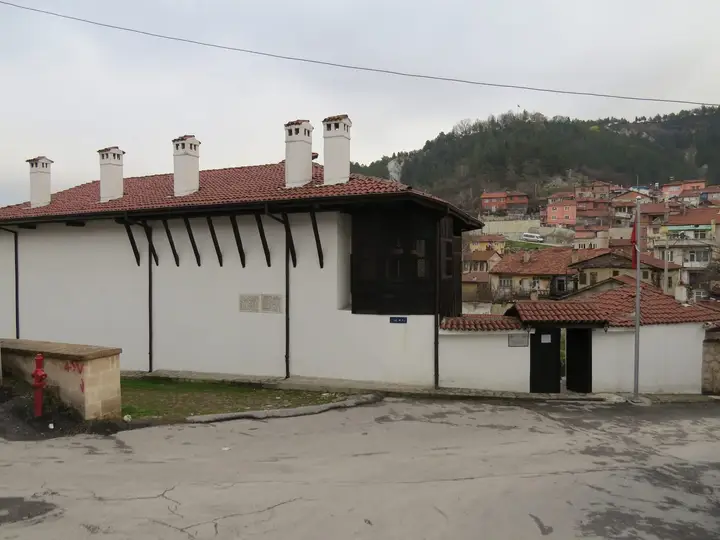
Getting to Know Kütahya
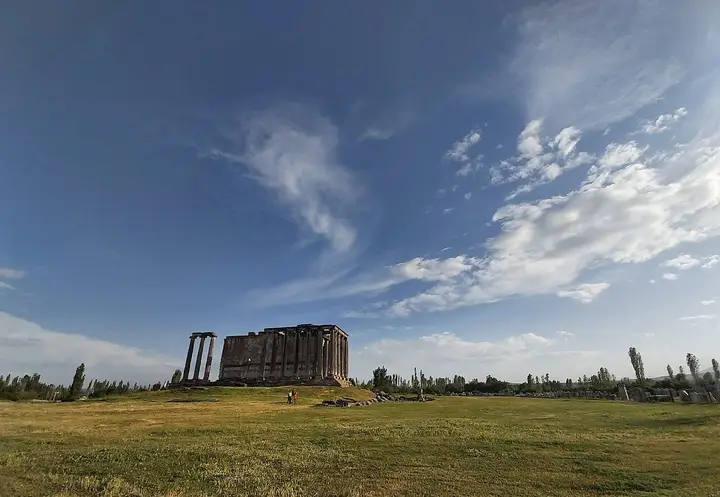
Kütahya lies in the valley of the Porsuk Stream in west-central Anatolia, surrounded by the Murat, Şaphane and Domaniç mountains. In antiquity the city lay in the region of Phrygia and was called Kotiaion. The province’s most important ancient city is Aizanoi at Çavdarhisar: an important centre in Roman times, it has one of the best-preserved temples of Zeus in the world, a combined theatre-stadium complex, and the Macellum, known as “the world’s first stock exchange” because of its price-list inscription. Aizanoi was added to the UNESCO World Heritage Tentative List in 2012.
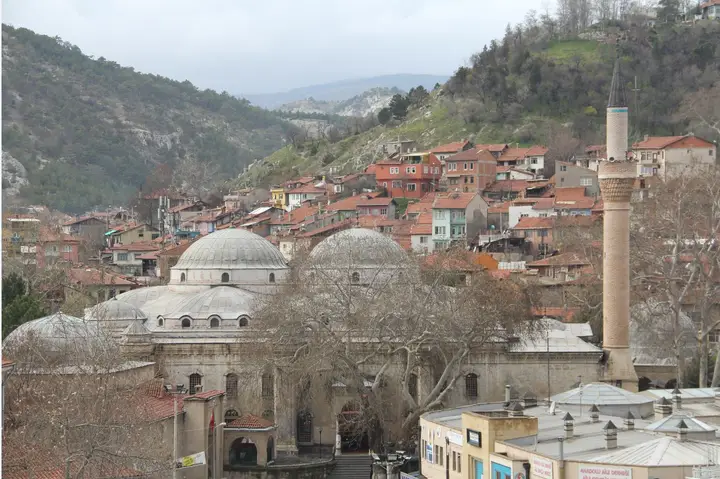
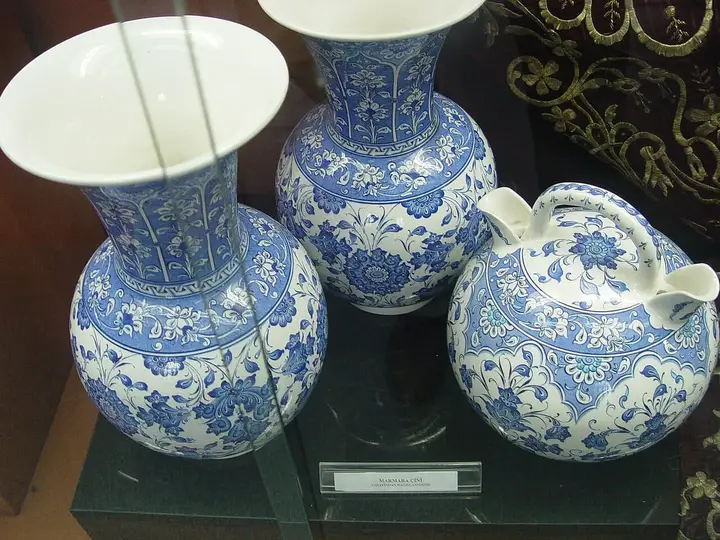
In the 14th century the city became the capital of the Germiyanid Principality and in 1429 it joined the Ottoman state. The Vacidiye Madrasa, left from the Germiyanid period and the early Ottoman centuries, the Grand Mosque, begun by Bayezid I, and the Byzantine Kütahya Castle make up the city’s historic fabric. From the 17th century, with the decline of İznik, Kütahya became the Ottoman Empire’s most important tile and ceramic centre, and the tradition continues in its workshops today. Lajos Kossuth, leader of the Hungarian Revolution of 1849, lived in exile in Kütahya in 1850–1851.
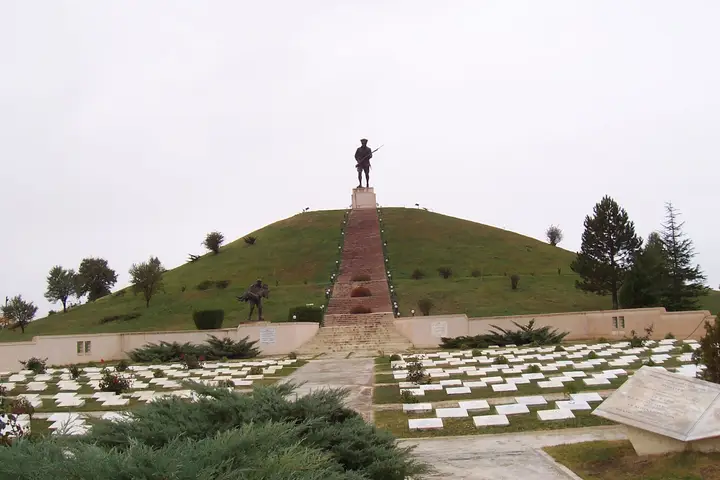
In the War of Independence, the Battles of Kütahya–Eskişehir and the Great Offensive took place on this land: Dumlupınar, where the Battle of the Commander-in-Chief was fought on 30 August 1922, is today the centre of the Victory Day ceremonies.
When to Go
Kütahya has a continental climate: winters are cold and snowy, and summers are warm and dry. Averages for 1929–2025 from the Turkish State Meteorological Service:
| Month |
Avg. high |
Avg. low |
Rainfall |
Rainy days |
| January |
4.8 °C |
−3.2 °C |
72 mm |
14 |
| February |
6.7 °C |
−2.3 °C |
58 mm |
13 |
| March |
10.9 °C |
−0.1 °C |
57 mm |
13 |
| April |
16.4 °C |
3.9 °C |
50 mm |
11 |
| May |
21.2 °C |
7.9 °C |
56 mm |
12 |
| June |
25.1 °C |
11.0 °C |
40 mm |
8 |
| July |
28.2 °C |
13.2 °C |
19 mm |
4 |
| August |
28.6 °C |
13.2 °C |
18 mm |
3 |
| September |
24.7 °C |
9.3 °C |
23 mm |
5 |
| October |
19.1 °C |
5.7 °C |
40 mm |
8 |
| November |
12.9 °C |
2.0 °C |
49 mm |
10 |
| December |
6.8 °C |
−1.0 °C |
76 mm |
14 |
The best periods are May to June and September to October. The Kütahya International Tile Festival is held in the summer months, and on 30 August Victory Day ceremonies are held at Dumlupınar. The hot springs of Simav and Gediz are open all year.
How to Get to Kütahya
By air: Zafer Airport (KZR), in the Altıntaş district, is a regional airport serving Kütahya, Afyonkarahisar and Uşak; it is about 60 km from the city.
By train and road: Kütahya lies on the Eskişehir–Balıkesir railway; by road it is about 80 km from Eskişehir, about 310 km from Ankara and about 350 km from Istanbul.
Kütahya Area by Area
- Central district: Kütahya Castle, the Grand Mosque, Vacidiye Madrasa (next to the Kütahya Tile Museum), Kossuth House, the Kütahya Archaeology Museum, tile workshops and historic Kütahya houses.
- Çavdarhisar: The ancient city of Aizanoi, the Temple of Zeus, the theatre-stadium and the Macellum.
- Dumlupınar: The Commander-in-Chief Historic National Park, the Dumlupınar Monument and the Unknown Soldier Monument.
- Simav and Gediz: The Eynal Hot Springs, Mount Murat and geothermal springs; the registered Simav hand-knotted carpet.
- Tavşanlı and Domaniç: The registered Tavşanlı roasted chickpeas and the forests of Domaniç.
- Emet: Boron deposits and the registered Emet pide and kebab.
Suggested Itineraries
Day 1 – The city centre: The view of the city from Kütahya Castle; the Grand Mosque, Vacidiye Madrasa and the Tile Museum, and Kossuth House. In the afternoon, watch the pattern and glazing masters at a tile workshop; in the evening, Kütahya cimcik or tosunum.
Day 2 – Aizanoi: Early in the morning at Çavdarhisar, the Temple of Zeus and its underground sanctuary, the theatre-stadium and the Macellum; shopping in Kütahya on the way back.
Day 3 – Dumlupınar or Simav: For history, Dumlupınar Commander-in-Chief Historic National Park; for relaxation, the Eynal hot springs at Simav.
Kütahya Cuisine
Kütahya cuisine is a bridge between Central Anatolia and the Aegean. The registered delicacies with geographical indications are Kütahya cimcik aşı (small dough-piece dish), Kütahya tosunumu, Kütahya kaz tiridi (goose tirit), Kütahya dolamber böreği (dolamber pastry), Kütahya kızılcık tarhanası (cornelian cherry tarhana), Kütahya bitli helva (bitli halva), Kütahya köpük helvası (foam halva), paşa helvası (paşa halva), Gediz güveci (Gediz clay-pot stew), Gediz höşmerimi, Gediz tarhanası, Tavşanlı güveci (Tavşanlı clay-pot stew), Tavşanlı leblebisi (Tavşanlı roasted chickpeas), Emet ekmeği (Emet bread), Emet kebabı (Emet kebab) and Emet pidesi. The products are Kütahya Pazarlar kirazı (Pazarlar cherries), Şaphane vişnesi (Şaphane sour cherries), Simav kestanesi (Simav chestnuts) and Simav Eynal domatesi (Simav Eynal tomatoes).
Handicrafts
The symbol of Kütahya is Kütahya tiles (Kütahya çinisi), made with cobalt blue, turquoise and red; they carry a geographical indication and are made by hand in dozens of workshops in the city. The Simav hand-knotted carpet (Simav el halısı) and Kütahya needle lace (Kütahya iğne oyası) are also registered handicrafts.
Practical Tips
- When buying tiles, to tell handmade (glazed, hand-painted) tiles from printed ones, look for the master’s signature on the back.
- Aizanoi is about 58 km from the city; as public transport is limited, going by car is practical.
- Kütahya’s historic houses and castle are on steep streets; wear comfortable shoes.
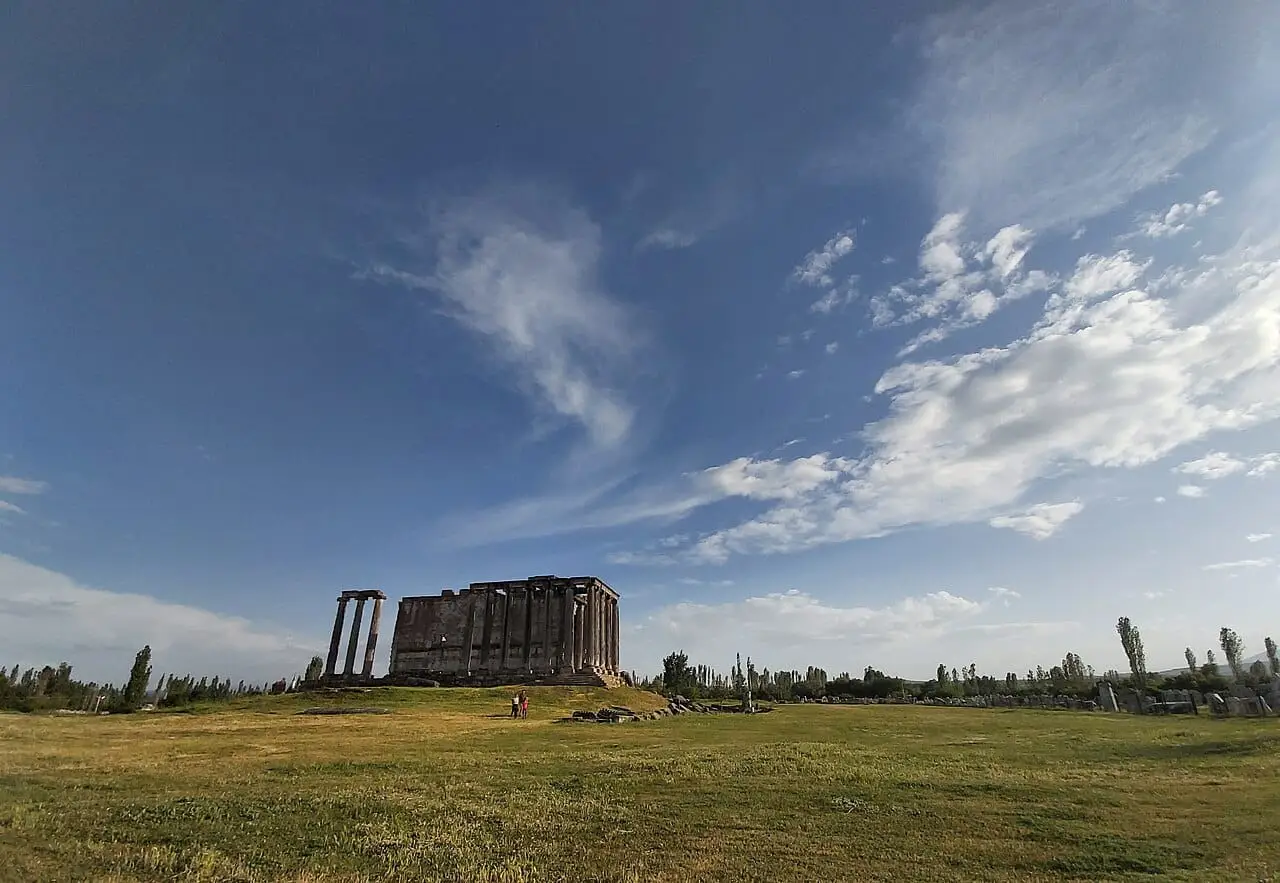
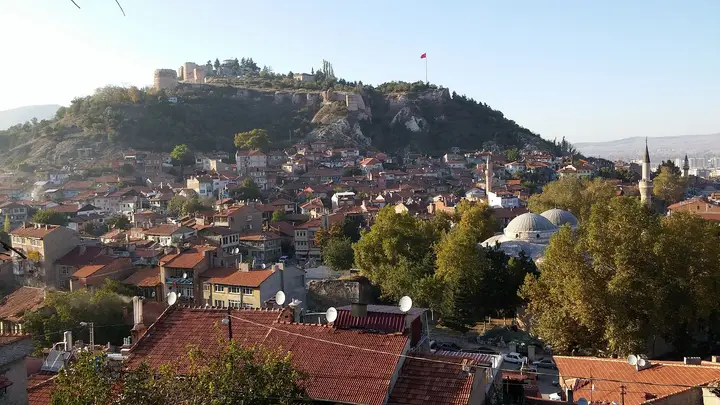 Photo: Ömer Serez (CC BY-SA 4.0) · Source