Afyonkarahisar is known for its castle on a 226-metre rock that was once a volcano, its UNESCO World Heritage Grand Mosque and Kocatepe, where the Great Offensive began. With its thermal hotels, clotted cream (kaymak) and sucuk, it is also one of Türkiye's thermal and gastronomy capitals, while the rock churches and monuments of the Phrygian Valley are the province's greatest undiscovered treasure.

Share with friends

Last updated:

Places to Visit in Afyonkarahisar

17 places worth seeing in Afyonkarahisar, from historic monuments to natural wonders, grouped by type. Open any of them on the map with a single click.

  • 5 Historic
  • 2 Ancient City
  • 2 Religious
  • 3 Museum
  • 5 Nature

Historic Sites 5

Historic

Afyonkarahisar Castle

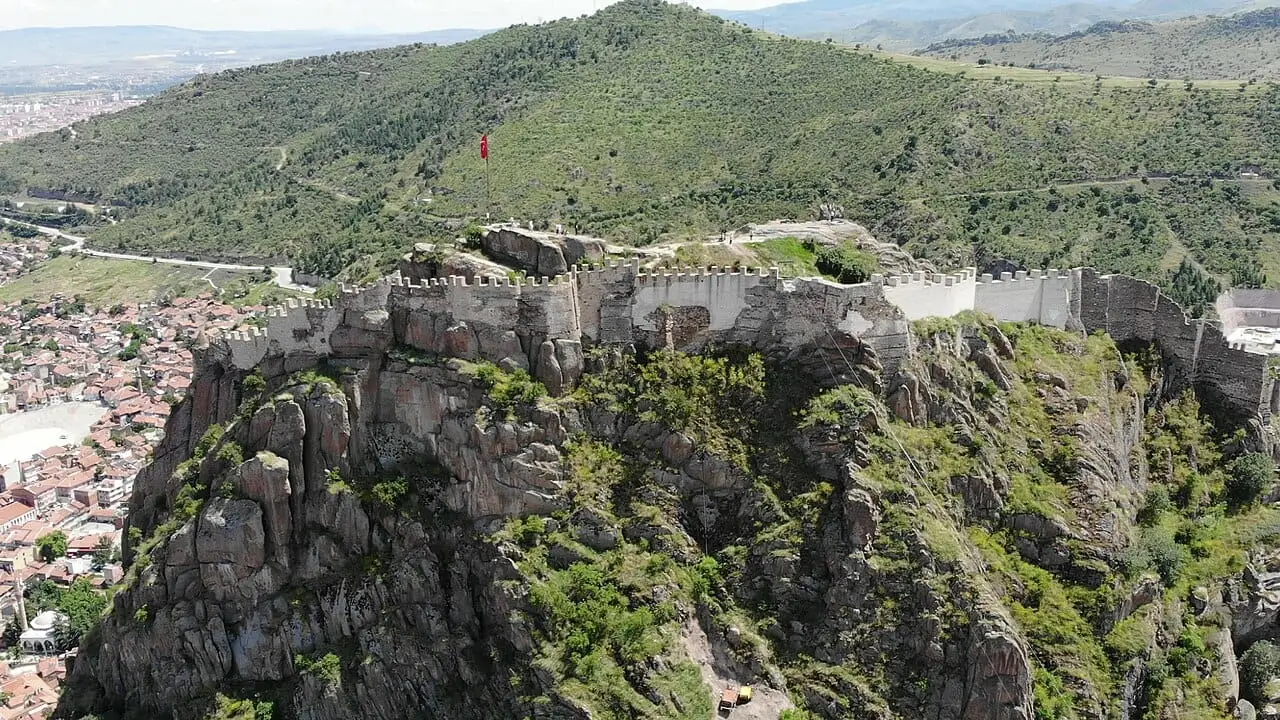
The castle stands on a 226-metre rock that was once a volcano. It was known as Hapanuva in the Hittite period and as Akroenos in the Roman and Byzantine eras, and also as Hisar-ı Devlet ("Fortress of the State") because the treasure of the Seljuk Sultan Alaeddin Keykubad I was kept here. From the summit you can see the whole city.

View on map
Historic

Kocatepe Atatürk Monument and Great Offensive Martyrs' Cemetery

Kocatepe, about 20 km south of the city, is the hill from which the Great Offensive began on the morning of 26 August 1922. The Atatürk Monument stands at the summit, at 1,874 metres, and the cemetery has symbolic graves in memory of the 275 officers and 2,150 soldiers who fell in the offensive.

View on map
Historic

Commander-in-Chief Historical National Park

A national park covering the Kocatepe, Zafertepe–Çalköy and Dumlupınar line, where the Great Offensive and the Battle of the Commander-in-Chief took place. Also known as the "Victory Road" (Zafer Yolu), it is visited by thousands of people every year on 30 August.

View on map
Historic

Döğer Caravanserai

A caravanserai in the town of Döğer in İhsaniye, built in 1434 by Sultan Murad II during his campaign against the Karamanids. About 56 metres long, it consists of a two-storey inn and a single-storey camel stable. It was restored in 1991–1993.

View on map
Historic

İscehisar Marble Quarries (Dokimeion)

İscehisar, known in antiquity as Dokimeion, is the source of one of the finest white marbles in the world; the marble is still exported today to many provinces of Türkiye and around the world.

View on map

Ancient Cities 2

Ancient City

Ayazini Rock Settlement

Ayazini, the "heart of Phrygia", lies in İhsaniye district, 33 km from the city centre, and has more than 300 rock-cut dwellings, tombs and chapels. The village's Byzantine-period rock church is about a thousand years old.

View on map
Ancient City

Aslantaş, Yılantaş and Maltaş Phrygian Monuments

The Göynüş Valley in İhsaniye holds the most impressive rock monuments of the Phrygian Valley; the Maltaş open-air temple stands out for its majestic façade carved into the rock mass.

View on map

Religious Buildings 2

Religious

Afyonkarahisar Grand Mosque

Built between 1272 and 1277 and popularly known as the Kırk Direkli ("Forty Columns") Mosque, this timber-columned mosque is one of the important examples of Seljuk and Beylik-period timber-columned mosque architecture. In 2023 it was inscribed as a UNESCO World Heritage Site among the "Medieval Wooden Hypostyle Mosques of Anatolia".

View on map
Religious

Gedik Ahmed Paşa Complex (İmaret Mosque)

A complex built around 1470–1472 for Gedik Ahmed Paşa, vizier in the time of Mehmed the Conqueror, and attributed to the architect Ayaz Ağa. It consists of a mosque, hammam, primary school (sıbyan mektebi) and madrasa, and is a leading example of 15th-century Ottoman architecture in the city.

View on map

Museums 3

Museum

Sultan Dîvânî Mevlevihane Museum

The Mevlevi lodge founded by Ulu Ârif Çelebi in 1316 was rebuilt in 1908 after a fire in 1902 and opened as a museum in 2008. The tradition of "40 Hatimli Şifalı Aşure" (healing aşure of forty Qur'an recitations) is believed to have begun here.

View on map
Museum

Victory Museum

Built as the town hall in 1913–1914, the building became the headquarters of Commander-in-Chief Mustafa Kemal Paşa and his commanders after the city's liberation on 27 August 1922, and the final plans for the Battle of the Commander-in-Chief of 30 August were drawn up here. It has been a museum since 1985.

View on map
Museum

Afyonkarahisar Museum

Founded in 1933, this archaeology and ethnography museum moved in 2023 to its new building on the Afyonkarahisar–Izmir road. Alongside finds from the Palaeolithic through the Hittite, Phrygian, Roman and Byzantine periods, it has a Seljuk–Ottoman ethnography collection and a rich sculpture garden.

View on map

Natural Wonders 5

Nature

Gazlıgöl Hot Springs

A thermal area in Gazlıgöl, in İhsaniye district, 25 km north of the city. It is also the source of Kızılay Maden Suyu (Kızılay mineral water), which has been in production since 1868 and is regarded as the oldest bottled mineral water in Türkiye.

View on map
Nature

Ömer-Gecek Thermal Area

Declared a Thermal Tourism Area by the Ministry, this district has the greatest concentration of thermal hotels on the Izmir road.

View on map
Nature

Hüdai Hot Springs

Hüdai, in the Sandıklı district, is one of the four areas of Afyonkarahisar declared Thermal Tourism Areas.

View on map
Nature

Eber Lake

A subsidence lake at 967 metres, between the Emir Mountains to the north and the Sultan Mountains to the south. Because of its extensive reed beds, most of it looks like a meadow. It is fed by the Akarçay and by waters from the Sultan Mountains, and is good for birdwatching.

View on map
Nature

Akdağ Nature Park

A nature area of about 14,500 hectares in the Sandıklı district, protected since 2000; its wooded slopes are good for walking.

View on map

Getting to Know Afyonkarahisar

Afyonkarahisar is a city in inner western Anatolia, at the point where the Aegean, Central Anatolia and Mediterranean regions meet. The symbol of the city is the castle on a 226-metre rock that was once a volcano. Called Hapanuva in Hittite sources and Akroenos in the Roman and Byzantine periods, the castle was known as Karahisar under the Seljuks and took the name Karahisar-ı Sahip after the vizier Sahip Ata Fahreddin Ali; the city’s present name was given by Selim II after the poppy (afyon) grown in the area.

The Grand Mosque, built in 1272–1277 in the valley between the castle and Hıdırlık Hill, was added to the UNESCO World Heritage list in 2023 under the “Medieval Wooden Hypostyle Mosques of Anatolia”. With the Mevlevihane founded by Ulu Ârif Çelebi in 1316 and the complex of Gedik Ahmed Paşa, vizier in the time of Mehmed the Conqueror, the city carries its Seljuk–Ottoman fabric into the present day.

Afyonkarahisar has a special place in Turkish history: on the morning of 26 August 1922, on Mustafa Kemal Paşa’s order given at Kocatepe, the Great Offensive began; the city was liberated on 27 August, and the final plans for the Battle of the Commander-in-Chief were drawn up in the building that is now the Victory Museum.

Today the city is known for three things: thermal tourism, with the greatest thermal bed capacity in Türkiye; marble production, among the world’s leading (İscehisar’s white marble has been quarried since antiquity); and gastronomy. In 2019 Afyonkarahisar joined the UNESCO Creative Cities Network in the field of gastronomy.

When to Go

Afyonkarahisar has a continental climate: winters are cold and snowy, summers mild and dry. Averages for 1929–2025 from the Turkish State Meteorological Service:

Month Avg. high Avg. low Rainfall Rainy days
January 4.6 °C −3.4 °C 44 mm 13
February 6.6 °C −2.4 °C 39 mm 12
March 11.0 °C 0.1 °C 45 mm 12
April 16.5 °C 4.3 °C 45 mm 11
May 21.4 °C 8.2 °C 56 mm 12
June 25.7 °C 11.4 °C 42 mm 8
July 29.6 °C 13.9 °C 22 mm 4
August 29.7 °C 13.8 °C 14 mm 3
September 25.4 °C 10.0 °C 21 mm 4
October 19.4 °C 5.9 °C 35 mm 7
November 12.9 °C 1.8 °C 33 mm 8
December 6.7 °C −1.2 °C 47 mm 12

The best time for sightseeing is between May and October; spring and autumn are ideal for walks in the Phrygian Valley. At the end of August, Kocatepe and the Victory Road become very crowded because of the ceremonies for the Great Offensive and Victory Day on 30 August, so book accommodation in advance for this period. Winter is the most popular season for thermal tourism: the open-air pools are a special pleasure at night-time temperatures below zero (the lowest recorded temperature is −27 °C).

How to Get to Afyonkarahisar

By air: Zafer Airport, Türkiye’s first regional airport, serving Kütahya, Afyonkarahisar and Uşak, is in the Altıntaş district of Kütahya, about 59 km from Afyonkarahisar.

By train: Afyonkarahisar Ali Çetinkaya Station, in the Ali Çetinkaya neighbourhood, is the junction of the Izmir–Afyon and Eskişehir–Konya railways; the Konya Blue Train, the Pamukkale Express and the Eskişehir–Afyonkarahisar regional trains pass through here. Check current timetables with TCDD Taşımacılık.

By road: The city lies at the intersection of the roads linking Istanbul, Ankara, Izmir and Antalya. There are more than 20 five-star thermal hotels on the Izmir road.

Thermal Tourism

Afyonkarahisar is the province with the highest thermal bed capacity in Türkiye. Ömer-Gecek, Hüdai (Sandıklı), Heybeli and Gazlıgöl-Yaylabağı have been declared Thermal Tourism Areas by the Ministry of Culture and Tourism. Gazlıgöl, 25 km north of the city, is also the source of Kızılay Maden Suyu, in production since 1868 and known as the oldest bottled mineral water in Türkiye. Thermal waters are traditionally used for conditions such as rheumatism, skin diseases and kidney stones; always consult a doctor before using them for treatment.

The Phrygian Valley: Ayazini, Döğer and the Rock Monuments

The Afyon section of the Phrygian Valley, which extends across Afyonkarahisar, Eskişehir and Kütahya, is concentrated around İhsaniye. In the village of Ayazini, the “heart of Phrygia” (33 km from the centre), there are more than 300 rock-cut structures of various sizes, including dwellings, rock tombs and chapels; the village’s Byzantine-period rock church is about a thousand years old. At Döğer stands the caravanserai built by Sultan Murad II in 1434, and in the Göynüş Valley you can see the Aslantaş, Yılantaş and Maltaş Phrygian monuments. The region continued to be used after the Phrygians, in the Roman and Byzantine periods.

Suggested Itineraries

Day 1 – The city centre: Climb the castle in the cool of the morning (it is reached by a stepped path; water and comfortable shoes are essential). On the way down, visit the Grand Mosque, the Mevlevihane Museum and the Gedik Ahmed Paşa Complex; in the afternoon, go to the Victory Museum and the new Afyonkarahisar Museum on the Izmir road. Spend the evening at a thermal hotel.

Day 2 – The Victory Road: Go up to Kocatepe, about 20 km south of the city; the Atatürk Monument and the Great Offensive Martyrs’ Cemetery are here, at 1,874 metres. On the way back you can visit the other sites of the Commander-in-Chief Historical National Park.

Day 3 – The Phrygian Valley: Start with the rock churches and tombs of Ayazini, move on to Döğer Caravanserai, and in the afternoon see the Aslantaş and Yılantaş monuments in the Göynüş Valley. On the way back you can take a thermal break at Gazlıgöl.

Afyonkarahisar Cuisine

The list of Afyonkarahisar’s products with geographical indications is a long one: Afyon kaymağı (registered in 2009, best made from buffalo milk), Afyon sucuğu, Afyon pastırması, kaymaklı ekmek kadayıfı, potato home-style bread, Çay sour cherries and Şuhut keşkeği are some of them. Kaymak and honey at breakfast, sucuk döner (a type of döner unique to Afyon) at lunch and kaymaklı ekmek kadayıfı for dessert make a classic Afyon day. Kaymaklı lokum is the most popular souvenir. In the province regarded as the homeland of the poppy, rolls made with poppy-seed paste are also common.

Practical Tips

  • The way up to the castle is a path of several hundred steps; avoid the midday hours in summer.
  • Most thermal hotels are on the Izmir road; ask your hotel about shuttle services if you want to see the city centre.
  • Between 26 and 30 August there is a heavy programme of ceremonies at Kocatepe and on the Victory Road.
  • Buy kaymak and sucuk from the long-established dairies and delicatessens in the city centre; kaymak must be transported in a cold chain.
Districts of Afyonkarahisar

Afyonkarahisar province has 18 districts. Explore the places to visit, local dishes and transport in each one.

What to Eat in Afyonkarahisar

All dishes →
  • Afyon Kaymağı (Afyon clotted cream)

    A thick, glossy white clotted cream, best when made from buffalo milk; it received a geographical indication on 10 July 2009. It is eaten at breakfast with honey or alongside desserts.

  • Afyon Sucuğu (Afyon spiced sausage)

    A sucuk with a geographical indication, made in the traditional way from minced meat enriched with red pepper, black pepper and garlic.

  • Sucuk Döner (sucuk döner kebab)

    A döner made from sucuk, unique to Afyonkarahisar cuisine.

  • Afyon Pastırması (Afyon pastırma)

    One of the products with a geographical indication, Afyon pastırma (cured beef) is part of the province's meat-product tradition alongside sucuk.

  • Kaymaklı Ekmek Kadayıfı (bread kadayıf with cream)

    A dessert with a geographical indication, served by topping syrupy bread kadayıf with Afyon kaymak.

  • Kaymaklı Lokum (Turkish delight with cream)

    Afyon lokum is both an everyday treat and the most popular souvenir.

What to eat in Afyonkarahisar: the full food guide

Afyonkarahisar: Frequently Asked Questions

What are the best places to visit in Afyonkarahisar?

In the city centre the highlights are Afyonkarahisar Castle, the UNESCO World Heritage Grand Mosque, the Gedik Ahmed Paşa Complex, the Mevlevihane and the Victory Museum. In the surrounding area, Kocatepe, the Ayazini rock settlement, Döğer Caravanserai, the Phrygian monuments and thermal areas such as Gazlıgöl and Ömer-Gecek stand out.

Why is the Afyonkarahisar Grand Mosque on the UNESCO list?

Built in 1272–1277, this timber-columned mosque was inscribed as a UNESCO World Heritage Site in 2023 as one of the medieval timber-columned and beamed mosques of Anatolia.

Which airport do you fly into for Afyonkarahisar?

Zafer Airport, in the Altıntaş district of Kütahya, is about 59 km from Afyonkarahisar.

Where is Kocatepe, and how far is it from Afyon?

Kocatepe is about 20 km south of Afyonkarahisar; the Atatürk Monument stands at the 1,874-metre summit. The Great Offensive began here on 26 August 1922.

What is Afyonkarahisar famous for?

Its kaymak, sucuk, pastırma, kaymaklı ekmek kadayıfı and lokum; it is also known for its thermal springs and İscehisar marble. It has been a UNESCO City of Gastronomy since 2019.

Which are the thermal areas in Afyonkarahisar?

Ömer-Gecek, Hüdai (Sandıklı), Heybeli and Gazlıgöl-Yaylabağı have been declared Thermal Tourism Areas by the Ministry of Culture and Tourism.

More from the Afyonkarahisar Guide

Other Provinces in the Aegean Region

Sources

The information in this guide has been compiled from and checked against the sources below (last checked: 7 October 2026). If you spot an error, please let us know.

  1. Vikipedi – Afyonkarahisar
  2. Vikipedi – Afyonkarahisar (il)
  3. Meteoroloji Genel Müdürlüğü – Afyonkarahisar il istatistikleri
  4. Vikipedi – Afyonkarahisar Kalesi
  5. Vikipedi – Afyonkarahisar Ulu Camii
  6. Vikipedi – Gedik Ahmed Paşa Camii
  7. Vikipedi – Sultan Dîvânî Mevlevîhâne Müzesi
  8. Vikipedi – Zafer Müzesi
  9. Vikipedi – Afyonkarahisar Müzesi
  10. Vikipedi – Büyük Taarruz Şehitliği
  11. Vikipedi – Büyük Taarruz
  12. Orucoğlu – Afyonkarahisar anıtları (Kocatepe konumu ve yüksekliği)
  13. Vikipedi – Ayazini
  14. NTV – Frigya'nın kalbi Ayazini
  15. Pegasus Blog – Frig Vadisi gezi rehberi
  16. Vikipedi – Döğer Kervansarayı
  17. Vikipedi – Gazlıgöl
  18. Vikipedi – Eber Gölü
  19. Vikipedi – Akdağ Millî Parkı
  20. Vikipedi – İscehisar
  21. Vikipedi – Zafer Havalimanı
  22. Wikipedia – Zafer Airport (mesafe)
  23. Vikipedi – Ali Çetinkaya Garı
  24. Küre Ansiklopedi – Afyon Kaymağı
  25. Haberler.com – Afyonkarahisar'da 8 lezzetin daha coğrafi işaret başvurusu
  26. AKÜ Açık Erişim – Gastronomik kimlik oluşturmada coğrafi işaretli ürünler: Afyonkarahisar

Search 81 province guides and 968 district guides.