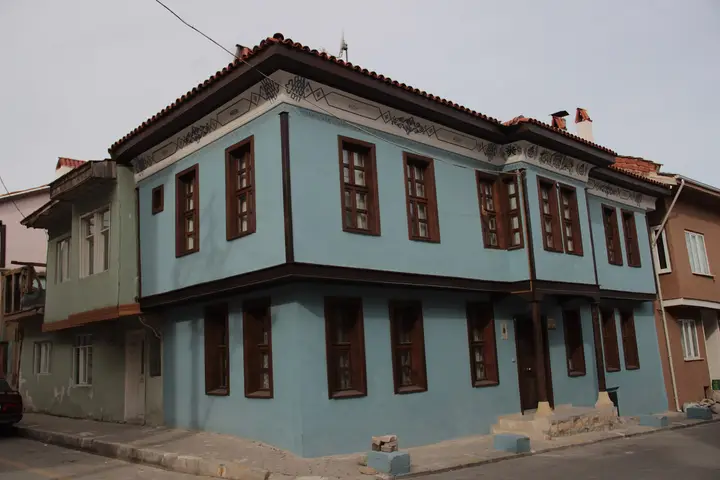
Uşak Old Houses
Examples of Ottoman civil architecture, combining timber and masonry, in the city centre.
View on map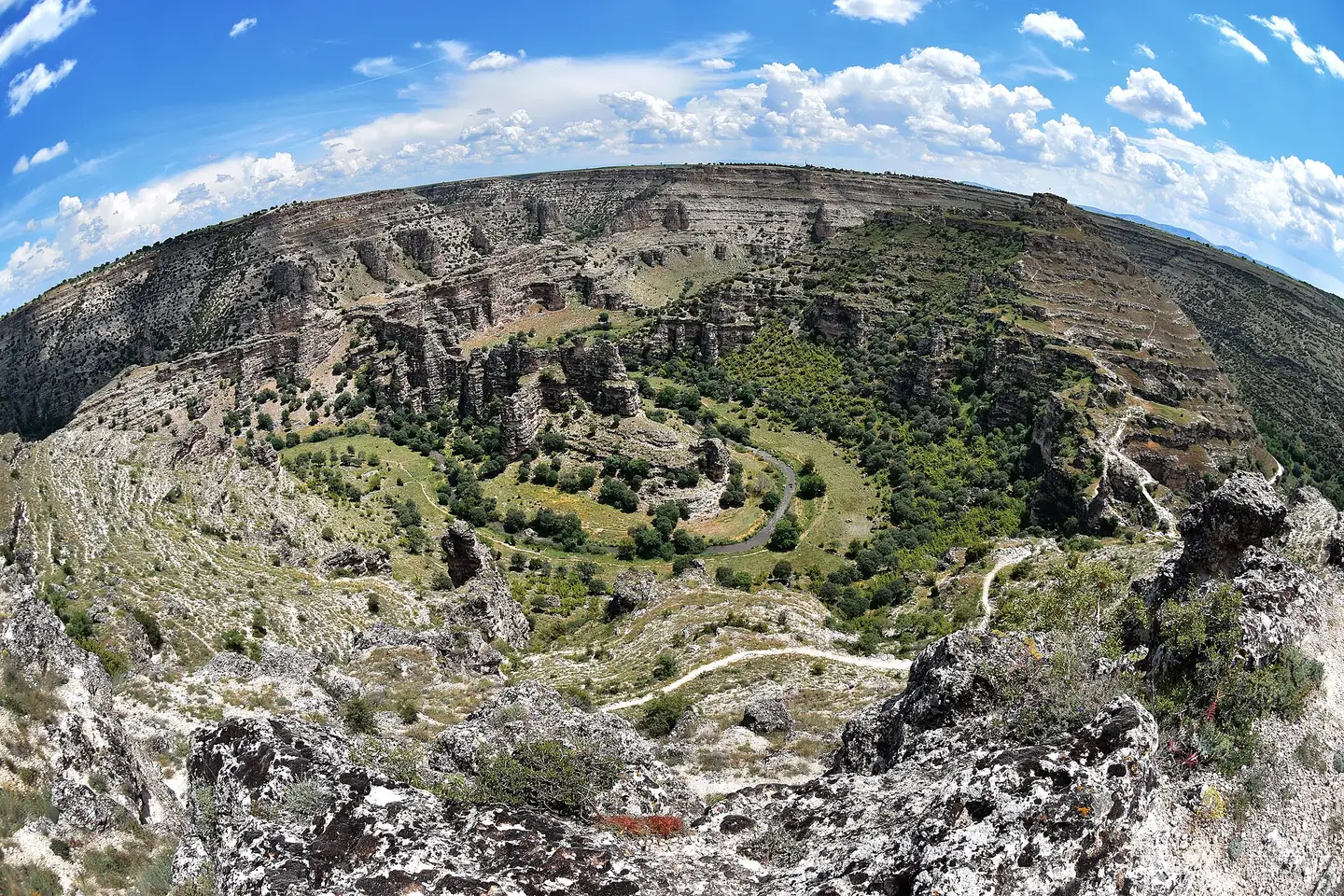 Photo: Emrahuygun (CC BY-SA 4.0) · Source
 Uşak is a province in the interior of the Aegean, on the Gördes–Uşak Plateau, known for its carpets, its tarhana and the treasures of Lydia. Highlights include the Karun Treasure from the time of Croesus, Ulubey Canyon (declared a nature park), the Hellenistic city of Blaundos, the Roman aqueduct known as Clandras (Cilandiras) Bridge, and the ruins of Sebaste. Uşak carpets, Uşak tarhana, Uşak helva and Karahallı melons carry registered geographical indications.
Last updated:
8 places worth seeing in Uşak, from historic monuments to natural wonders, grouped by type. Open any of them on the map with a single click.
Examples of Ottoman civil architecture, combining timber and masonry, in the city centre.
View on map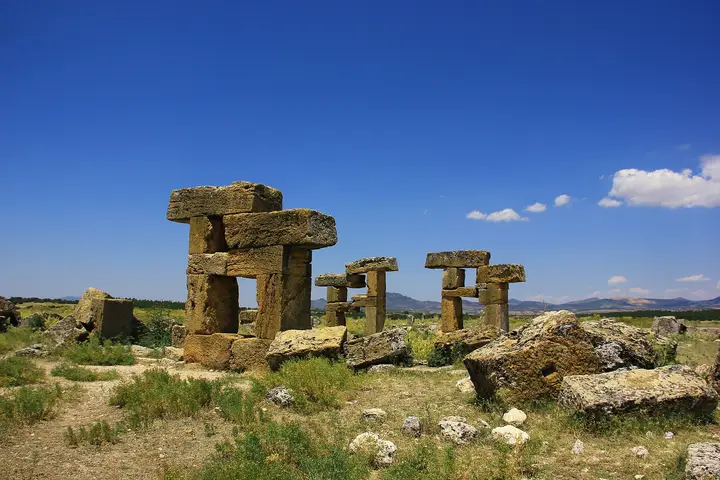 Photo: Thecatcherintherye (CC BY-SA 4.0) · Source
 An ancient city within the boundaries of Sülümenli village in Ulubey, founded by the Macedonians in 334 BC; it was a military city in the time of the Kingdom of Pergamon and kept its importance in the Roman and Byzantine periods.
View on map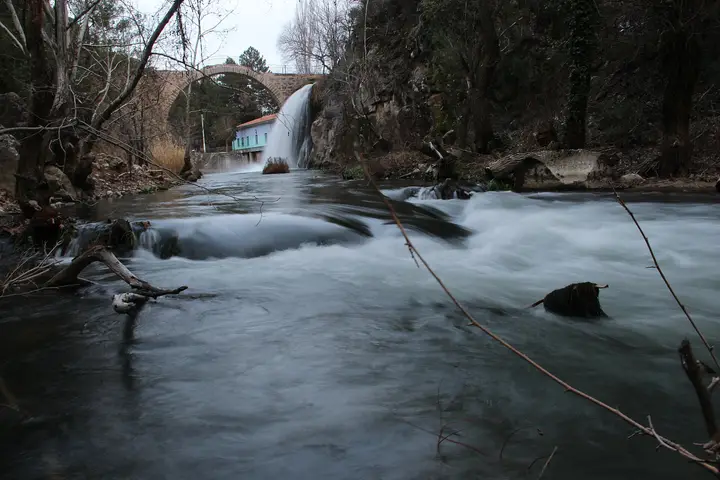 Photo: Hamdigumus (CC BY-SA 4.0) · Source
 A Roman aqueduct over the Banaz Stream at Karahallı, probably built in the 2nd century AD. Although known as a bridge, it stands at the start of the channels that carried water to ancient Pepouza, about 1 km further on.
View on map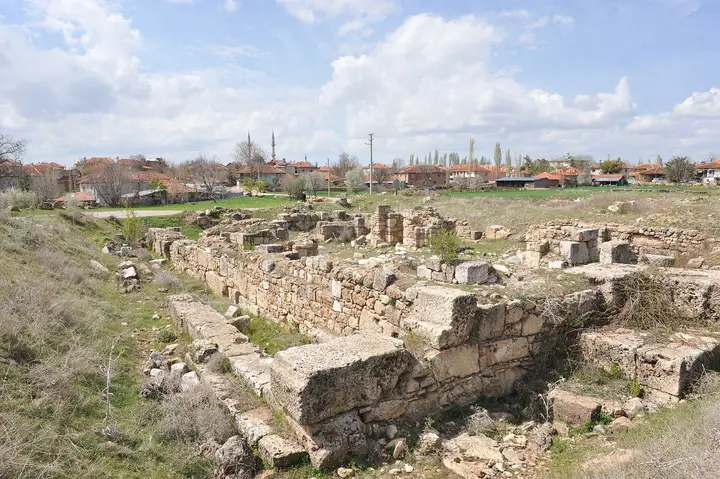 Photo: Elmas2014 (CC BY-SA 3.0) · Source
 The ruins of an ancient city and a church from the Roman and Byzantine periods in the town of Selçikler, which belongs to Sivaslı.
View on mapArtefacts, mostly from the time of the Lydian king Croesus (560–546 BC), taken from tumuli near Güre, 25 km west of Uşak, smuggled to the USA in the 1960s and recovered in 1993.
View on mapA mosque and madrasa built in 1826 by the Kabaklarlı family, whose upper storey and minaret collapsed in the 1949 earthquake.
View on mapA 3-storey museum opened on 23 May 1970 and moved in 2012 to a new building on the site of the old railway station; pieces of the Karun Treasure, such as the winged seahorse brooch, are displayed here.
View on map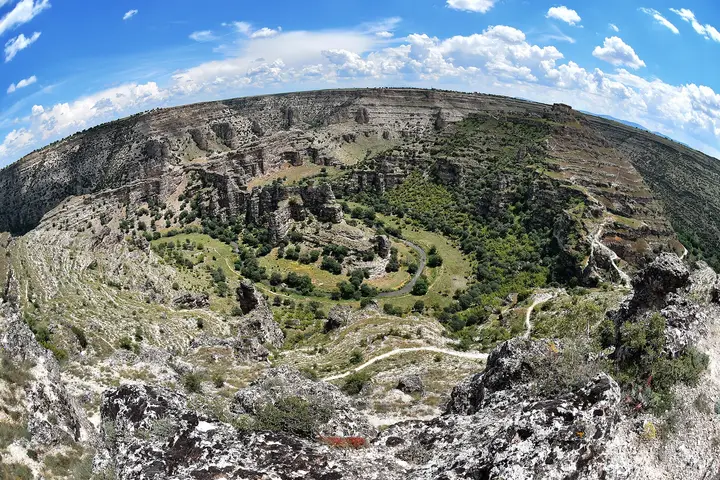 Photo: Emrahuygun (CC BY-SA 4.0) · Source
 A large canyon in the Ulubey district, declared a nature park by the Ministry of Forestry and Water Affairs on 27 June 2013; it was shaped by the tectonic movements of the Aegean horst-graben structure.
View on mapUşak is a province in the Inner Aegean part of the Aegean Region, set on the Gördes–Uşak Plateau at an altitude of about 920 metres. Its position linking Western and Central Anatolia has made it a transit region throughout history. It is 211 km from Izmir, 368 km from Ankara and 491 km from Istanbul.
In the time of the Lydian king Croesus (Karun) (560–546 BC), the region was one of the centres of wealth. The artefacts taken in the 1960s from tumuli around the town of Güre, near Uşak, and smuggled to the USA were recovered in 1993 at the end of a long legal process; known as the Karun Treasure, they are displayed in the Uşak Archaeology Museum. In the region’s history the Persian, Macedonian, Pergamene, Roman and Byzantine periods followed one another; after Manzikert in 1071 it came under Turkish rule in the time of Kutalmışoğlu Süleyman Şah, was then added to the lands of the Germiyanids, and in the Ottoman period became a district (kaza) of the sanjak of Kütahya.
Uşak’s world-renowned asset is the Uşak carpet: the city is one of the oldest and best-known centres of Anatolian carpet weaving, and its carpet has a registered geographical indication. The natural symbol of the province is Ulubey Canyon, declared a nature park on 27 June 2013.
Uşak has the continental climate of the interior: winters are cold, and summers are hot and dry. Averages from the General Directorate of Meteorology, 1939–2025:
| Month | Avg. high | Avg. low | Rainfall | Rainy days |
|---|---|---|---|---|
| January | 7.0 °C | -1.2 °C | 73 mm | 11 |
| February | 8.4 °C | -0.6 °C | 67 mm | 10 |
| March | 11.8 °C | 1.4 °C | 58 mm | 10 |
| April | 16.9 °C | 5.3 °C | 51 mm | 9 |
| May | 21.9 °C | 9.2 °C | 48 mm | 9 |
| June | 26.6 °C | 12.7 °C | 27 mm | 5 |
| July | 30.5 °C | 15.5 °C | 17 mm | 2 |
| August | 30.7 °C | 15.7 °C | 13 mm | 2 |
| September | 26.4 °C | 12.0 °C | 19 mm | 3 |
| October | 20.4 °C | 8.0 °C | 42 mm | 6 |
| November | 14.3 °C | 3.9 °C | 59 mm | 7 |
| December | 8.9 °C | 0.8 °C | 85 mm | 11 |
The best times to visit are April–June and September–October. Spring, when everything is green, is ideal for Ulubey Canyon and the ancient cities; in winter, frosts are frequent in the city centre.
By air: Uşak Airport is 4 km from the city and opened in 1998; it was closed to civilian flights in 2011, and from 10 January 2014 flights to and from Istanbul Sabiha Gökçen Airport resumed. The terminal is used for both civilian and military purposes.
By road: The city is linked by road to Izmir (211 km), Ankara (368 km) and Istanbul (491 km). The province has 6 districts.
Day 1 — Uşak centre: The Karun Treasure in the Archaeology Museum, Kırık Minare Mosque and the historic houses; in the evening, Uşak tarhana and helva.
Day 2 — Ulubey and Blaundos: The viewpoints of Ulubey Canyon and the ancient city of Blaundos.
Day 3 — Karahallı and Sivaslı: The Clandras aqueduct, the ruins of Sebaste and Karahallı melons.
Uşak cuisine is known for its tarhana, its helvas and its pastry dishes. Flavours with a registered geographical indication are: Uşak tarhanası, Uşak helvası, Uşak gelin helvası, Uşak baklavası, Uşak Ulubey zini hamursuzu, Karahallı ciğeri and Uşak haşhaş ezmesi (poppy-seed paste). Products: Karahallı kavunu (melons), Uşak susamı (sesame) and Uşak keten tohumu (flaxseed).
Uşak carpets and Eşme–Yörük kilims carry registered geographical indications.
Uşak province has 6 districts. Explore the places to visit, local dishes and transport in each one.
Tarhana with a registered geographical indication (protected designation of origin).
Helva with a registered geographical indication.
A dessert with a registered geographical indication.
Baklava with a registered geographical indication.
A liver dish with a registered geographical indication.
The main stops are the Uşak Archaeology Museum (Karun Treasure), Ulubey Canyon, Blaundos, Clandras Bridge, Sebaste and Kırık Minare Mosque.
Uşak carpets, tarhana, helva, Karahallı melons and the Karun Treasure.
A collection of artefacts from the time of the Lydian king Croesus, taken from tumuli in the 1960s, smuggled abroad and recovered in 1993.
It is in the Karahallı district, over the Banaz Stream; it is actually a Roman aqueduct.
April–June and September–October are the best times.
The information in this guide has been compiled from and checked against the sources below (last checked: 8 October 2026). If you spot an error, please let us know.