Çay Taş Madrasa (Yusuf bin Yakub Madrasa)
Built in the late 13th century during the Anatolian Seljuk period, the madrasa is the district's most important historic monument, known for its stonework and tile decoration.
View on map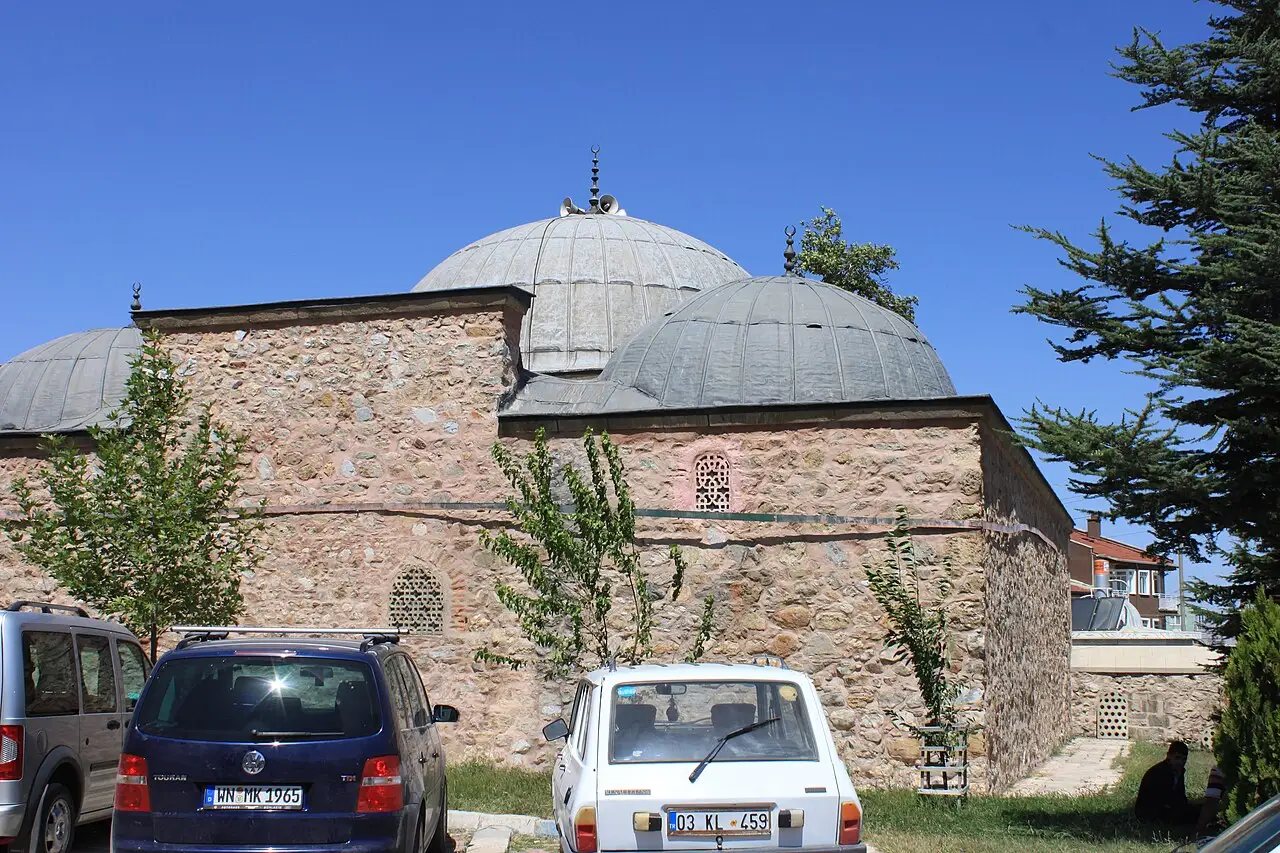 Photo: Christian1311 (CC BY-SA 4.0) · Source
 7 places to visit in the Çay district of Afyonkarahisar: Çay Taş Madrasa (Yusuf bin Yakub Madrasa), Eber Lake and Karamık Lake. Plan your trip to Çay with local food, practical tips and transport information.
Çay is a district of Afyonkarahisar province. Located in the Inner Aegean region at the meeting point of the Aegean, Mediterranean and Central Anatolia regions, it lies 48 km from the provincial centre. The district covers 803 km² and has an average elevation of 1,038 metres above sea level.
Settled by Oghuz Turks during the Seljuk period, the place was renamed ‘Çay Değirmeni’. It was liberated from Greek occupation on 24 September 1921 during the War of Independence, and gained district status on 1 April 1958.
Lakes Eber and Karamık are among the district’s natural attractions, and fishing and bird hunting take place on these lakes. The district economy is based on agriculture, with cereals, sugar beet and poppies produced.
Çay’s history goes back to the Old Bronze Age. Çay became famous for hosting the Battle of Ipsus in 301 BC and became a junction of ancient trade routes. During the War of Independence, Çay was briefly under Greek occupation and was liberated on 24 September 1921. Taşhan was built for Oğul Bey by Ebul-Mücahhit Yusufhan in 1278.
Çay district lies at the intersection of the Aegean, Mediterranean and Central Anatolia regions, surrounded by the districts of Sultandağı, Yalvaç, Şuhut, Afyonkarahisar and Bolvadin. In the Seljuk period, Çay’s castle was repaired because of its strategic importance, and monumental structures were built, including the Grand Mosque with 40 wooden columns, the Stone Complex and the Sahipata Caravanserai.
Last updated:
Built in the late 13th century during the Anatolian Seljuk period, the madrasa is the district's most important historic monument, known for its stonework and tile decoration.
View on mapLying within the district's southwestern boundaries, Lake Eber, with its reed beds and birdlife, attracts nature watchers; sazan (carp) fishing also takes place on the lake.
View on mapAt the foot of the Sultan Mountains, Lake Karamık, with its reed beds and migratory birds, is the district's second most important wetland.
View on mapÇağlayan Park, one of the district's picnic areas, with its small waterfall and shaded spots, is a weekend gathering place for local people.
View on mapOn the border with Isparta, the Sultan Mountains have peaks above 2,500 metres and offer a suitable route for plateau walks in the summer months.
View on mapA caravanserai in the centre of Çay district, on the Afyonkarahisar–Konya road.
View on mapA tomb with an octagonal body, located in the cemetery in Eber Village in Çay district.
View on mapWhile you are in Çay, you can also see the highlights of Afyonkarahisar province. These places are in other districts; Çay is about 48 km from the provincial centre.
Afyonkarahisar's sausage, a protected geographical indication, is also indispensable at breakfast and barbecue tables in Çay.
A pastry made with a paste from poppy seeds grown in the region, served with tea.
When served with syrup-soaked bread kadayıf and Afyon kaymak (clotted cream), it becomes the province's most famous dessert.
One of the essential dishes at Çay tables, often served alongside okra soup and cheese börek.
The Battle of Ipsus in 301 BC, between the successors of Alexander the Great, took place on these lands.
The economy is based on agriculture; cereals, sugar beet and poppies are the main products. Pasture-based livestock farming is carried out in the mountainous areas, and the district has flour mills.
Çay is 48 km from Afyonkarahisar city centre. The district lies on the Afyonkarahisar–Konya road.
The highlights of Çay are 7 sites: Çay Taş Madrasa (Yusuf bin Yakub Madrasa), Eber Lake, Karamık Lake, Çağlayan Park and Waterfall, Sultan Mountains, Taşhan (Çay Caravanserai) and Ebheri Tomb.
Afyon sausage, Haşhaşlı Çörek, Ekmek Kadayıfı and Etli yaprak ve kuru biber sarması are the standout flavours at Çay tables.
Çay is known for Çay İlçesi Vişnesi (Çay sour cherry) and the legacy of the Battle of Ipsus. It is a product registered with TÜRKPATENT as a protected designation of origin.
Çay is 48 km from Afyonkarahisar city centre. The district lies on the Afyonkarahisar–Konya road.
Suggested visit duration: 1 day. Best time to visit: spring and autumn.