10 places to visit in the Dinar district of Afyonkarahisar: Tatarlı Tumulus, Celaenae-Apamea Ancient City and Büyük Menderes River Source. Plan your trip to Dinar with local food, practical tips and transport information.

Share with friends

Dinar is a district of Afyonkarahisar province. It takes its name from Dinar Bey, son of Kitiş Bey, who settled in the area during the Turkish migrations from Central Asia. Dinar lies on an important highway linking Central Anatolia with the Aegean and the Mediterranean with the Marmara region, and it is of strategic importance for Türkiye’s road network.

Ancient and Classical Period

Dinar is one of the oldest settlements in Anatolia, with a history reaching back to around 1200 BCE. In the Persian period, the area around the town was used as a hunting park called Paradeisos. Dr. Hasan T. Uçankuş excavated a Persian-period tomb near Tatarlı. In the Roman period, Apameia was, after Ephesus, the largest commercial centre of the Asian provinces, and it was the seat of a regional administration run by a Roman governor.

Republican Period

The district gained municipal status in 1874 and district status in 1908. The magnitude 6.1 earthquake of 1 October 1995 killed 95 people and caused heavy material damage.

Economy

The local economy is based on agriculture and livestock farming. Grain, sugar beet and poppy are among the crops grown. Large and small livestock are raised, and meat, milk, yoghurt, cheese and honey produced by the district contribute to its economy.

History and Culture

Over the course of history, Dinar was known by names such as Kelainai, Celainai, Apameia, Kiboyossimo and Geyikler before it took the name Dinar.

History and Culture

Dinar is cited as the place where the first music competition in history was held. Dinar became a municipality in 1874 and a district in 1908.
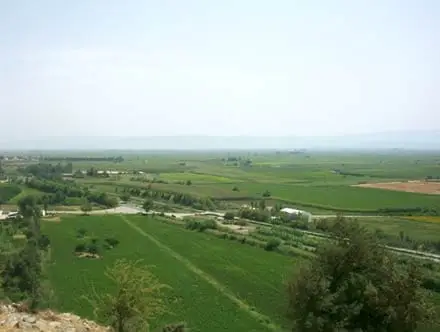
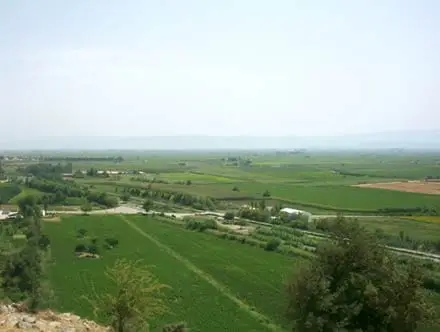
Last updated:

Places to Visit in Dinar

  • 4 Historic
  • 1 Ancient City
  • 1 Religious
  • 4 Nature

Historic Sites 4

Historic

Celaenae-Apamea Ancient City

This ancient city, built over by Dinar, was founded in the 5th century BCE as Celaenae, the Persian satrapal capital, and was later rebuilt as Apamea by the Seleucid king Antiochus I. Located close to the source of the Büyük Menderes River, it served as an important trading and military base in antiquity.

View on map
Historic

Dinar Castle

This castle, on the hill north of the district centre, is notable for its walls, which date from the Roman and Byzantine periods. From the top of the castle hill there are panoramic views of the Dinar plain and the surrounding mountains.

View on map
Historic

Apollo and Marsyas Cave

In ancient mythology, this cave is known as the site of the famous musical contest between Apollo, the god of music, and the satyr Marsyas. It is one of Dinar's most mysterious historical sites. Ancient writers such as Herodotus and Xenophon described the region in their works.

View on map
Historic

Daneion (Tanrılar Kulu Temple)

One of the structures that is cited as a focus of interest in Dinar.

View on map

Ancient Cities 1

Ancient City

Tatarlı Tumulus

A tomb from the Persian period, excavated by Dr. Hasan T. Uçankuş.

View on map

Religious Buildings 1

Religious

Dinar Grand Mosque

Built in the Ottoman period, this mosque is the most important religious building in Dinar, known for its dressed-stone architecture and minaret. The plane trees in the mosque courtyard bear witness to a history of a century or more.

View on map

Natural Wonders 4

Büyük Menderes River Source - Dinar Photo: Wikipedia (CC BY-SA) · Source
Nature

Büyük Menderes River Source

The Büyük Menderes River, known in antiquity as the Maeander, rises at Suçıkan within the boundaries of Dinar district. The spring, with its clear water gushing strongly from underground, has been developed as a natural park.

View on map
Nature

Büyük Menderes River Source (Pınarbaşı)

The Pınarbaşı spring, which rises in the Dinar region, is the starting point of the Büyük Menderes River. In antiquity it was known as the Maeander.

View on map
Nature

Karakuyu

There is a lake called Karakuyu in Dinar, and the Karakuyu bird sanctuary is counted among the district's main attractions.

View on map
Nature

Cerit Plateau

Cited as one of Dinar's important plateaus.

View on map

Places to Visit Around Afyonkarahisar Province

See all →

While you are in Dinar, you can also see the highlights of Afyonkarahisar province. These places are in other districts.

  • Afyonkarahisar Castle — The castle stands on a 226-metre rock that was once a volcano.
  • Afyonkarahisar Grand Mosque — Built between 1272 and 1277 and popularly known as the Kırk Direkli ("Forty Columns") Mosque, this timber-columned mosque is one of the important examples of Seljuk and Beylik-period timber-columned mosque architecture.
  • Gedik Ahmed Paşa Complex (İmaret Mosque) — A complex built around 1470–1472 for Gedik Ahmed Paşa, vizier in the time of Mehmed the Conqueror, and attributed to the architect Ayaz Ağa.
  • Sultan Dîvânî Mevlevihane Museum — The Mevlevi lodge founded by Ulu Ârif Çelebi in 1316 was rebuilt in 1908 after a fire in 1902 and opened as a museum in 2008. The tradition of "40 Hatimli Şifalı Aşure" (healing aşure of forty Qur'an recitations) is believed to have begun here.
  • Victory Museum — Built as the town hall in 1913–1914, the building became the headquarters of Commander-in-Chief Mustafa Kemal Paşa and his commanders after the city's liberation on 27 August 1922, and the final plans for the Battle of the Commander-in-Chief of 30 August were drawn up here.
  • Afyonkarahisar Museum — Founded in 1933, this archaeology and ethnography museum moved in 2023 to its new building on the Afyonkarahisar–Izmir road.

Practical Information for Visiting Dinar

Suggested time
1 day
Best time to visit
Spring and autumn
Places to visit
10 places

What to Eat in Dinar

Food guide →
  • Dinar Taptama Köfte

    Dinar Taptama Köfte was registered as a protected geographical indication on 6 June 2022 (TÜRKPATENT registration no. 1132). Product group: dishes and soups. Registered by: Dinar Municipality.

  • Dinar Köftesi

    Dinar köftesi, the best-known dish of the district, is made by shaping minced meat blended with local spices by hand and grilling it. It is served with roasted peppers and tomatoes.

  • Keşkek

    Prepared by simmering cracked wheat and meat for a long time and then pounding them with a wooden mallet, keşkek is the traditional dish of wedding and festival tables in Dinar. Melted butter is poured over it.

  • Haşhaşlı Pide

    Prepared with the seeds of the poppy, the emblematic plant of the Afyonkarahisar region, this pide is baked in wood-fired ovens in Dinar's bakeries. The mildly nutty flavour of the poppy seed gives the pide a distinctive taste.

  • Bamya Çorbası

    Made by simmering dried okra in meat broth, this soup is an essential part of Dinar's winter table. It is served with a squeeze of lemon.

Culture, Local Products and Economy of Dinar

  • Ancient Celaenae Heritage

    Dinar is built over the ancient city of Celaenae-Apamea and bears traces of the Persian, Hellenistic and Roman periods. The Apollo-Marsyas legend was born in these lands.

  • Dinar Folk Songs

    Dinar is known for the türkü folk songs it has given to Turkish folk music. The district's rich folk culture is kept alive through türküs and laments passed down from generation to generation.

  • Memory of the 1995 Earthquake

    The magnitude 6.0 earthquake that struck on 1 October 1995 caused massive destruction in Dinar and changed the district's demographic makeup. The reconstruction process after the earthquake has left deep marks on the district's collective memory.

Local Products

  • Poppy — Poppy, the most important agricultural product of the Afyonkarahisar region, is also traditionally grown in Dinar. Its seeds are used in the food industry and its oil in the pharmaceutical industry.
  • Wheat — Wheat grown on the fertile soils of the Dinar plain is the staple agricultural product of the area. Hard wheat varieties are especially preferred by the milling industry.
  • Sugar Beet — Sugar beet, grown on the irrigated plains of Dinar, is an important industrial crop that supplies raw material to the sugar factories in the region.

Economy

Dinar's economy rests mainly on agriculture. Wheat, barley, sugar beet and poppy are grown on the fertile plain watered by the Büyük Menderes River. Although the wave of migration after the 1995 earthquake had a negative effect on the district's economy, recovery has been seen in recent years in agro-industry and livestock farming. Dinar is an important junction on the road that runs from Ankara and Istanbul to Antalya.

How to Get to Dinar

Dinar is 106 km from the Afyonkarahisar provincial centre and is reached by road. The district lies at a strategic junction on the road that runs from Ankara and Istanbul to Antalya. There are regular bus services from Afyonkarahisar. The nearest airport is Afyon Çobanlar Airport.

Get directions on Google Maps Getting to Afyonkarahisar

Dinar: Frequently Asked Questions

What are the things to see in Dinar?

The 10 highlights of Dinar: Tatarlı Tumulus, Celaenae-Apamea Ancient City, Büyük Menderes River Source, Dinar Castle, Apollo and Marsyas Cave, Dinar Grand Mosque, Büyük Menderes River Source (Pınarbaşı), Daneion (Tanrılar Kulu Temple), Karakuyu and Cerit Plateau.

What should I eat in Dinar?

Dinar Taptama Köfte, Dinar Köftesi, Keşkek and Haşhaşlı Pide are the standout dishes on Dinar's tables.

What is Dinar famous for?

Dinar is known for poppy and the Ancient Celaenae Heritage. Poppy, the most important agricultural product of the Afyonkarahisar region, is also traditionally grown in Dinar. Its seeds are used in the food industry and its oil in the pharmaceutical industry.

How do I get to Dinar?

Dinar is 106 km from the Afyonkarahisar provincial centre and is reached by road. The district lies at a strategic junction on the road that runs from Ankara and Istanbul to Antalya. There are regular bus services from Afyonkarahisar. The nearest airport is Afyon Çobanlar Airport.

How much time should I spend in Dinar?

Suggested visit length: 1 day. Best time to visit: spring and autumn.

Continue Your Trip

Other Districts of Afyonkarahisar

Search 81 province guides and 968 district guides.