Bolvadin Castle
Built in the centre of the settlement known as Polybotum in the Roman period, this castle was also used in the Seljuk and Ottoman periods. From the castle hill, the Bolvadin plain and the view of Lake Eber can be seen.
View on map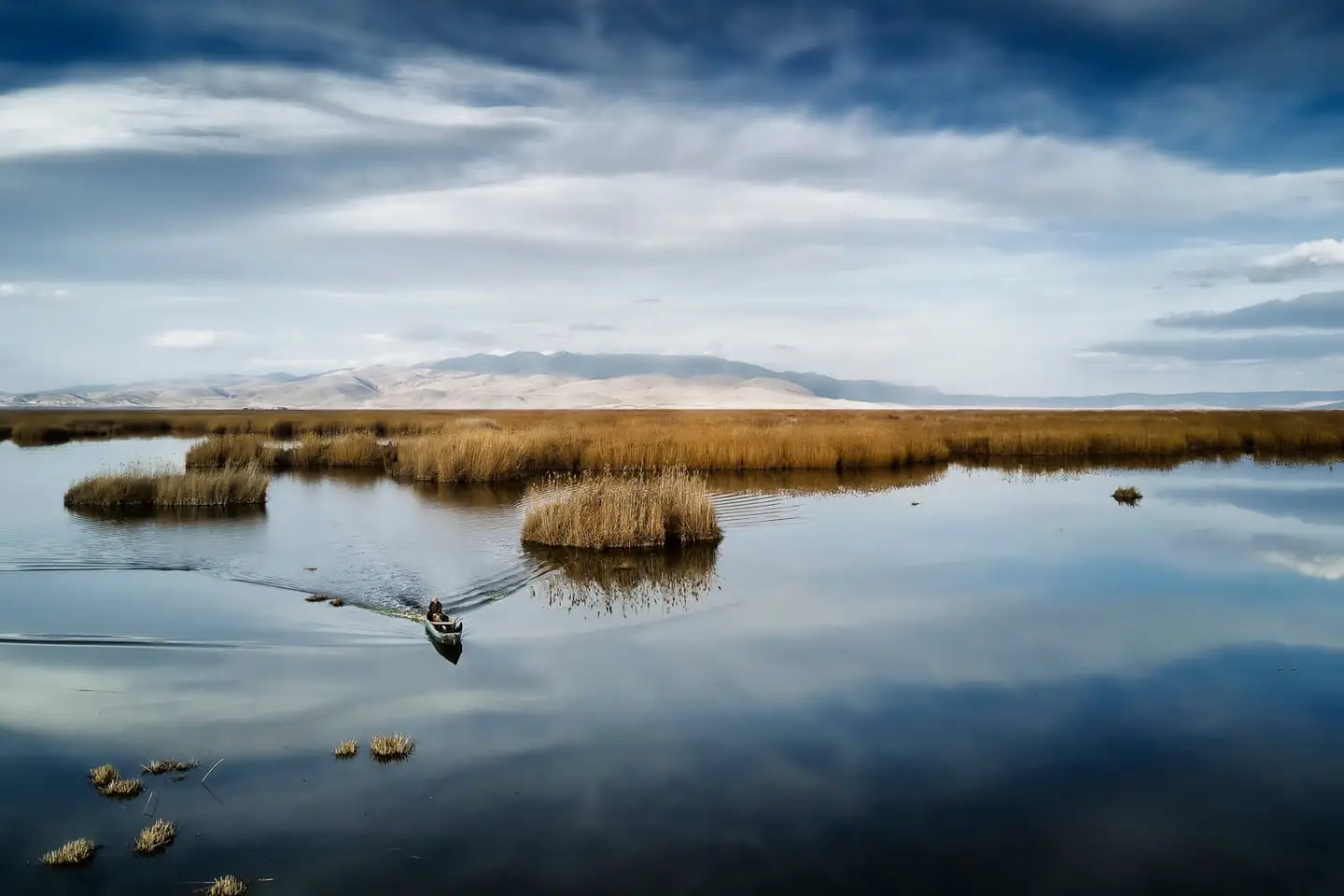 Photo: Wikipedia (CC BY-SA) · Source
 10 places to visit in the Bolvadin district of Afyonkarahisar: Bolvadin Castle, Lake Eber and Bolvadin Grand Mosque (Ulu Cami). Plan your trip to Bolvadin with local food, practical tips and transport information.
Bolvadin declined in importance in the Byzantine period. In 732 the Umayyad commander Maslama came to the region with a large army and besieged the castle of Akrenon (Afyon).
During the Turkish War of Independence the town became a strategically important centre, and the First and Second Armies were established in Bolvadin.
Bolvadin came into Turkish hands in 1107 after the Battle of Bolvadin, when Emir Mengücek Bey took it. Only the Alaca Mosque has survived from the Seljuk period. In 1873 Ziraat Bankası opened its 22nd branch in Bolvadin. Abdül Vahap Gazi is said to have died in Bolvadin.
Last updated:
Built in the centre of the settlement known as Polybotum in the Roman period, this castle was also used in the Seljuk and Ottoman periods. From the castle hill, the Bolvadin plain and the view of Lake Eber can be seen.
View on mapBridge over the Akarçay outside the Bolvadin district centre.
View on mapRock settlement about 3.5 kilometres north-east of Kemerkaya village, part of Bolvadin district.
View on mapBuilt in the Seljuk period, this mosque with its dressed stonework and minaret is Bolvadin's most important historic religious building. The woodwork inside reflects the artistic taste of the period.
View on mapA museum serving as the City Museum in the restored Yanık Kışla building.
View on map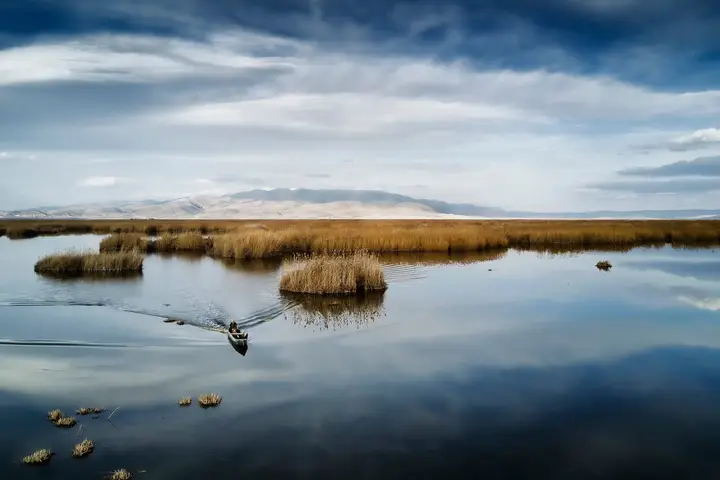 Photo: Wikipedia (CC BY-SA) · Source
 This freshwater lake, lying 967 metres above sea level south-east of the Bolvadin plain, is an important natural area for birdwatching and fishing. The reeds around the lake are home to many bird species.
View on mapStretching along the Akarçay River, which irrigates the Bolvadin plain, this valley has routes suitable for walking and cycling. The green areas on the riverbank are popular for picnics and rest.
View on mapFairy chimneys seen in the Minareli Stream at Özburun town, attached to Bolvadin.
View on mapBolvadin was occupied by the Greeks during the War of Independence and liberated in September 1922. The monument in the district centre was erected to commemorate this historic period and the martyrs.
View on mapWhile you are in Bolvadin, you can also see the highlights of Afyonkarahisar province. These places are in other districts.
Bolvadin Mantı was registered as a protected geographical indication on 1 December 2022 (TÜRKPATENT registration no. 1266). Product group: dishes and soups. Registered by: Bolvadin Chamber of Commerce and Industry.
Bolvadin kaymak, produced from buffalo milk by traditional methods, is the region's most famous delicacy. Its thick, creamy texture makes it an essential part of breakfast tables, served with honey or jam.
Prepared with the seeds of poppy, the emblematic plant of Afyonkarahisar, this bun is baked in Bolvadin's bakeries using a traditional recipe. The mild, walnut-like aroma of the poppy seed gives the bun its distinctive taste.
Keşkek, prepared by boiling and pounding crushed wheat and meat for hours, is the traditional dish at weddings and religious holiday feasts in Bolvadin. It is served with butter.
This local dish, made by frying lamb on a griddle with vegetables, is the most beloved dish of Bolvadin's rural tables.
As part of the ancient Phrygian region, Bolvadin has a rich historical heritage. The city known as Polybotum in the Roman period carries traces of different civilisations.
Bolvadin was occupied by the Greeks during the War of Independence and liberated after the Great Offensive. The memories of this period hold an important place in the district's collective memory.
Held to promote Bolvadin's famous buffalo kaymak, the events, local product stalls and cultural shows are among the most colourful events in the district.
Bolvadin's economy rests on agriculture and livestock farming. Wheat, barley and sugar beet are grown on the fertile plain irrigated by the Akarçay River. Buffalo breeding and kaymak production are the district's best-known economic activities. Poppy cultivation is also maintained as a traditional practice. Carp fishing and reed cutting on Lake Eber also contribute to the economy.
Bolvadin is 55 km from Afyonkarahisar city centre and is reached by road. The nearest airport is Afyon-Çobanlar Airport. Regular bus and minibus services run from Afyonkarahisar. The district lies on the Afyon–Konya road.
The main highlights in Bolvadin are 10 places: Bolvadin Castle, Lake Eber, Bolvadin Grand Mosque (Ulu Cami), Akarçay Valley, War of Independence Monument, Forty-Eye Bridge, Abdülkadir Geylani Tomb, Bolvadin Museum (City Museum), Yedikapılar Rock Settlement and Minareli Stream fairy chimneys.
Bolvadin Mantı, Bolvadin Kaymak, Haşhaşlı Çörek and Keşkek are the standout dishes on Bolvadin's tables.
Bolvadin is known for Bolvadin Fırın Eti and Phrygian Heritage. It is a product registered with TÜRKPATENT as a protected geographical indication.
Bolvadin is 55 km from Afyonkarahisar city centre and is reached by road. The nearest airport is Afyon-Çobanlar Airport. Regular bus and minibus services run from Afyonkarahisar. The district lies on the Afyon–Konya road.
Suggested visit length: 1 day. Best time to visit: spring and autumn.