Sandıklı Castle
This castle, on the hill in the district centre, was built in the Byzantine period and used in the Seljuk and Ottoman periods. Part of the castle walls has survived, and the Sandıklı plain can be seen from the hilltop.
View on map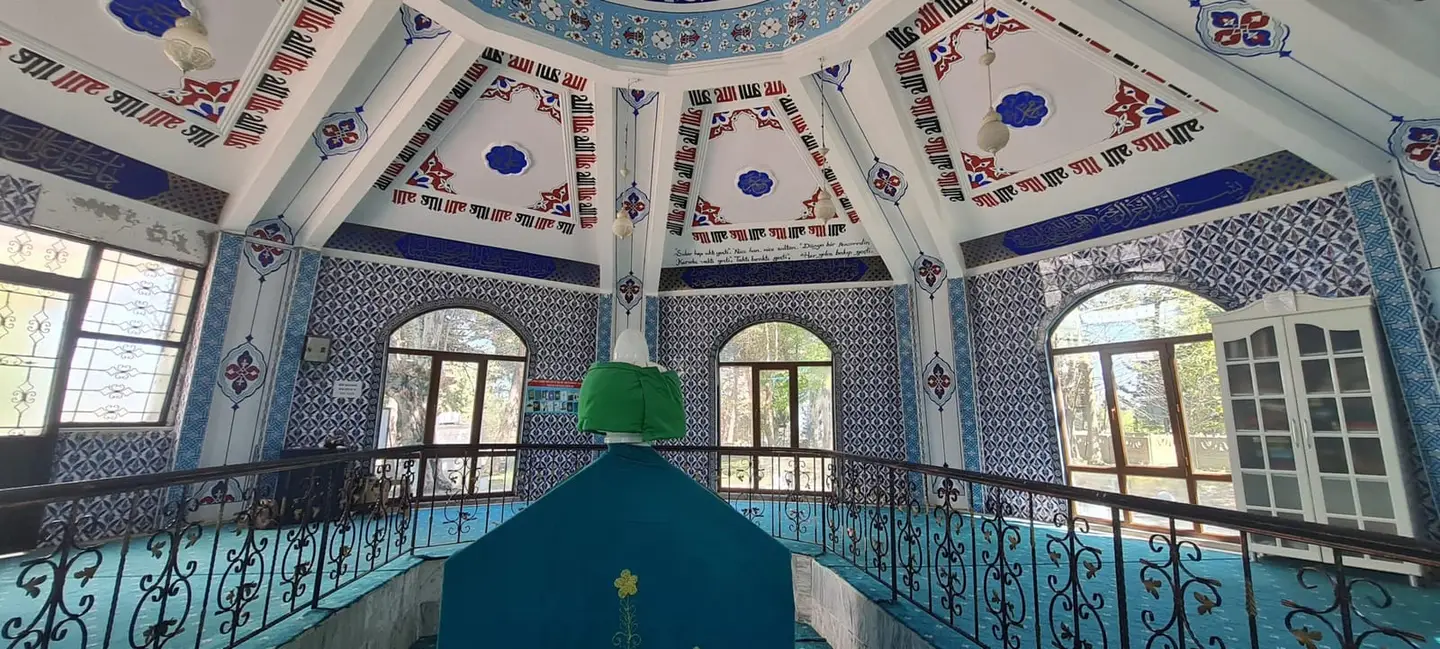 Photo: Wikipedia (CC BY-SA) · Source
 11 places to visit in the Sandıklı district of Afyonkarahisar: Hüdai Hot Springs, Sandıklı Castle and Sandıklı Grand Mosque. Plan your trip to Sandıklı with local food, practical tips and transport information.
Sandıklı is a district of Afyonkarahisar province.
Sandıklı is surrounded by mountains on all four sides. The district covers an area of 1,238 km².
The architect of the Sandıklı Grand Mosque was Aydemir, and the mosque was never closed for worship. The absence of any columns inside the mosque is a feature unique in Anatolia. The interior decoration consists of wall paintings reflecting 19th-century Ottoman decorative features. At the very centre of the mosque’s dome is the hexagonal seal of Hz. Süleyman (Prophet Solomon).
Last updated:
This castle, on the hill in the district centre, was built in the Byzantine period and used in the Seljuk and Ottoman periods. Part of the castle walls has survived, and the Sandıklı plain can be seen from the hilltop.
View on mapBuilt in the 14th century under the Germiyanids, this mosque is Sandıklı's oldest religious building. Its stonework and mihrab decorations are a fine example of Beylik-period architecture.
View on map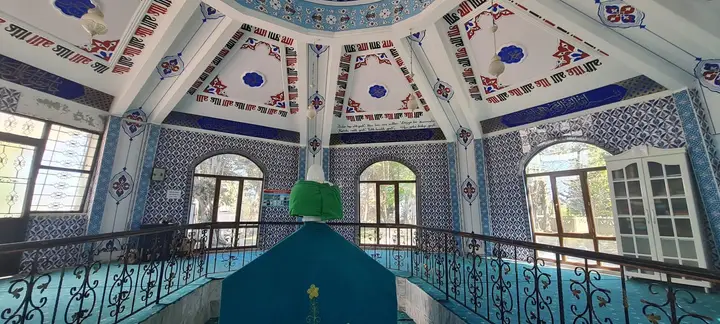 Photo: Wikipedia (CC BY-SA) · Source
 This tomb in Yunus Emre village, attached to Sandıklı, is one of the tombs attributed to the great Turkish mystic Yunus Emre. The area around the tomb has been arranged for visitors and is important for spiritual tourism.
View on mapThe tombs in Sandıklı of Tapduk Emre, the teacher of Yunus Emre, and of Barak Baba, Tapduk's teacher.
View on mapThe natural mud pools near Hüdai Hot Springs are used for skin care and treatment thanks to their mineral-rich mud. Visitors from all over Türkiye benefit from these natural mud baths.
View on mapThe mountain where the Sideritis akmanii plant, which grows only in Sandıklı, is found.
View on mapHüdai Hot Springs, 12 km south-west of Sandıklı, is one of Türkiye's most important healing centres, with thermal waters at 70°C. Known to help with rheumatism, skin conditions and nervous system disorders, the springs welcome tens of thousands of visitors a year to their modern thermal facilities.
View on mapSandıklı is known for its high-quality marble deposits. The marble quarries around the district can be visited as part of industrial tourism, and it is possible to learn about the geological structure of the region.
View on mapWhile you are in Sandıklı, you can also see the highlights of Afyonkarahisar province. These places are in other districts.
Sandıklı Alacaşı was registered as a protected geographical indication on 30 January 2023 (TÜRKPATENT registration no. 1329). Product group: dishes and soups. Registered by: Sandıklı Municipality.
Sandıklı Haşhaşlı Tahinli Pidesi was registered as a protected geographical indication on 19 January 2024 (TÜRKPATENT registration no. 1523). Product group: bakery and pastry products, dough products and desserts. Registered by: Sandıklı Municipality.
Sandıklı Kapama Yemeği was registered as a protected geographical indication on 17 December 2021 (TÜRKPATENT registration no. 972). Product group: dishes and soups. Registered by: Sandıklı Municipality.
Sandıklı Kürek Helvası was registered as a protected geographical indication on 20 January 2022 (TÜRKPATENT registration no. 1000). Product group: chocolate, confectionery and derived products. Registered by: Sandıklı Municipality.
Sandıklı's Hüdai Hot Springs have welcomed people seeking healing for centuries. The tradition of treatment with thermal waters is an inseparable part of local culture.
Sandıklı was one of the important settlement centres of the Germiyanid principality in the 14th century. The mosque, bath and madrasa remains from this period enrich the district's historical fabric.
Sandıklı was attached to Hüdavendigar province in the Ottoman period. This administrative link, lasting from 1867 to 1922, left deep marks on the district's cultural identity.
Sandıklı's economy is based on thermal tourism, agriculture and marble mining. Hüdai Hot Springs attract tens of thousands of visitors a year and form the district's most important source of income. Wheat, barley and sugar beet are grown in agriculture. Marble quarries and processing facilities form the basis of the industrial sector. Livestock farming, especially buffalo breeding and kaymak production, also contributes to the economy.
Sandıklı is 80 km from Afyonkarahisar city centre and is reached by road. The district lies on the Afyonkarahisar–Denizli road and has regular bus and minibus services. The nearest airport is Afyon–Çobanlar Airport. Access from the direction of Denizli is also possible.
The highlights of Sandıklı are 11 sites: Hüdai Hot Springs, Sandıklı Castle, Sandıklı Grand Mosque, Natural Mud Baths, Yunus Emre Tomb, Sandıklı Marble Quarries, Sandıklı Grand Mosque, Akdağ National Park, Yunus Emre Tomb (Sandıklı), Tapduk Emre and Barak Baba Tombs and Kumalar Mountain.
Sandıklı Alacaşı, Sandıklı Haşhaşlı Tahinli Pidesi, Sandıklı Kapama Yemeği and Sandıklı Kürek Helvası are the standout flavours at Sandıklı tables.
Sandıklı is known for Sandıklı Haşhaş Ezmesi and the Thermal Healing Tradition. It is a product registered with TÜRKPATENT as a protected geographical indication.
Sandıklı is 80 km from Afyonkarahisar city centre and is reached by road. The district lies on the Afyonkarahisar–Denizli road and has regular bus and minibus services. The nearest airport is Afyon–Çobanlar Airport. Access from the direction of Denizli is also possible.
Suggested visit duration: 2 days. Best time to visit: all year round (thermal tourism).