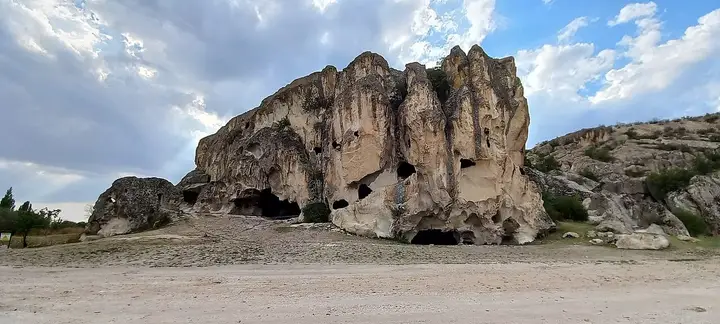
13 places to visit in the İhsaniye district of Afyonkarahisar: Döğer Caravanserai, Emre Lake and Phrygian Valley (Phrygian Cultural Route). Plan your trip to İhsaniye with local food, practical tips and transport information.

Share with friends

İhsaniye is a district of Afyonkarahisar province; it covers 849 km², has an elevation of 1,097 m and a population of 27,636. It gained district status by Law No. 7033 on 1 April 1959.

History

Around 1085, the Döğer and Alanlı areas were settled by Oghuz Turks. Sultan Murad II stayed at Döğer and ordered the construction of Döğer Caravanserai. Founded as a village in 1888 by migrants from Bulgaria, it later took the name İhsaniye from the railway station on the line. It was occupied by the Greeks on 13 July 1921 and suffered under enemy oppression for 13 months and 14 days. It was liberated from the enemy invasion on 27 August 1922.

Geographical Structure

The district’s average elevation above sea level is 1,102 metres, and it covers an area of 90,900 hectares. The plain areas are covered by steppe, while the mountainous parts are partly covered by oak and pine forests. There is no significant river in the district, but small streams that dry up in summer are present.

Climate

Being far from the sea and surrounded by mountains, the district has a typical continental climate, with very cold winters and very hot, short summers.

Economy

The district economy is based on livestock farming, cattle fattening and agriculture. There are private sector enterprises such as the Kızılay Madensuyu and Yıldız Madensuyu bottling plants. The Gazlıgöl Hot Spring lies within the district boundaries, 25 km from Afyonkarahisar.

History and Culture

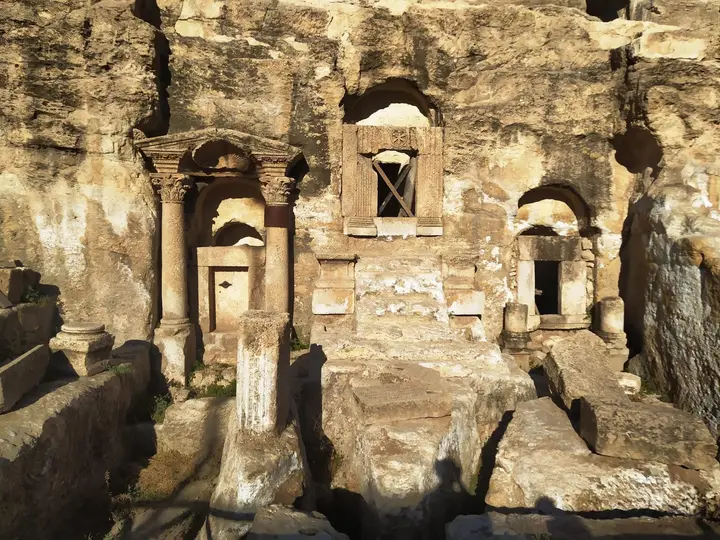
Historic remains at the Döğer, Ayazini and Kayıhan settlements are considered to date from the Phrygian period. İhsaniye was occupied by the Greeks on 13 July 1921 and endured an occupation of 13 months and 14 days. The district’s neighbourhoods became the starting point of the Great Offensive. The mountainous Phrygian Valley has been on the UNESCO World Heritage Tentative List since 2015. In Ayazini there are rock-cut tomb chambers from the Roman and Byzantine periods. Asar Castle became an important settlement called Kedrea in the Byzantine period.
Last updated:

Places to Visit in İhsaniye

  • 6 Historic
  • 2 Ancient City
  • 2 Religious
  • 1 Nature
  • 1 Attraction
  • 1 Cultural

Historic Sites 6

Phrygian Valley (Phrygian Cultural Route) - İhsaniye Photo: Wikipedia (CC BY-SA) · Source
Historic

Phrygian Valley (Phrygian Cultural Route)

The Phrygian Valley within the boundaries of İhsaniye contains the most important remains of the Phrygian civilisation, dating to the 8th–6th centuries BC. On the UNESCO World Heritage Tentative List, this valley, with its rock monuments, tumuli, rock tombs and ancient settlement areas, lies at the heart of the 506 km Phrygian Cultural Route.

View on map
Ayazini Rock Settlement - İhsaniye Photo: Bluetime93 (CC BY-SA 4.0) · Source
Historic

Ayazini Rock Settlement

This rock settlement in Ayazini village, attached to İhsaniye, consists of rock-cut churches, dwellings and tombs from the Roman and Byzantine periods. The rock church known as Meryem Ana Kilisesi (Church of the Virgin Mary) stands out for its wall frescoes and is important for faith tourism.

View on map
Döğer Rock Tombs - İhsaniye Photo: Wikipedia (CC BY-SA) · Source
Historic

Döğer Rock Tombs

The rock tombs in Döğer town, attached to İhsaniye, are monumental structures from the Phrygian period. The facade decorations and geometric motifs carved into the rock reflect the characteristic features of Phrygian art.

View on map
Historic

Seydiler Rock Monument

The Seydiler Monument, one of the most impressive rock monuments in the Phrygian Valley, is a cult structure dedicated to the Phrygian goddess Cybele. The facade and niches carved into the rock are important examples of 6th-century BC Phrygian art.

View on map
Historic

Ayazini Archaeological Site (Metropolis)

The archaeological site in Ayazini village, used as a settlement since the Phrygian period.

View on map
Historic

Göynüş (Köhnüş) Valley

A valley known for its Phrygian rock tombs and monuments.

View on map

Ancient Cities 2

Ancient City

Aslantaş Rock Tomb

A rock tomb with two imposing lion reliefs beside the doorway.

View on map
Ancient City

Maltaş Monument

A Phrygian monument in the south-west of Göynüş Valley, an open-air place of worship.

View on map

Religious Buildings 2

Religious

Karacaahmet Tomb

A tomb adjoining the mosque; it contains sarcophagi belonging to the disciples of Karacaahmet.

View on map
Religious

Yunus Emre Tomb

A tomb in Döğer town, on the hill to the south-east of Emre Lake.

View on map

Natural Wonders 1

Emre Lake - İhsaniye
Nature

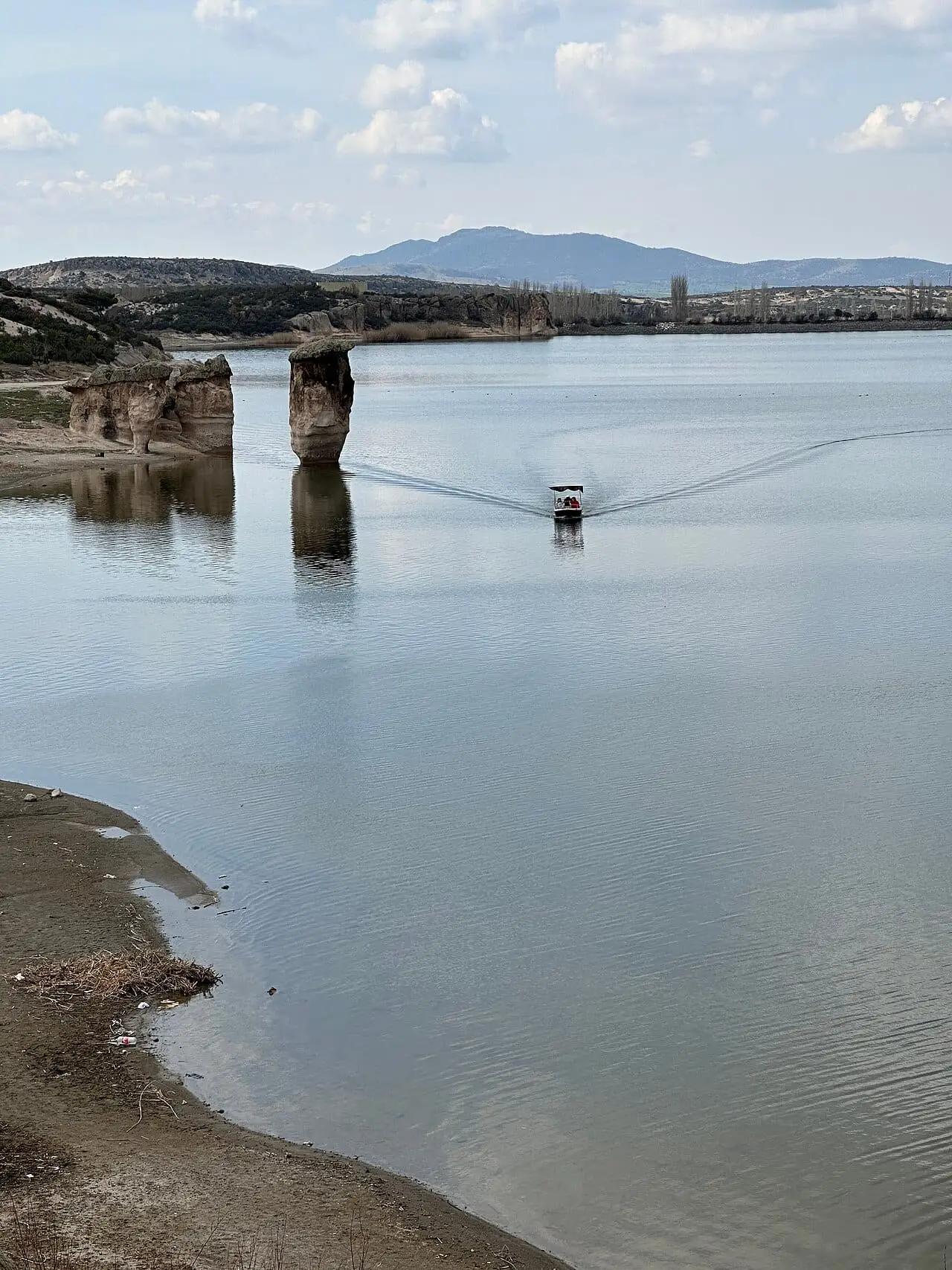
Emre Lake

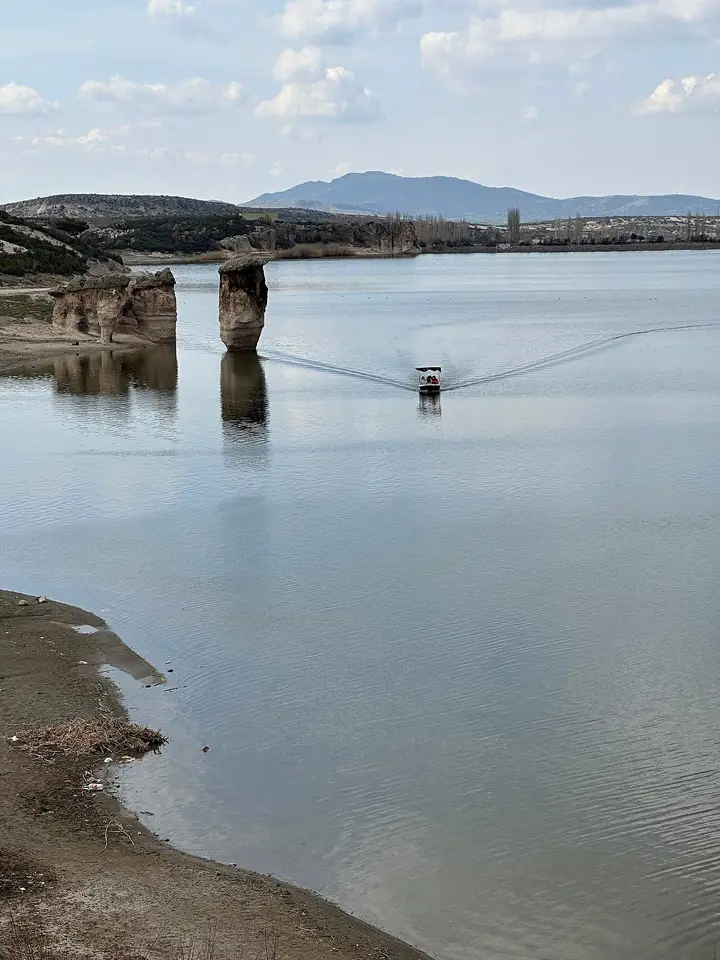
A pond built for irrigation within the boundaries of Döğer town.

View on map

Attractions 1

Attraction

Gazlıgöl Hot Springs

Gazlıgöl town, within the boundaries of İhsaniye, is known for its rare thermal springs containing natural carbon dioxide. The waters, at 36–42°C, are preferred especially for treating the circulatory system and skin conditions.

View on map

Cultural Venues 1

Cultural

Döğer Caravanserai

A caravanserai built in the 15th century by Sultan Murad II; it has Ottoman architectural features.

View on map

Places to Visit Around Afyonkarahisar Province

See all →

While you are in İhsaniye, you can also see the highlights of Afyonkarahisar province. These places are in other districts.

  • Afyonkarahisar Castle — The castle stands on a 226-metre rock that was once a volcano.
  • Afyonkarahisar Grand Mosque — Built between 1272 and 1277 and popularly known as the Kırk Direkli ("Forty Columns") Mosque, this timber-columned mosque is one of the important examples of Seljuk and Beylik-period timber-columned mosque architecture.
  • Gedik Ahmed Paşa Complex (İmaret Mosque) — A complex built around 1470–1472 for Gedik Ahmed Paşa, vizier in the time of Mehmed the Conqueror, and attributed to the architect Ayaz Ağa.
  • Sultan Dîvânî Mevlevihane Museum — The Mevlevi lodge founded by Ulu Ârif Çelebi in 1316 was rebuilt in 1908 after a fire in 1902 and opened as a museum in 2008. The tradition of "40 Hatimli Şifalı Aşure" (healing aşure of forty Qur'an recitations) is believed to have begun here.
  • Victory Museum — Built as the town hall in 1913–1914, the building became the headquarters of Commander-in-Chief Mustafa Kemal Paşa and his commanders after the city's liberation on 27 August 1922, and the final plans for the Battle of the Commander-in-Chief of 30 August were drawn up here.
  • Afyonkarahisar Museum — Founded in 1933, this archaeology and ethnography museum moved in 2023 to its new building on the Afyonkarahisar–Izmir road.

Practical Information for Visiting İhsaniye

Suggested time
2 days
Best time to visit
Spring and autumn
Places to visit
13 places

What to Eat in İhsaniye

Food guide →
  • Keşkek (wheat and meat porridge)

    Keşkek, prepared by long simmering and pounding of cracked wheat and meat, is the traditional dish of wedding and bayram feasts in İhsaniye. It is served with butter.

  • Haşhaşlı Çörek (poppy seed pastry)

    The poppy seed pastry, the signature flavour of the Afyonkarahisar region, is also prepared with a traditional recipe in İhsaniye's bakeries. The aroma of the poppy seeds gives the pastry a distinctive taste.

  • Tandır Çorbası (tandır broth)

    This soup is made from the liquid obtained by cooking lamb with its bones in a tandır oven, thickened with flour and yoghurt, and is indispensable on İhsaniye's winter tables.

  • Bazlama (griddle flatbread)

    This traditional bread, cooked on a griddle (sac), is an indispensable part of village tables in İhsaniye. It is eaten at breakfast with fresh butter and honey.

Culture, Local Products and Economy of İhsaniye

  • Phrygian Civilisation Heritage

    İhsaniye is the area with the most intensive remains of the Phrygian civilisation. Rock monuments, tumuli and cult structures are living witnesses of Phrygian culture of the 8th–6th centuries BC.

  • Rock Settlement Tradition

    Rock-carved settlements in villages such as Ayazini and Döğer reflect a unique way of life that has come down from the Roman and Byzantine periods. Some rock dwellings were used until recent times.

  • Phrygian Cultural Route

    The 506 km Phrygian Cultural Route is a long-distance walking trail passing through İhsaniye. The route attracts international walkers and history enthusiasts to the region and contributes to the development of cultural tourism.

Local Products

  • Thermal Water Products — The naturally carbonated thermal waters of Gazlıgöl are bottled and sold as health products. This rare thermal spring is İhsaniye's most valuable natural resource.
  • Poppy — Poppy, a traditional product of the Afyonkarahisar region, is also grown in İhsaniye. Its seeds are used in the food industry and its oil in cooking.
  • Cereal products — Wheat and barley grown on the İhsaniye plain are the region's main agricultural products.

Economy

İhsaniye's economy consists of agriculture, livestock farming and tourism. The Phrygian Valley and Gazlıgöl Hot Springs are the district's most important tourism assets. Wheat, barley and poppy are cultivated in agriculture. Small and large livestock farming is the main livelihood in rural areas. The thermal facilities at Gazlıgöl and cultural tourism in the Phrygian Valley have developed in recent years.

How to Get to İhsaniye

İhsaniye is 30 km from Afyonkarahisar city centre and is reached by road. The district lies on the Afyonkarahisar–Eskişehir road and has regular minibus services. The nearest airport is Afyon–Çobanlar Airport. A private vehicle is recommended for reaching the Phrygian Valley.

Get directions on Google Maps Getting to Afyonkarahisar

İhsaniye: Frequently Asked Questions

What are the places to see in İhsaniye?

The highlights of İhsaniye are 13 sites: Döğer Caravanserai, Emre Lake, Phrygian Valley (Phrygian Cultural Route), Ayazini Rock Settlement, Gazlıgöl Hot Springs, Döğer Rock Tombs, Seydiler Rock Monument, Ayazini Archaeological Site (Metropolis), Karacaahmet Tomb, Göynüş (Köhnüş) Valley, Aslantaş Rock Tomb, Maltaş Monument and Yunus Emre Tomb.

What to eat in İhsaniye?

Keşkek, Haşhaşlı Çörek, Tandır Çorbası and Bazlama are the standout flavours at İhsaniye tables.

What is İhsaniye famous for?

İhsaniye is known for thermal water products and the Phrygian civilisation heritage. The naturally carbonated thermal waters of Gazlıgöl are bottled and sold as health products. This rare thermal spring is İhsaniye's most valuable natural resource.

How do I get to İhsaniye?

İhsaniye is 30 km from Afyonkarahisar city centre and is reached by road. The district lies on the Afyonkarahisar–Eskişehir road and has regular minibus services. The nearest airport is Afyon–Çobanlar Airport. A private vehicle is recommended for reaching the Phrygian Valley.

How much time should I set aside for a visit to İhsaniye?

Suggested visit duration: 2 days. Best time to visit: spring and autumn.

Continue Your Trip

Other Districts of Afyonkarahisar

Search 81 province guides and 968 district guides.