 Photo: Özge mahan (CC BY-SA 4.0) · Source
 Lake Marmara
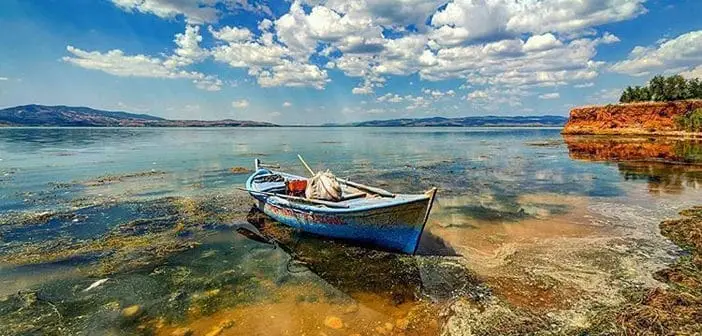
Lake Marmara, which gives the district its name, is one of the largest natural lakes in the Aegean Region. It is a suitable area for birdwatching, fishing and nature walks.
View on map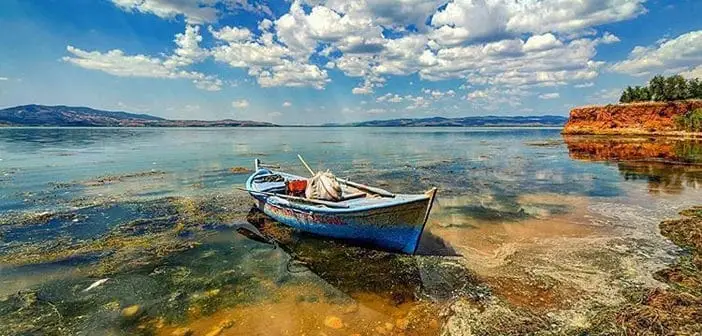 Photo: Özge mahan (CC BY-SA 4.0) · Source
 7 places to visit in the Gölmarmara district of Manisa: Lake Marmara, Gölmarmara Mosque and Halime Hatun Complex. Plan your trip to Gölmarmara with local food, practical tips and transport information.
Gölmarmara is one of the districts of Manisa province in the Aegean Region of Türkiye. It is one of the smallest districts in Manisa province. The district covers an area of 310 km² and lies at an elevation of 103 metres. The district takes its name from Lake Marmara, which lies within its borders.
Gölmarmara lies in the northwest of the Aegean Region. Although the district was founded at the foot of Mount Marmara, it has spread out onto the plain over time.
The most important economic activity in the district is agriculture. In the summer months, melons, watermelons, industrial tomatoes, table tomatoes, peppers, grapes and olives are grown intensively. In recent years maize cultivation has also increased. In the winter months, cabbage, broccoli and cauliflower are grown.
Lake Marmara, located between Gölmarmara and Salihli, is an alluvial dammed lake. The basin in which the lake lies connects to the Gediz basin. Although Lake Marmara is a natural dammed lake, it has gained the function of a reservoir through its artificial canals. It is under the influence of a dry climate: in dry years the lake level falls, while in wet years it rises.
During the War of Independence, Gölmarmara was under Greek occupation for three years. Gölmarmara was liberated from enemy occupation on 6 September 1922. The name Gölmarmara comes from the lake near Marmara, which became a district in 1987, and from its marble quarries.
Gölmarmara is bordered by Salihli to the east, Gördes to the northeast, Akhisar to the north, Saruhanlı to the west, and Ahmetli and Salihli to the south. Marmara, which became a district in 1987, took its present name Gölmarmara from the nearby lake and marble quarries.
Last updated:
Photo: Özge mahan (CC BY-SA 4.0) · Source Lake Marmara, which gives the district its name, is one of the largest natural lakes in the Aegean Region. It is a suitable area for birdwatching, fishing and nature walks.
View on map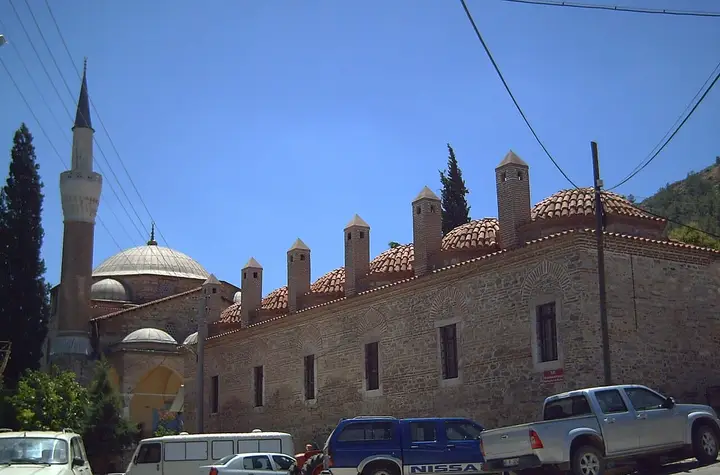 Photo: Cretanforever (CC BY-SA 3.0) · Source
 The mosque in the district centre was built in Ottoman-period architecture. The building reflects the local architectural style and is significant both religiously and culturally.
View on mapA complex built between 1595 and 1605, containing a madrasa, an imaret and a mosque. The complex also includes a hammam, which is now in ruins.
View on mapA square-plan mosque with a single dome, located in Eskicami Neighbourhood. It was commissioned by Şahuban Hatun, daughter of Sarı İbrahim Paşa.
View on mapA square-plan double hammam forming part of the Halime Hatun complex. It is a 15th-century Ottoman work, and the hammam is currently being restored.
View on mapA tomb located inside the Türbe Mosque. It can be visited through the door beside the minbar on the qibla side.
View on mapExcavation and research work began in 2014 at Kaymakçı and its surroundings, on the western shore of Lake Marmara, targeting the Middle and Late Bronze Age. The work is carried out in Gölmarmara's Hacıveliler Neighbourhood.
View on mapWhile you are in Gölmarmara, you can also see the highlights of Manisa province. These places are in other districts; Gölmarmara is about 30 km from the provincial centre.
Freshwater fish from Lake Marmara, served grilled or pan-fried.
Prepared by marinating lamb in special spices before cooking. Made from recipes passed down through the generations, this dish is an important part of the local culinary culture.
Thanks to its location on the shore of Lake Marmara, Gölmarmara keeps fishing and lake culture alive.
The economy of Gölmarmara is based on agriculture, fishing and livestock farming. Olives, grapes and wheat are the main agricultural products.
Gölmarmara is 30 km from Manisa city centre. Transport is by road.
The highlights of Gölmarmara are 7 places: Lake Marmara, Gölmarmara Mosque, Halime Hatun Complex, Şahuban Mosque, Sarı Ahmet Paşa Hammam, Hanefi Sultan Tomb and Kaymakçı Excavations.
Göl Balığı and Manisa Kebabı are the standout dishes on Gölmarmara's tables.
Gölmarmara is known for its olives and olive oil and its lake culture. Olives are grown around Gölmarmara.
Gölmarmara is 30 km from Manisa city centre. Transport is by road.
Suggested visit length: half a day. Best time to visit: spring and autumn months.