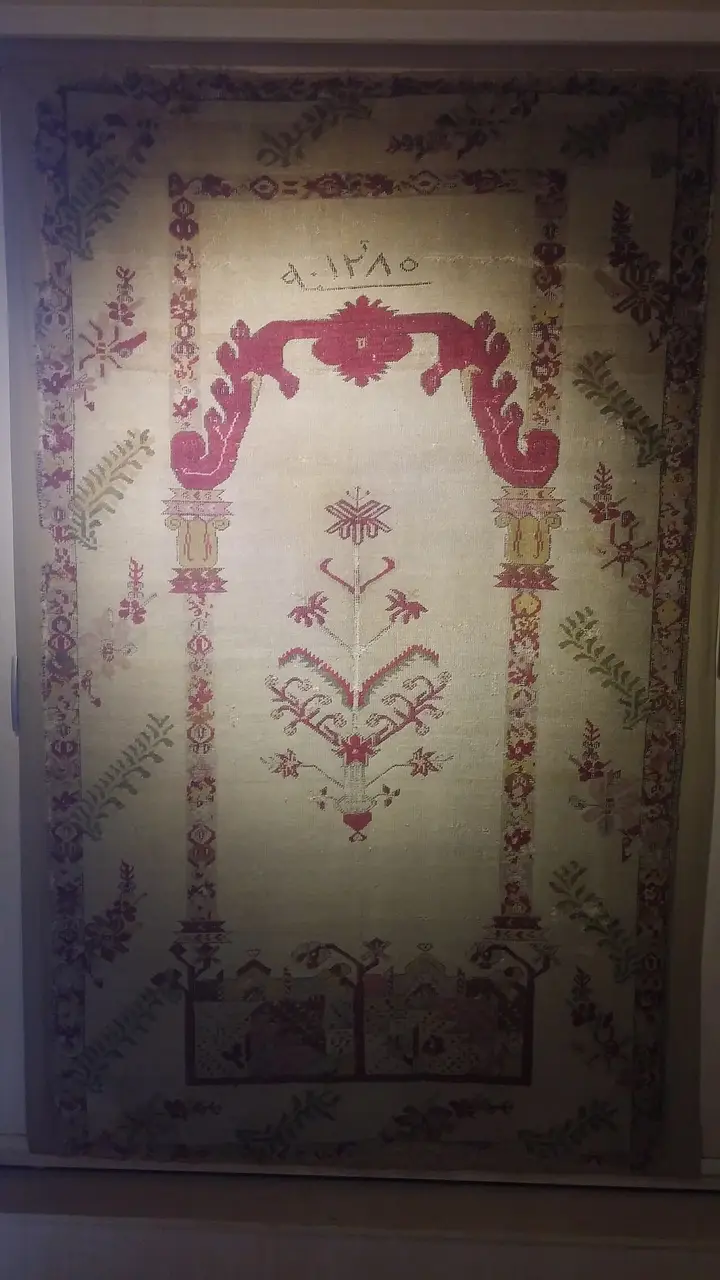
 Photo: Ibra~28 (CC BY-SA 4.0) · Source
 Gördes Carpet Museum
A museum presenting the history and importance of carpet weaving in Gördes.
View on map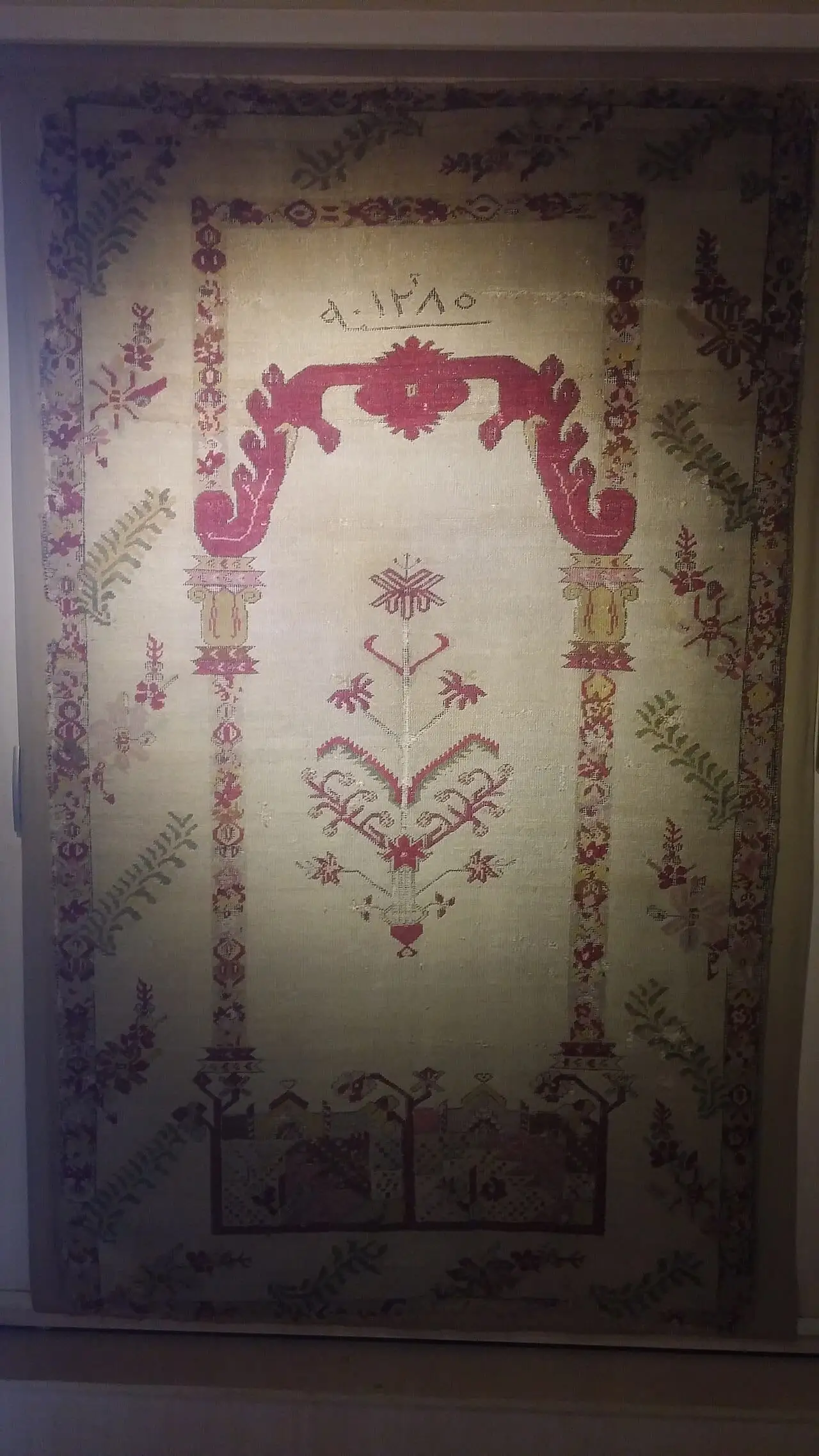 Photo: Ibra~28 (CC BY-SA 4.0) · Source
 3 places to visit in the Gördes district of Manisa: Gördes Carpet Museum, Gördes Dam and Gördes (Kum Çayı) stream. Plan your trip to Gördes with local food, practical tips and transport information.
In antiquity, Gördes was a city in Lydia and was later named Julia Gordes. During the Turkish War of Independence the district was occupied by Greek forces on 15 July 1920 and liberated on 5 September 1922.
Gördes is an important settlement area with a history dating back to ancient times.
The district lies in the Inner Western Anatolia section of the Aegean Region, in the north-east of Manisa. Gördes has dry, hot summers and mild, rainy winters. Forested areas make up 45% of the district’s land.
Zeolite mining makes up an important part of the district’s economy.
The founding date and origin of Gördes are not known for certain. In 1940 a severe landslide hit Old Gördes, and the district was moved to a new settlement site. Gördes was under Greek occupation for about 14 months between 1920 and 1922. Makbule Hanım, a daughter of Gördes, is one of the names most often mentioned in the War of Independence.
In the Lydian period Gördes was known as Julia Gordos. After the Lydian Kingdom it remained under Persian, Macedonian, Roman and Byzantine rule. Gördes is better known for its prayer rugs (seccade) than for its floor carpets, and in the 17th and 18th centuries it was an important carpet-weaving centre of Western Anatolia.
Last updated:
Photo: Ibra~28 (CC BY-SA 4.0) · Source A museum presenting the history and importance of carpet weaving in Gördes.
View on mapA dam built on the Gediz River. With the green areas around it, it is a picnic area suitable for picnics and nature walks.
View on mapThe district's most important watercourse. Forested areas make up a significant share of the district, around 45%.
View on mapWhile you are in Gördes, you can also see the highlights of Manisa province. These places are in other districts; Gördes is about 100 km from the provincial centre.
Prepared by marinating lamb in special spices and then cooking it. This dish has an important place on local tables and is prepared using traditional recipes. The recipe, passed down through generations, varies slightly from family to family.
A traditional dish made by simmering cracked wheat and meat for a long time. Prepared from recipes passed down through generations, it is an important part of the local food culture. Listed on UNESCO's Intangible Cultural Heritage List, keşkek is a source of pride in Turkish cuisine.
Gördes is one of the most important centres of Turkish carpet weaving. The carpet knotting technique known as the 'Gördes knot' (Turkish knot) has entered the world's carpet terminology.
Gördes's economy is based on farming, livestock and carpet weaving. Hand-woven carpet production continues as a traditional craft.
Gördes is 100 km from Manisa provincial centre. Access is by road.
The main sights in Gördes are: Gördes Carpet Museum, Gördes Dam and the Gördes (Kum Çayı) stream.
Manisa Kebabı and Keşkek are the highlights of Gördes's tables.
Gördes is known for Gördes Hand-Woven Carpets and the Carpet Weaving Tradition. A product registered with TÜRKPATENT as a protected geographical indication.
Gördes is 100 km from Manisa provincial centre. Access is by road.
Suggested visit time: half a day. Best time to visit: spring and autumn.