Sunken City (Old Halfeti)
The old Halfeti settlement, now under the waters of Birecik Dam, offers an impressive view with its half-submerged mosque minarets and houses. It can be visited on boat tours.
View on map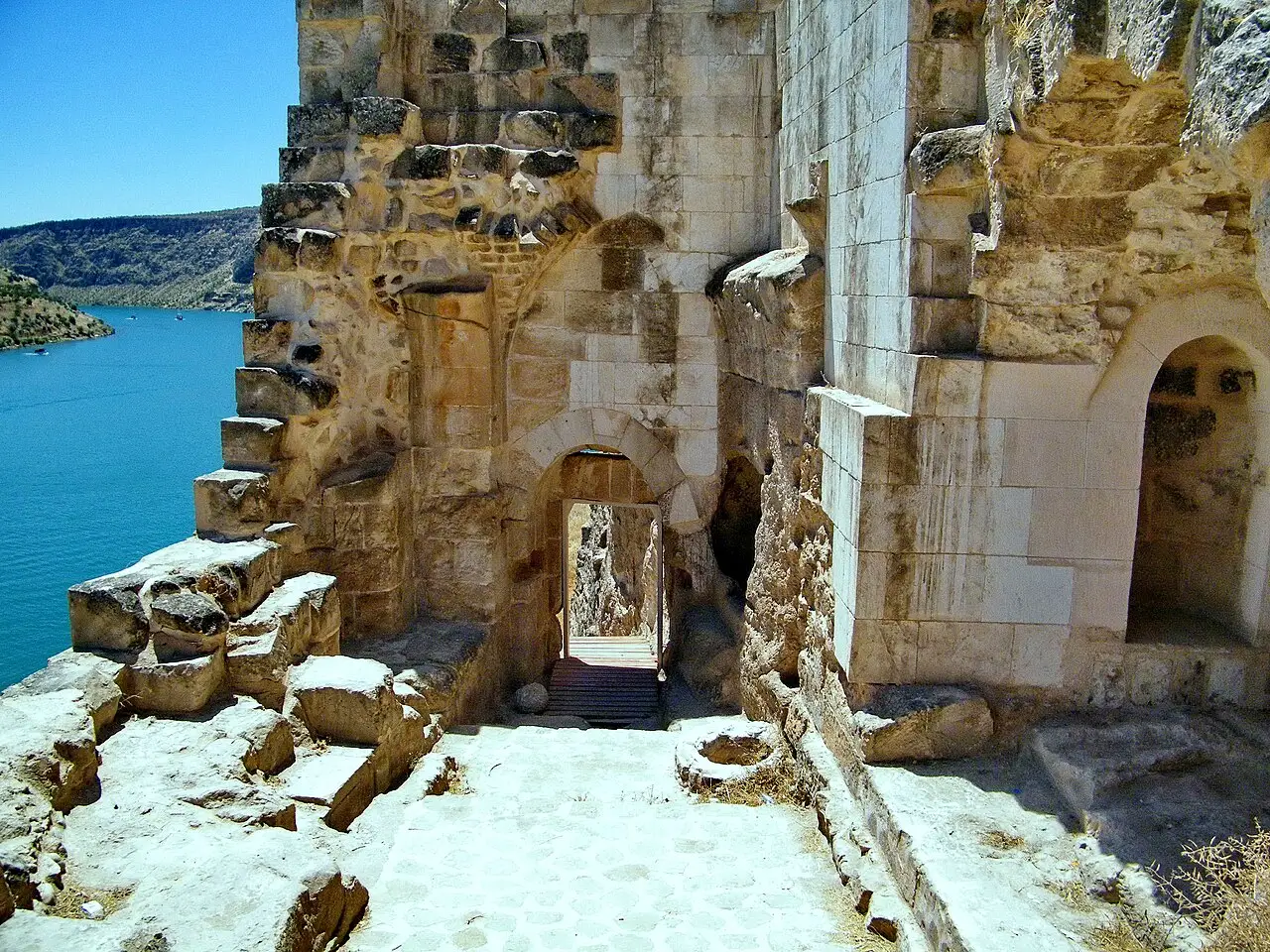 Photo: Volker Höhfeld (CC BY-SA 4.0) · Source
 9 places to visit in the Halfeti district of Şanlıurfa: Sunken City (Old Halfeti), Rumkale and Euphrates River Boat Tour. Plan your trip to Halfeti with local food, practical tips and transport information.
Halfeti is a district of Şanlıurfa province. It lies in the west of Şanlıurfa, covers an area of 609 km² and has an average elevation of 409 metres above sea level.
Founded in 855 BC by the Assyrian king Shalmaneser III, the town was called ‘Şitamrat’. Throughout its history, it was ruled by the Hittites, Assyrians, Medes, Persians, Macedonians, Seleucids and Parthians. Halfeti was a nahiye (sub-district) attached to Birecik until 1926 and became a district in 1954.
After the construction of Birecik Dam, 80 per cent of Halfeti’s population moved to a new settlement centre 15 km away, as the houses were submerged. The district, where stone houses and mosques lie under water, is notable for its natural beauty. Lying above the Euphrates River’s submerged stone architecture, Halfeti has also come to be called the ‘hidden paradise’ and the ‘lost city’. Halfeti has received the international ‘Cittaslow’ (Slow City) title.
As a result of the waters of Birecik Dam covering the old town, Halfeti was divided into New Halfeti and Old Halfeti. Karagül (black rose), one of Halfeti’s most celebrated features, was first grown by Lomo Sait, and it is now still grown on an amateur basis in the gardens and pots of houses.
The founding of the district is traced to Shalmaneser III, king of Assyria, in 855 BC. Halfeti was a nahiye attached to Birecik until 1926 and became a district in 1954. The Birecik Dam of 2000 submerged three-fifths of the district. The district was included in the Cittaslow Network and received the title “slow city”. Mentioned in Urartian texts as “Halpa”, Halfeti became one of the important cities of Commagene. In the 16th century, Halfeti and its surroundings were incorporated into Ottoman territory.
Last updated:
The old Halfeti settlement, now under the waters of Birecik Dam, offers an impressive view with its half-submerged mosque minarets and houses. It can be visited on boat tours.
View on map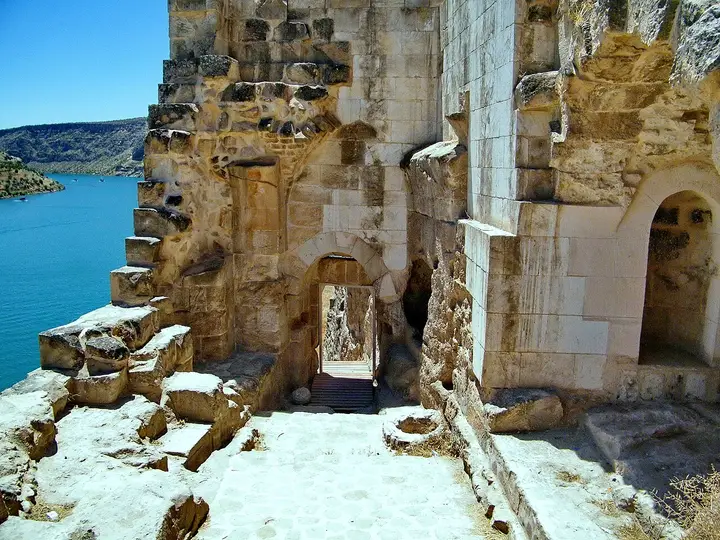 Photo: Volker Höhfeld (CC BY-SA 4.0) · Source
 Rumkale, on a rocky hill on the bank of the Euphrates River, is an important historic site with remains from the Roman, Byzantine and Crusader periods. Remains of an Armenian church and water cisterns can be seen.
View on mapThe minaret of the mosque in Savaşan village, which lies under the waters of the dam, has become a symbol of the region.
View on mapAn old settlement known for its houses built of natural stone, its caves and its streets, and a favourite stop for visitors.
View on mapHalfeti is famous for the black rose, which is rare in the world. These roses, grown in gardens on the bank of the Euphrates River, have become the symbol of the district.
View on mapBoat tours on the Euphrates River from Halfeti offer views of the sunken city, Rumkale and the surrounding landscape.
View on mapA boat trip of about an hour on the Euphrates, where you can see houses under the water and the village of Savaşan.
View on mapThe suspension bridge known as the Halfeti gerdan (necklace) connects to the streets with historic houses and mansions.
View on mapA production farm where Kara Gül, the symbol of the district, is grown. It is open to visitors.
View on mapWhile you are in Halfeti, you can also see the highlights of Şanlıurfa province. These places are in other districts; Halfeti is about 110 km from the provincial centre.
Urfa kebab, made from minced lamb grilled over charcoal, is served in Halfeti in its traditional recipe.
Raw meatball made with fine bulgur and isot pepper, an essential local delicacy in Halfeti too.
Fresh fish from the Euphrates River are served grilled in Halfeti's riverside restaurants.
Old Halfeti, submerged under the waters of Birecik Dam, is an important part of the district's cultural memory. The sunken city is one of the most impressive tourist destinations in Türkiye.
The Halfeti black rose is the symbol of the district and the basis of its cultural identity. A rose festival is held every year.
The economy of Halfeti is based on tourism, agriculture and fishing. Boat tours and sunken city tourism are important sources of income. Pistachio and olive cultivation also take place.
Halfeti is 110 km from Şanlıurfa city centre. It is 20 km from Birecik. It is 130 km from GAP Airport.
The 9 highlights of Halfeti are Sunken City (Old Halfeti), Rumkale, Euphrates River Boat Tour, Black Rose Gardens, Euphrates River boat tour (Çekem, Savaşan, Rumkale route), Minaret of the Savaşan village mosque, Old Halfeti, Halfeti Gerdan Suspension Bridge and Kara Gül production farm.
Urfa Kebabı, Çiğ Köfte and Euphrates Fish are the standout flavours on Halfeti's tables.
Halfeti is known for Halfeti Karagül and its Sunken City Heritage. Halfeti Karagül (Halfeti black rose) is a registered product at TÜRKPATENT.
Halfeti is 110 km from Şanlıurfa city centre. It is 20 km from Birecik. It is 130 km from GAP Airport.
Suggested visit length: 1-2 days. Best time to visit: spring and autumn (April-June, September-November).