Harran Beehive-Domed Houses
The mud-brick houses with conical domes, the symbol of Harran, are living examples of an architectural tradition thousands of years old. Beehive-shaped domes provide natural ventilation in the hot climate.
View on map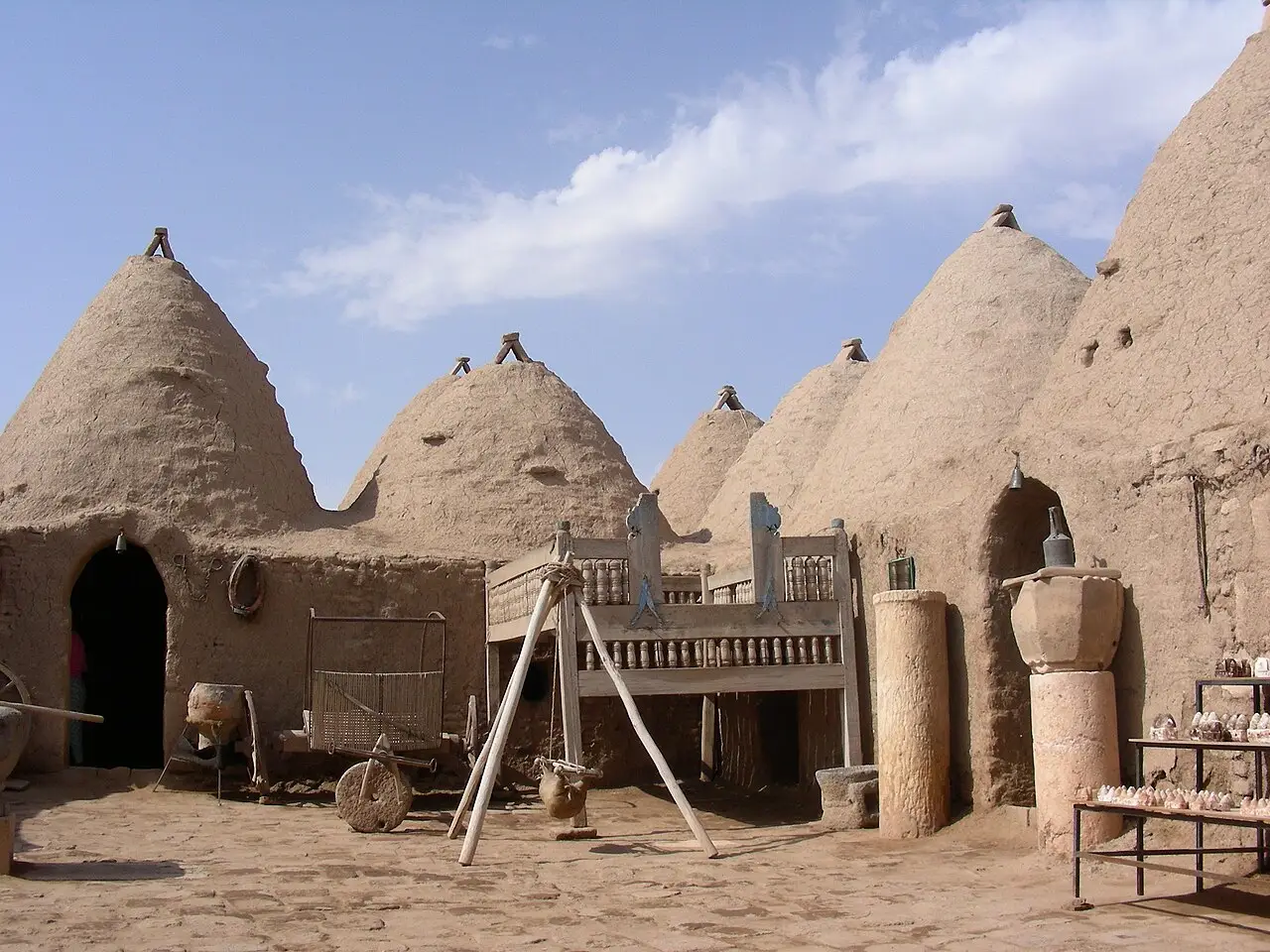 Photo: Herbert Frank from Wien (Vienna), AT (CC BY 2.0) · Source
 8 places to visit in the Harran district of Şanlıurfa: Harran Beehive-Domed Houses, Harran Archaeological Site and Harran University Ruins. Plan your trip to Harran with local food, practical tips and transport information.
Harran is a district of Şanlıurfa province. It lies close to the Syrian border, 44 km from Şanlıurfa. It is one of the ancient settlements of Northern Mesopotamia and one of the oldest cities in the world that is still inhabited.
The name of the city first appears on cuneiform tablets found at Ebla, dating to around 2250 BC. The name comes from the word ‘haran-u’, meaning ‘journey’ or ‘caravan’ in Sumerian and Akkadian.
Around 2000 BC, Harran was one of the most important centres of the pagan belief of Mesopotamia. In the middle of the 2nd millennium BC, a treaty between the Hittites and the Mitanni was witnessed by the moon god Sin and the sun god Shamash in Harran. Incorporated into the Assyrian Empire in 857 BC, Harran became the refuge of Ashur-uballit II, the last Assyrian king. Harran was conquered in 640 during the caliphate of Umar (Ömer) by İyâz b. Ganm, and the Sin temple, dedicated to the pagan gods, was converted into a mosque. During the caliphate of II. Mervân, Harran became the capital of the Umayyad State.
Harran University in Şanlıurfa takes its name from this district.
Harran is considered one of the oldest cities in Northern Mesopotamia. A cuneiform tablet recording a treaty was found in the Temple of Sin in Harran. Harran was an important centre of Sabianism, the worship of the moon, sun and planets. Harran Kümbet Houses were registered as an archaeological and urban conservation area in 1979. Harran has been on UNESCO’s Tentative List of World Heritage Sites since 2000. The Harran Ulu Mosque was built during the reign of the Umayyad caliph II. Mervan.
Last updated:
The mud-brick houses with conical domes, the symbol of Harran, are living examples of an architectural tradition thousands of years old. Beehive-shaped domes provide natural ventilation in the hot climate.
View on map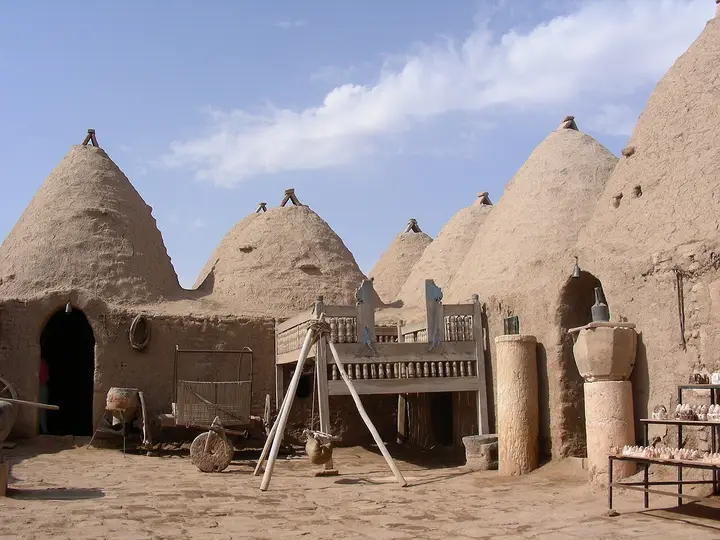 Photo: Herbert Frank from Wien (Vienna), AT (CC BY 2.0) · Source
 The ancient city of Harran, dating to the 3rd millennium BC, is one of the oldest settlements in the world. The city, where Abraham (Hz. İbrahim) is believed to have lived, is also famous for the temple of Sin, the moon god.
View on mapThe remains of Harran University, one of the first universities in the Islamic world, bear traces of the educational centre founded in the Umayyad period in the 8th century.
View on mapThe castle in the centre of the ancient city was built and repaired in different periods. Its walls and towers still stand.
View on mapA historic mosque from the Umayyad period on the north-eastern slope of Harran Mound.
View on mapAn ancient city dating to the Late Roman period, known for its rock-cut tombs and courtyard houses.
View on mapWhile you are in Harran, you can also see the highlights of Şanlıurfa province. These places are in other districts; Harran is about 44 km from the provincial centre.
Urfa kebab, made from minced lamb grilled over charcoal, is served in Harran in its traditional recipe.
Raw meatball made with fine bulgur and isot pepper, an essential local delicacy in Harran too.
With a history of more than 5,000 years, Harran is one of the oldest settlements in the world. It bears traces of Sumerian, Assyrian, Babylonian, Roman and Islamic civilisations.
Harran's beehive-domed houses are living examples of a thousands-year-old architectural tradition. These houses have become a tourism symbol of the district.
The economy of Harran is based on agriculture. Cotton, wheat and maize are produced on the Harran Plain, which is irrigated by the GAP project. Tourism is also an important source of income.
Harran is 44 km from Şanlıurfa city centre. The district is reached by road via Şanlıurfa.
The 8 highlights of Harran are Harran Beehive-Domed Houses, Harran Archaeological Site, Harran University Ruins, Harran Castle, Harran Ulu Mosque (Cennet Mosque), Harran Kümbet Houses, Han El-Ba'rur Caravanserai and Şuayb Ancient City.
Urfa Kebabı and Çiğ Köfte are the standout flavours on Harran's tables.
Harran is known for cotton and its Ancient Civilisation Heritage. The Harran Plain, irrigated by the GAP project, is one of the largest cotton-producing areas in Türkiye.
Harran is 44 km from Şanlıurfa city centre. The district is reached by road via Şanlıurfa.
Suggested visit length: half a day - 1 day. Best time to visit: spring and autumn (March-May, September-November).