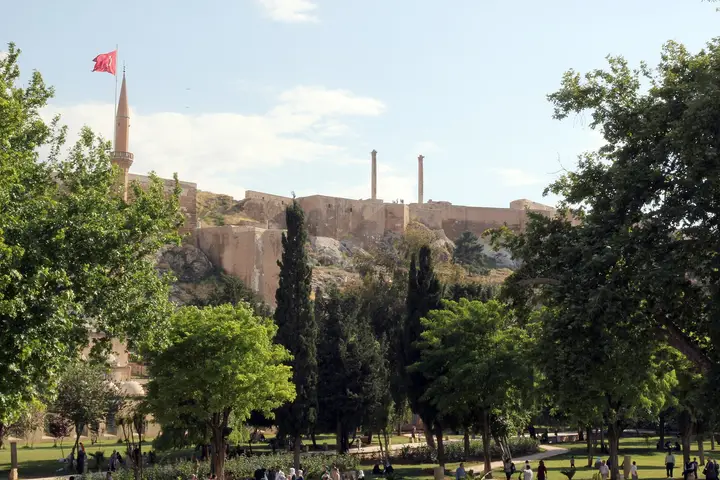
 Photo: Klaus-Peter Simon (CC BY-SA 3.0) · Source
 Şanlıurfa Castle
The castle rising above the city was built in the Osroene period; its present walls were built by the Abbasids in AD 814. Today it serves as an open-air museum.
View on map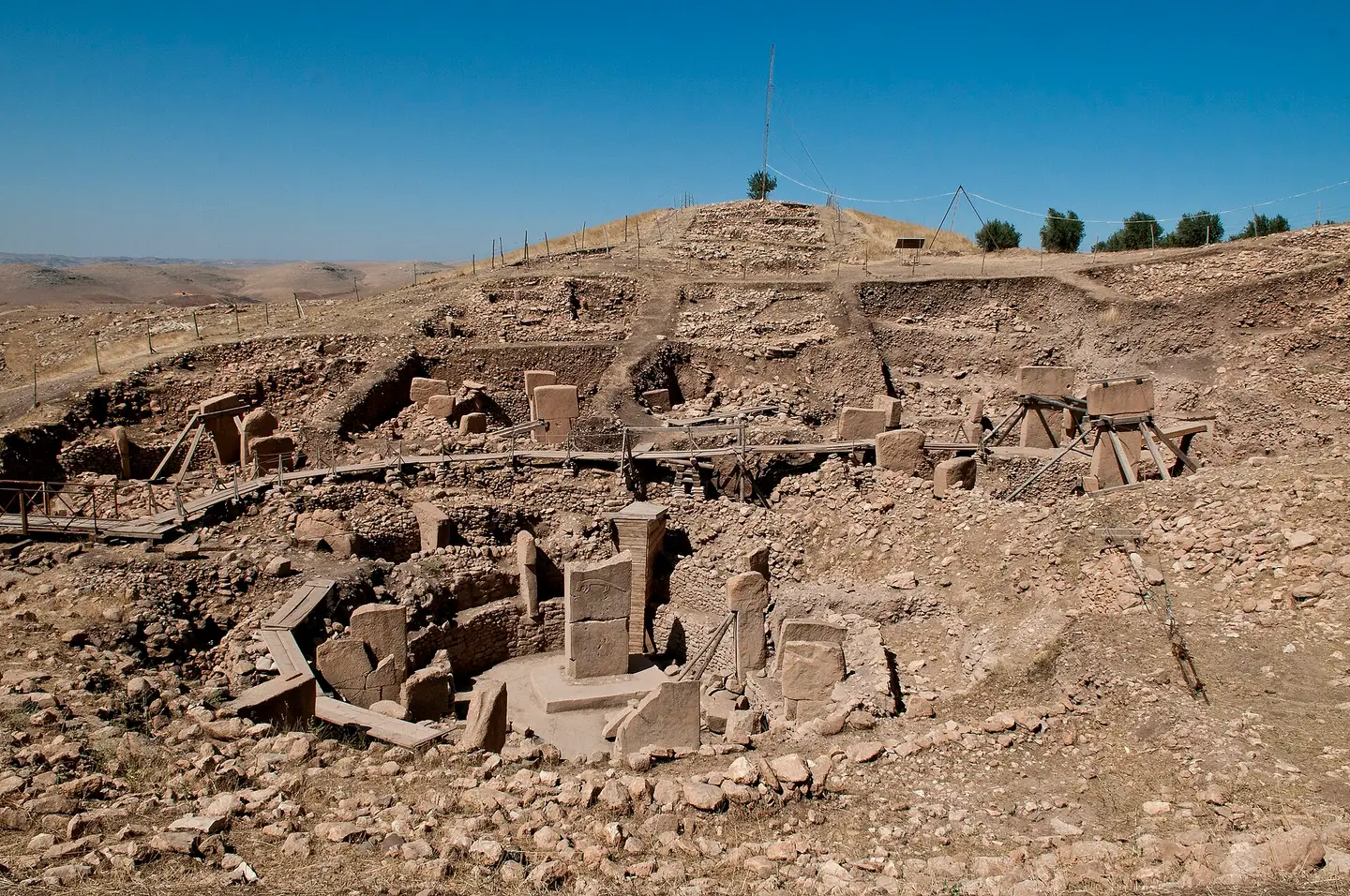 Photo: Teomancimit (CC BY-SA 3.0) · Source
 Şanlıurfa is the province of Göbekli Tepe, dated to 9600–9500 BC and the oldest known monumental structure, of Karahantepe, of Balıklıgöl, where the Prophet Abraham is believed to have been thrown into the fire, and of Halfeti on the banks of the Euphrates. The bazaars of the city, once known as Edessa, Harran, Soğmatar and one of the world's largest mosaic museums stand out. Urfa has 50 registered geographical indications, led by çiğ köfte, tepsi kebabı, isot, ciğer kebabı and the Halfeti black rose.
Last updated:
11 places worth seeing in Şanlıurfa, from historic monuments to natural wonders, grouped by type. Open any of them on the map with a single click.
Photo: Klaus-Peter Simon (CC BY-SA 3.0) · Source The castle rising above the city was built in the Osroene period; its present walls were built by the Abbasids in AD 814. Today it serves as an open-air museum.
View on map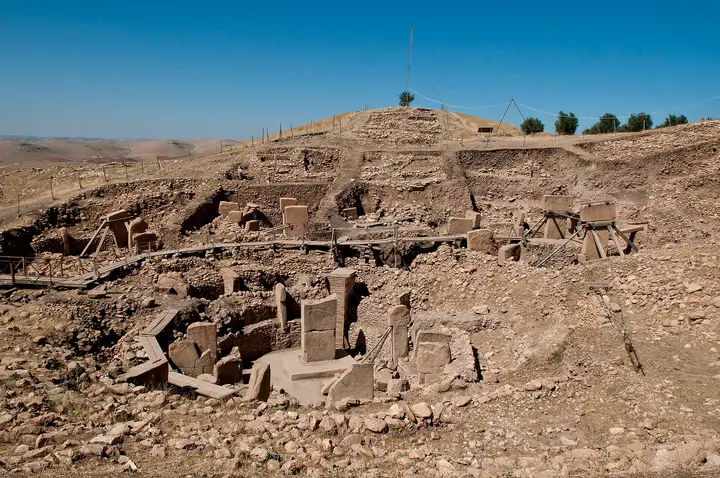 Photo: Teomancimit (CC BY-SA 3.0) · Source
 A Neolithic cult centre near the village of Örencik in the Haliliye district, dated to about 9600–9500 BC and the oldest known monumental structure. It is known for its T-shaped standing stones with animal reliefs, and was inscribed on the UNESCO World Heritage List in 2018.
View on map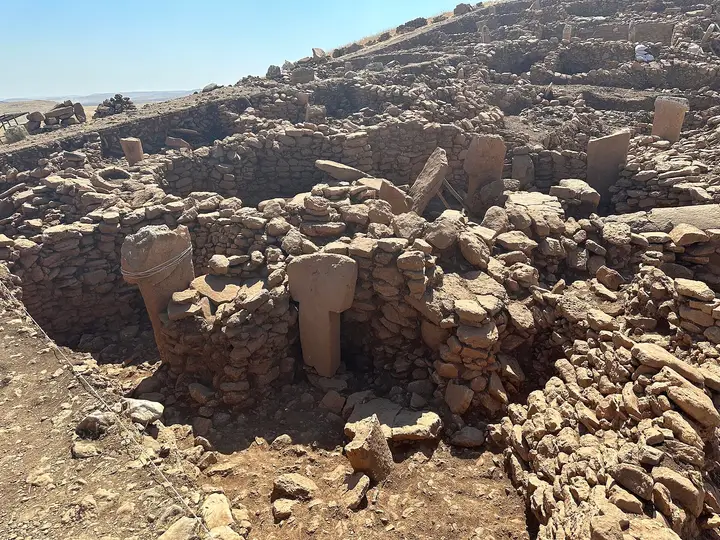 Photo: Vincent Vega (CC BY-SA 4.0) · Source
 A Neolithic settlement 46 km from the city centre, contemporary with Göbekli Tepe; it is known for its 250 standing stones and special buildings carved into the bedrock, and excavations began in 2019.
View on mapOne of the ancient settlements of Northern Mesopotamia, 44 km from Şanlıurfa; it is cited as one of the oldest cities in the world that is still inhabited.
View on mapA cult centre in the Eyyübiye district, 15 km from Şuayb City, dated to the 2nd century AD, where the people of Harran worshipped the moon and planetary gods; it is known for a cave and rock carvings dedicated to Sin.
View on mapA Neolithic settlement in Hilvan, now under a reservoir; its finds are displayed in the museum.
View on map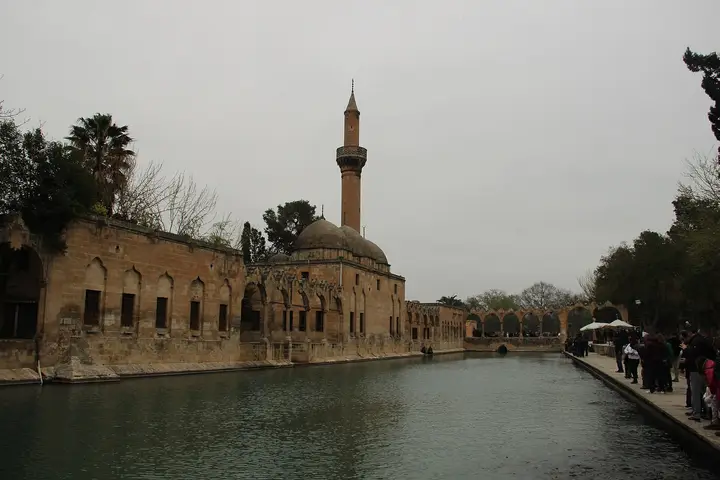
Made up of two lakes known for their sacred fish, where the Prophet Abraham is believed to have been thrown into the fire. Its present appearance comes from the Dergâh and Balıklıgöl Landscaping Project carried out in 1992–2000.
View on map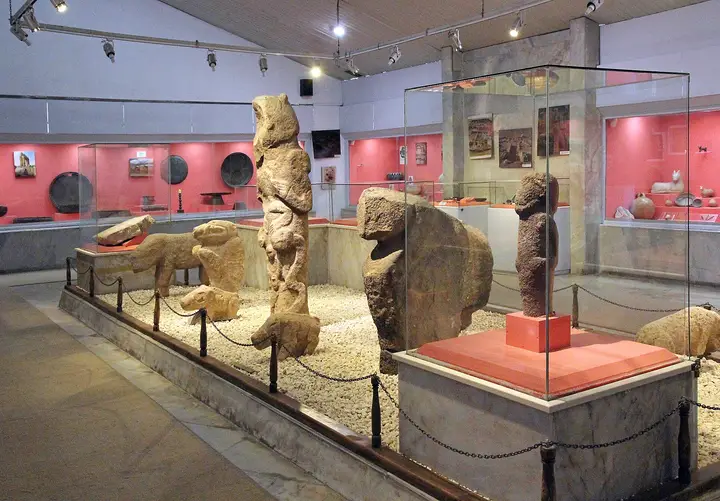 Photo: Klaus-Peter Simon (CC BY-SA 3.0) · Source
 In its present modern building since 2015, the museum has one of the largest indoor exhibition halls in Türkiye and a 4.5-km visitor route; finds from Göbekli Tepe and Karahantepe are displayed here.
View on mapAn archaeology museum in the Eyyübiye district where Roman-period mosaics are displayed in situ.
View on map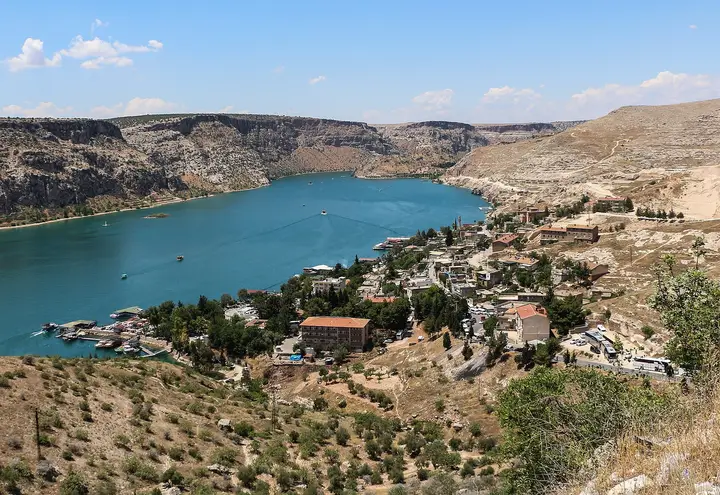 Photo: Bernard Gagnon (CC BY-SA 3.0) · Source
 A district on the banks of the Euphrates, known for its old settlement drowned under the waters of the Birecik Dam; 80 per cent of the district is under water. The black Halfeti rose (karagül) has a registered geographical indication.
View on mapBuilt on the Euphrates within the Southeastern Anatolia Project (GAP); in terms of the size of its embankment and reservoir, it is one of the largest dams and hydroelectric power plants in Europe.
View on mapŞanlıurfa lies in Southeastern Anatolia, at the northern gateway to Mesopotamia, at an altitude of about 914 metres above sea level. Known in earlier times as Ruha, Riha and Edessa, the city was long famous under the name Edessa from the Seleucid period onwards. Urfa became a province in 1924; its name was changed to Şanlıurfa by Law No. 3020 of 22 June 1984, and in 2012 it became a metropolitan municipality.
The province is home to some of the most important archaeological finds in human history. Göbekli Tepe, 18 km north-east of the centre near the village of Örencik in Haliliye, is a cult centre dated to about 9600–9500 BC and regarded as the oldest known monumental structure; it was inscribed on the UNESCO World Heritage List in 2018. Karahantepe, 46 km from the city centre, is a contemporary Neolithic centre with some 250 standing stones, and its excavations began in 2019.
In the heart of the city lies Balıklıgöl (the Halil-ür Rahman and Aynzeliha lakes), where the Prophet Abraham is believed to have been thrown into the fire by Nimrod. Ancient sources also say that the lake was a temple pool dedicated to the goddess Atargatis. Şanlıurfa Castle was built in the Osroene period, and its present walls were built by the Abbasids in AD 814.
In Şanlıurfa summers are very hot and dry, and winters are cool and rainy. Averages for 1929–2025 from the Turkish State Meteorological Service:
| Month | Avg. high | Avg. low | Rainfall | Rainy days |
|---|---|---|---|---|
| January | 10.0 °C | 2.2 °C | 85 mm | 12 |
| February | 12.0 °C | 3.0 °C | 68 mm | 10 |
| March | 16.5 °C | 5.9 °C | 65 mm | 10 |
| April | 22.4 °C | 10.4 °C | 49 mm | 9 |
| May | 28.8 °C | 15.4 °C | 27 mm | 6 |
| June | 34.8 °C | 20.7 °C | 4 mm | 1 |
| July | 38.8 °C | 24.4 °C | 2 mm | 0 |
| August | 38.4 °C | 24.1 °C | 3 mm | 0 |
| September | 34.0 °C | 20.1 °C | 5 mm | 1 |
| October | 27.1 °C | 14.7 °C | 25 mm | 5 |
| November | 18.8 °C | 8.6 °C | 45 mm | 7 |
| December | 12.1 °C | 4.1 °C | 79 mm | 11 |
The best periods are March–May and October–November. In July and August daytime temperatures reach 38 °C; visit open-air sites early in the morning or in the late afternoon. In winter there can be wind and rain at Göbekli Tepe.
By air: Şanlıurfa GAP Airport opened on 17 June 2007 and is about 35 km from the city centre.
By road: It takes about 2 hours from Gaziantep and about 3 hours from Diyarbakır. Birecik is 83 km from Şanlıurfa and 63 km from Gaziantep. The centre of the Harran district is 44 km from Şanlıurfa.
Day 1 – The city centre: In the morning, the area around Balıklıgöl and Urfa Castle; in the afternoon, the Şanlıurfa Archaeology and Mosaic Museum. In the evening, ciğer kebabı in the historic bazaar.
Day 2 – Neolithic Urfa: Göbekli Tepe and Karahantepe; in the afternoon, the Neolithic statues in the museum.
Day 3 – Harran and Soğmatar: From Harran to Soğmatar; in the evening, a sıra night.
Day 4 – Halfeti: A boat tour on the Euphrates and the Karagül.
Urfa cuisine is one of the cuisines with the most geographical indications in Türkiye; the province has 50 registered geographical indications. Highlights are Şanlıurfa çiğ köfte (raw meatballs), Urfa tepsi kebabı (tray kebab), Urfa ciğer kebabı (liver kebab), Urfa haşhaş kebabı, Urfa kazan kebabı (cauldron kebab), Urfa soğan kebabı (onion kebab), Urfa patlıcanlı kebabı (aubergine kebab), Urfa lahmacunu (kıymalı ekmeği), Urfa içli köftesi (stuffed bulgur köfte), Urfa yumurtalı köfte (egg köfte), Urfa aya köftesi, Şanlıurfa lolaz dürümü, Şanlıurfa açık ekmeği (open flatbread), Şanlıurfa tırnaklı ekmeği, Urfa pendirli kedeyif (cheese kadayıf), Urfa şıllık tatlısı (şıllık dessert), Urfa zerdesi (sweet saffron rice), Şanlıurfa peynirli helvası (cheese halva), Urfa meyan şerbeti (biyanbalı) (liquorice sherbet) and Urfa peyniri (Urfa cheese). Products: Şanlıurfa biberi (isot) (dried chilli), Halfeti karagülü (Halfeti black rose), Birecik patlıcanı (Birecik aubergines), Suruç narı (Suruç pomegranates), Karaköprü narı (Karaköprü pomegranates), Şanlıurfa sadeyağı (clarified butter) and Şanlıurfa pamuğu (Şanlıurfa cotton).
Şanlıurfa culha dokuması (culha weaving), Urfa sini darahlığı, Urfa Frenk çömleği, Urfa isot çömleği and Urfa külünçesi have registered geographical indications.
Şanlıurfa province has 13 districts. Explore the places to visit, local dishes and transport in each one.
The symbol of the region's sıra nights; it has a registered geographical indication.
A kebab with a registered geographical indication.
A kebab with a registered geographical indication, also eaten at breakfast.
Registered with a geographical indication.
Registered with a geographical indication.
A dessert with a registered geographical indication.
Göbekli Tepe, Karahantepe, Balıklıgöl, Urfa Castle, the Şanlıurfa Archaeology and Mosaic Museum, Harran, Soğmatar, Halfeti and Birecik are the main stops.
Dated to about 9600–9500 BC, Göbekli Tepe is the oldest known monumental structure; it was inscribed on the UNESCO World Heritage List in 2018.
Çiğ köfte, tepsi kebabı, ciğer kebabı, isot, the Halfeti black rose and Balıklıgöl.
No, Rumkale is in the Nizip district of Gaziantep; it is reached by boat tours from Halfeti.
March–May and October–November are the best periods; beware of summer temperatures that reach 38 °C.
The information in this guide has been compiled from and checked against the sources below (last checked: 8 October 2026). If you spot an error, please let us know.