6 places to visit in the Midyat district of Mardin: Midyat Stone Houses, Mor Gabriel Monastery and Konuk Evi (Guest House). Plan your trip to Midyat with local food, practical tips and transport information.

Share with friends

Midyat is a district of Mardin province known as a meeting point of religions and languages. The district appears in history during the Assyrian period, when it is described as Matiate on 9th-century BC tablets. It suffered heavy losses during the First World War but was revived after 1930.

Geography

The average elevation of the district centre is 957 metres above sea level. It is one of the largest and most populous districts of Mardin province; there are 43 villages and hamlets attached to the district. The district covers an area of 1,241 square kilometres.

Culture and Art

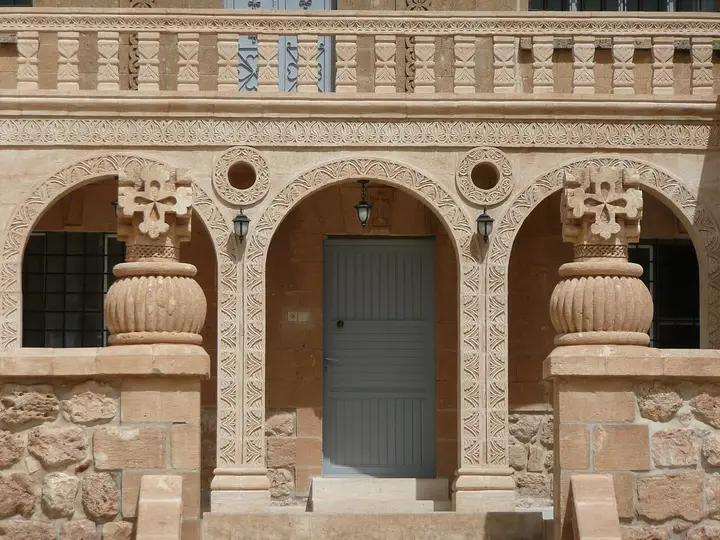
The Midyat Stone Houses reflect the stone-working craft that shapes the district’s distinctive architecture. Telkari (silverwork) is being revived thanks to films and series shot in the district and efforts are being made to turn it into an industry.

History and Culture

Midyat is a district where Islam, Christianity and Yezidism, and the Turkish, Kurdish, Arabic and Syriac languages, come together. Films and series have been shot in Midyat since the 2000s. After 1930 the town was revived, and its churches and houses were restored.

Last updated:

Places to Visit in Midyat

  • 2 Historic
  • 3 Religious
  • 1 Cultural
Cultural

Midyat Stone Houses

The stone houses of Midyat, with their distinctive architecture, reflect the district's stone-working craft.

View on map
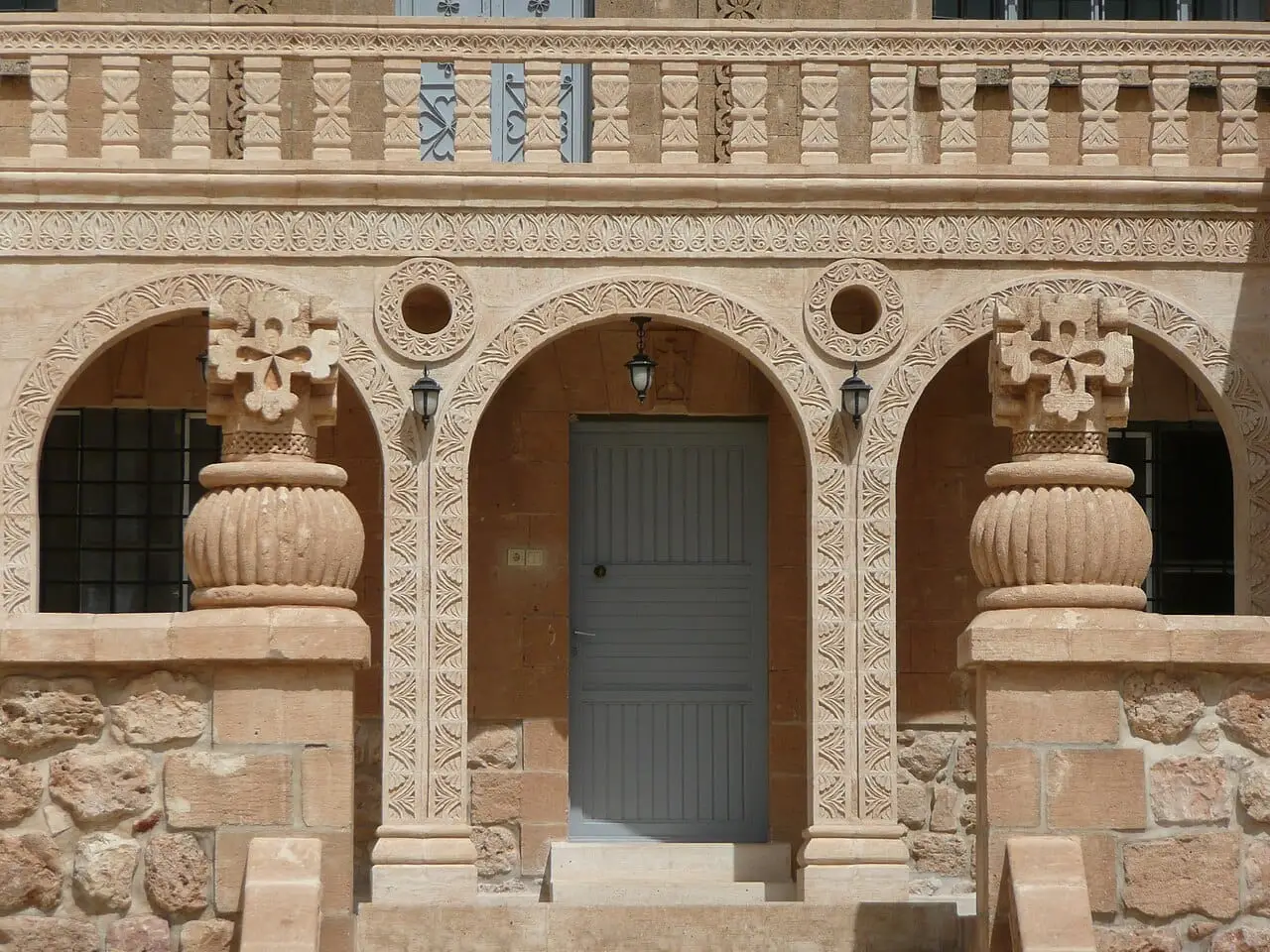
Mor Gabriel Monastery - Midyat Photo: Nevit Dilmen (CC BY-SA 3.0) · Source
Religious

Mor Gabriel Monastery

Founded in 397 AD, Mor Gabriel Monastery is one of the oldest active monasteries in the world. It still serves as one of the most important centres of the Syriac Orthodox tradition.

View on map
Historic

Konuk Evi (Guest House)

Restored stone mansions in Midyat's historic centre have been converted into boutique hotels. They keep the traditional architectural fabric alive.

View on map
Religious

Mor Gabriel Monastery (Deyrulumur)

One of the well-known monasteries of the Syriac Kadim community, set on a hill covered with oak trees.

View on map
Historic

Midyat Konukevi (Midyat Guest House)

A three-storey historic mansion with a room carved out of the bedrock.

View on map
Religious

Meryem Ana Monastery

A church complex in Anıtlı (Hah) village, known in Syriac as "Mother of God".

View on map

Places to Visit Around Mardin Province

See all →

While you are in Midyat, you can also see the highlights of Mardin province. These places are in other districts; Midyat is about 65 km from the provincial centre.

  • Mardin Stone Houses — Historic houses with courtyards and arches, built of soft limestone Mardin stone, descending step by step from the foot of the castle towards the Mesopotamian plain; the city's skyline is on the UNESCO World Heritage Tentative List.
  • Kasımiye Madrasa — A madrasa begun in the Artuqid period and completed at the end of the 15th century under the Aq Qoyunlu Sultan Kasım ibn Cihangir; with its two-storey arcaded courtyard and pool, it was one of the most important centres of learning in the region.
  • Zinciriye (Sultan İsa) Madrasa — A madrasa built at the end of the 14th century by the Artuqid Sultan Melik Necmeddin İsa and one of the best-known buildings of the old city, with its ribbed domes and rich portal; the terrace offers views over the plain.
  • Mardin Grand Mosque — A mosque built in the Artuqid period, whose ribbed dome is an example of Mardin architecture; its present minaret was built in 1888–1889 on a square base.
  • Deyrulzafaran Monastery — A Syriac Orthodox monastery built in the 5th century, 3 km east of Mardin; for a long time it served as the seat of the patriarchate.
  • Dara Ancient City — A Byzantine fortress city on the Sasanian frontier, 30 km south-east of Mardin; it was the scene of the Roman–Persian wars of 530–604. A rock-cut necropolis, huge water cisterns and the remains of the city walls can be visited.

Practical Information for Visiting Midyat

Suggested time
1-2 days
Best time to visit
Spring and autumn
Places to visit
6 places

What to Eat in Midyat

Food guide →
  • İçli Köfte (bulgur balls stuffed with spiced mince)

    Thin bulgur dough is wrapped around a filling of minced meat and spices, then boiled. It can be tasted in its most authentic form at local markets and home-style restaurants.

  • Sembusek (triangular pastry)

    A traditional pastry made by folding thin dough around minced meat or cheese into a triangle shape and frying it.

  • Midyat İnciri (Midyat figs)

    Registered as a geographical indication, Midyat fig is recorded as a mountain fig of Midyat.

Culture, Local Products and Economy of Midyat

  • Syriac Culture

    Midyat is one of the most important centres of the Syriac Christian communities. Monasteries, churches and traditional telkari art are parts of this cultural heritage.

Local Products

  • Midyat Acuru — Midyat Acuru was registered as a protected geographical indication on 11 August 2021 (TÜRKPATENT registration no. 848). Product group: processed and unprocessed fruits and vegetables and mushrooms. Registered by: Midyat Municipality.
  • Midyat İnciri — A product registered with TÜRKPATENT as a protected designation of origin.
  • Midyat Kavunu (Midyat melon) — Midyat Kavunu was registered as a protected geographical indication on 23 November 2021 (TÜRKPATENT registration no. 954). Product group: processed and unprocessed fruits and vegetables and mushrooms. Registered by: Midyat Municipality.
  • Midyat Tandır Ekmeği (Midyat tandoor bread) — Midyat Tandır Ekmeği was registered as a protected geographical indication on 5 May 2022 (TÜRKPATENT registration no. 1097). Product group: bakery and pastry products, dough products, desserts. Registered by: Midyat Municipality.
  • Midyat Telkârisi (Midyat filigree) — Midyat Telkârisi was registered as a protected geographical indication on 9 August 2021 (TÜRKPATENT registration no. 837). Product group: handicrafts other than carpets, kilims and textiles. Registered by: Midyat Subprovincial Governorship.
  • Midyat Turşusu (Midyat pickles) — Midyat Turşusu was registered as a protected geographical indication on 1 June 2022 (TÜRKPATENT registration no. 1131). Product group: processed and unprocessed fruits and vegetables and mushrooms. Registered by: Midyat Municipality.
  • Midyat Zeynebi Üzümü (Midyat Zeynebi grapes) — Midyat Zeynebi Üzümü was registered as a protected designation of origin on 8 February 2022 (TÜRKPATENT registration no. 1023). Product group: processed and unprocessed fruits and vegetables and mushrooms. Registered by: Midyat Municipality.

Economy

The economy of Midyat is based on tourism, telkari craftsmanship and farming. The historic fabric and monasteries bring in income from cultural tourism. Telkari jewellery making continues as a traditional craft.

How to Get to Midyat

Midyat is 65 km from Mardin city centre. Transport is by road.

Get directions on Google Maps Getting to Mardin

Midyat: Frequently Asked Questions

What are the places to see in Midyat?

The highlights of Midyat are 6 sites: Midyat Stone Houses, Mor Gabriel Monastery, Konuk Evi (Guest House), Mor Gabriel Monastery (Deyrulumur), Midyat Konukevi and Meryem Ana Monastery.

What to eat in Midyat?

İçli Köfte and Sembusek are the standout dishes on Midyat tables.

What is Midyat famous for?

Midyat is known for Midyat Acuru and Syriac Culture. It is a product registered with TÜRKPATENT as a protected geographical indication.

How do I get to Midyat?

Midyat is 65 km from Mardin city centre. Transport is by road.

How long should I spend in Midyat?

Suggested visit: 1-2 days. Best time to visit: spring and autumn.

Continue Your Trip

Other Districts of Mardin

Search 81 province guides and 968 district guides.