 Photo: Dosseman (CC BY-SA 4.0) · Source
 Temenni Hill
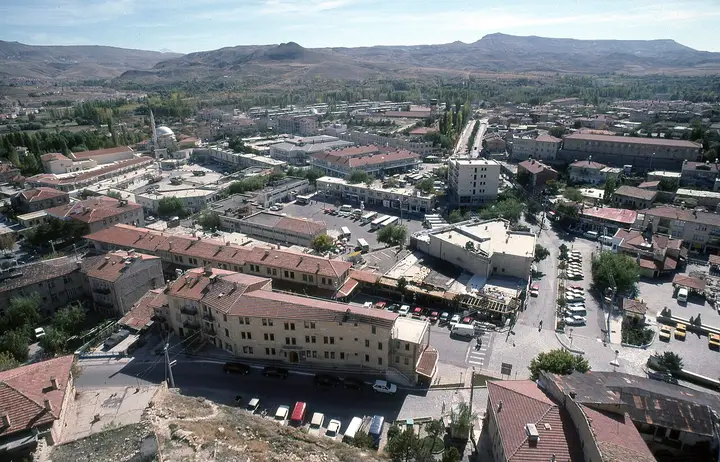
A hill in central Ürgüp, notable for a Seljuk-period tomb and clock tower. From the top there are panoramic views of the town of Ürgüp and the surrounding valleys.
View on map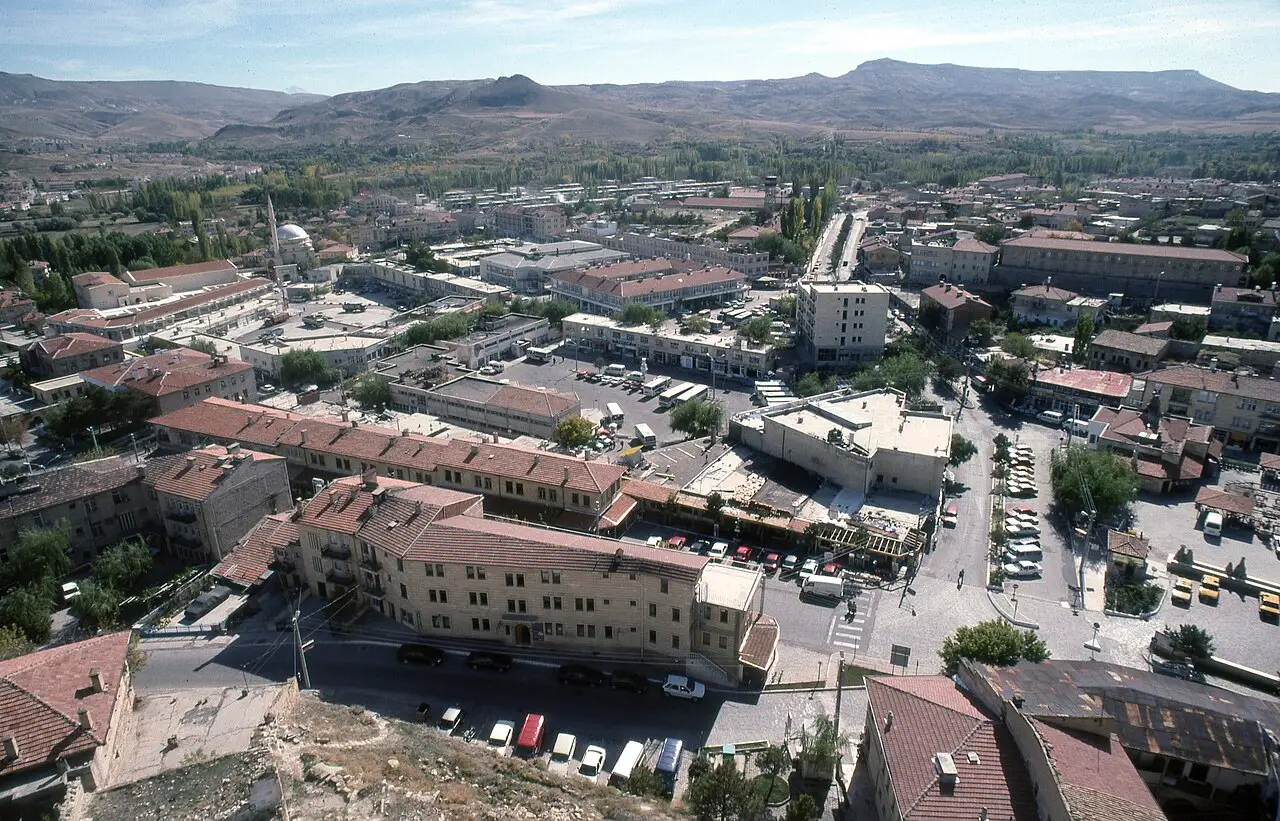 Photo: Dosseman (CC BY-SA 4.0) · Source
 10 places to visit in the Ürgüp district of Nevşehir: Three Graces Fairy Chimneys, Devrent (Imagination) Valley and Temenni Hill. Plan your trip to Ürgüp with local food, practical tips and transport information.
Ürgüp is a district of Nevşehir province, and tourism is its main source of income. The district covers an area of 587 km², and the average altitude of the district centre above sea level is 1,068 metres.
Ürgüp is one of the important settlements of the Cappadocia region, which has hosted many civilisations throughout history. In antiquity the settlement was known as Osiana (Assiana); in the Byzantine period it was called Prokopi, a name thought to derive from Prokopios, son of the Byzantine Emperor Maurikios. With the spread of Christianity in the Roman and Byzantine periods, Ürgüp became a religious centre; churches and monasteries carved into the rocks of the area bear witness to this period.
Conquered by the Seljuks after the Battle of Malazgirt in 1071, Ürgüp developed commercially and culturally during the period of the Anatolian Seljuk State and was endowed with various pious foundation buildings. In the Ottoman period it remained a district centre attached to the Niğde sanjak. Ürgüp, which is notable for its multicultural character, was home to Turks as well as Greek and Armenian communities. Under the 1924 population exchange, the Greek population was sent to Greece, and Turkish migrants from Western Thrace settled in their place.
Ürgüp was attached to Niğde province, then in 1933 to Kayseri province, and in 1954, with the creation of Nevşehir province, to Nevşehir. Thanks to tourism, which developed especially after the 1980s, it has become a regional centre of attraction.
The Ürgüp Municipality has signed sister city protocols with the following cities:
In antiquity Ürgüp was known as Osiana, and in the Byzantine period as Prokopi. Ürgüp was conquered by the Seljuks after Malazgirt in 1071. It was attached to Kayseri province in 1933. After the 1924 population exchange, Turkish migrants from Western Thrace settled in place of the Greek population. Thanks to tourism, which developed after the 1980s, Ürgüp has become a regional centre of attraction.
Last updated:
Photo: Dosseman (CC BY-SA 4.0) · Source A hill in central Ürgüp, notable for a Seljuk-period tomb and clock tower. From the top there are panoramic views of the town of Ürgüp and the surrounding valleys.
View on mapA castle carved into a natural rock mass 86 metres high, in Ortahisar, 6 km from Ürgüp. It is one of the most impressive structures in Cappadocia. The rooms and tunnels inside the castle can be explored.
View on mapA private museum established by Ürgüp Municipality, displaying horse-themed works of art.
View on mapA museum in Mustafapaşa village that can be visited. It is also known as the Doll Museum.
View on mapThe three mushroom-shaped fairy chimneys, the symbol of Ürgüp, were formed by millions of years of erosion of volcanic tuff. Protected by basalt caps, these formations are one of the most photographed spots in Cappadocia.
View on mapA valley near Ürgüp known for natural rock formations that resemble animal figures. Camels, snakes and rocks shaped like mushrooms with caps show the imagination of nature.
View on mapTurasan, one of Cappadocia's best-known wine producers, reflects Ürgüp's history of viticulture.
View on mapA village 5 km south of Ürgüp, known for its historic houses. Its ancient name was Sinasos.
View on mapWhile you are in Ürgüp, you can also see the highlights of Nevşehir province. These places are in other districts.
Lamb, potatoes, tomatoes and peppers baked in a clay testi jar. It is prepared using traditional methods in Ürgüp's historic restaurants.
Mantı made from small hand-rolled pieces of dough filled with minced meat and boiled. It is served with a garlic yoghurt and red pepper butter sauce.
A soup made by cooking dried okra with meat stock. It is a traditional winter dish in Ürgüp.
A dessert inherited from the Ottomans, sweetened with grape molasses, and one of the local dishes of Ürgüp.
A grape harvest festival held every year in September and October. With wine tasting, a grape-treading competition and music events, it is one of Cappadocia's most colourful festivals.
The winemaking tradition in Ürgüp, which has lasted for thousands of years, is kept alive in cellars carved into rock. The rock cellars provide natural temperature control, allowing wine to mature under ideal conditions.
Ürgüp's economy is based on tourism and viticulture. Boutique cave hotels, wine tours and balloon tourism are the main sources of income. Viticulture and winemaking are traditional sources of livelihood. Handicrafts and carpet weaving also contribute to the economy.
Ürgüp is 20 km from Nevşehir and 8 km from Göreme. Nevşehir Cappadocia Airport is 50 km away and Kayseri Airport is 70 km away. There are regular minibus services from Nevşehir and Kayseri.
The highlights of Ürgüp are 10 places: Three Graces Fairy Chimneys, Devrent (Imagination) Valley, Temenni Hill, Ortahisar Castle, Turasan Wine House, Ürgüp Erhan Ayata Horse Museum, Asmalı Konak, Mustafapaşa Village, Gomeda Valley and the Cappadocia Art and History Museum.
Ürgüp Testi Kebabı, Ürgüp Mantısı and Bamya Çorbası are the standout dishes on Ürgüp's tables.
Ürgüp is known for Ürgüp Wine and the Ürgüp Grape Harvest Festival. Ürgüp is the wine-producing centre of Cappadocia. Wines made from Emir and Kalecik Karası grapes are matured in rock-cut cellars. Turasan and Kocabağ wine houses are open to visitors.
Ürgüp is 20 km from Nevşehir and 8 km from Göreme. Nevşehir Cappadocia Airport is 50 km away and Kayseri Airport is 70 km away. There are regular minibus services from Nevşehir and Kayseri.
Suggested visit length: 2–3 days. Best time to visit: spring and autumn (April–June, September–November).