Alişar Höyük
A höyük 15 km southeast of Sorgun, with layers dating to the Hittite, Phrygian and Roman periods. Excavations carried out between 1927 and 1932 uncovered some of the earliest traces of settlement in Anatolia.
View on map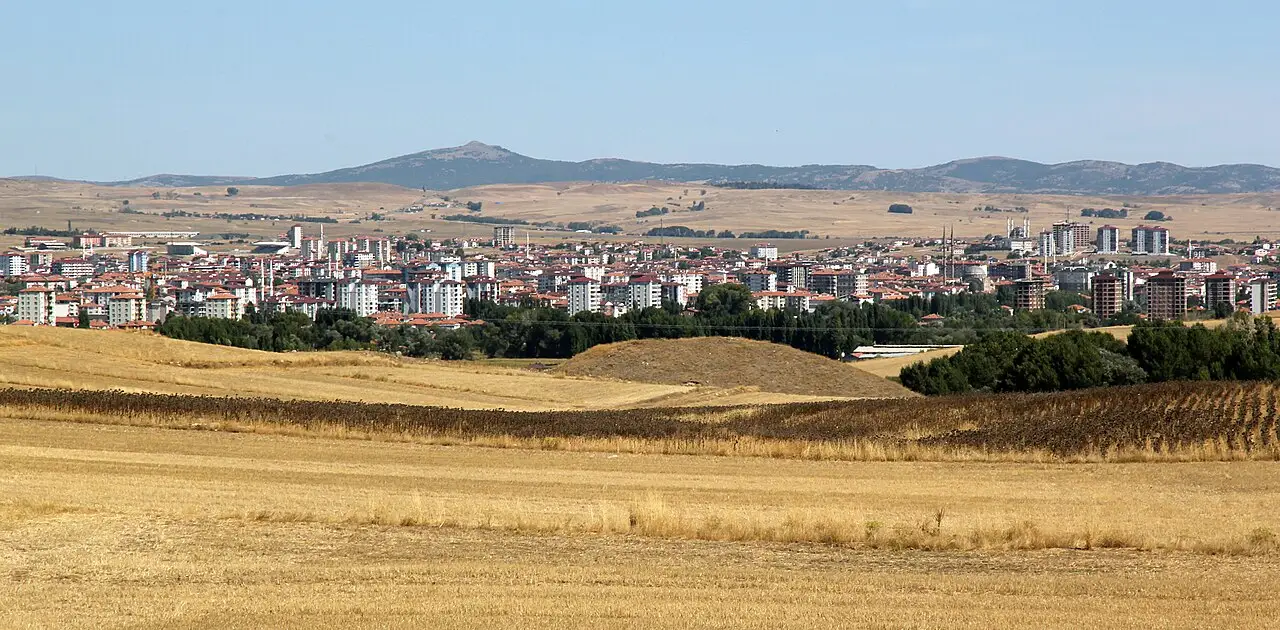 Photo: Ingeborg Simon (CC BY-SA 3.0) · Source
 4 places to visit in the Sorgun district of Yozgat: Alişar Höyük, Sorgun Thermal Baths and Kerkenez Underground City. Plan your trip to Sorgun with local food, practical tips and transport information.
Sorgun is a district of Yozgat Province. The district lies at an altitude of 1,081 metres. Sorgun is one of Türkiye’s leading centres for mineral spring waters.
The Ottoman-era spelling of the name Sorgun was Sorkun. It is thought that the name derives from that of a Turkic Mongol general during the time of the Çobanoğulları principality.
The district has underground resources rich in lignite, uranium and thorium. Underground thermal hot water is also used for heating in part of Sorgun.
The district is known as a granary, and wheat production is the main activity. The opening of the Sorgun Sugar Factory has increased sugar beet production.
Thermal baths play an important role in the district’s tourism. Sorgun is a very important centre for historic monuments.
The original Ottoman-era spelling of the name Sorgun was Sorkun. According to the source, Sorgun is a very important centre for historic monuments. With the opening of the Sorgun Sugar Factory in 1998, sugar beet production increased considerably. On 26 March 1995, 38 people died in a firedamp explosion at a coal mine.
Artefacts dating back 5,000 years were found during the excavations at Alişar Höyük in Sorgun district. Excavations have been ongoing since 1993 at the Kerkenes Dağı Ancient City in Şahmuratlı Village, Sorgun district.
Last updated:
A höyük 15 km southeast of Sorgun, with layers dating to the Hittite, Phrygian and Roman periods. Excavations carried out between 1927 and 1932 uncovered some of the earliest traces of settlement in Anatolia.
View on mapThermal springs around the district contain mineral water that is considered beneficial for rheumatism and skin conditions. The thermal facilities attract visitors interested in health tourism. This site is an important part of the local heritage for the people of Sorgun and bears witness to the district's history.
View on mapAn underground city near the district. According to sources, it is not yet well known.
View on mapThe springs play an important role in the district's tourism. According to the source, the district is one of Türkiye's leading centres for mineral water springs.
View on mapWhile you are in Sorgun, you can also see the highlights of Yozgat province. These places are in other districts; Sorgun is about 35 km from the provincial centre.
A traditional soup made with chicken broth, flour and butter. In Sorgun it is an essential dish at weddings and festivals.
A kebab prepared by baking lamb and vegetables in a clay pot. It is Sorgun's best-known dish.
Sorgun Yağlısı is a breakfast speciality specific to Yozgat and Sorgun, prepared in stone ovens.
Alişar Höyük is one of the most important excavation sites in Anatolian archaeology. Finds from the excavations are displayed in museums around the world.
Sorgun's economy is based on agriculture and trade. Wheat, barley and sugar beet are the main agricultural products. Thermal tourism also contributes to the district's economy.
Sorgun is 35 km from Yozgat city centre. It lies on the Yozgat-Sivas highway. There are regular minibus services from Yozgat.
The highlights of Sorgun are 4 sites: Alişar Höyük, Sorgun Thermal Baths, Kerkenez Underground City and Thermal Springs (mineral water sources).
Arabaşı and Testi Kebabı are the standout dishes on Sorgun's tables.
Sorgun is known for Sorgun Yağlısı and the Alişar Höyük Archaeological Heritage. Sorgun Yağlısı is registered with TÜRKPATENT as a protected geographical indication.
Sorgun is 35 km from Yozgat city centre. It lies on the Yozgat-Sivas highway. There are regular minibus services from Yozgat.
Suggested visit time: 1 day. Best time to visit: spring and summer (May-September).