12 places to visit in the Melikgazi district of Kayseri: Hunat Hatun Complex, Kayseri Castle and Gevher Nesibe Medical Museum. Plan your trip to Melikgazi with local food, practical tips and transport information.

Share with friends

With a population of around 600,000, Melikgazi is the most populous district of Kayseri. The district has been a centre of the city’s important cultural, industrial and trade activities throughout history.

History

Melikgazi has a castle built in the Byzantine period and expanded by the Seljuks. The district contains the 13th-century Seljuk Hatun Complex, mosques, a madrasa, hammams and a clock tower.

History and Culture

Melikgazi, with a population close to 600,000, is Kayseri’s most populous district. Melikgazi has a castle built in the Byzantine period and expanded by the Seljuks. The oldest settlement area around Kayseri is Kaniş Mound. By 1085, Kayseri was regarded as a Turkish and Muslim city. Döner Kümbet is named after its twelve-sided body. The Ağırnas Underground City contains places of worship from the Christian period.

Last updated:

Places to Visit in Melikgazi

  • 6 Historic
  • 4 Religious
  • 1 Museum
  • 1 Attraction

Historic Sites 6

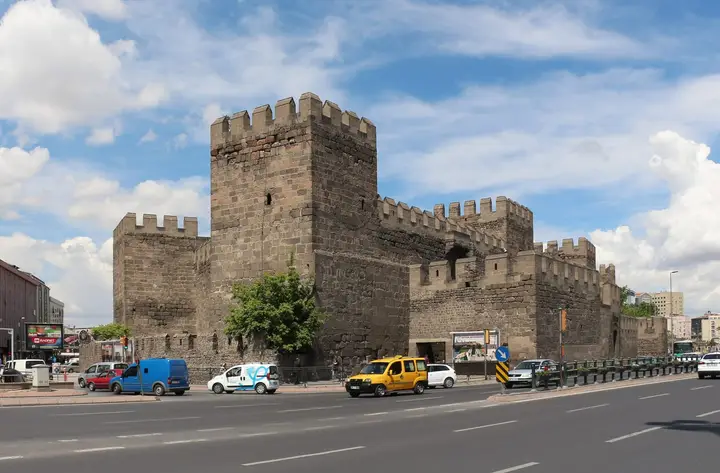
Kayseri Castle - Melikgazi Photo: Wikipedia (CC BY-SA) · Source
Historic

Kayseri Castle

The inner castle, built in the time of the Roman Emperor Gordian (3rd century), and the outer castle, added in the Seljuk period, stand in the centre of the city. Shopping centres and museums are located inside the castle.

View on map
Historic

Gevher Nesibe Medical Museum

The darüşşifa (hospital) built in 1206 by Gevher Nesibe Sultan, sister of the Seljuk Sultan Gıyaseddin Keyhüsrev II, is considered one of the world's first medical schools.

View on map
Historic

Döner Kümbet (Şah Cihan Hatun Tomb)

A Seljuk tomb known for its twelve-sided body and stonework, located on Talas Street.

View on map
Historic

Germir-Tavlusun and Derevenk Valley

A region intertwined with history, with settlements, churches and monasteries carved into the valleys; Tavlusun has listed churches and mosques.

View on map
Historic

Ağırnas Underground City

An underground city, parts of which date from before the common era, known for its places of worship from the Christian period.

View on map
Historic

Grand Mosque (Camii Kebir)

Built between 1134 and 1142 using the brick technique that the Seljuks first used in Anatolia.

View on map

Religious Buildings 4

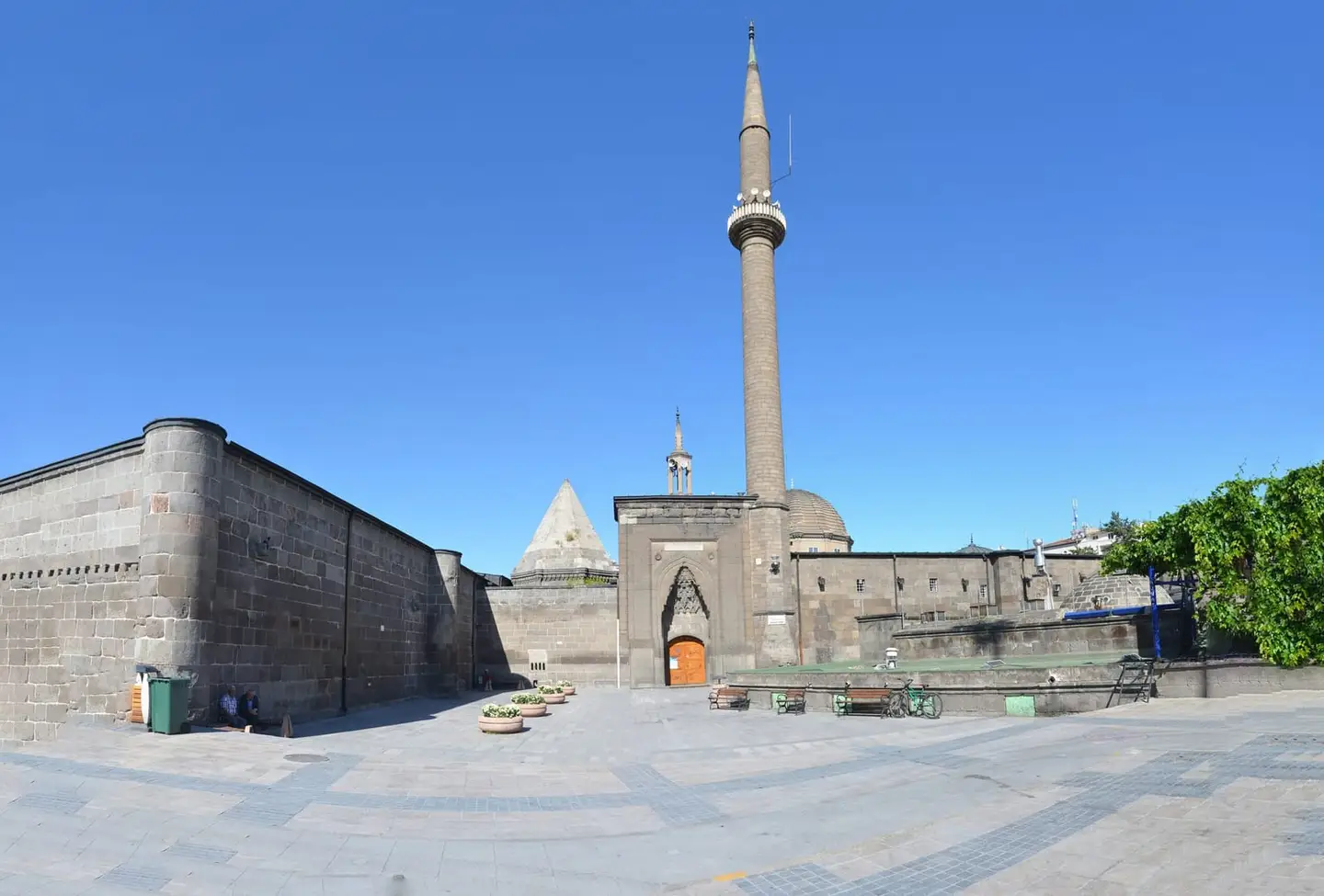
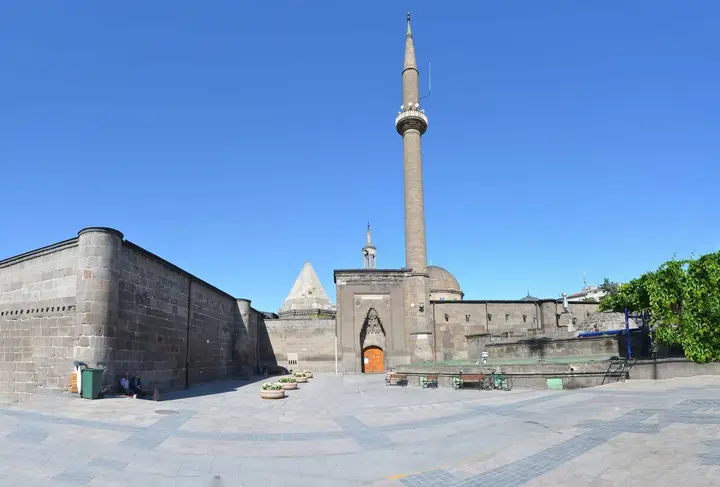
Hunat Hatun Complex - Melikgazi Photo: Wikipedia (CC BY-SA) · Source
Religious

Hunat Hatun Complex

A Seljuk-period structure from the 13th century.

View on map
Religious

Seyyid Burhaneddin Tomb

The tomb of Seyyid Burhaneddin, teacher of Mevlânâ, is one of the most visited tombs in Kayseri.

View on map
Religious

Gülük Mosque

The mosque section of a complex built in the Danishmendid period; the inscription on its portal gives the date 1211.

View on map
Religious

Lale Mosque

A Seljuk-period mosque with three entrance portals, commissioned by Lala Musluhiddin Paşa.

View on map

Museums 1

Museum

Ahi Evran Lodge / Museum of Craftsmen and Tradesmen

The building of Ahi Evran, founder of the Ahi organisation (Ahilik), is now used as the Museum of Craftsmen and Tradesmen.

View on map

Attractions 1

Attraction

Erciyes Ski Centre

The ski centre on Mount Erciyes, at 3,917 metres, is one of Türkiye's largest ski centres, with 150 km of pistes. Skiing is possible between November and May.

View on map

Places to Visit Around Kayseri Province

See all →

While you are in Melikgazi, you can also see the highlights of Kayseri province. These places are in other districts.

  • Mount Erciyes and Ski Resort — An extinct volcano 25 km south of the city and, at 3,916 metres, the highest mountain in Central Anatolia; its ski resort, between 2,150 and 3,400 metres, is one of the largest in Türkiye.
  • Kültepe (Kaniş-Karum) — The ancient city of Kaniş, 20 km north-east of the city, where Assyrian merchants had their trading colony in the early 2nd millennium BC; the cuneiform tablets found here are the earliest known written documents in Anatolia.
  • Gevher Nesibe Hospital (Darüşşifa) — The "Twin Madrasa" (Çifte Medrese), consisting of a hospital and a medical madrasa, built in 1206 at the bequest of Gevher Nesibe, daughter of the Seljuk Sultan Kılıçarslan II; it is counted among the world's first centres of medical education and healthcare.
  • Döner Tomb — A twelve-sided tomb (kümbet) on the Talas road, built in 1276 for Şah Cihan Hatun, daughter of Alaeddin Keykubad I; its reliefs include human-headed lions, a double-headed eagle and tree-of-life motifs.
  • Ağırnas — A village in the Melikgazi district where Mimar Sinan was born; the house in which he was born has been turned into a museum, and the village also has an underground city.
  • Talas Historic Houses — In Talas, 8 km east of the city, are stone mansions from the 19th century and the Church of the Virgin Mary; the hillside town at the foot of Mount Ali preserves its historic fabric.

Practical Information for Visiting Melikgazi

Suggested time
2–3 days
Best time to visit
Winter (for skiing), spring and autumn (for city sightseeing)
Places to visit
12 places

What to Eat in Melikgazi

Food guide →
  • Kayseri Mantısı

    Small pieces of dough filled with minced meat, boiled and served with yoghurt and garlic sauce. It is a product with a geographical indication.

  • Pastırma (cured beef)

    Kayseri pastırma is prepared by salting and drying beef and then coating it with fenugreek paste (çemen). It is a world-famous delicatessen product.

  • Sucuk (spiced sausage)

    Kayseri sucuk is made by kneading veal with spices, stuffing it into casings and drying it. It is a product with a geographical indication.

Culture, Local Products and Economy of Melikgazi

  • Seljuk Heritage

    Melikgazi houses some of the most important works of the Anatolian Seljuk period. Hunat Hatun Complex, Gevher Nesibe Darüşşifası and Kayseri Castle are symbols of this period.

  • Trade Culture

    Kayseri has been known for its trade culture for centuries. The Covered Bazaar and historic hans carry traces of this tradition.

Local Products

  • Kayseri Pastırması (Kayseri cured beef) — Kayseri pastırma coated with fenugreek paste is a product with a geographical indication and is known around the world.
  • Kayseri Sucuğu (Kayseri spiced sausage) — Kayseri sucuk, produced by traditional methods, is Türkiye's best-known sucuk brand.

Economy

Melikgazi is the most populous district of Kayseri. Industry, trade and services are the main economic activities. Erciyes University lies within the district boundaries. Erciyes Ski Centre provides income from winter tourism.

How to Get to Melikgazi

Melikgazi is Kayseri's central district. It is 15 km from Kayseri Erkilet Airport. An intercity bus terminal and a tram line are available.

Get directions on Google Maps Getting to Kayseri

Melikgazi: Frequently Asked Questions

What are the places to see in Melikgazi?

The highlights of Melikgazi are 12 places: Hunat Hatun Complex, Kayseri Castle, Gevher Nesibe Medical Museum, Erciyes Ski Centre, Döner Kümbet (Şah Cihan Hatun Tomb), Seyyid Burhaneddin Tomb, Germir-Tavlusun and Derevenk Valley, Ağırnas Underground City, Gülük Mosque, Ahi Evran Lodge / Museum of Craftsmen and Tradesmen, Lale Mosque and Grand Mosque (Camii Kebir).

What is there to eat in Melikgazi?

Kayseri Mantısı, Pastırma and Sucuk are the standout flavours on Melikgazi's tables.

What is Melikgazi famous for?

Melikgazi is known for Kayseri Pastırması and its Seljuk Heritage. Kayseri pastırma, coated with fenugreek paste, is a product with a geographical indication and is known worldwide.

How do I get to Melikgazi?

Melikgazi is Kayseri's central district. It is 15 km from Kayseri Erkilet Airport. An intercity bus terminal and a tram line are available.

How much time should I set aside for a visit to Melikgazi?

Suggested visit length: 2–3 days. Best time to visit: winter (for skiing), spring and autumn (for city sightseeing).

Continue Your Trip

Other Districts of Kayseri

Search 81 province guides and 968 district guides.